
An open kitchen and living room layout can transform how you live – but only when the design serves both function and flow. These open kitchen and living room ideas cover everything from island configurations and floor plans to small space solutions and Indian-inspired designs that balance openness with practical living. Save these open kitchen and living room decor ideas for your next project.
The Layout Everyone Gets Wrong
Here’s a bold statement: most open kitchen and living room designs fail because they prioritize aesthetics over function.
I’ve analyzed hundreds of open concept spaces, and the pattern is consistent. People remove walls, install a statement island, and call it done. Then reality hits – cooking smells permeate the sofa, noise travels everywhere, and the “open” space starts feeling chaotic rather than connected.
The reason this matters is simple. An open kitchen and living room concept works only when you understand the principles behind successful integration. It’s not about creating one giant room. It’s about designing distinct zones that communicate visually while maintaining functional independence.
This guide covers 19 open kitchen and living room ideas that actually work. Floor plans, island strategies, zoning techniques, small space solutions, Indian-inspired approaches, and the emerging trends reshaping how designers think about connected living. Each recommendation comes with the reasoning behind it. Because smart design requires understanding why something works, not just how it looks.
Open Kitchen And Living Room With Island As Divider

The kitchen island serves a critical function in open layouts – it creates psychological separation without physical barriers. This is fundamental to successful open kitchen and living room design.
A well-positioned island establishes where the kitchen ends and living space begins. Guests instinctively understand the boundary. The cook maintains territorial definition. Both zones preserve identity while sharing visual connection. Size matters significantly – islands should be proportional to overall square footage without dominating circulation paths.
Here’s what most people overlook. The island orientation affects sightlines and conversation flow. Positioning the island parallel to the living room creates a natural stage for entertaining. Perpendicular placement emphasizes separation. Choose based on how you actually use the space, not how it photographs.
Open Kitchen And Living Room Floor Plans That Work
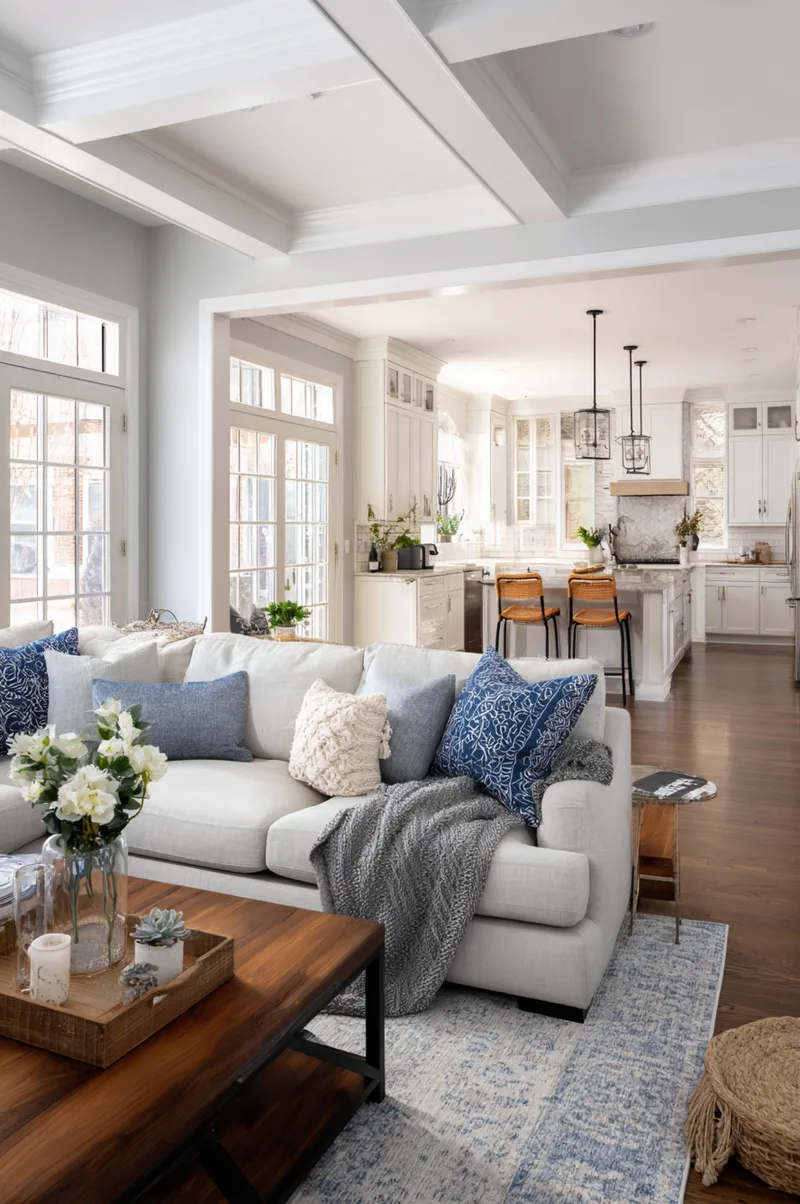
Floor plan success depends on understanding the work triangle – the relationship between stove, sink, and refrigerator. Open layouts can either enhance or destroy this efficiency.
The most effective open kitchen and living room floor plans position kitchen elements along one or two walls, preserving the compact work triangle while opening the fourth side to living space. L-shaped and galley configurations work particularly well because they concentrate cooking activity without scattering it across the room.
Here’s the strategic consideration. Traffic flow through open layouts must not intersect the work triangle. When guests walk through your prep zone to reach the living room, the design has failed functionally. Smart floor plans create clear circulation paths that bypass active cooking areas entirely.
Open Kitchen And Living Room Small Space Solutions
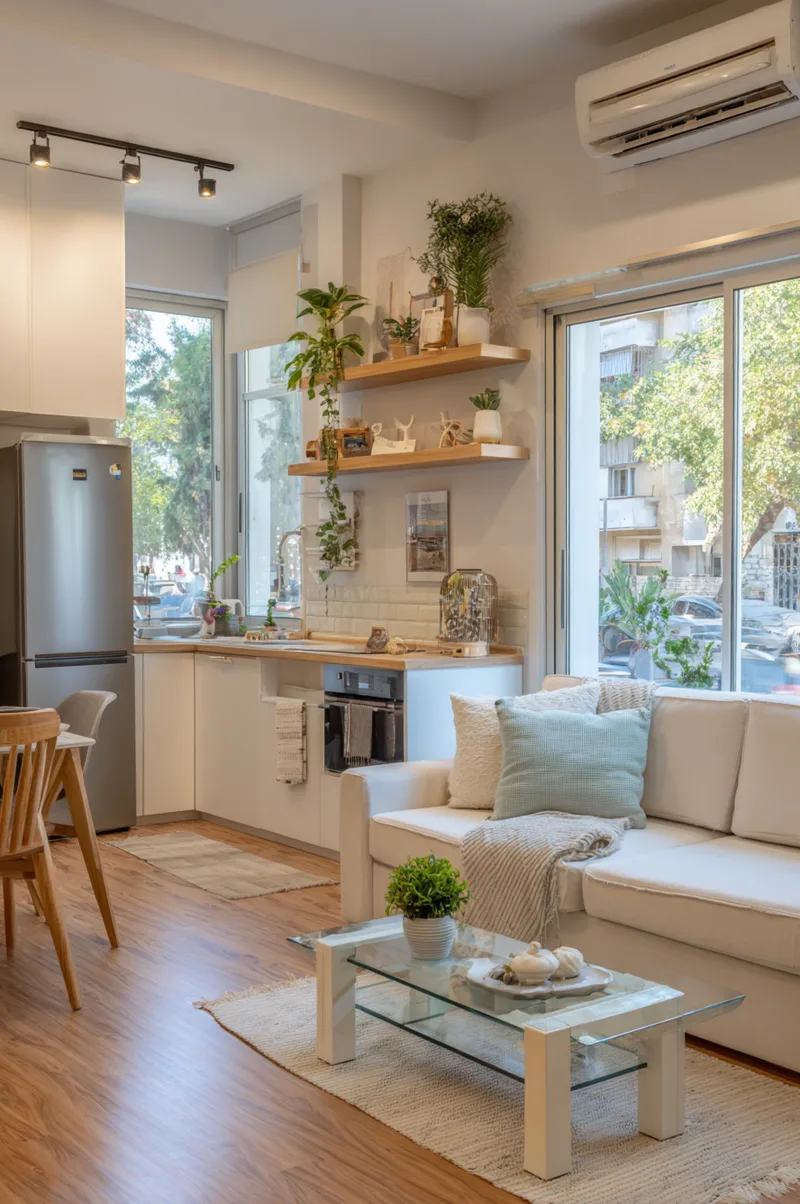
Small spaces benefit enormously from open layouts – but only with disciplined design choices. The wrong decisions amplify problems rather than solving them.
In compact open kitchen and living room small space designs, vertical storage replaces horizontal sprawl. Upper cabinets maximize wall utilization. Furniture scales appropriately – oversized sectionals that work in large rooms overwhelm small open concepts. Choose streamlined sofas, armless chairs, and transparent materials like glass tables that reduce visual weight.
The key principle is continuous flooring. Running the same material throughout the entire space creates uninterrupted visual flow that tricks the eye into perceiving larger dimensions. Transitional strips between different flooring materials create psychological barriers that fragment already limited square footage.
Open Kitchen And Living Room Design With Defined Zones
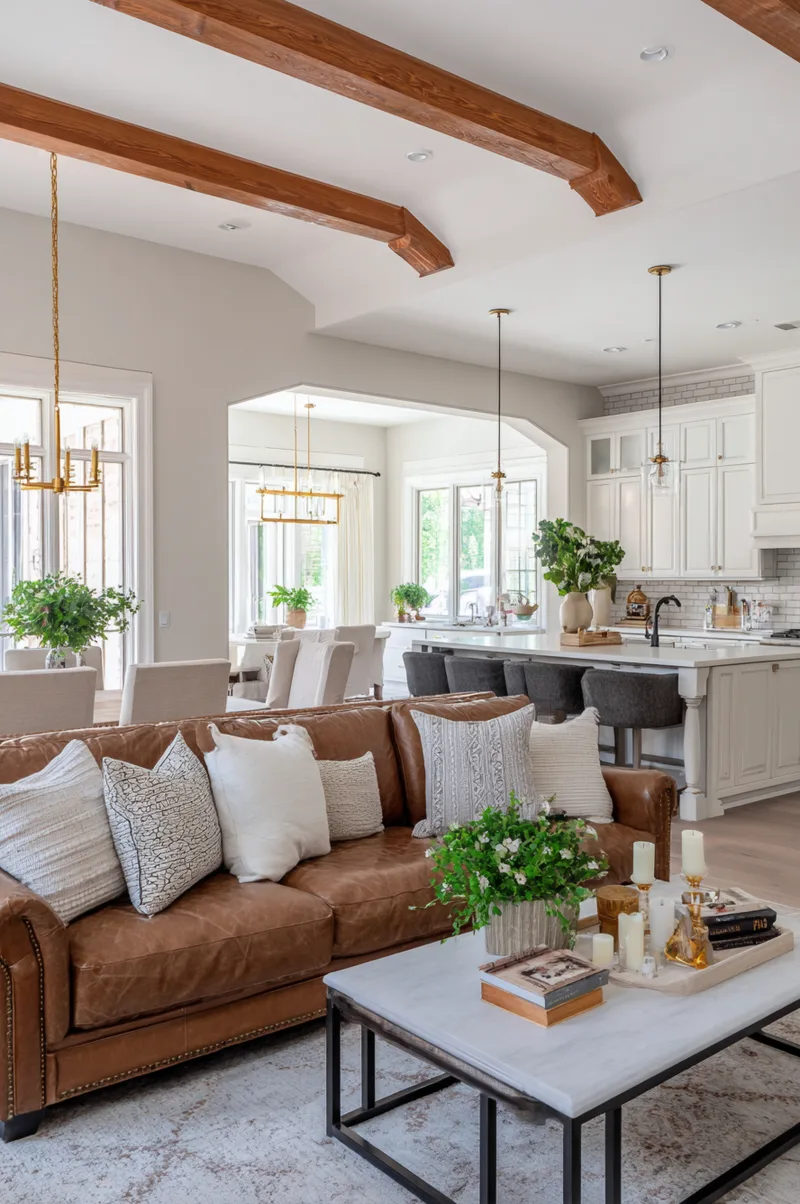
Zone definition represents the most critical skill in open kitchen and living room design. Without clear boundaries, open spaces feel chaotic rather than connected.
Multiple techniques establish zones without walls. Area rugs anchor furniture groupings and signal living room territory. Lighting changes – pendants over kitchen, floor lamps in living areas – create overhead definition. Ceiling treatments like beams or paint color variations mark transitions. Even furniture arrangement, with sofa backs facing the kitchen, communicates spatial separation.
The reason zoning matters is psychological. Humans need spatial hierarchy to feel comfortable. Completely undifferentiated open spaces create subtle anxiety because the brain cannot categorize the environment. Proper zoning provides the mental organization we need while preserving the visual openness we want.
Open Kitchen And Living Room Ideas For Lighting Strategy
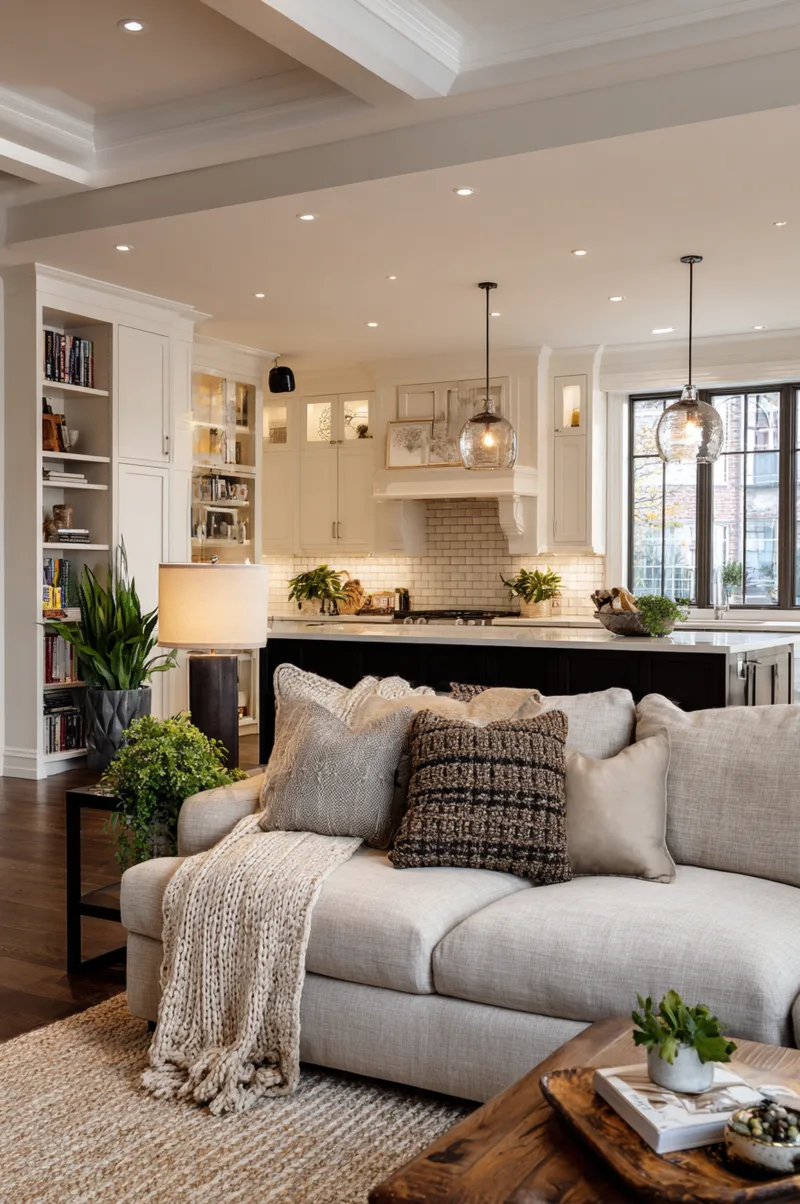
Lighting in open layouts serves dual purposes – functional illumination and spatial definition. Most designs fail because they treat lighting as afterthought rather than architectural element.
Layer three types of lighting across your open kitchen and living room layout. Task lighting illuminates work surfaces – under-cabinet fixtures, pendant lights over islands. Ambient lighting provides overall illumination – recessed cans, central fixtures. Accent lighting creates atmosphere – table lamps, wall sconces, dimmable options throughout.
Here’s the critical insight. Different zones should have independent lighting controls. The ability to dim living room lights while maintaining bright kitchen task lighting transforms how the space functions during evening entertaining. Single-switch designs eliminate this flexibility entirely.
YOU MIGHT ALSO LIKE
21 Kitchen Pendant Lights Over Island Ideas
Open Kitchen And Living Room Apartment Considerations
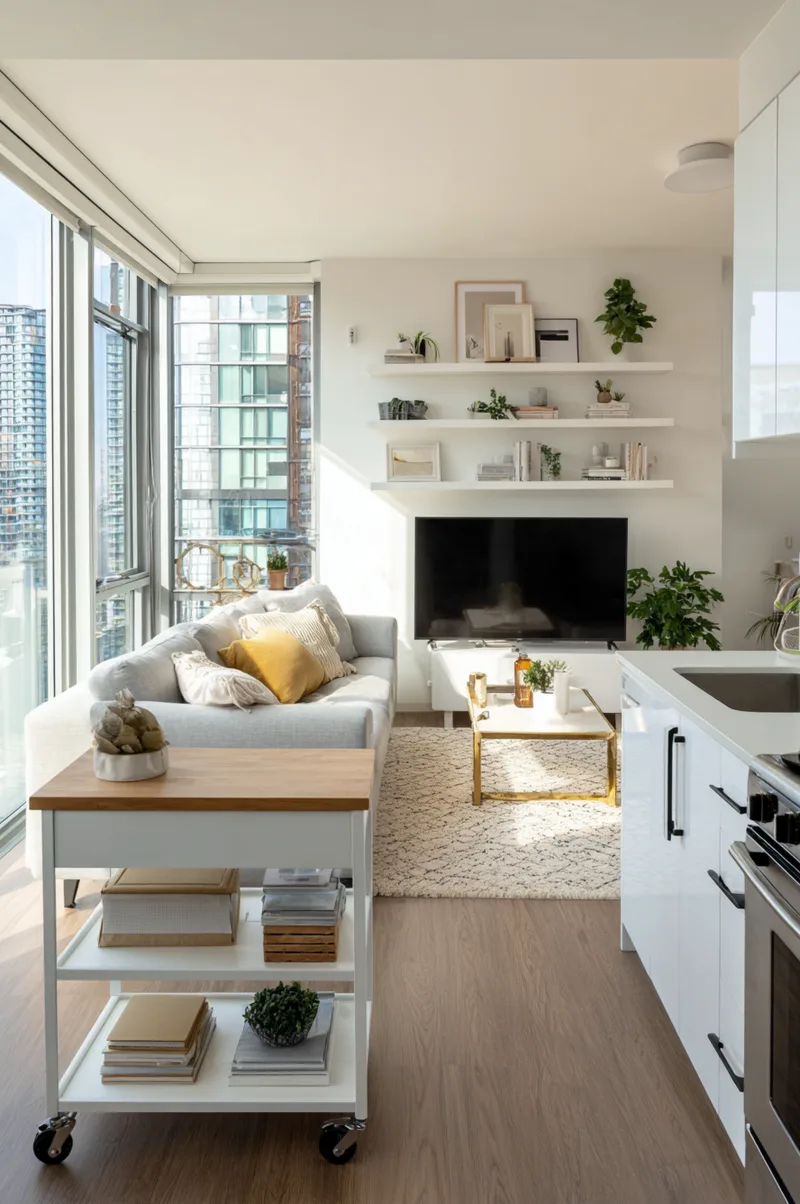
Apartment living adds constraints that single-family homes don’t face – structural limitations, noise concerns with neighbors, and typically smaller footprints requiring maximum efficiency.
Open kitchen and living room apartment designs must work harder per square foot. Every element earns its place through function. Moveable islands replace fixed ones – they can be repositioned for entertaining or pushed aside for yoga. Murphy beds or convertible furniture create flexible living areas. Vertical storage exploits full ceiling height.
The reason apartment open concepts succeed is that they eliminate wasted circulation space. Hallways connecting separate rooms consume valuable square footage. Removing those walls returns that space to usable living area. The trade-off is intentional design to manage the challenges of consolidated living.
Open Kitchen And Living Room Concept With Color Cohesion
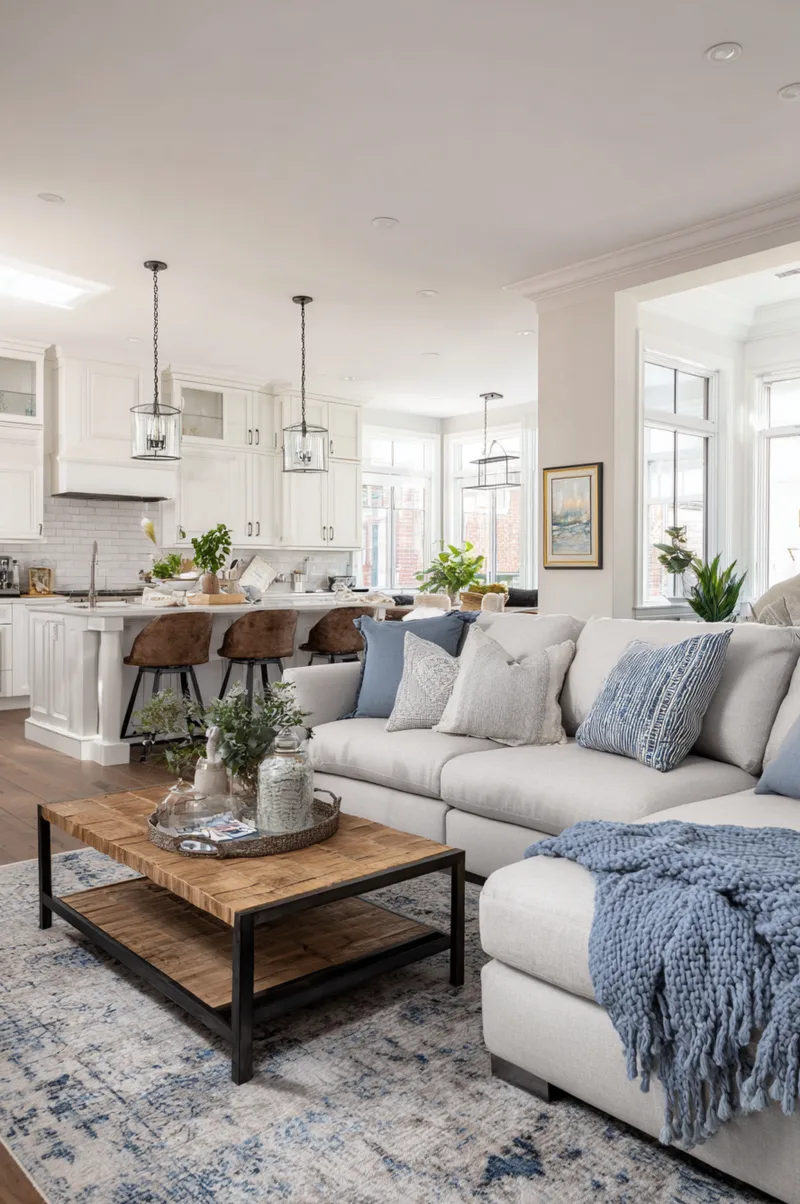
Color strategy creates visual unity across open spaces. Without intentional palette coordination, open layouts feel fragmented and accidental.
The most effective approach for open kitchen and living room concept design is establishing a consistent base palette – typically neutrals – that flows throughout both zones. Variation comes through accent colors and material textures rather than competing wall colors. Kitchen cabinets should relate to living room furniture tones. Countertops should complement soft furnishing colors.
Here’s what separates good design from great. The color transitions should feel inevitable rather than designed. When you stand at the junction between kitchen and living room, the eye should travel smoothly without jarring shifts. This requires viewing the space as one composition rather than two separate rooms happening to share walls.
Open Kitchen And Living Room Plan With Broken-Plan Elements
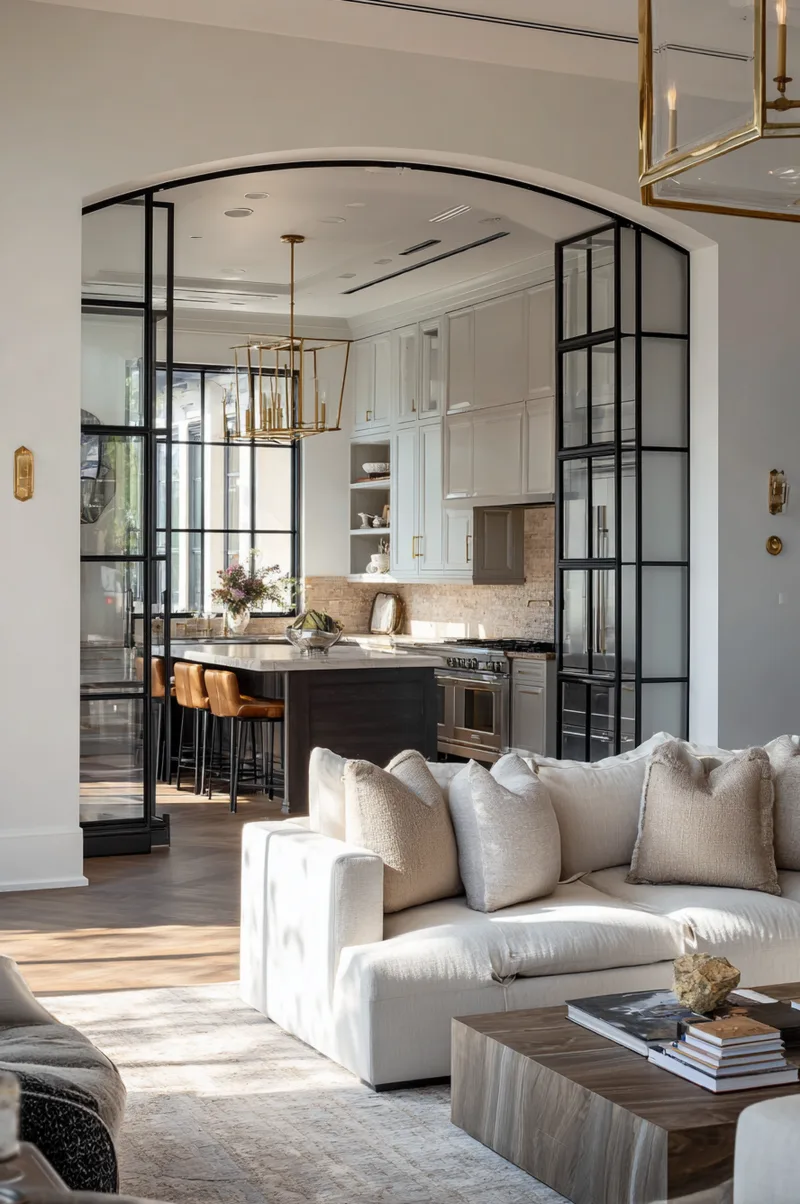
The newest evolution in open design is the broken-plan layout – maintaining visual connection while introducing subtle architectural separation. This trend addresses the legitimate criticisms of fully open concepts.
Broken-plan open kitchen and living room plan designs use partial walls, glass partitions, wide archways, or strategic furniture placement to suggest division without creating isolation. You maintain the light flow and sightlines of open design while gaining acoustic separation, odor containment, and visual rest areas.
Here’s why this matters for current design. Designers report that designs are shifting back towards broken-plan layouts, favoring cozier, zoned spaces. The fully open concept had its moment, but practical experience revealed its limitations. Broken-plan represents the sophisticated evolution – the benefits of openness with solutions for its challenges.
Open Kitchen And Living Room Layout For Entertaining
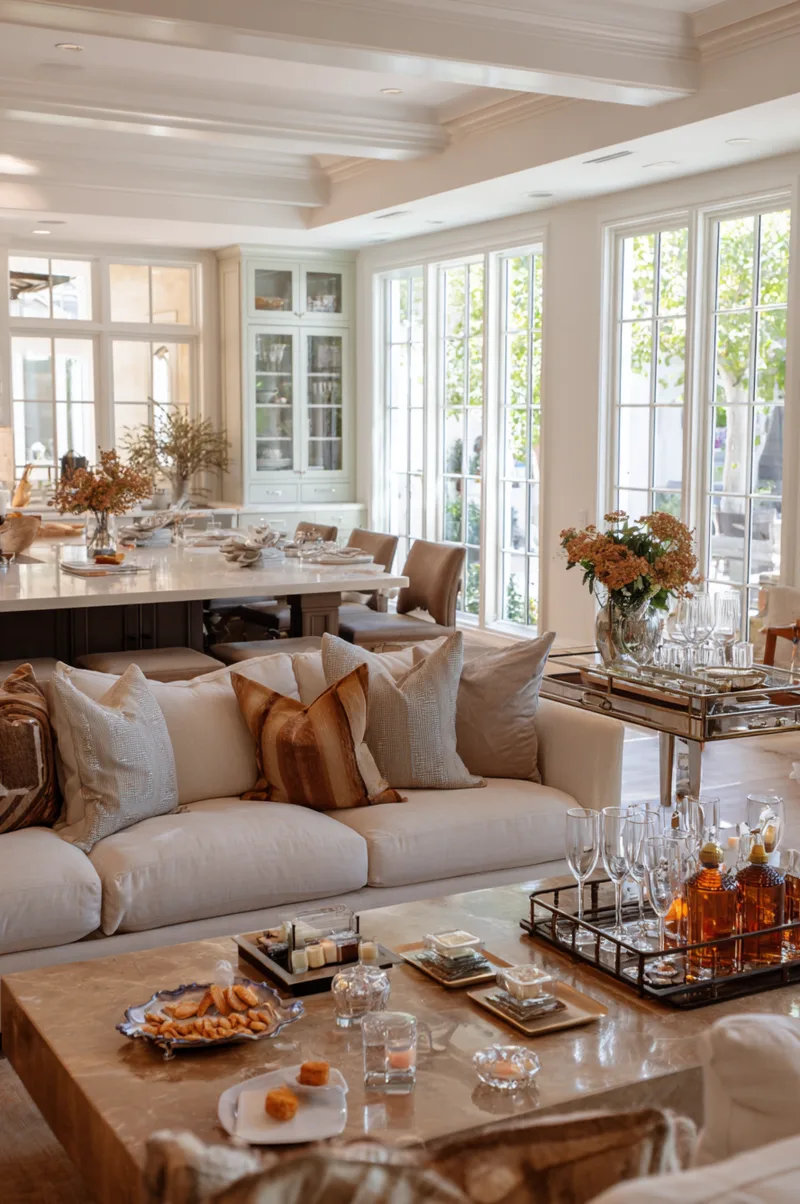
Entertaining requirements should drive layout decisions in social households. The wrong configuration makes hosting exhausting rather than enjoyable.
Effective open kitchen and living room layout for entertaining positions the host facing guests during food preparation. Island seating allows visitors to gather near the cook without crowding the work zone. Traffic patterns enable serving without threading through seated groups. The living room arrangement should facilitate conversation circles rather than theater-style TV viewing.
The key insight is sightline management. The cook should see into the living room. Guests should see kitchen activity without full exposure to mess. Strategic positioning of islands, peninsula extensions, and furniture achieves this selective visibility. Complete exposure makes hosting stressful because every dish and cutting board remains on display.
YOU MIGHT ALSO LIKE
Open Kitchen And Living Room Decor Ideas For Texture Balance
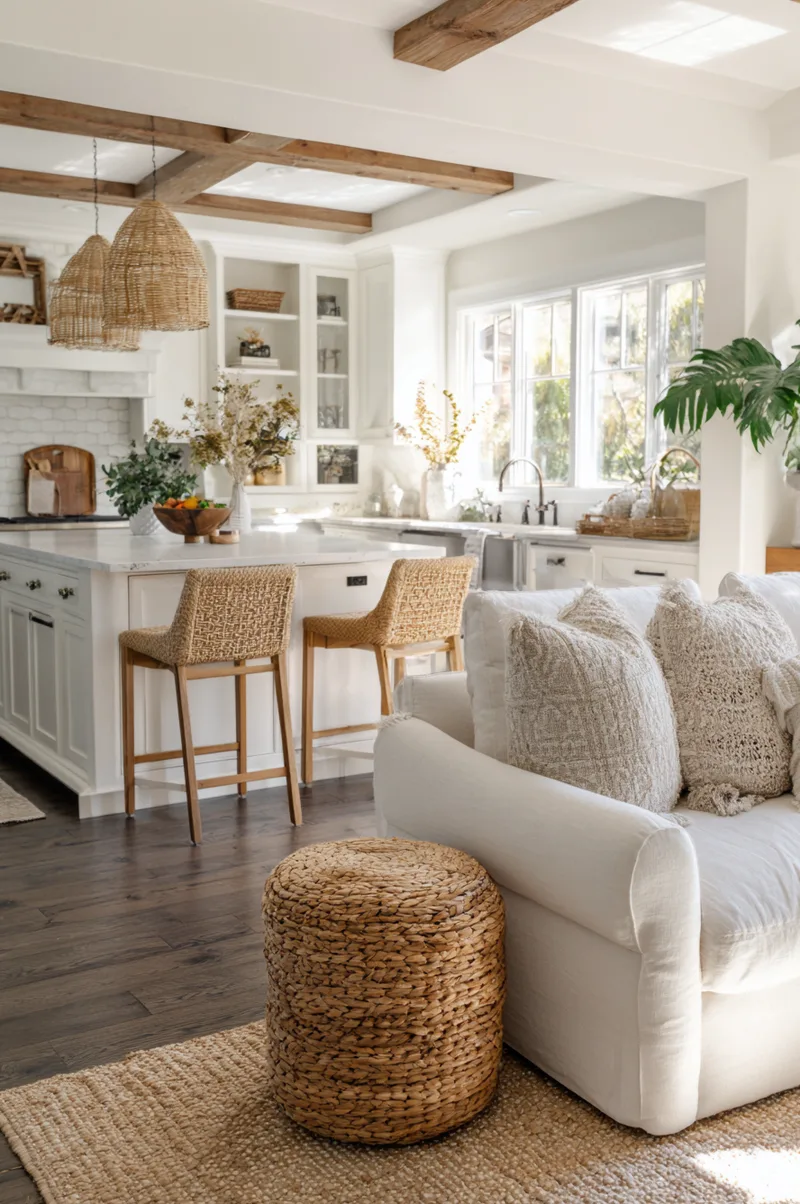
Kitchens feature hard surfaces – stone, metal, ceramic. Living rooms feature soft surfaces – fabric, leather, textile. Open concepts must bridge this material disparity.
Successful open kitchen and living room decor ideas introduce texture variation that creates visual continuity. Wood appears in both zones – kitchen cutting boards relating to living room coffee tables. Woven elements like rattan bar stools connect to jute area rugs. The goal is material echoes that link spaces without forced matching.
Here’s the design principle. Hard kitchen surfaces should soften as you transition toward living areas. The island might feature stone counters, but bar stools introduce upholstery. The peninsula edge softens with wood trim. Gradually increasing textile presence prepares the eye for the fully soft living zone.
Open Kitchen And Living Room With Hidden Storage Solutions
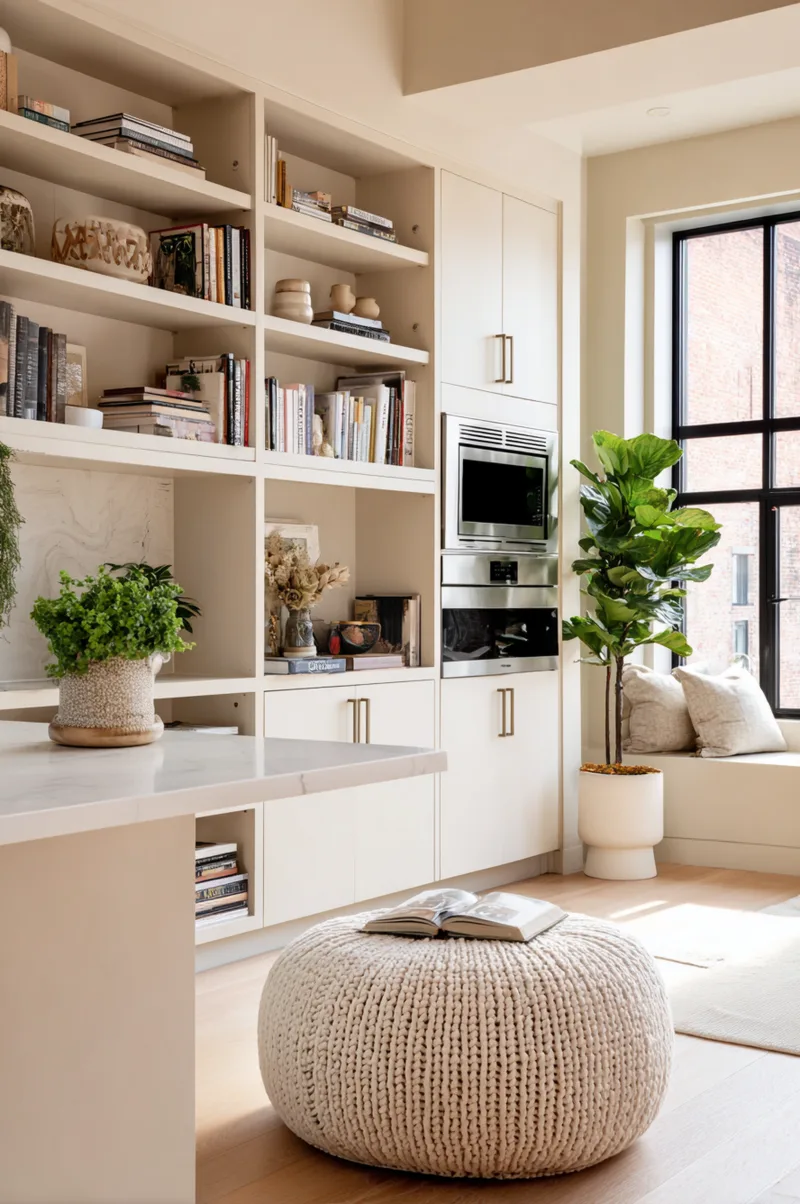
Storage presents unique challenges in open layouts. Clutter visible from both zones doubles the visual impact of disorganization.
The most effective open kitchen and living room ideas incorporate hidden storage throughout. Kitchen pantries conceal bulk items and small appliances. Living room ottomans open for blanket storage. Built-in cabinetry replaces freestanding furniture that collects surface clutter. The principle is providing homes for everything while minimizing visible storage presence.
Here’s the strategic consideration. Smart storage becomes critical in open concept spaces. Built-in shelves, kitchen islands with storage, and multipurpose furniture keep clutter away from visible areas. Open shelving works aesthetically but requires constant curation. For most households, closed storage serves daily reality better than magazine-worthy display shelving.
Open Kitchen And Living Room Decor With Statement Lighting
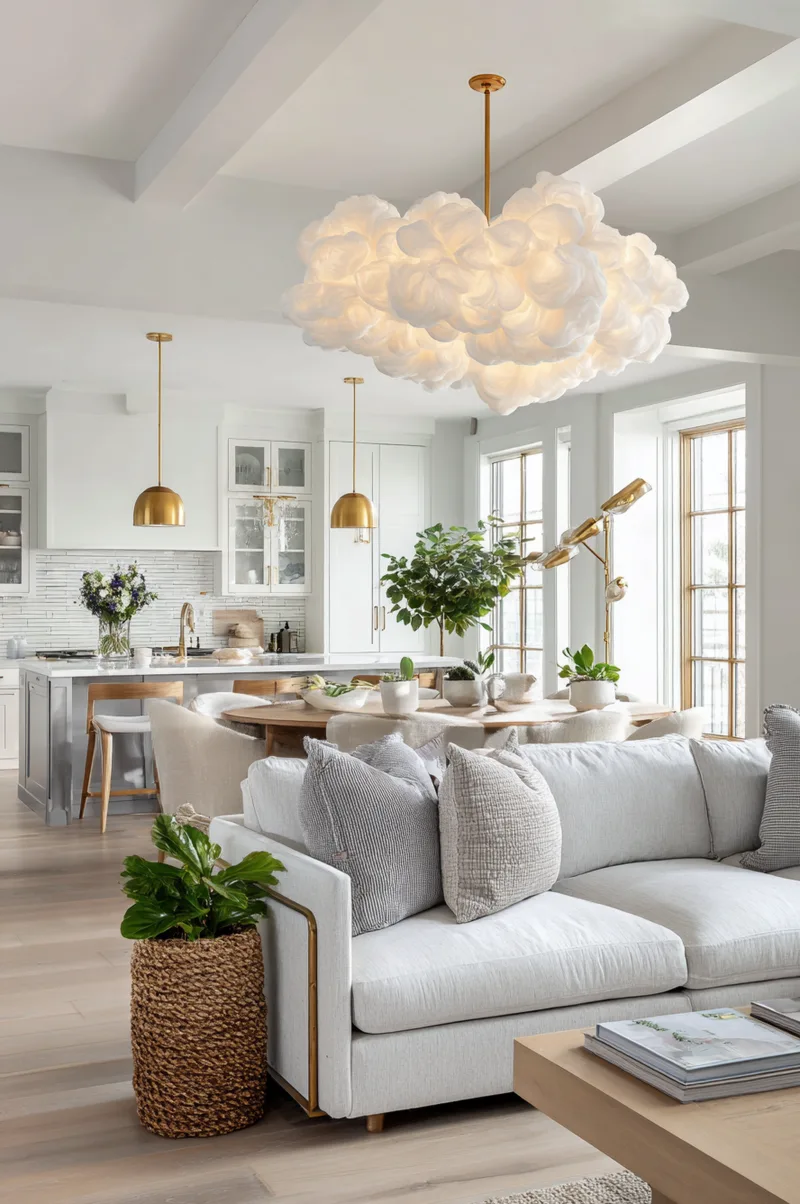
In open layouts, lighting fixtures serve as visual bridges connecting disparate zones. Statement pieces draw the eye and create compositional focus points.
Position major fixtures to define spatial hierarchy within your open kitchen and living room decor scheme. A dramatic pendant cluster over the island announces kitchen territory. A sculptural floor lamp anchors the living room conversation area. These fixtures communicate zone identity while establishing stylistic dialogue across the open space.
The coordination principle matters. Statement fixtures should share design language without matching exactly. If kitchen pendants feature brass, living room lamp hardware might include brass accents. This creates family resemblance rather than catalog uniformity. The goal is curated collection, not showroom display.
Open Kitchen And Living Room Ideas For Acoustic Management
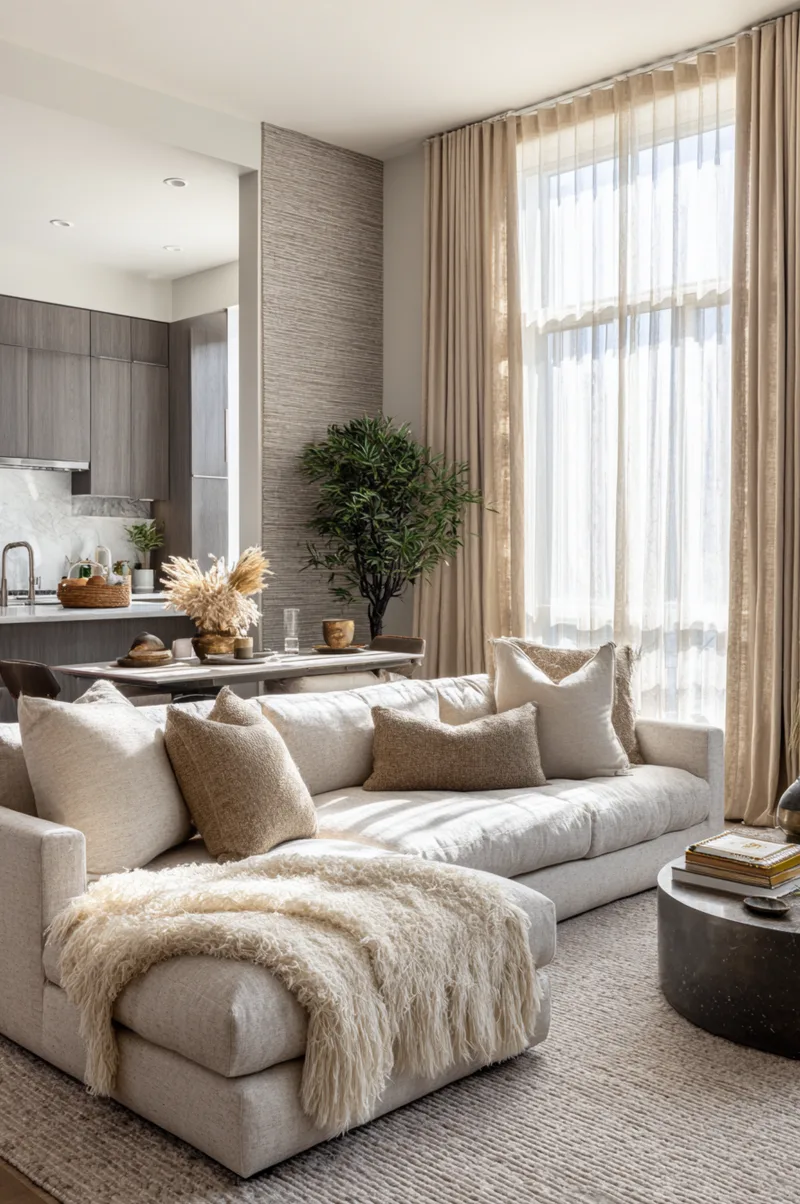
Sound travels freely in open spaces. Without intervention, kitchen noise – dishwashers, conversation, cooking sounds – disrupts living room activities.
Acoustic management for open kitchen and living room ideas involves strategic material selection. Soft furnishings absorb sound – upholstered furniture, heavy curtains, thick area rugs. Hard surfaces reflect it. Concentrating soft materials in the living zone creates a quieter retreat from kitchen activity. Textured wall treatments and ceiling panels provide additional absorption.
Here’s the practical consideration. Complete acoustic separation is impossible in open layouts – that’s the trade-off for visual connection. The goal is mitigation, not elimination. Enough soft surface coverage reduces reverberation from sharp sounds while accepting that some noise transfer is inherent to the design.
Open Kitchen And Living Room Layout With Pass-Through Connection
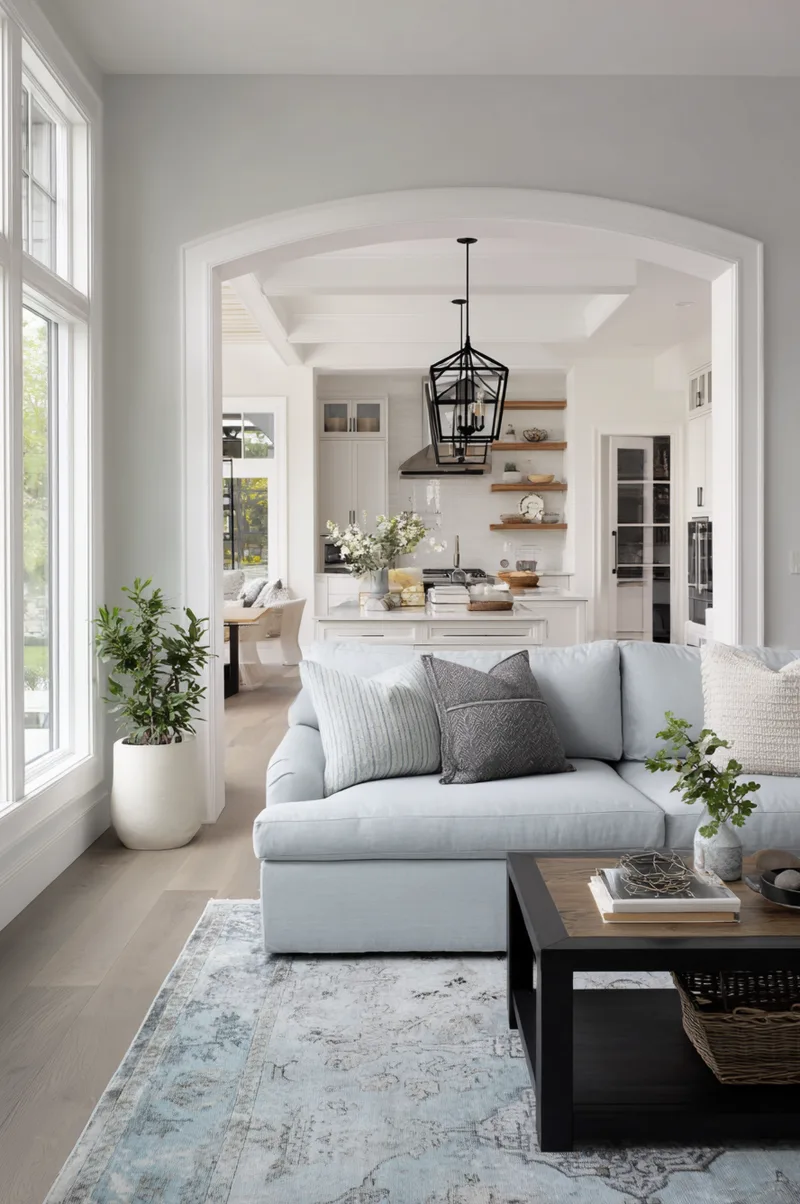
Pass-through windows represent a middle ground between fully open and fully closed kitchen designs. They provide connection without complete exposure.
A pass-through in open kitchen and living room layout creates framed visual connection – almost like a picture window into the kitchen. It works almost like a framed view: it connects the kitchen to the adjoining spaces without fully going open plan, allowing light, sightlines, and conversation to flow freely while still giving each room a sense of definition.
The practical benefit is selective exposure. Pass-throughs can be positioned to show the attractive elements – a styled open shelf, pendant lighting – while concealing work zones. During entertaining, food and drinks pass through easily. When cooking creates mess, the limited opening contains visual disruption.
Open Kitchen And Living Room Plan For Working From Home
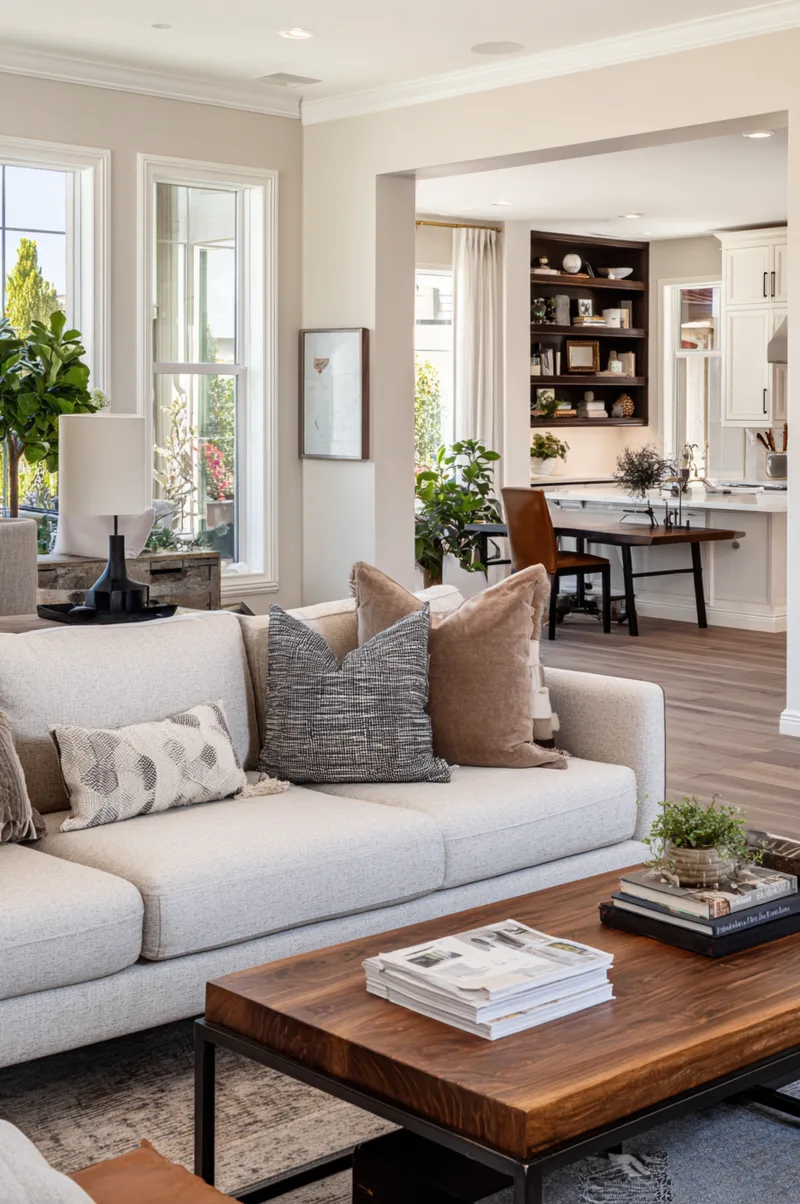
Remote work transformed how we use domestic space. Open layouts now must accommodate office function alongside cooking and relaxation.
Smart open kitchen and living room plan designs incorporate work zones without dedicating entire rooms. A desk positioned along the living room wall maintains connection to household activity while providing workspace. Kitchen counters double as standing desks for laptop work. The key is establishing work territory within the open flow.
Here’s the functional consideration. Work zones need visual separation from relaxation areas, even within open layouts. A bookshelf behind a desk creates psychological boundary. Positioning the desk facing away from the TV removes temptation. The goal is creating focus within a connected environment.
Open Kitchen And Living Room Concept With Furniture Selection
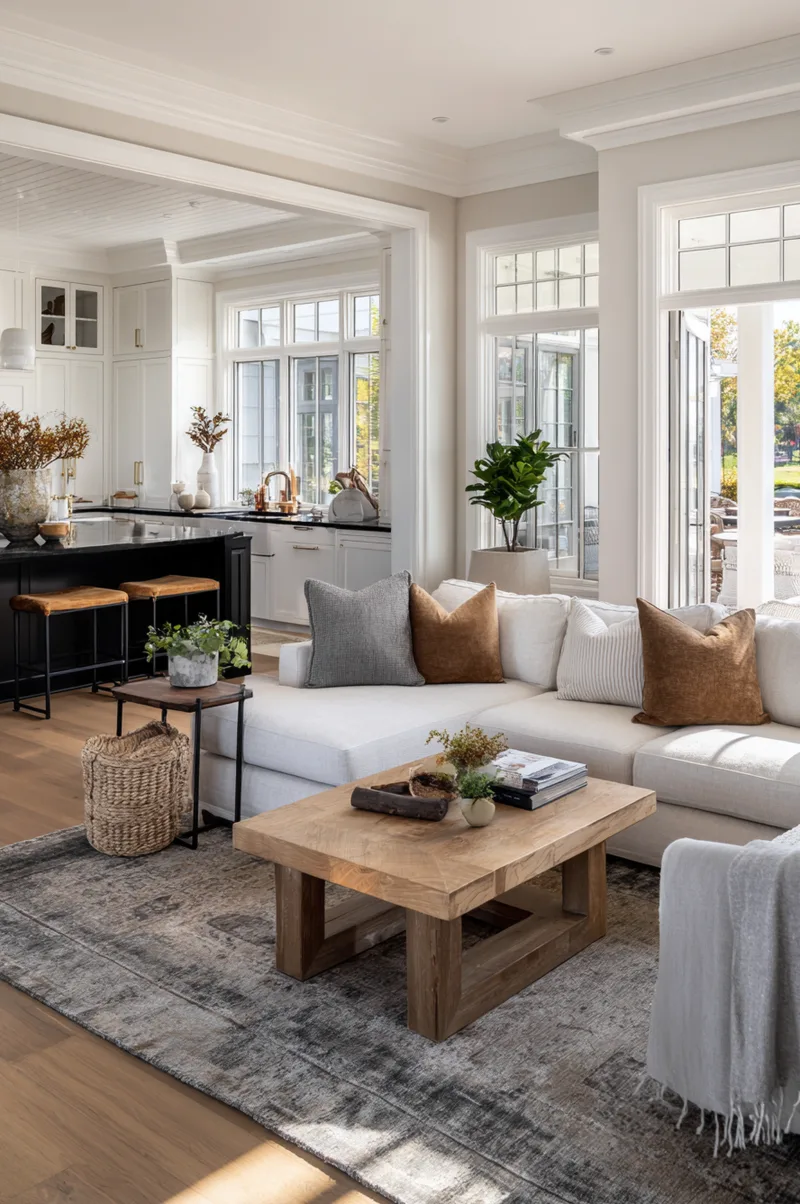
Furniture choices impact open concept success more than most people realize. Scale, style, and arrangement either unify or fragment the space.
Select furniture for your open kitchen and living room concept that relates visually across zones. Kitchen bar stools should share material or color DNA with living room accent chairs. Coffee table finishes should relate to countertop materials. This doesn’t mean matching – it means conversational relationship between pieces.
The critical principle is scale appropriateness. Open layouts read as single large rooms. Furniture should respond to this scale. Pieces that work in traditional enclosed living rooms may appear undersized in open concepts. Generally, fewer larger pieces work better than numerous small ones, which fragment the visual field.
Open Kitchen And Living Room Ideas With Ventilation Priority
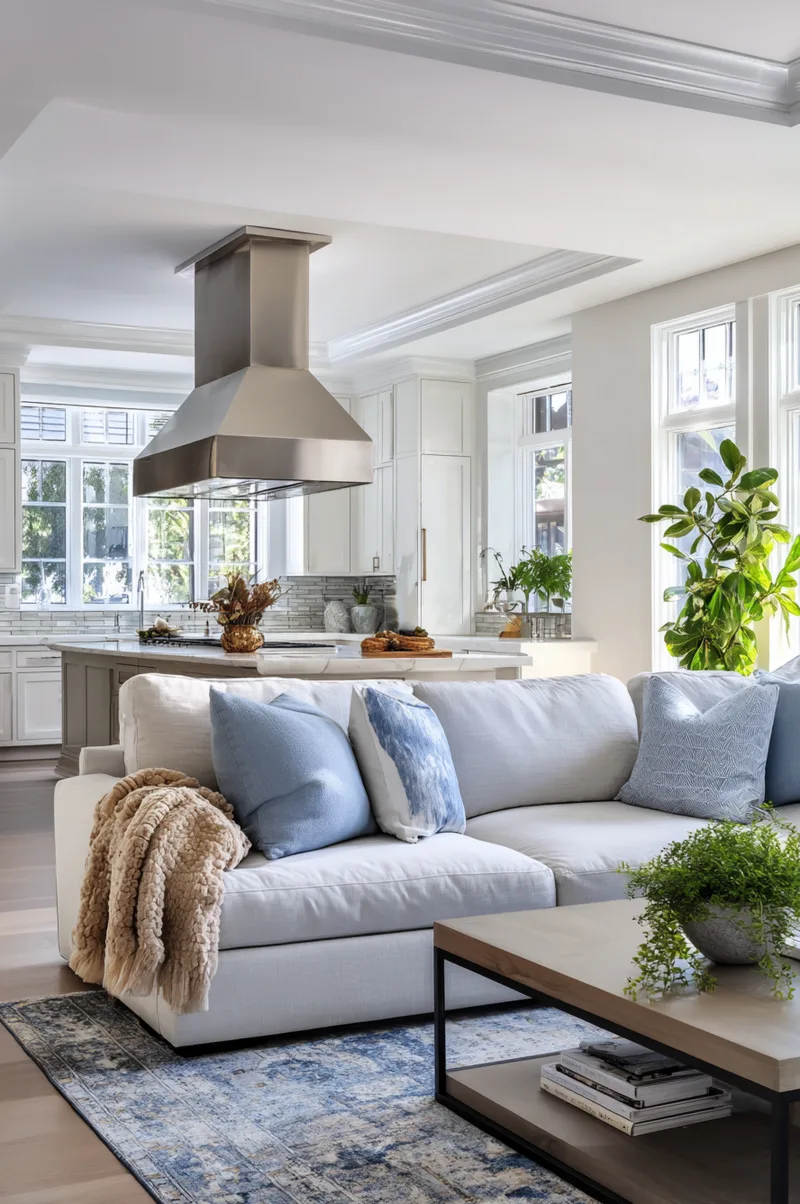
Cooking odors represent the most common complaint about open concepts. Without proper ventilation, food smells permeate soft furnishings and linger for hours.
Prioritize ventilation in any open kitchen and living room ideas implementation. A powerful range hood – properly ducted to exterior, not recirculating – removes smoke, steam, and odors at the source. CFM ratings matter: open concepts require higher capacity than enclosed kitchens because contaminated air has more volume to fill.
Here’s the technical consideration. Makeup air matters in tightly sealed modern homes. A powerful exhaust hood creates negative pressure that must be replaced. Without adequate makeup air, the hood cannot perform effectively. Consult with HVAC professionals when planning open concept kitchens to ensure the ventilation system functions as intended.
Open Kitchen And Living Room Decor Ideas For Visual Flow
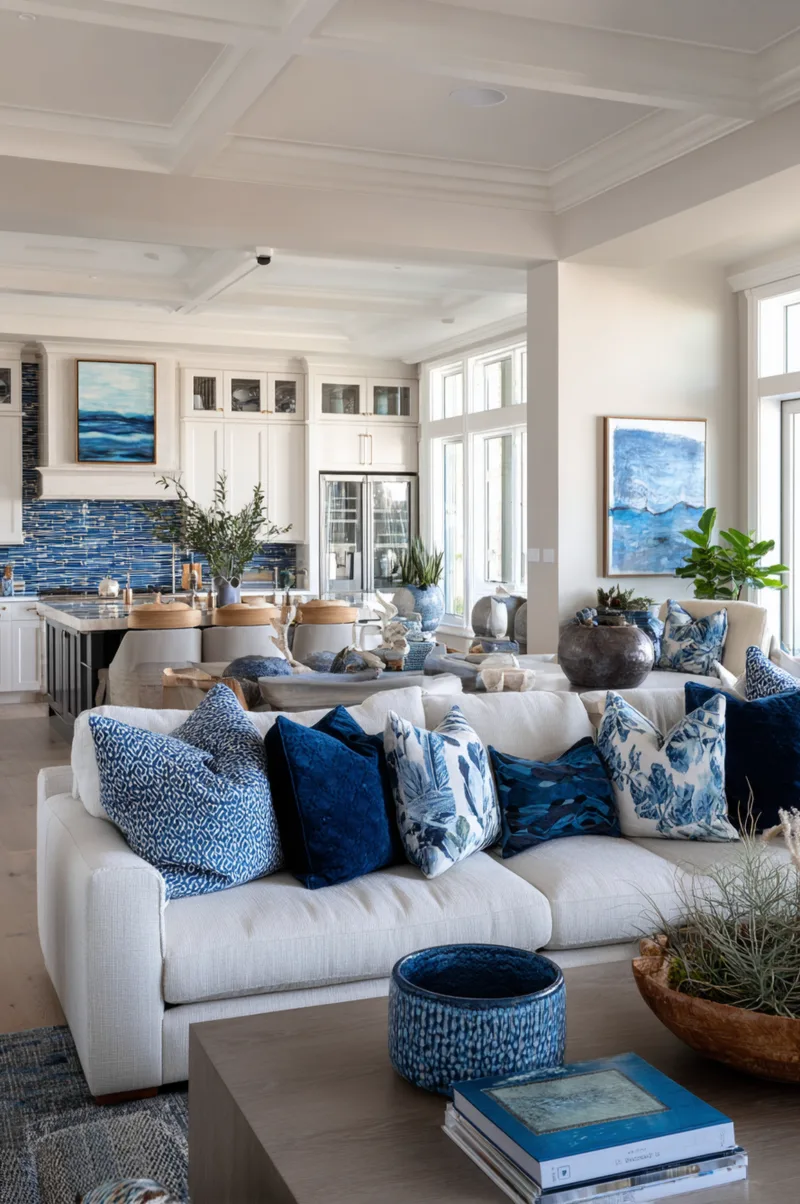
Visual flow determines whether an open space feels unified or disjointed. The eye should move smoothly across zones without barriers or jarring transitions.
Create visual pathways through your open kitchen and living room decor ideas. Repeating colors at intervals guides the eye – a blue kitchen backsplash relates to blue throw pillows, which connect to blue artwork. Consistent sight lines mean no furniture blocking natural movement paths. Ceiling continuity – same height, same treatment – maintains overhead flow.
The compositional principle is rhythm and repetition. Just as music needs recurring themes, visual spaces need repeated elements that create coherence. Without these anchoring repetitions, open layouts feel like accidental adjacencies rather than intentional design.
Open Kitchen And Living Room Indian Design Approaches
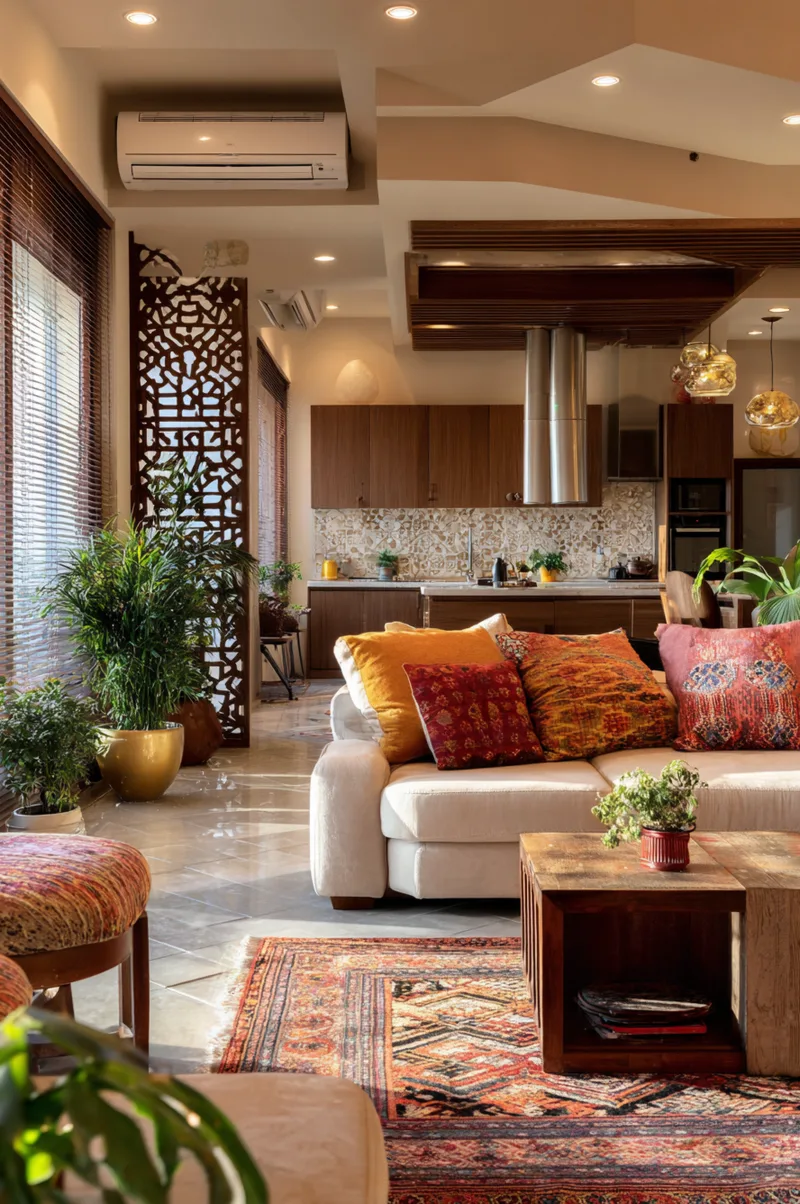
Indian homes present unique considerations for open concepts – cooking styles generate significant smoke and aromas, extended family gathering patterns differ from Western models, and Vastu principles influence spatial organization.
Successful open kitchen and living room Indian designs address these realities through strategic chimney placement, semi-partitioned layouts, and orientation choices. Powerful ventilation systems become essential rather than optional. Many Indian designers recommend L-shaped configurations with partial visual barriers – countertops, decorative screens, or glass partitions – that maintain connection while containing cooking activity.
Here’s the cultural consideration. Indian cooking often involves multiple people working simultaneously. Open layouts accommodate this better than closed kitchens, but require wider prep zones and multiple work stations. The social benefits of open design align well with Indian hospitality traditions when the practical challenges are properly addressed.
Making Smart Choices For Your Space
Nineteen strategies for creating open kitchen and living room concepts that actually work. The common thread – understanding the principles behind successful integration rather than copying surface aesthetics.
Open layouts succeed when they balance visual connection with functional separation. Zone definition matters. Ventilation matters. Scale and proportion matter. The details that seem technical determine whether daily life in the space feels effortless or frustrating.
Which approach fits your situation? The broken-plan evolution for those wanting connection with containment? The Indian-inspired strategies for managing intensive cooking? The small space solutions for apartment living?
Start with function. Let aesthetics follow. Your open concept will serve you better for years to come.
Hope you’ll use these ideas,
Rachel