Removing a load bearing wall in your kitchen is one of the highest-impact changes you can make to a home – but only if you know what to do with the space after. These load bearing wall ideas cover everything from open concept kitchen layouts and structural beams to breakfast bars, half walls, and modern kitchen islands that make the result look intentional, not like something was just removed. Keep this guide close for your planning process.
Best Load Bearing Wall Ideas
I’ve been noticing a shift in how people are approaching kitchen renovations. It used to be that removing a load bearing wall meant one thing: open concept, full stop. Knock it down, open it up, done. But lately, the most interesting kitchens I’ve seen are doing something smarter. They’re keeping something – a beam, a half wall, a breakfast bar – to mark where the wall was and give the space a sense of purpose.
That instinct is right. A completely open floor plan can feel unanchored, especially in older homes where the original architecture had character worth preserving. The load bearing wall ideas that work best are the ones that solve a structural problem while also creating something beautiful: a kitchen island that flows from the wall’s footprint, a rustic beam that replaces a full partition, a curved arch that turns a necessary support into a design feature.
Whether you are planning a full renovation or just starting to research what is possible, these 15 ideas give you a clear picture of what thoughtful load bearing wall solutions actually look like. I’ve organized them by design approach so you can find the ideas most relevant to your kitchen layout, style, and goals.
Half Wall Between Kitchen and Living Room: Making It Work
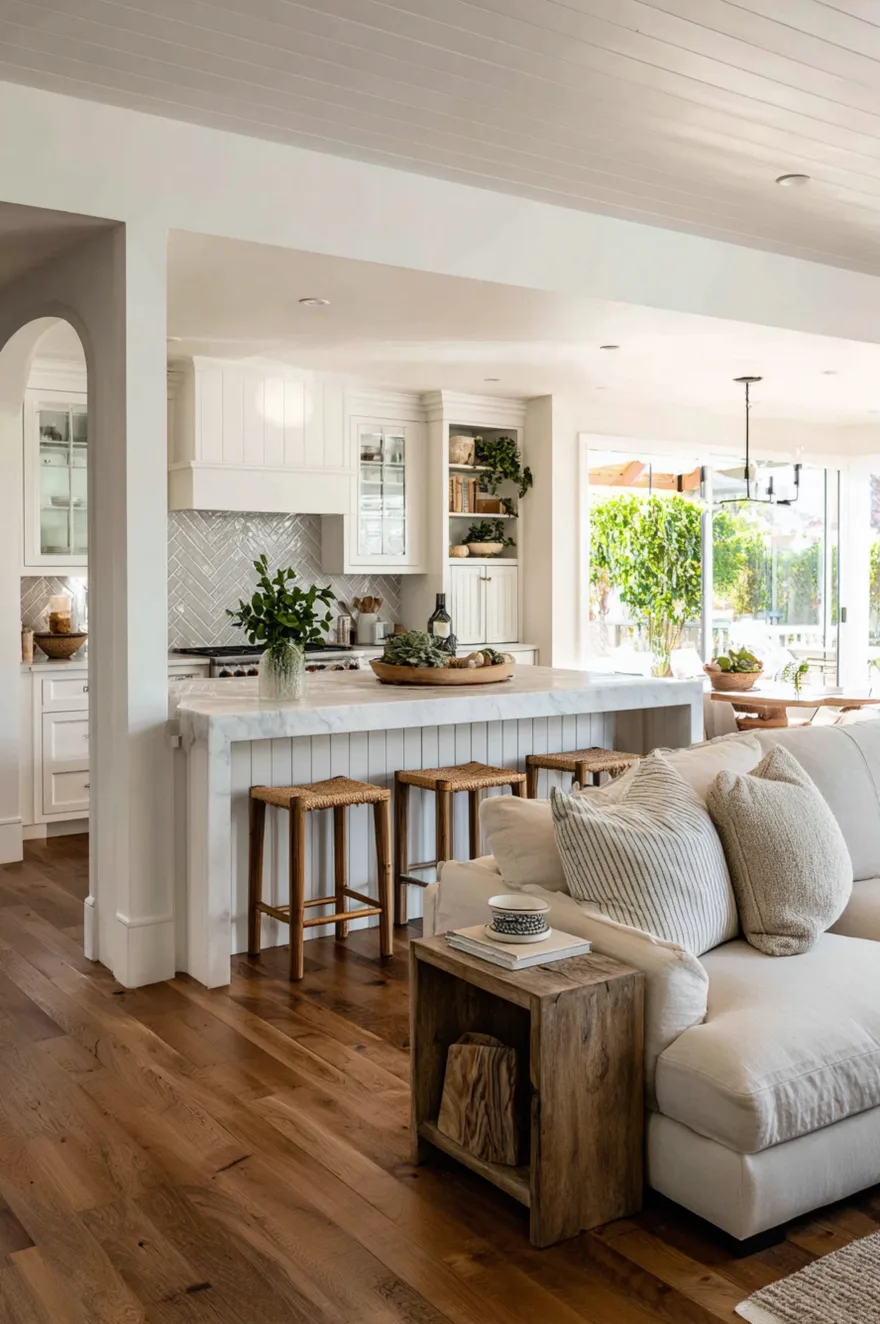
The half wall between a kitchen and living room is one of the most practical load bearing wall ideas in this guide, and also one of the most misunderstood. People often treat it as a compromise – something you do when you cannot remove the full wall. The reality is that a well-designed half wall is frequently a better solution than full removal, because it gives the open concept kitchen a defined edge without creating an undivided loft-like space that is hard to furnish.
The functional key is the countertop. Whatever material you choose for the top of the half wall – marble, wood, quartz, stone – it needs to be thick enough to read as intentional and long enough to function as a genuine surface. At minimum, 36 inches of run with a 12-inch overhang on the living room side gives you two to three seats at counter height. Bar stools or counter stools with backs are more comfortable for daily use than backless stools, which tend to migrate and look scattered.
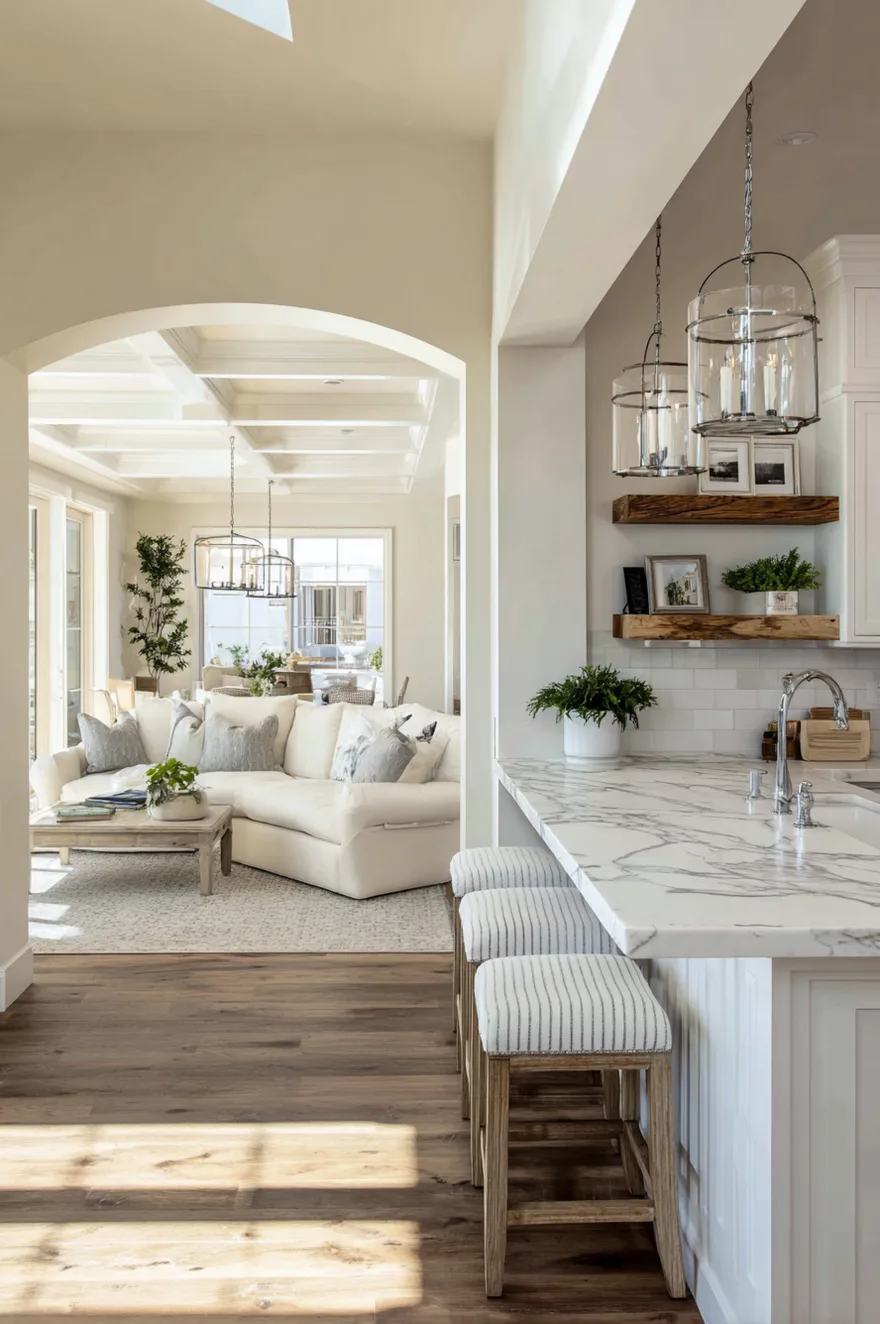
The face of the half wall on the living room side is where most people under-invest. This is an opportunity for architectural detail: shiplap, beadboard, a plastered finish, or even the same tile as the kitchen backsplash wrapped around to the living room side. Any of these treatments turn the half wall from a structural remnant into a designed element. Add recessed power outlets on the living room face and you have a functional media console zone that doubles as a kitchen breakfast bar.
The Rustic Wood Frame Pass-Through Breakfast Bar
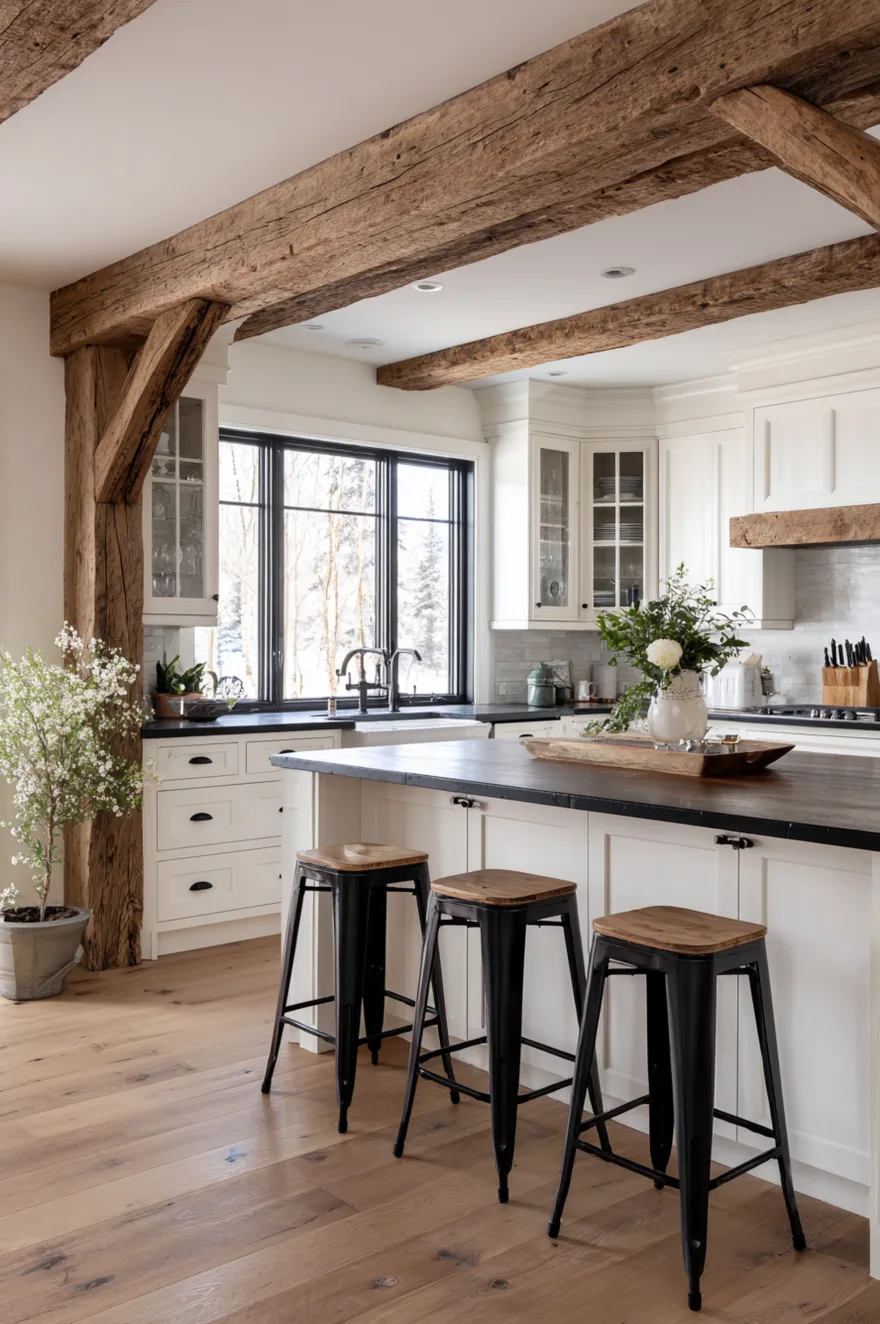
Here’s what I’ve learned about pass-through breakfast bars: they work best when the framing element does double duty as both structure and style. In this approach, thick reclaimed wood beams form a portal frame around the pass-through opening – replacing the load bearing wall’s structural role while becoming the most visually striking feature in the room.
The execution here is specific and intentional. White shaker cabinets with glass-front upper panels keep the kitchen side clean and light. A dark butcher block or live-edge wood slab runs along the pass-through ledge, creating a breakfast bar that seats three comfortably on black industrial metal stools. The contrast between the warm wood frame overhead and the crisp white cabinetry below is what makes this feel elevated rather than rustic-by-default.
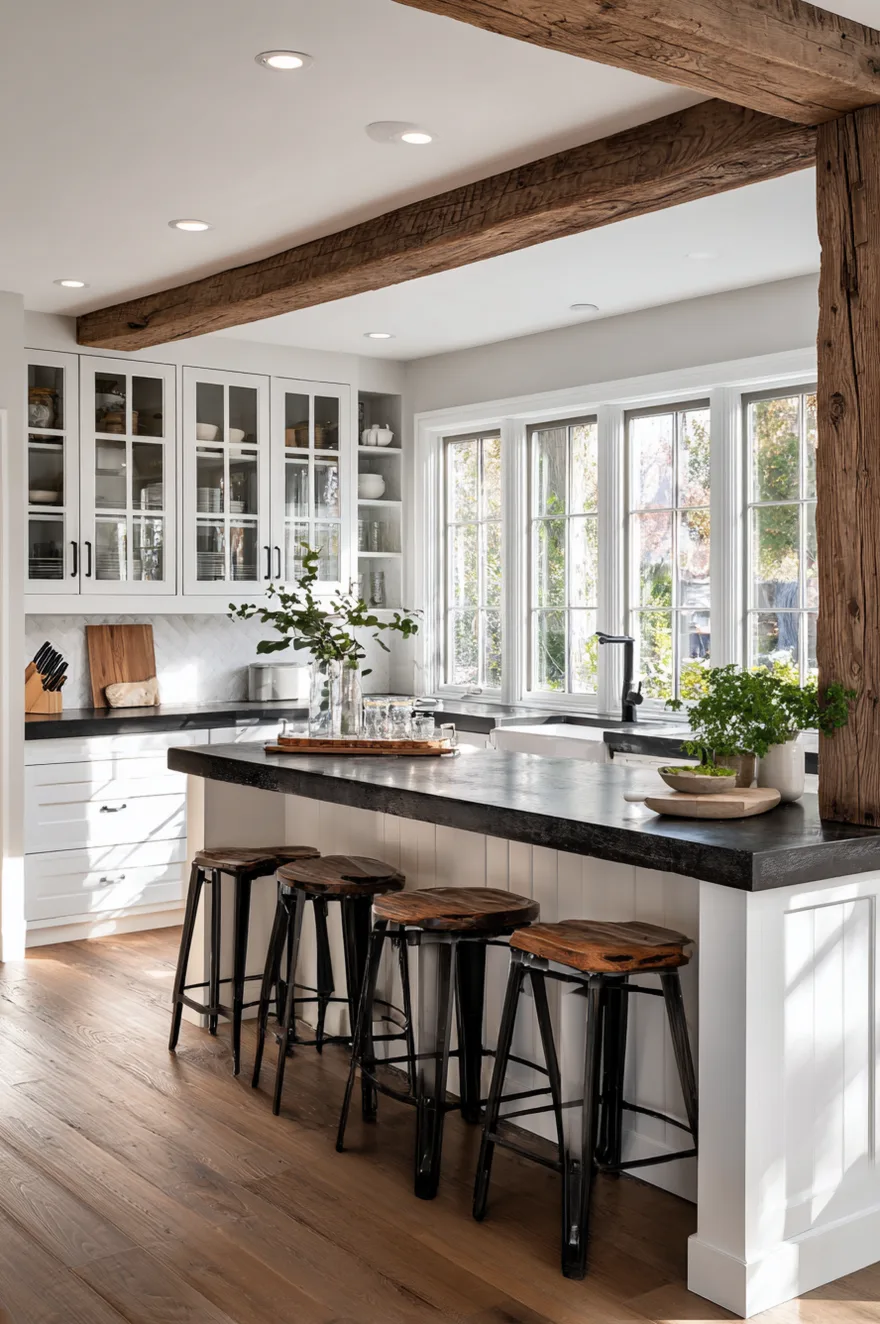
The reason this load bearing wall solution works so well is that the beam frame signals to the eye exactly where the original wall was – giving the open concept kitchen a visual anchor without closing the space back up. Glass-front upper cabinets on both sides keep sight lines open. For countertops, dark granite or honed black quartz on the kitchen side reads as purposefully contrasting with the warm wood bar top, tying the whole composition together.
The Whitewashed Brick Arch Opening
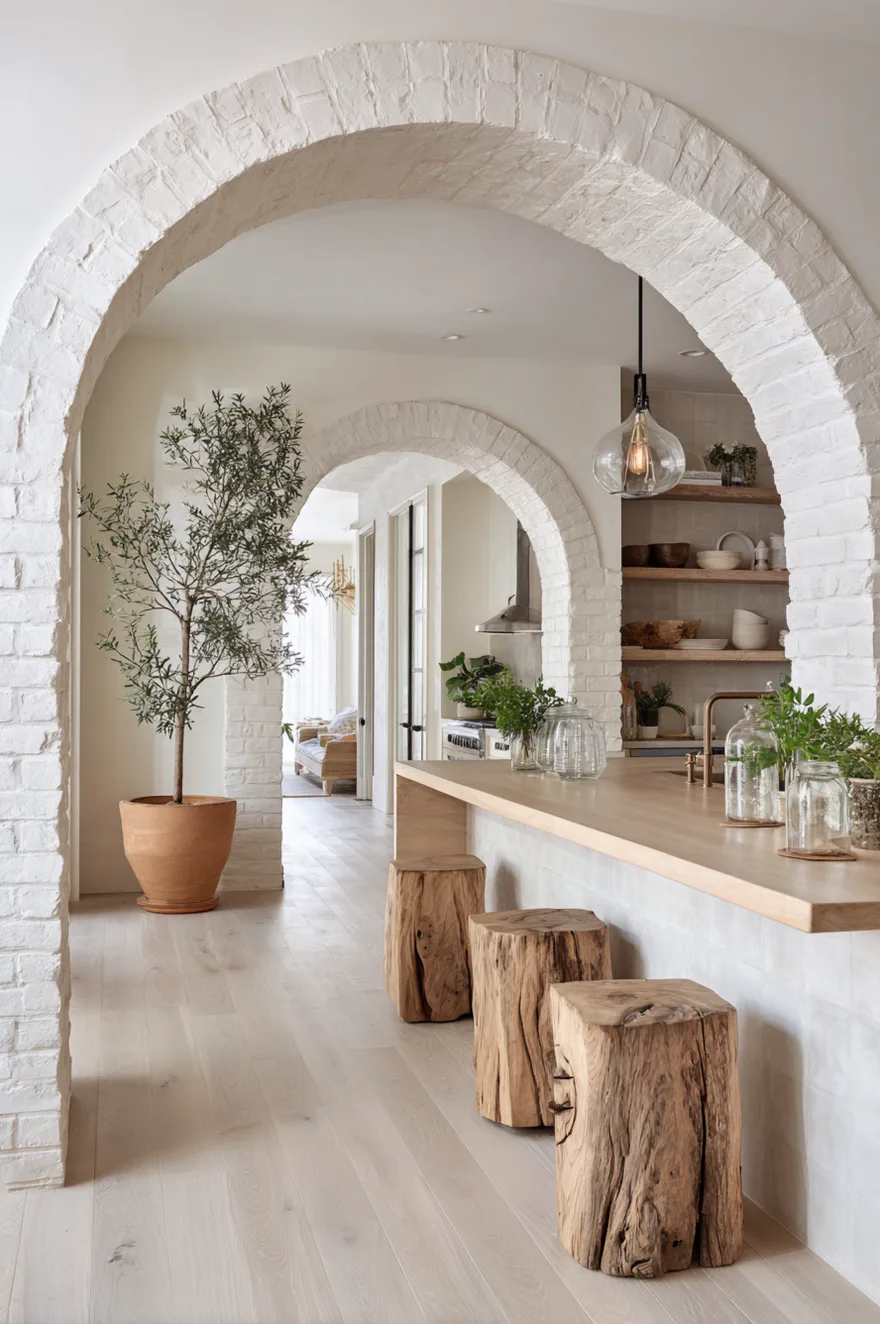
When a load bearing wall has an existing brick or masonry structure, the smartest design move is often to expose and celebrate that material rather than cover it. A whitewashed brick arch is one of the most architecturally interesting load bearing wall ideas in this guide – it turns structural necessity into a Mediterranean or European-inspired feature that no amount of standard renovation work can replicate.
The key detail that makes this work is the arch shape itself. A full rounded arch in whitewashed brick frames the kitchen opening like a painting. Inside, the space gets a continuous natural wood bar top that runs wall to wall at counter height – smooth, light oak in a matte finish, with simple carved wooden stools lined up on the living room side. Plants are non-negotiable here: trailing greenery and a terracotta pot with a small tree or bonsai on the bar top bring the organic warmth that makes this look feel intentional rather than restaurant-like.
The reason whitewash is the right finish – rather than painted or bare brick – is that it softens the texture enough to work in residential spaces without losing the character of the material. A fully exposed red or orange brick arch can feel heavy. Whitewashed, it reads as textural and light. The interior of the arch can echo this with a plastered or limewash finish, and arched interior openings elsewhere in the space reinforce the architectural language. This is one of those load bearing wall solutions that genuinely adds value to a home.
When to Keep the Beam and Skip the Wall Entirely
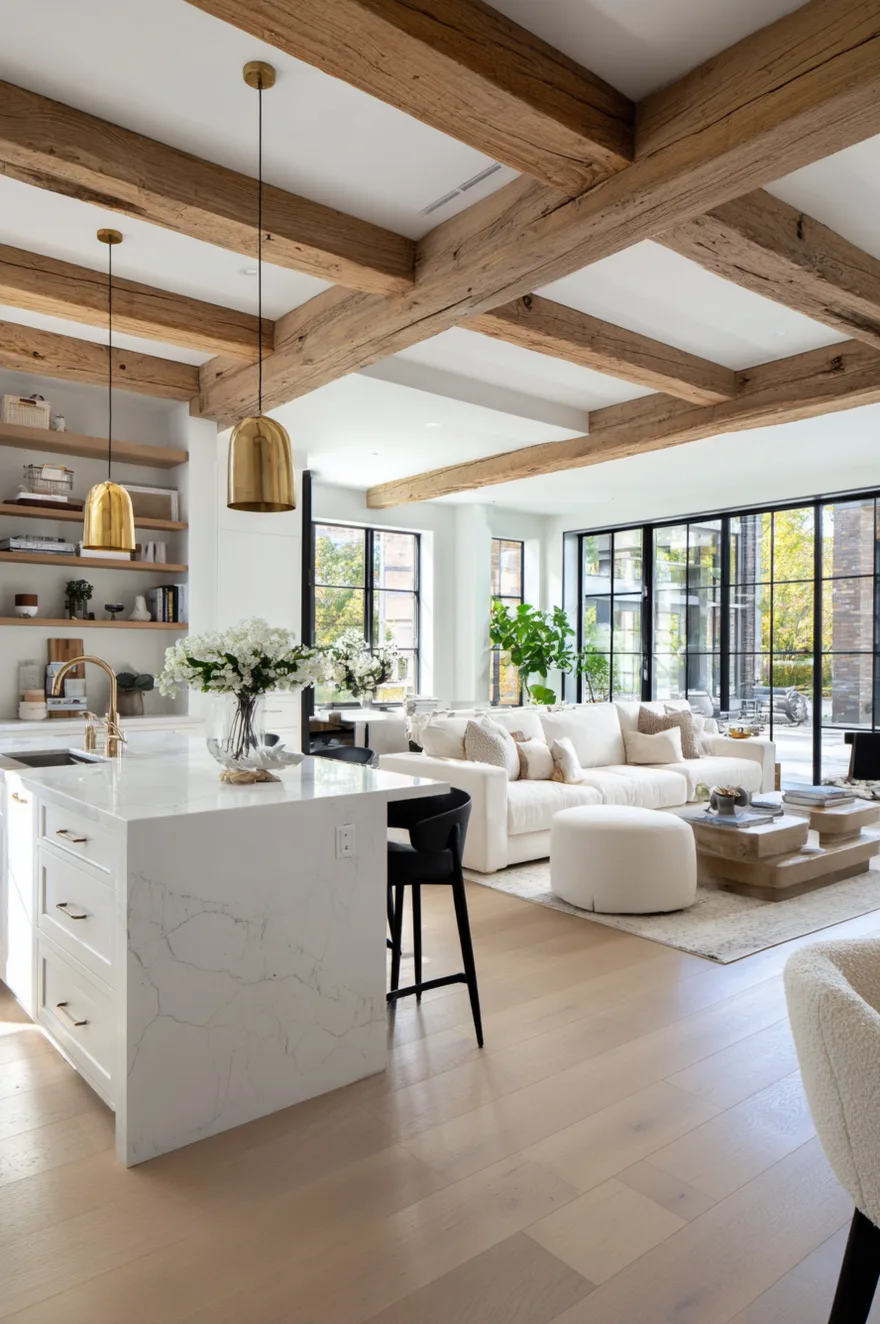
Here’s what I’ve noticed in kitchens where the load bearing wall removal is handled with the most architectural confidence: the beam that replaces the wall’s structural support is never hidden. It is always exposed, celebrated, and finished in a material that earns its presence in the room. A steel I-beam painted matte black. A heavy timber beam in white oak or reclaimed Douglas fir. These are not compromises – they are features.
The reason this matters functionally is that beam placement determines your kitchen layout options. A beam that sits at ceiling height opens the full vertical space below – you can run a kitchen island directly beneath it, hang pendant lights from it, or use it to anchor open shelving brackets. A beam that drops lower creates a natural soffit zone that can house under-cabinet lighting or define a breakfast bar area without any additional structure.
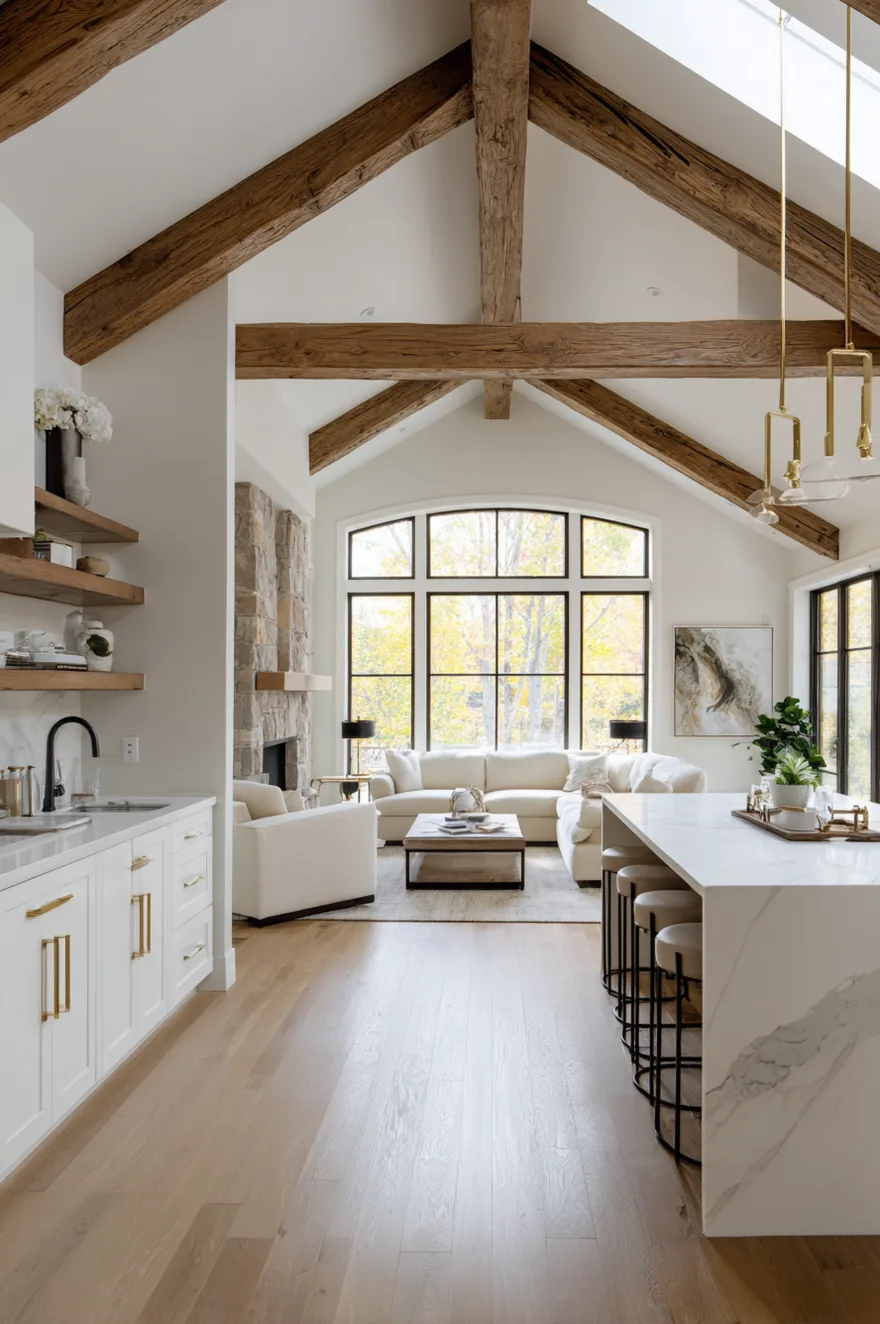
My recommendation for most open concept kitchen layouts: if the structural engineer approves a steel beam that can be minimized or concealed within the ceiling cavity, take it. If the beam needs to be exposed – as is common in older homes and longer spans – choose a finish that matches your kitchen’s design language from day one. Retrofitting a painted steel beam to look like timber, or cladding a timber beam after the fact, rarely looks as intentional as choosing the right material from the start.
The Plaster Arch With Natural Oak Cabinets and Zellige Tile
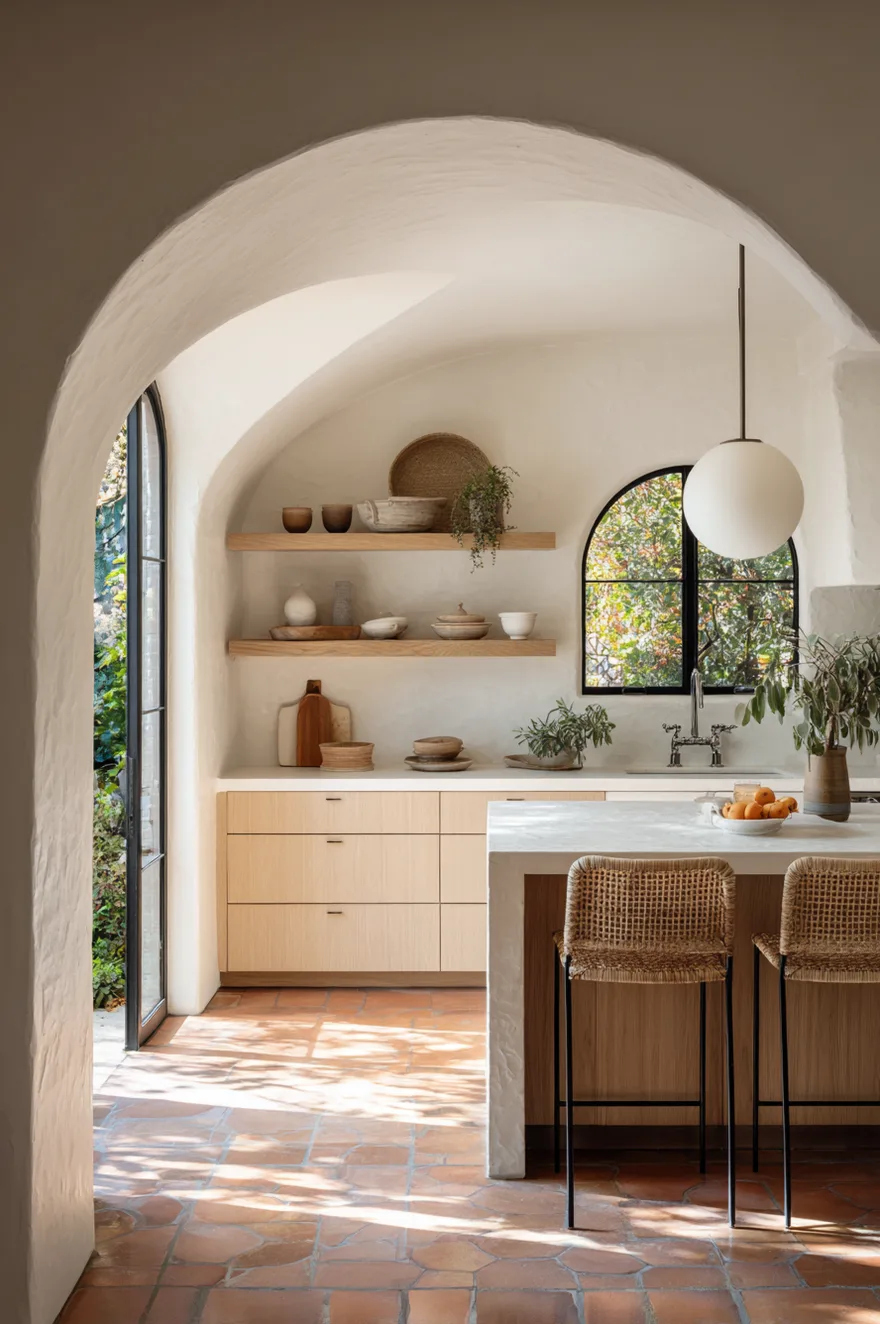
The plaster arch is having a serious moment in kitchen design, and it makes complete sense. When a load bearing wall is removed and the opening needs a structural header anyway, shaping that header into a soft plaster arch costs relatively little extra in labor but transforms the entire visual impact of the renovation. The arch becomes an architectural frame for everything inside the kitchen, making even simple cabinetry look more considered.
This specific combination – a smooth white plaster arch, light natural oak cabinets, and a zellige or tumbled stone tile backsplash – hits every current kitchen design note at once. The oak cabinets stay unfussy: simple shaker or flat-front doors with matte black or unlacquered brass hardware. Open wood shelves above the counter line hold ceramics, stoneware, and a few small plants. Rattan counter stools with black metal frames on the living room side of the arch complete the look with texture that doesn’t compete with the stone tile.
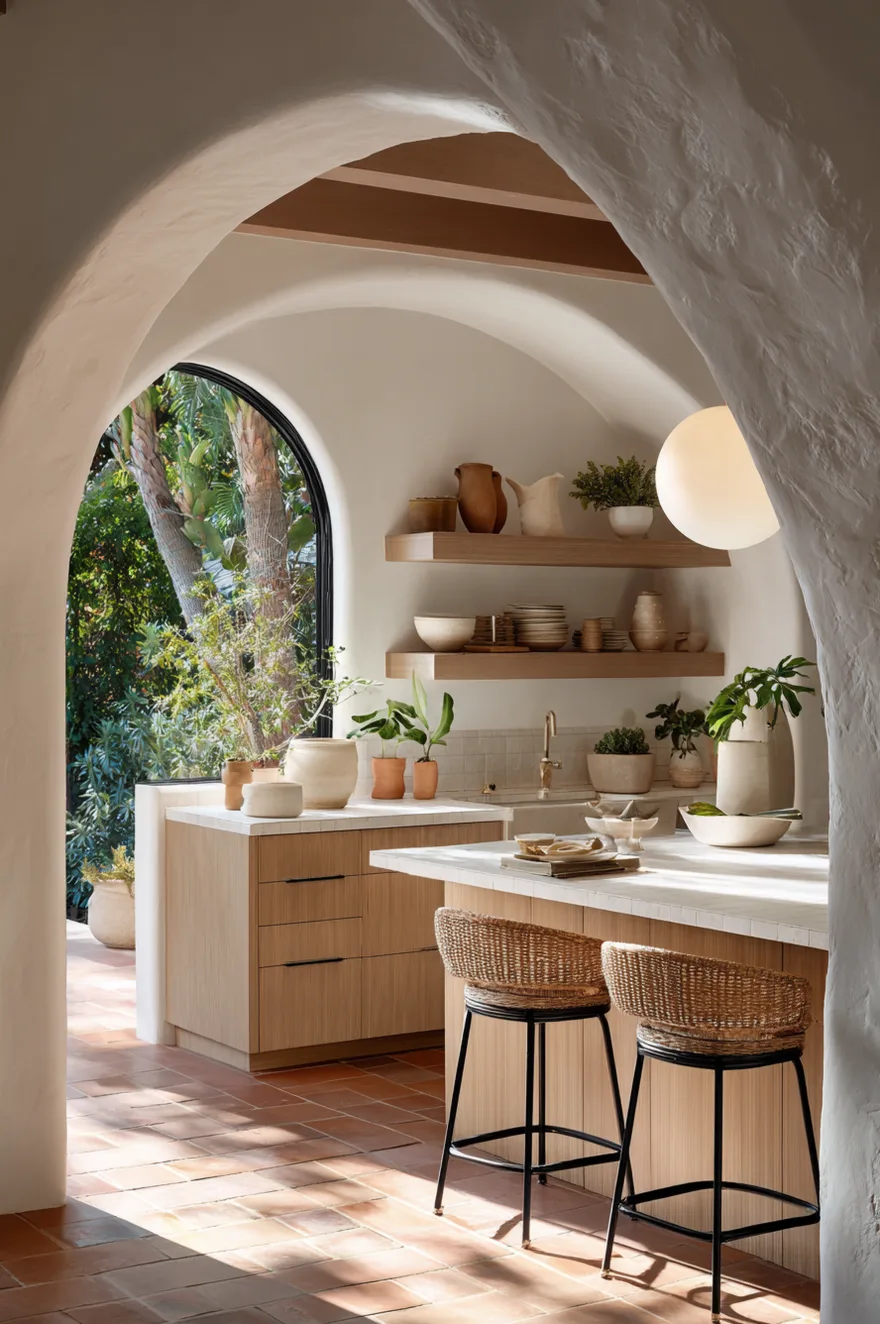
The functional logic here is just as strong as the aesthetic. The arch opening can be sized to create a natural breakfast bar at the counter height of the kitchen peninsula, which handles casual dining without requiring a separate dining area. A globe pendant in white or matte plaster hangs inside the arch for warm task lighting. The result is a modern kitchen layout that feels grounded in craft and materiality – the kind of space that looks original to the house even when it is completely new.
The Marble Half Wall Peninsula for Open Concept Flow
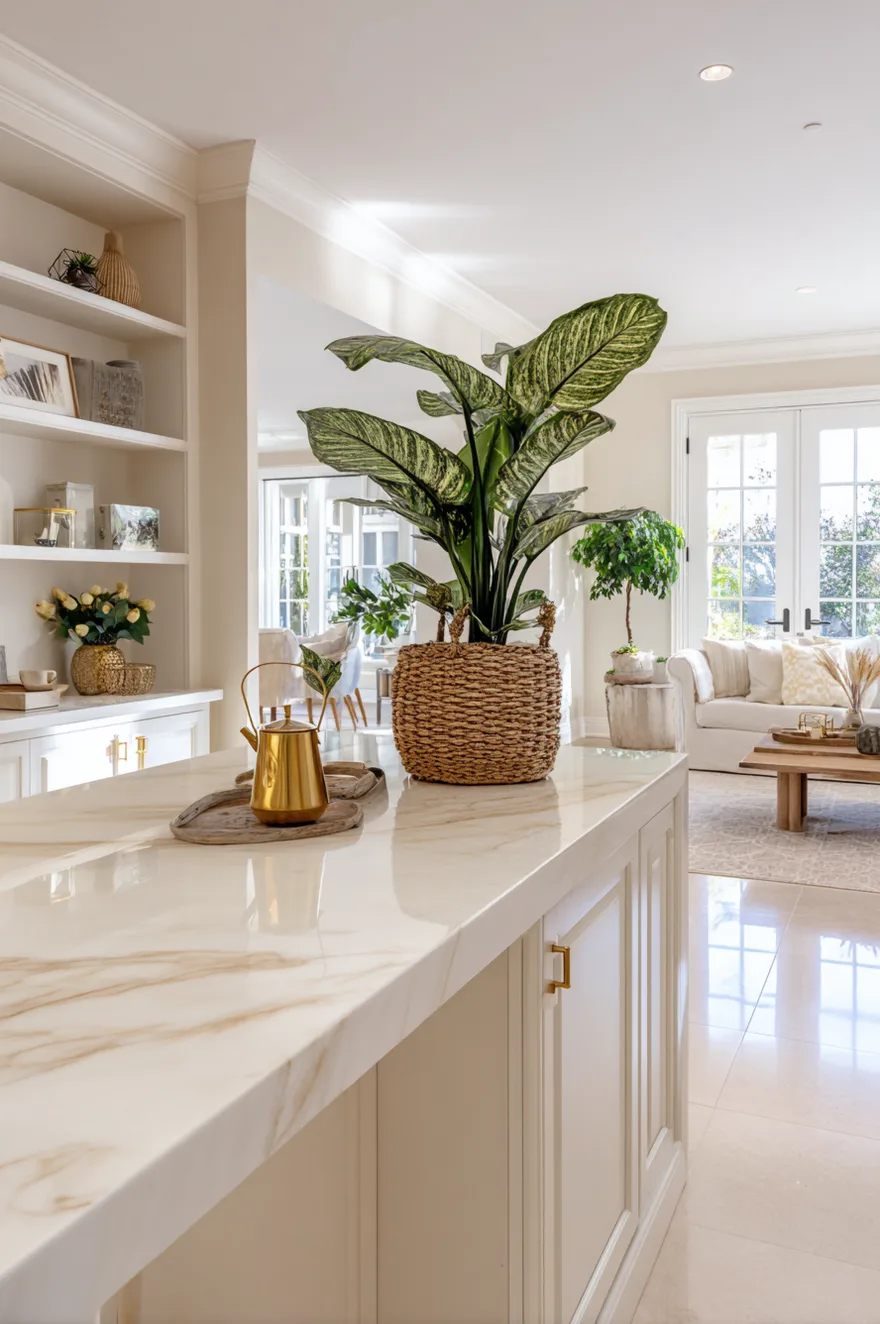
Not every load bearing wall needs to come all the way down. In many cases, a half wall – keeping the lower three or four feet of the original wall and opening up the space above – is the most practical and visually effective solution. It preserves structure where structure is easiest to maintain, while opening sightlines between the kitchen and living spaces in a way that feels considered rather than gutted.
The execution that makes this look genuinely elegant is the countertop material on the half wall. A thick slab of marble, quartzite, or honed granite running the full length of the half wall turns it from a structural remnant into a design feature – it becomes a peninsula counter with serious presence. White cabinet bases below the counter keep the kitchen side clean, with open shelving cubbies for practical storage. On the living room side, the half wall face can be painted, plastered, or clad in the same material as the kitchen for a seamless finish.
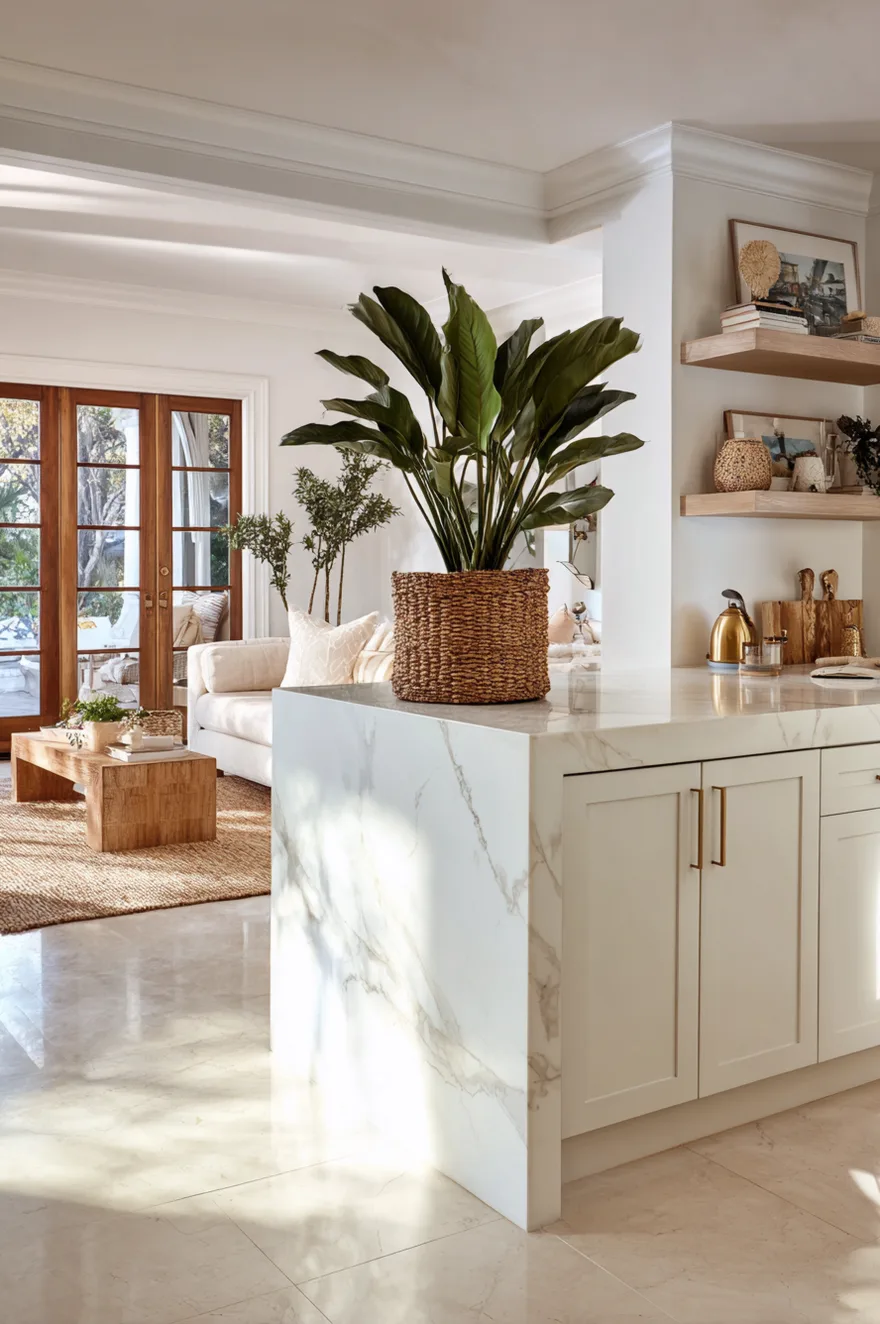
What I especially like about this approach for kitchens that open into living spaces with French doors or large windows is the way the half wall channels natural light without blocking it. In rooms with this kind of light, a full island might feel heavy – the half wall peninsula stays low and horizontal, letting the room breathe. Large tropical or architectural plants on the counter surface add height and life without adding visual bulk. This is a particularly good load bearing wall solution for Mediterranean, transitional, and modern classic kitchen styles.
Exposed Brick Arch With Reclaimed Live-Edge Wood Bar
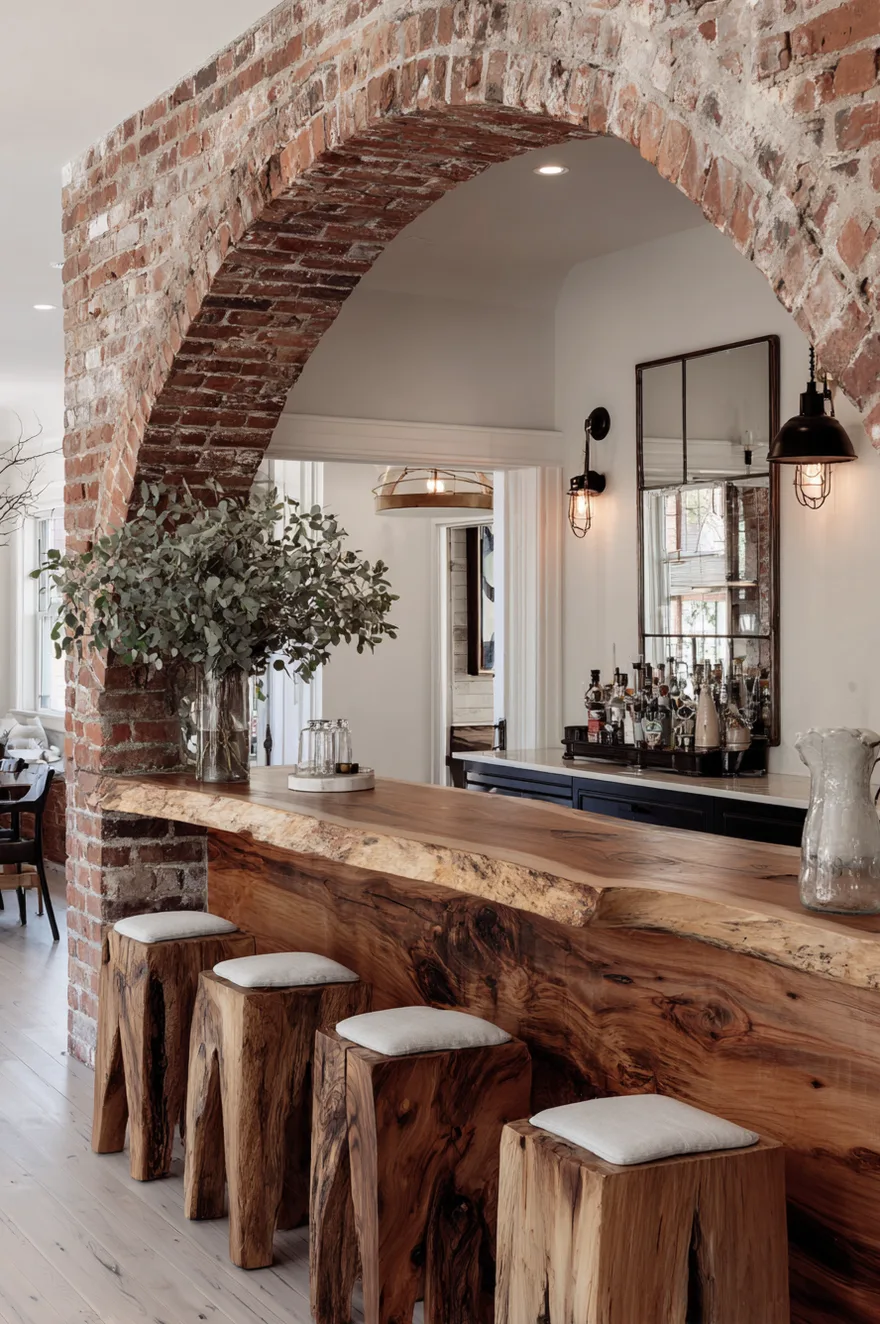
The exposed brick arch with a reclaimed wood bar is the load bearing wall idea for kitchens where you want the renovation to feel like it uncovered something rather than added something. When original brick or stone masonry is present and in good condition, exposing it in an arch form is one of the most impactful and authentic things you can do. The material tells the story of the house – you simply give it the right frame.
The specific detail that elevates this beyond a standard brick exposure is the reclaimed live-edge wood bar top. A single slab of weathered, character-rich wood – the kind with visible knots, nail holes, and natural edge movement – running the full width of the arch opening becomes the functional anchor of the design. It serves as a breakfast bar on the living room side and a pass-through surface on the kitchen side. Rustic wooden stools with small seat cushions in natural linen complete the seating. On the bar surface, keep it simple: a clear glass vase with fresh greenery, a small ceramic pitcher, a candle.
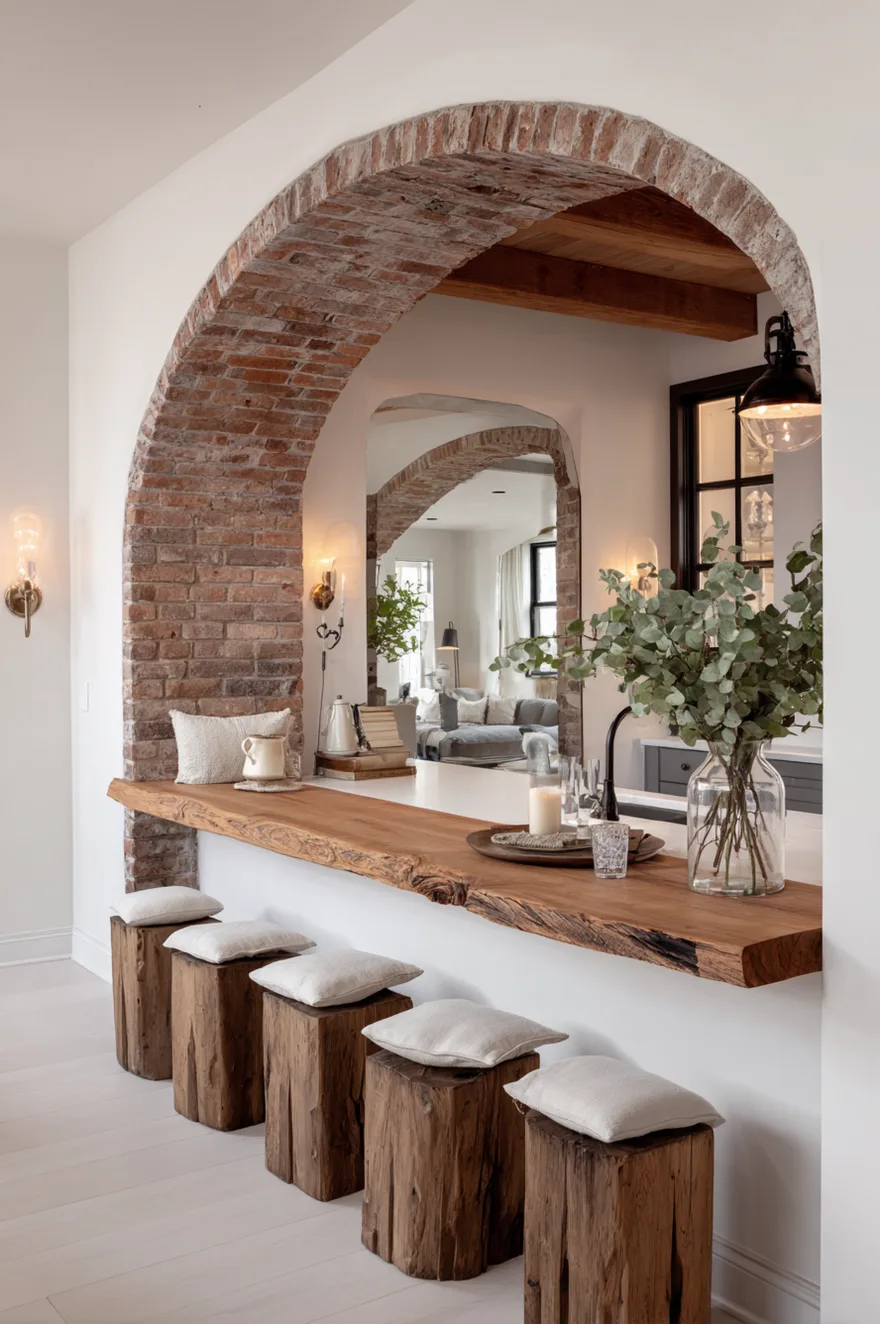
The surrounding wall treatment matters here. White plaster or limewash on the walls flanking the brick arch creates the contrast that makes the exposed brick read as a feature rather than an unfinished surface. Inside the kitchen visible through the arch, a dark pendant light and a large mirror or glass partition add depth. This is one of the most photographed load bearing wall kitchen ideas because it works equally well in farmhouse, industrial, and European rustic styles – versatile in a way that most structural design choices are not.
Farmhouse Kitchen Island With Live-Edge Wood and Brass Pendants
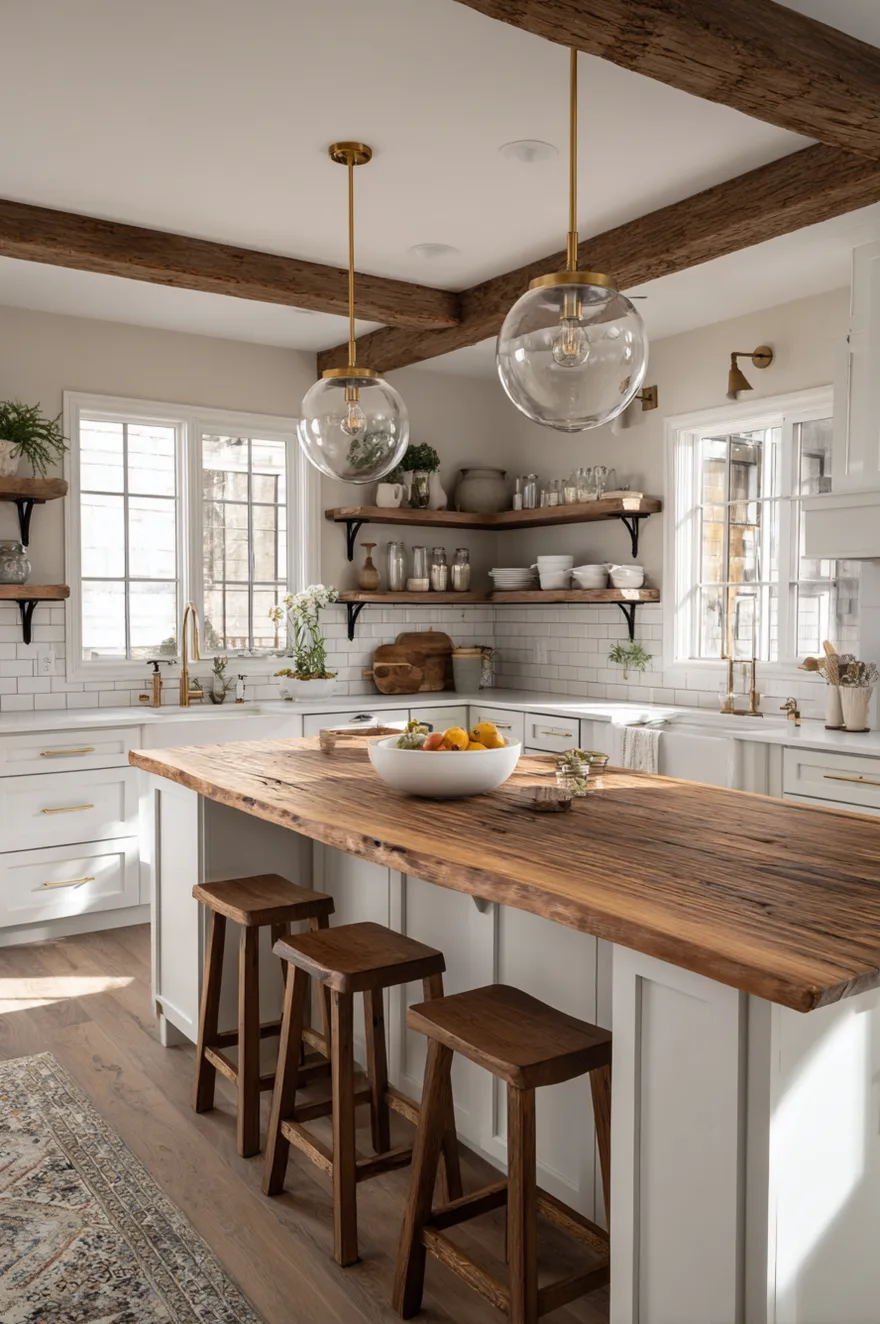
The combination of white shaker cabinets, a live-edge wood island, and brass pendant lights is one of the most searched farmhouse kitchen looks for good reason – it balances warmth and freshness in a way that few other material combinations can. When this is built around a load bearing wall removal, the island typically sits on or near the original wall’s footprint, giving the open concept kitchen a clear organizing center.
The live-edge island top is the key piece here. Choose a slab with visible character – grain movement, natural edge variation, some color depth in the wood – in a finish that is oiled or lightly sealed rather than heavily lacquered. This keeps the wood looking alive. White shaker cabinets on the perimeter walls with a white subway tile backsplash create a clean backdrop that lets the island read as the room’s focal point. Open wood floating shelves on black metal brackets above the counter hold ceramics, spice jars, and small plants – styling that looks effortless but is actually very considered.
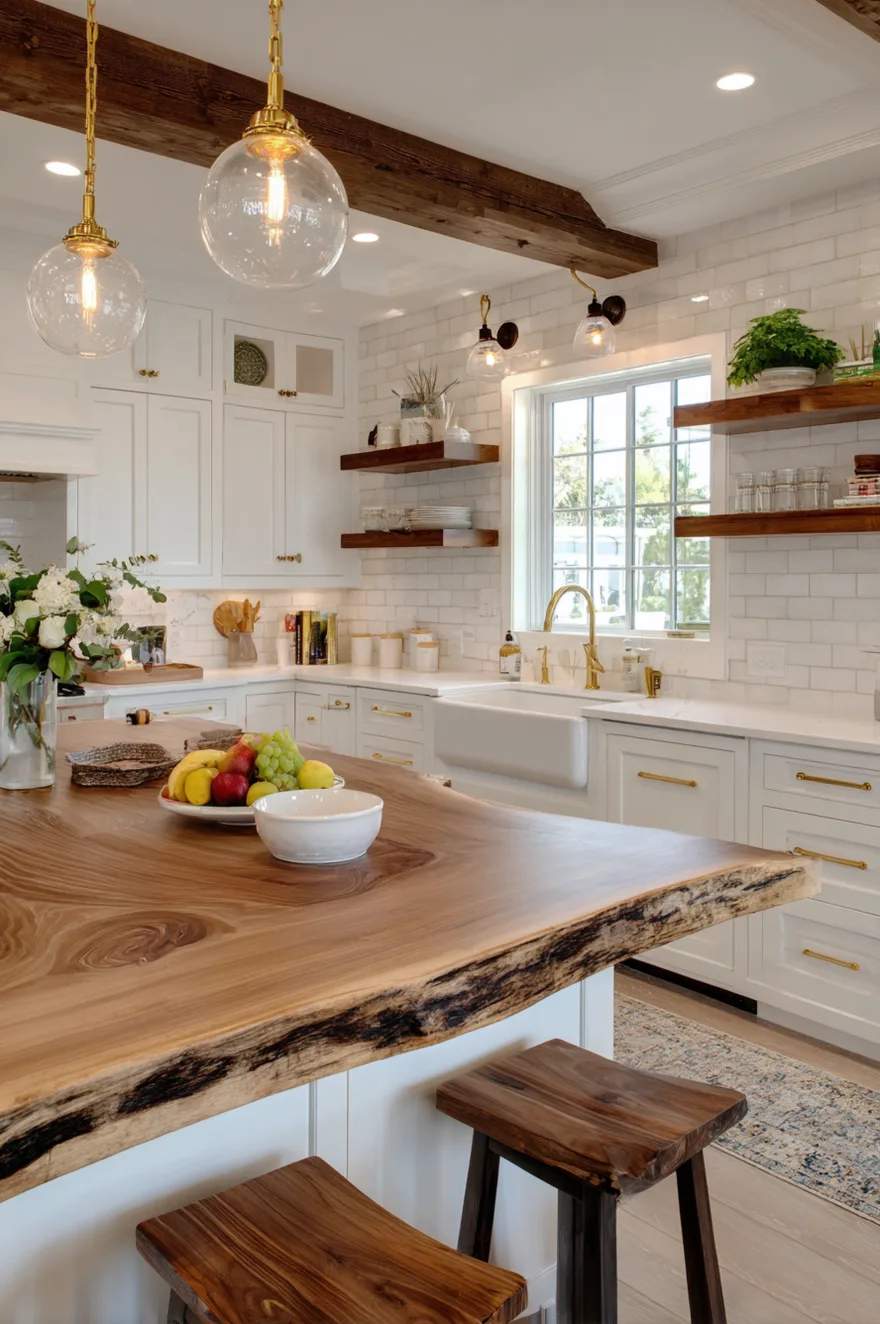
A reclaimed wood beam across the ceiling above the island area reinforces the farmhouse kitchen language and marks the structural change without requiring any additional visual cues. Three brass and glass pendant lights hanging from or near this beam tie the kitchen and island zones together with warm light and period-appropriate hardware. A farmhouse sink on the perimeter wall and wooden saddle-seat stools at the island complete the picture. This is a genuinely timeless load bearing wall kitchen solution – not trend-dependent, not overly styled.
Sage Green Cabinets With a Raw-Edge Wood Peninsula and Wicker Storage
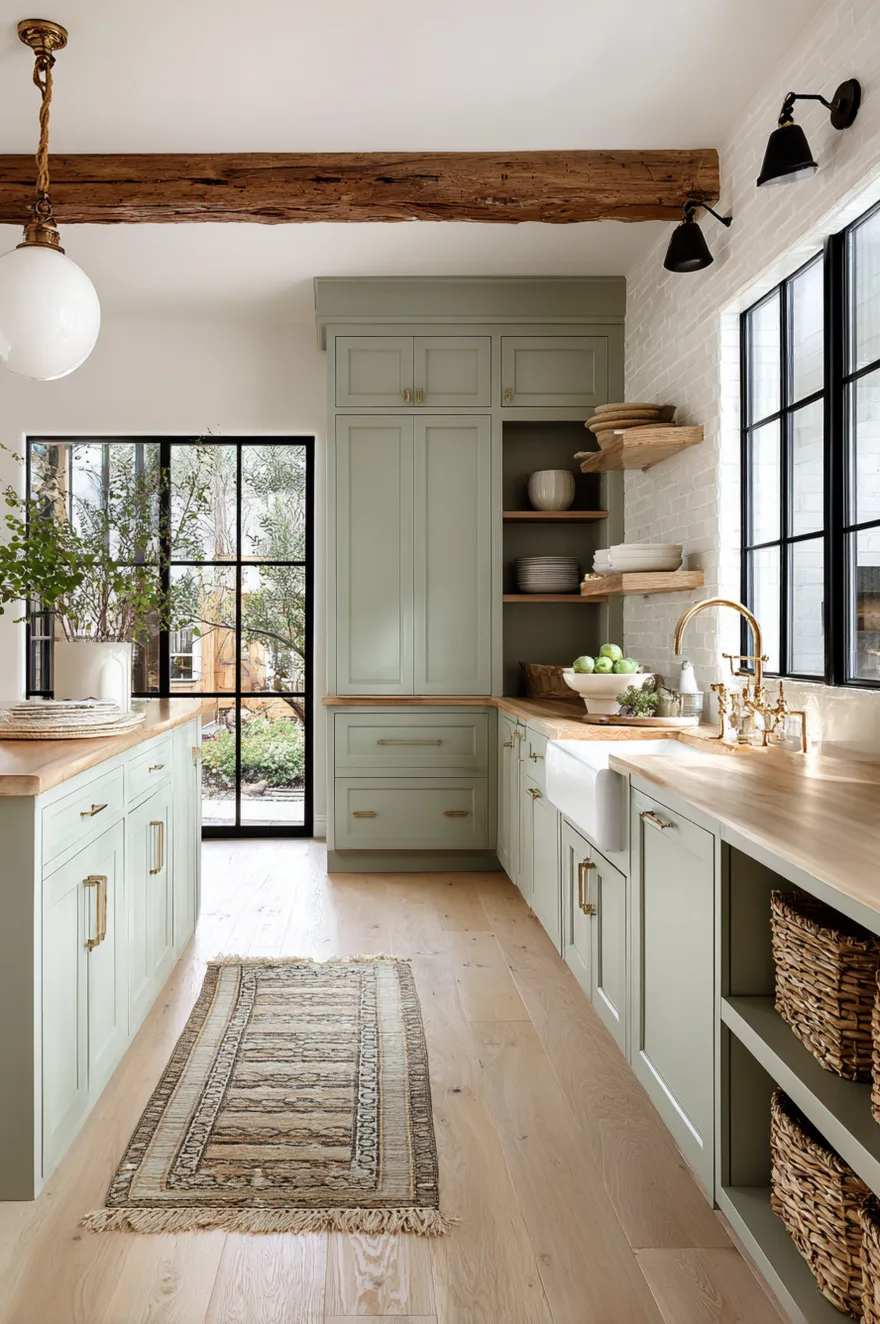
Sage green kitchen cabinets paired with a raw-edge wood peninsula is one of the most sophisticated load bearing wall kitchen combinations available right now. The green grounds the space with color without feeling bold or trend-driven – sage sits in a comfortable middle ground between warm and cool, between earthy and fresh. It works with brass hardware, black iron hardware, or unlacquered raw metal, giving you flexibility in the finishing details.
The peninsula design here is particularly worth studying. The raw-edge wood countertop – slightly rough on the edges, smooth on the surface – runs from the end of the perimeter cabinet run and extends out into the room, supported by a vertical panel in the same sage green as the cabinets. The open face of the peninsula has a wood shelf for display and open cubbies at floor level for wicker baskets – practical storage that looks intentional. This is the kind of peninsula that doubles as a room divider between kitchen and living space while providing generous counter space and casual seating.
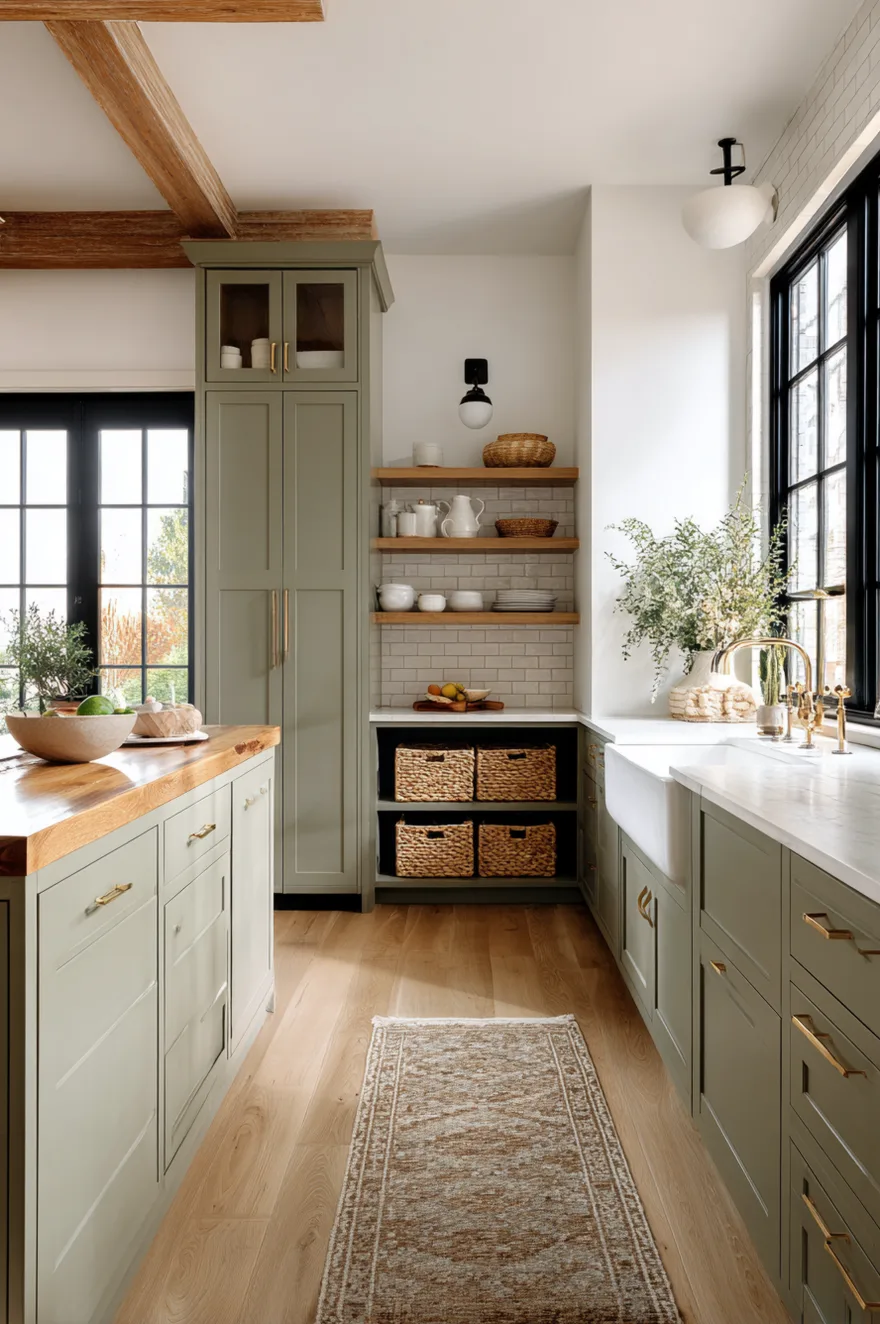
The architectural details that support this look – an exposed wood ceiling beam, a single globe pendant on a rope fitting, a black wall sconce for task lighting – are low-cost additions that dramatically increase the coherence of the design. A farmhouse sink set into the perimeter counter, cream or oat subway tile backsplash, and light oak wood floors complete a palette that feels current but not trendy. This is a load bearing wall solution that photographs beautifully and lives even better.
Dark Modern Cabinets With a Live-Edge Peninsula
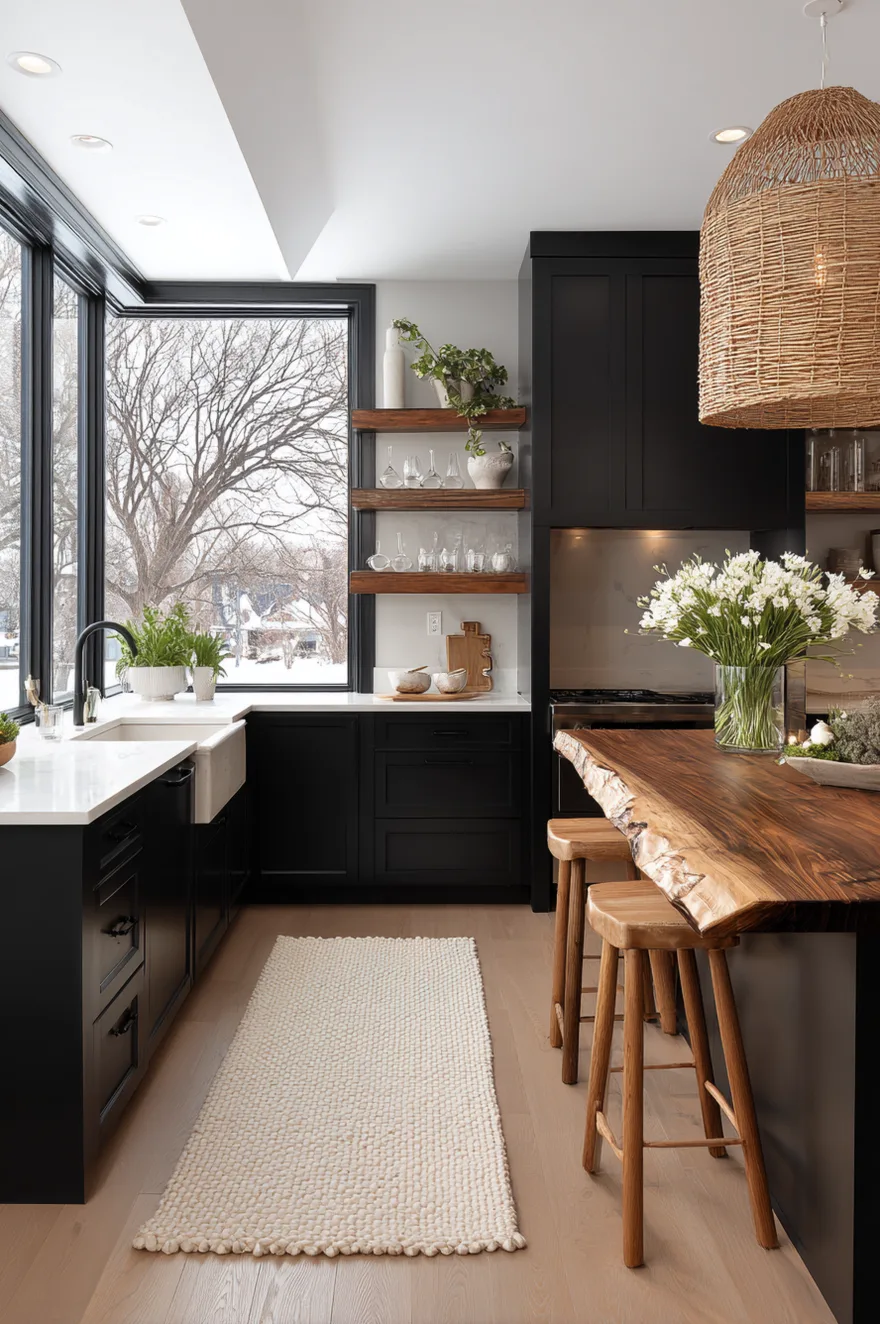
Most live-edge wood kitchen ideas skew rustic or farmhouse. This combination proves that wrong. Dark charcoal or near-black shaker cabinets paired with a live-edge wood peninsula creates a kitchen that reads as thoroughly modern – the contrast between the dark cabinetry and the warm, organic wood counter is precisely what makes it work. The live-edge is not the rustic element here. It is the natural counterweight to the darkness of the cabinets.
The layout is what makes this a compelling load bearing wall idea specifically. The dark perimeter cabinets run in an L-shape, and the peninsula extends from one end of the L into the room on the original wall’s footprint. The live-edge slab runs the full length of the peninsula, with an overhang on the living room side to accommodate counter stools. The kitchen side of the peninsula integrates the cooktop, keeping the perimeter wall clean for the sink and additional prep space. Open wood floating shelves on the perimeter wall above the counter display glassware and white ceramic pieces.
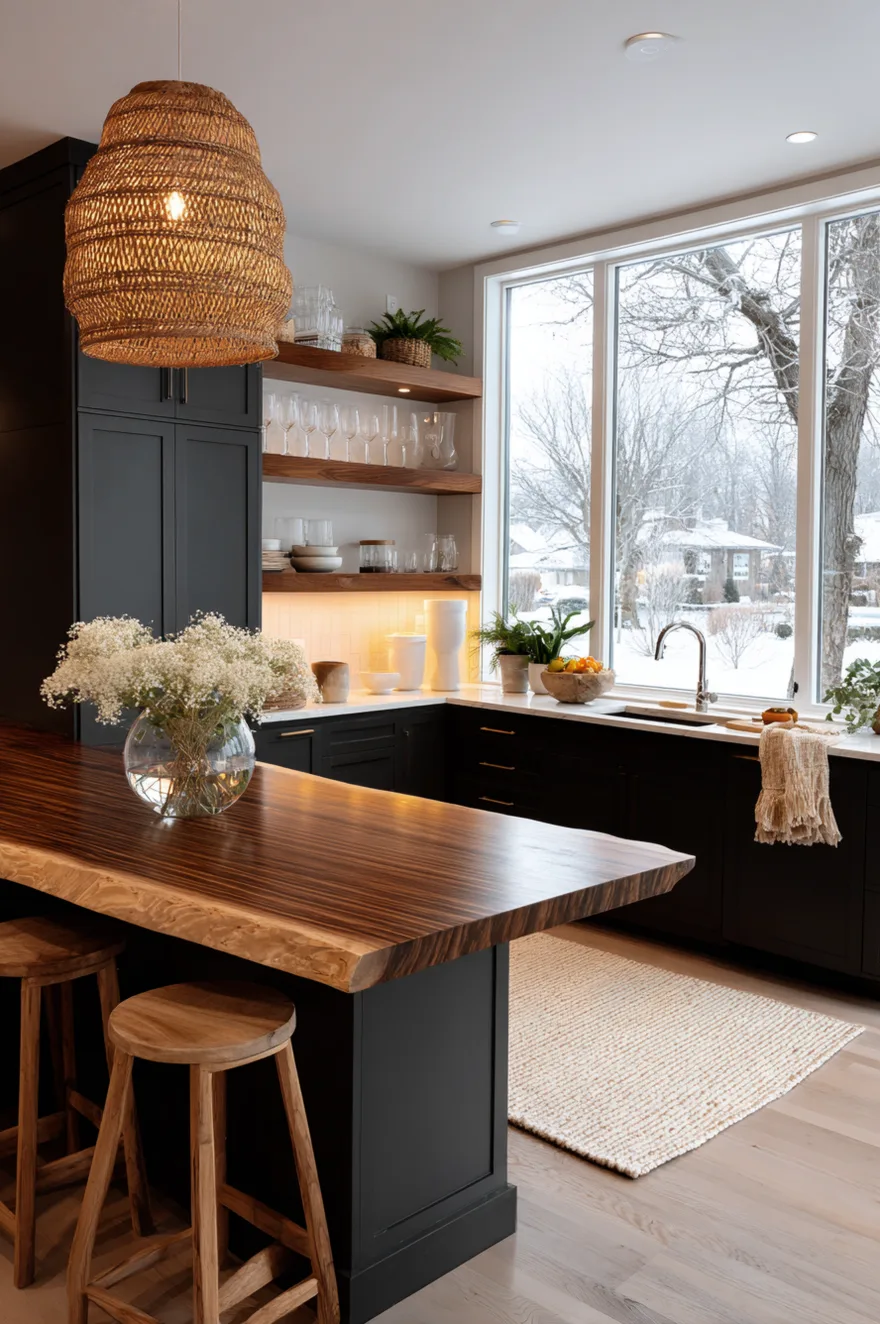
Two critical details seal this as a modern kitchen layout rather than a transitional one: floor-to-ceiling windows on the exterior wall that flood the space with daylight regardless of the dark cabinetry, and a large woven rattan pendant light that adds texture overhead without adding warmth in a way that would soften the contemporary edge too much. White flowers in a clear glass vase on the peninsula are the only styling needed on the counter surface. This is a load bearing wall solution for people who want their kitchen to look architecturally resolved.
Sizing Your Kitchen Island After a Wall Removal
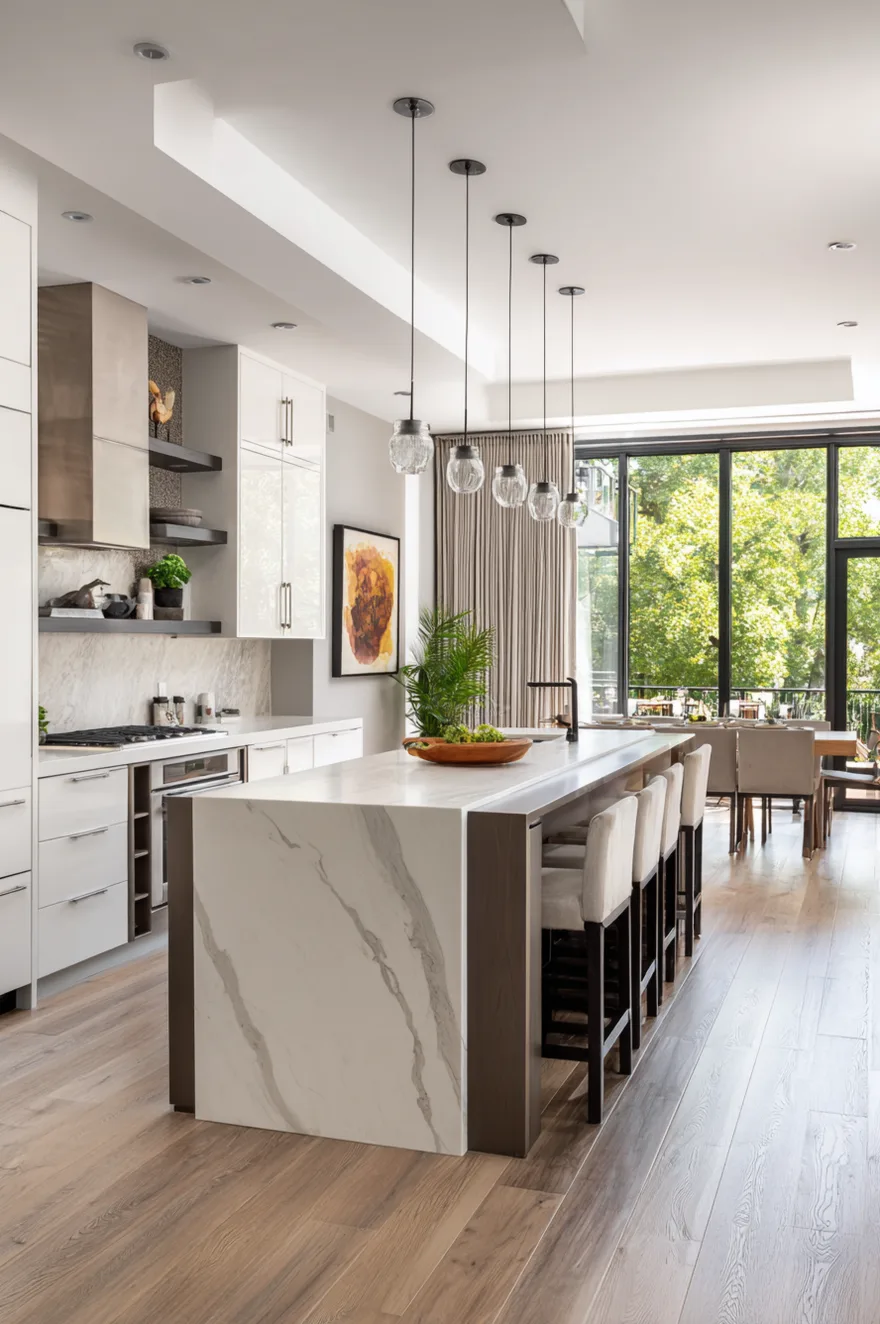
The most common mistake I see after a load bearing wall removal is an island that is sized for the original room rather than the new one. Before the wall came down, the kitchen had a certain footprint. After removal, the kitchen and the adjacent space share one larger footprint – and the island needs to be sized relative to that new, larger context. An island that would have been generous in the original kitchen can look undersized and lost in the combined space.
The practical rule: in an open concept kitchen where the kitchen shares a room with a dining or living area of 12 feet or more in depth, the island should be a minimum of 4 feet long and ideally 6 to 8 feet. This gives you a surface presence that reads correctly in the larger volume. An island that runs to 4 feet or less in this context looks like furniture rather than architecture. For seating, plan for 24 inches of counter space per stool – so a 6-foot island can seat three people comfortably on one side.
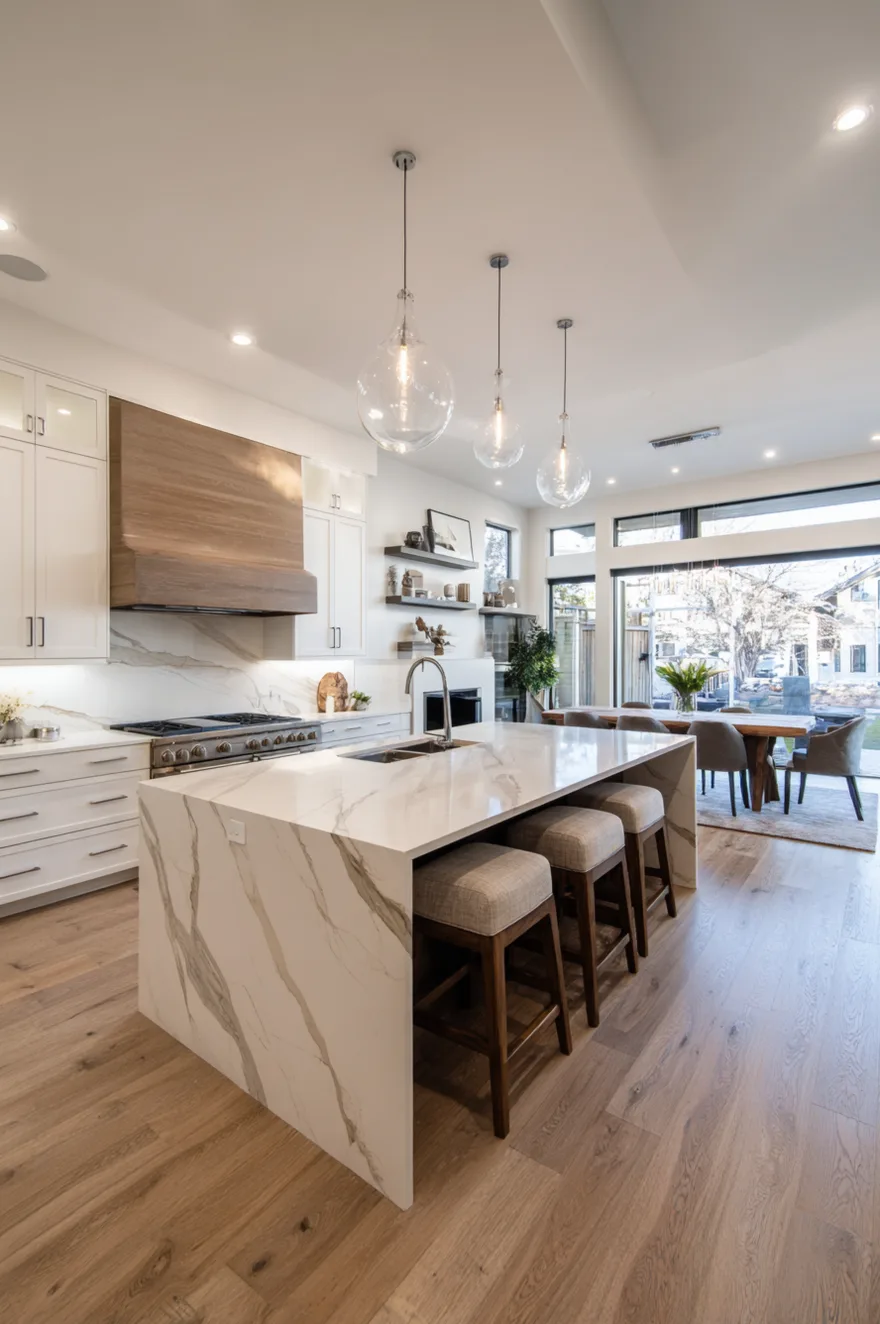
The waterfall countertop – where the slab continues down the end of the island to the floor – is one of the most effective ways to give a modern kitchen island the visual weight it needs in a large open plan. A thick stone or quartz slab in a waterfall configuration reads as a designed object rather than a functional appliance. For smaller budgets, a painted or lacquered island base in a contrasting color to the perimeter cabinets achieves a similar effect with joinery rather than material investment.
Rustic Beams and Open Concept Kitchens: The Right Combination
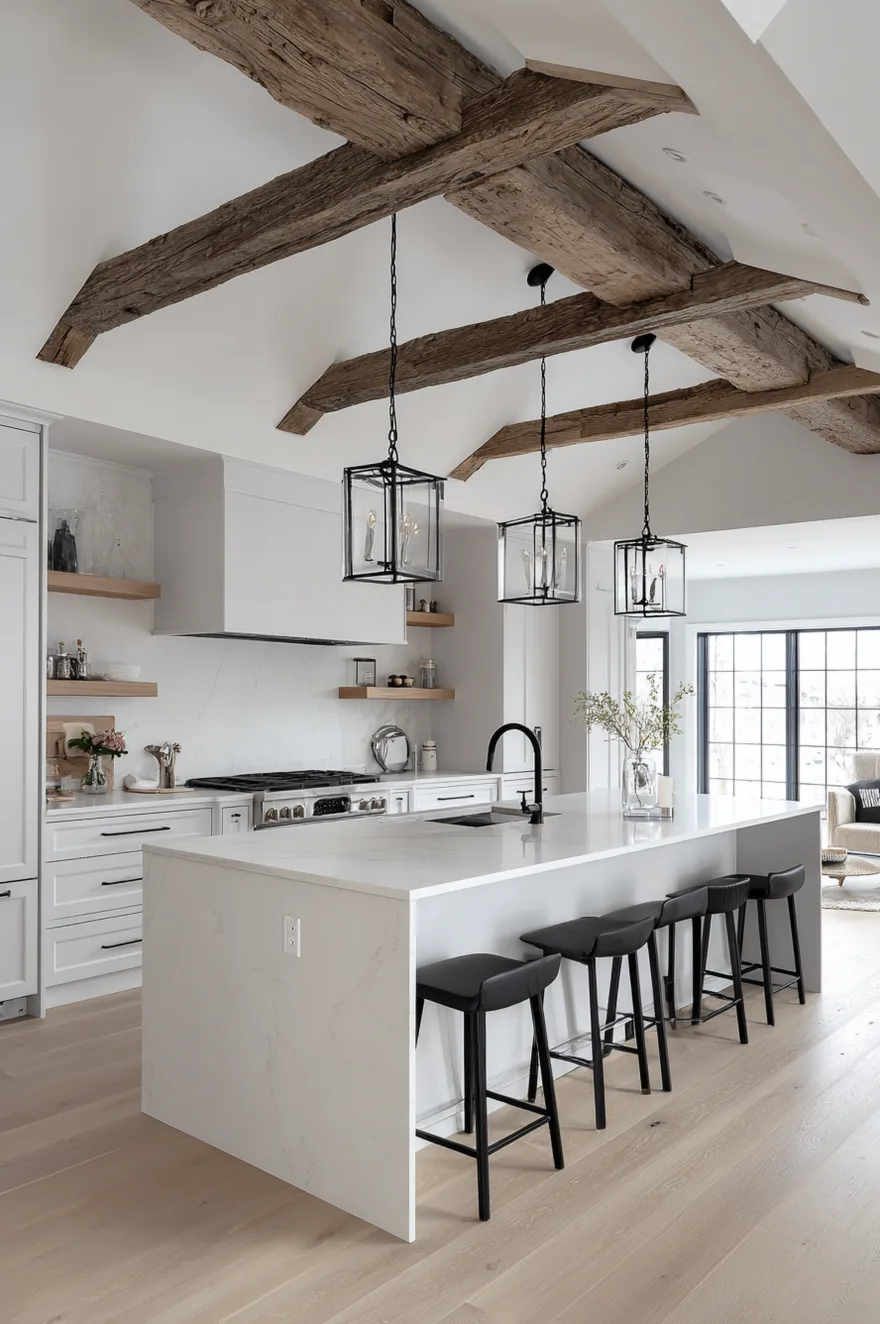
The reclaimed wood beam is one of the most requested elements in open concept kitchen renovations, and it is also one of the most frequently misapplied. A rustic beam works in a modern or transitional kitchen when it is the only rustic element – when everything else is clean, smooth, and controlled, the beam reads as an intentional material contrast. When a kitchen already has distressed cabinetry, rough tile, and a farmhouse sink, adding a rustic beam can tip the design into pastiche.
Used correctly, a reclaimed or rough-sawn timber beam above the kitchen island marks the structural transition zone – the place where the load bearing wall used to be – in a way that feels logical and architectural. It becomes a natural place to hang pendant lights, reinforcing the kitchen zone within the open plan. For pendant selection: glass and metal fittings in brass or black iron work best with timber beams. Fabric or paper pendants read as too soft next to the wood’s weight.
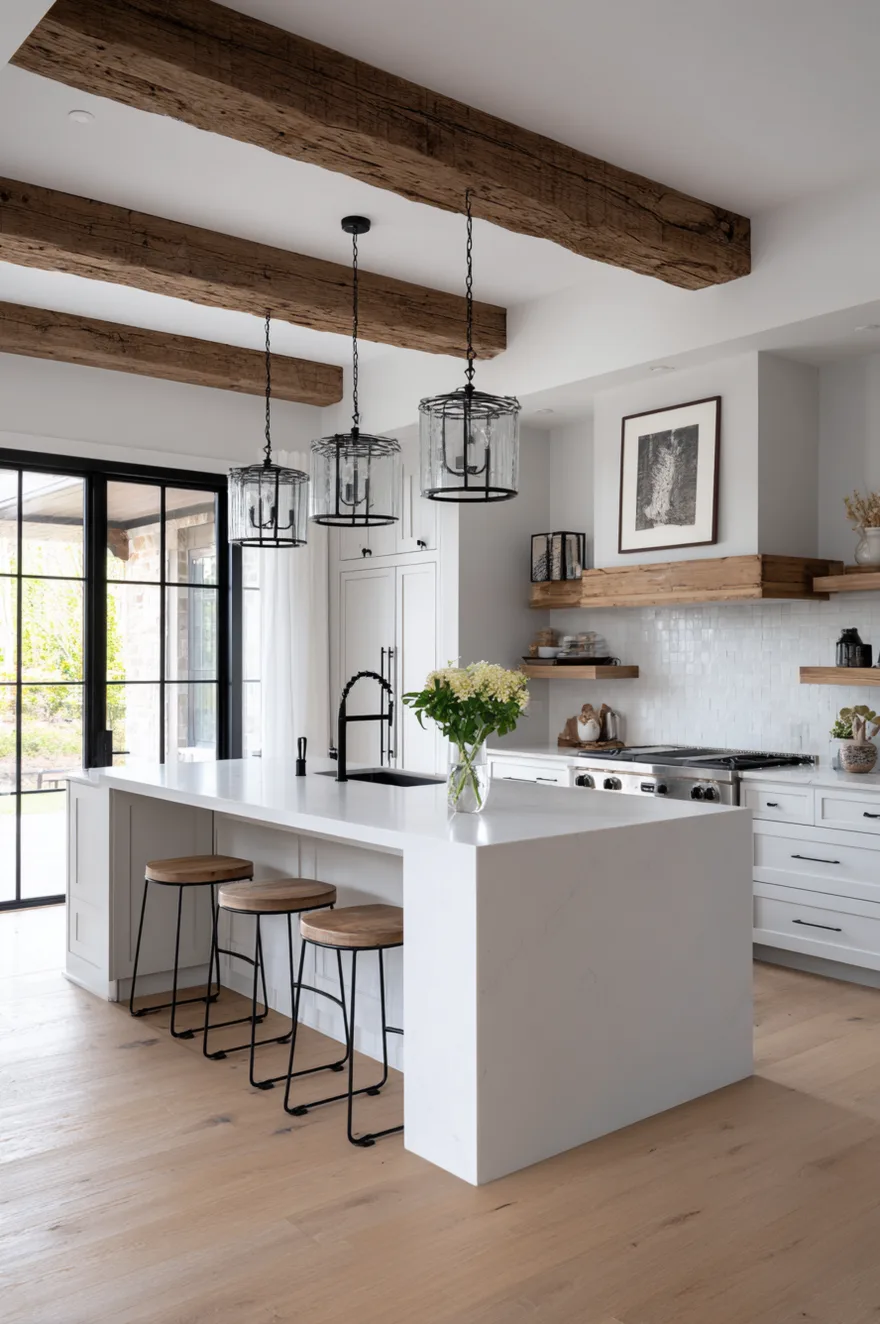
The ceiling treatment around the beam matters as well. A smooth white plaster or drywall ceiling with a single beam running through it is very different from a fully beamed ceiling grid. For most open concept kitchen renovations, one or two prominent beams in the kitchen zone – matching the span of the island or the former wall – is more effective than a complete ceiling treatment. The restraint keeps the beam reading as structure rather than decoration.
Built-In Bench Seating Island for Cottage Kitchens
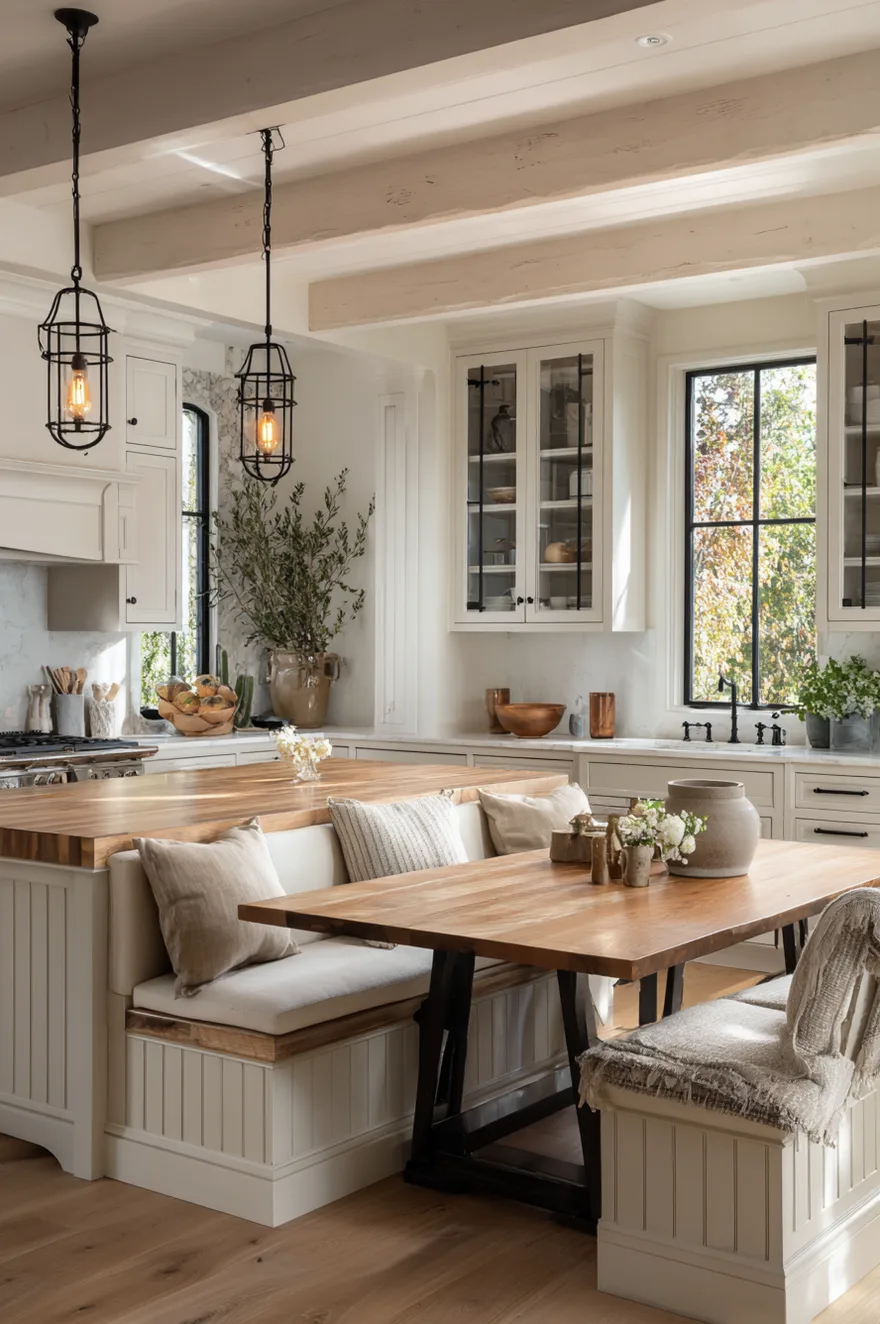
Most people think of kitchen islands as freestanding furniture pieces. But when you are working with a load bearing wall removal in a smaller kitchen, a built-in bench island – where seating is integrated directly into the island structure – is often a far smarter solution. It gives you dining without pulling extra chairs into a tight space, and the built-in quality makes the island feel like it was always meant to be there.
I like this approach for cottage-style and farmhouse kitchens especially. The island base is built with beadboard paneling in cream or warm white, and the wood countertop runs long enough to serve as both prep surface and casual dining ledge. On one side, a cushioned bench seat is built directly into the base – think shiplap or beadboard on the bench front, a simple cushion in linen or canvas on top. Edison bulb pendant lights in black metal fittings hang overhead, giving the space a warm, lived-in glow even during the day.
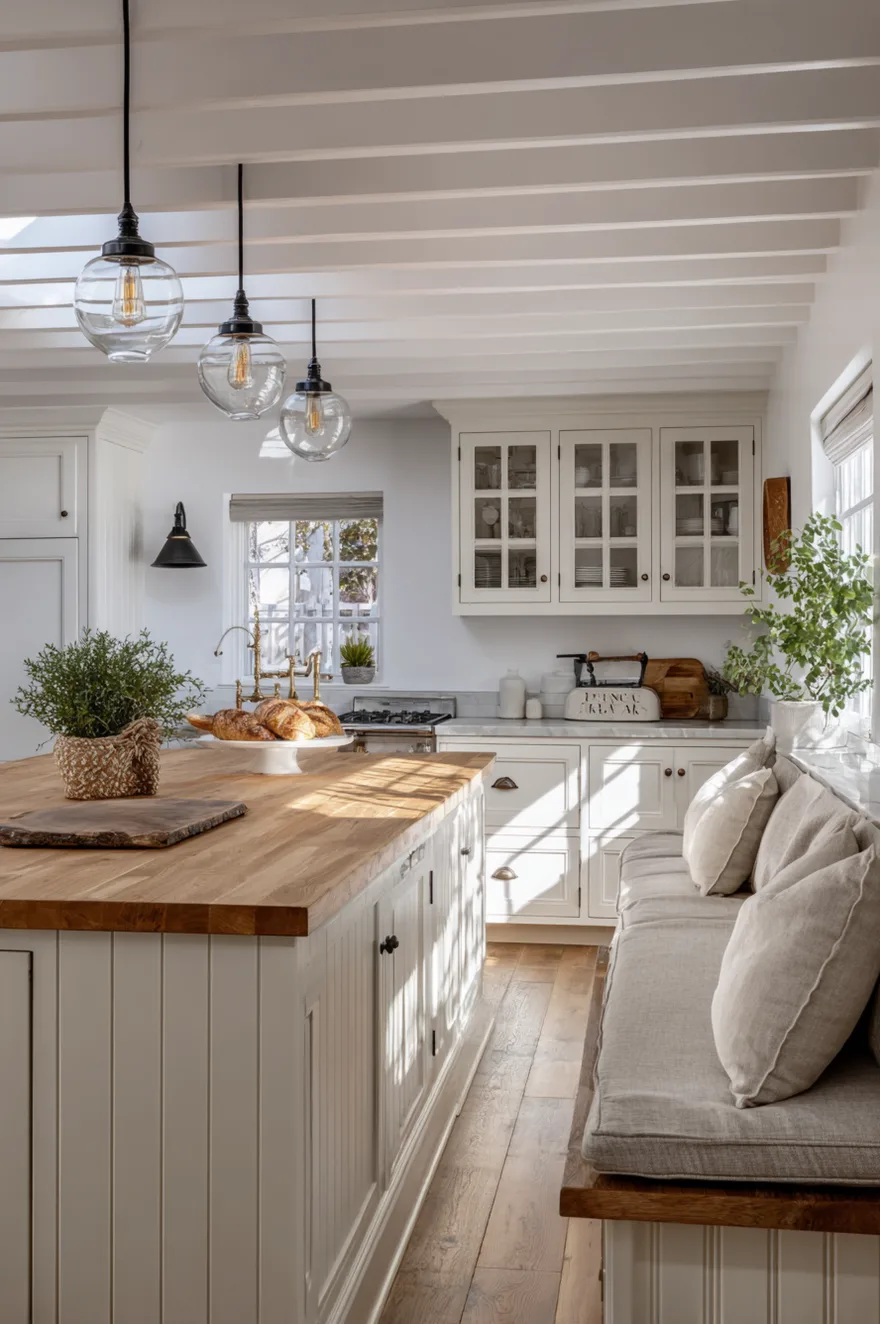
What makes this load bearing wall idea perform well in open concept kitchens is the way the bench seating faces into the living area rather than the kitchen. This creates a social seating zone that bridges the two spaces – you can be cooking on one side and talking to someone seated on the other, which is exactly the flow people want when they open up a kitchen layout. Add a small shelf or cubby on the bench side of the island for extra storage and you have a genuinely functional design solution.
Breakfast Bar Load Bearing Wall Solutions That Add Real Value
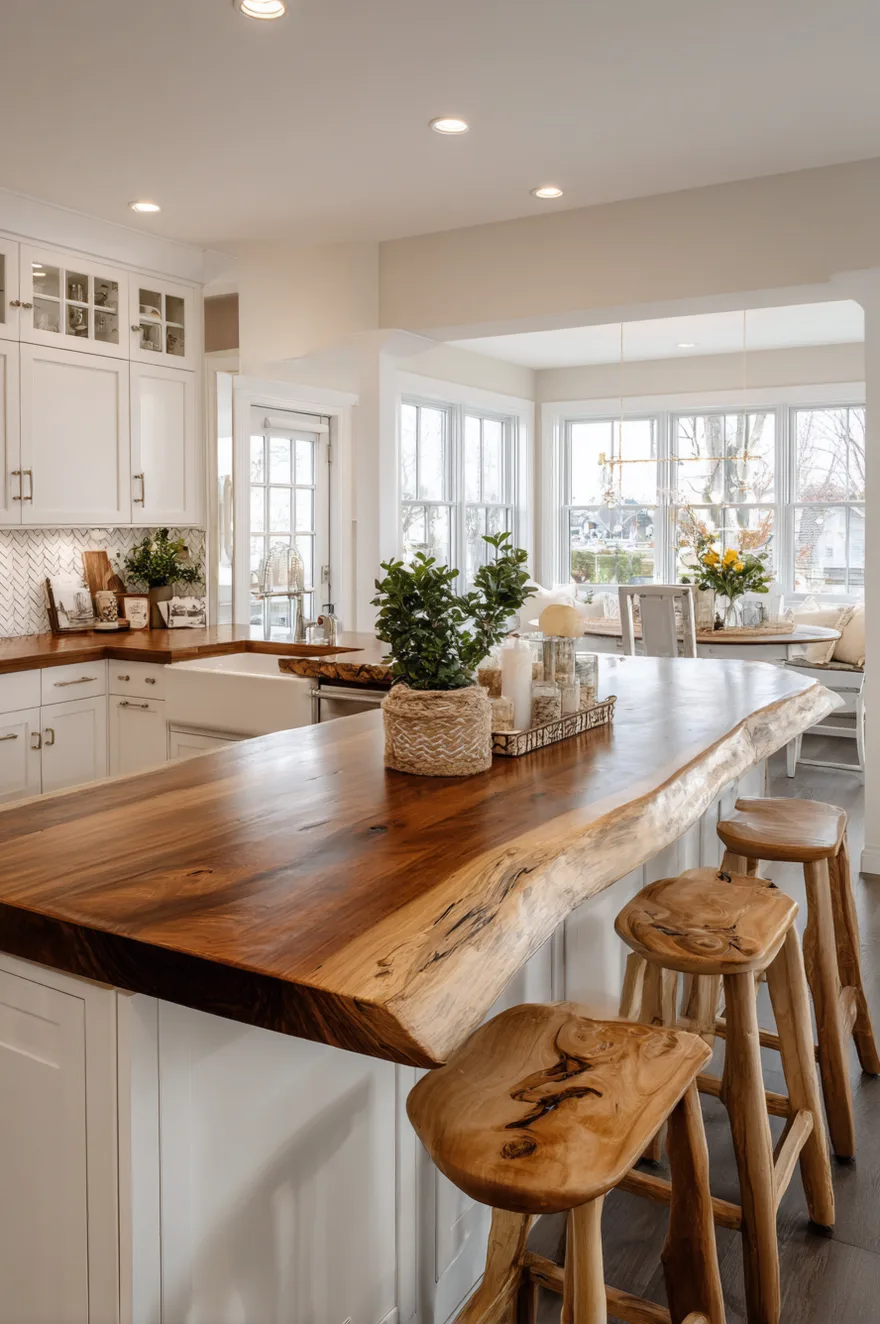
The breakfast bar is the most consistently functional load bearing wall solution available, and it is also the one most likely to add measurable resale value to a home. A well-executed breakfast bar on a peninsula or half wall replaces the need for a separate dining space, gives the kitchen a casual eating zone, and creates a natural gathering point that makes open plan living work in a practical rather than theoretical way.
The material decisions that determine whether a breakfast bar looks considered or makeshift are the counter thickness, the overhang depth, and the stool height. Counter thickness: at least 1.5 inches for stone, at least 2 inches for wood – anything thinner reads as a countertop, not a breakfast bar surface. Overhang depth: 12 to 15 inches minimum for knee clearance on counter-height stools, more if space allows. Stool height: match your stools to your counter height exactly – 24-inch stools for 36-inch counters, 28 to 30-inch stools for 42-inch bar height.
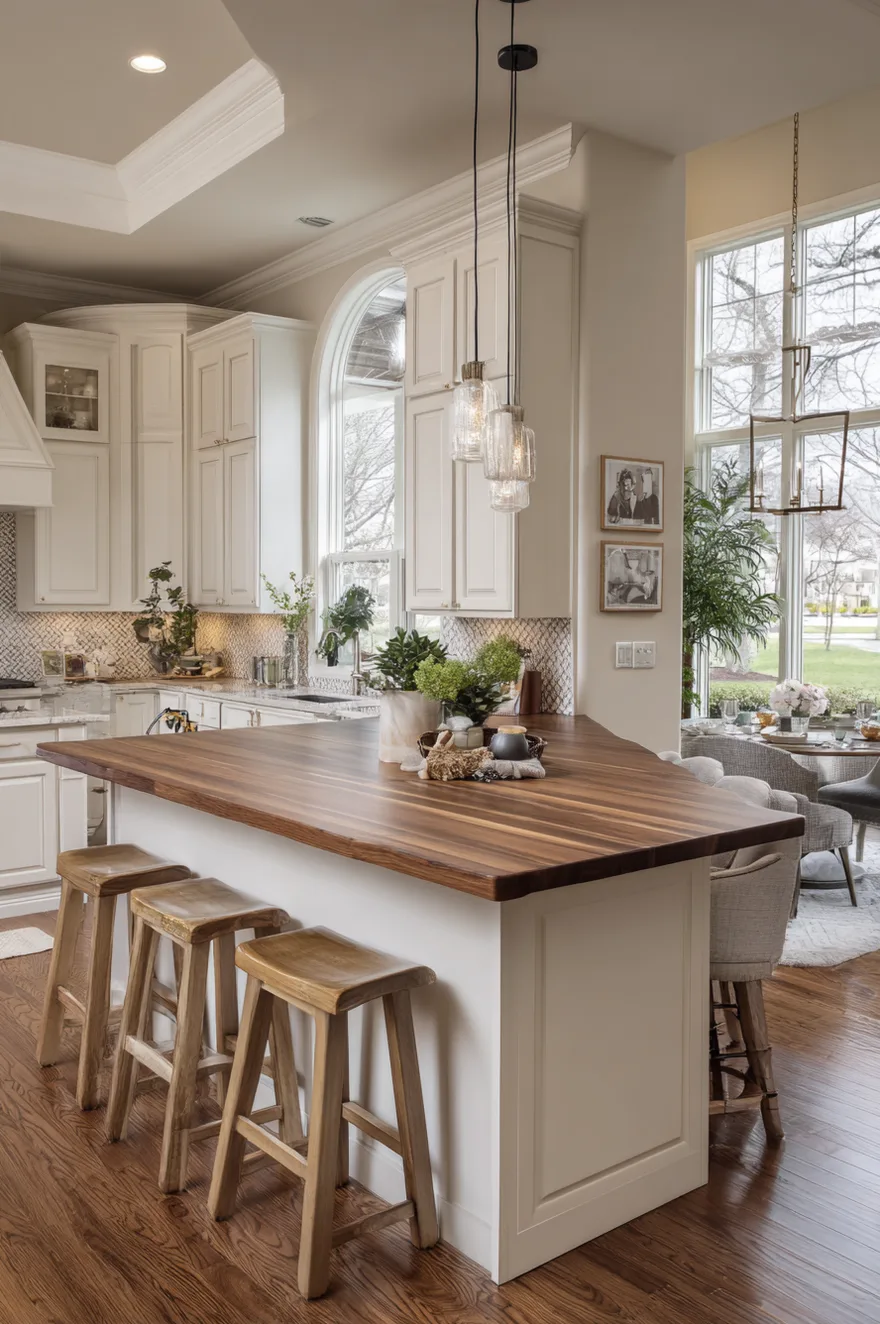
The most versatile breakfast bar configurations for load bearing wall kitchens are the peninsula (extending from one end of the perimeter cabinets) and the pass-through (a ledge in a half-wall opening). Both handle the structural replacement role while adding function. The peninsula gives you more counter space and can incorporate a prep sink. The pass-through is better for smaller kitchens where you need visual openness more than additional counter area. Neither requires a particularly large budget – the return on investment from a well-built breakfast bar typically exceeds the construction cost within a few years of use.
Open Concept Kitchen Layout: What Actually Works
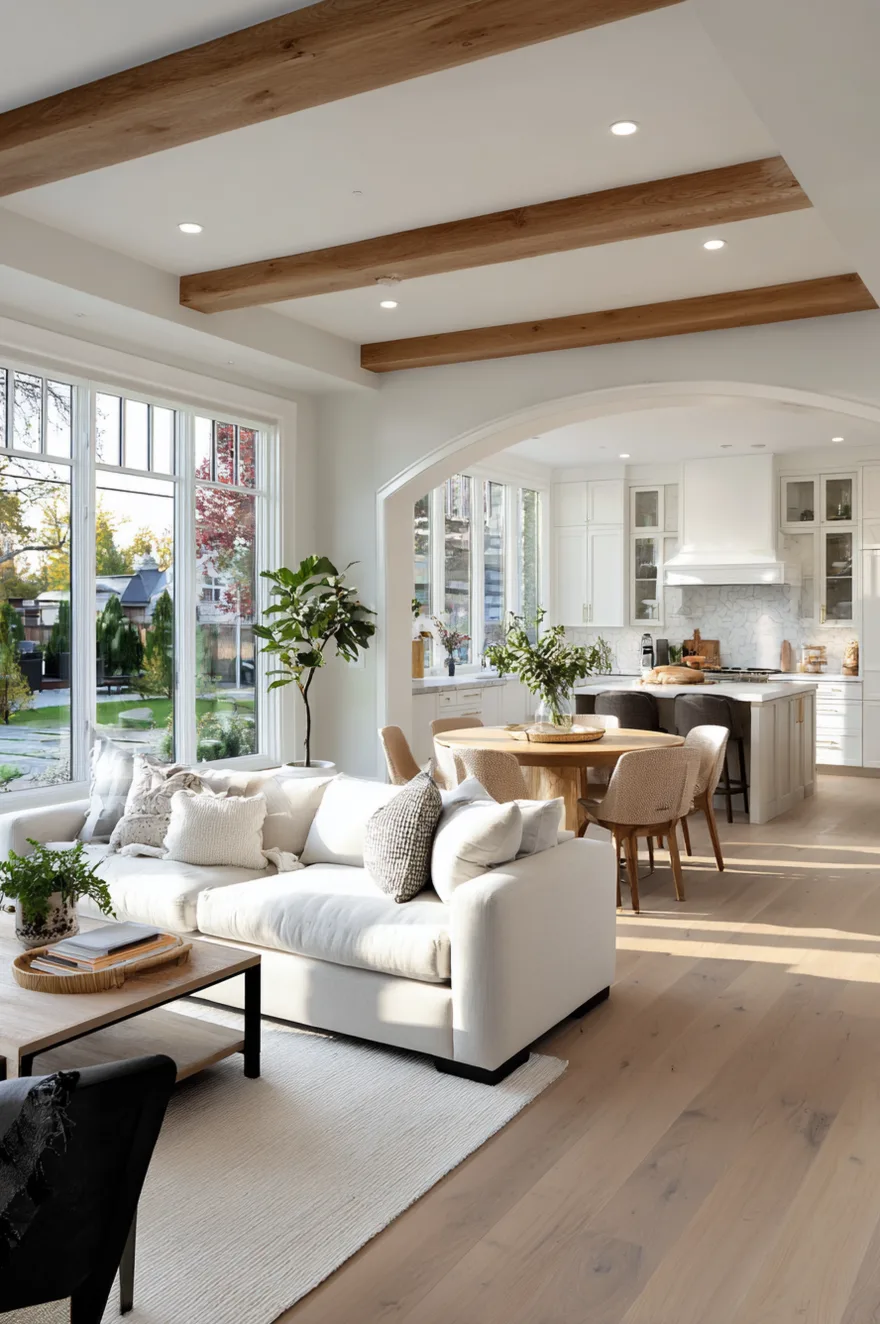
The most common misconception about open concept kitchen layouts is that removing walls automatically improves the space. It does not – it changes the space, and whether that change is an improvement depends entirely on how the layout is resolved after the wall comes down. I’ve seen open concept kitchens that feel more functional and connected than the rooms they replaced, and I’ve seen ones where the result was a large, undifferentiated room that is harder to use and harder to heat.
The layouts that work share a few consistent principles. First, the kitchen zone needs definition within the open plan – an island, a peninsula, a change in flooring material, or a lowered or raised ceiling section all accomplish this. Without definition, cooking activities and living activities blur together in a way that benefits neither. Second, the traffic flow between zones needs to be unobstructed – the path from kitchen to dining to living should be at least 42 inches wide at all points, 48 inches where two people might need to pass.
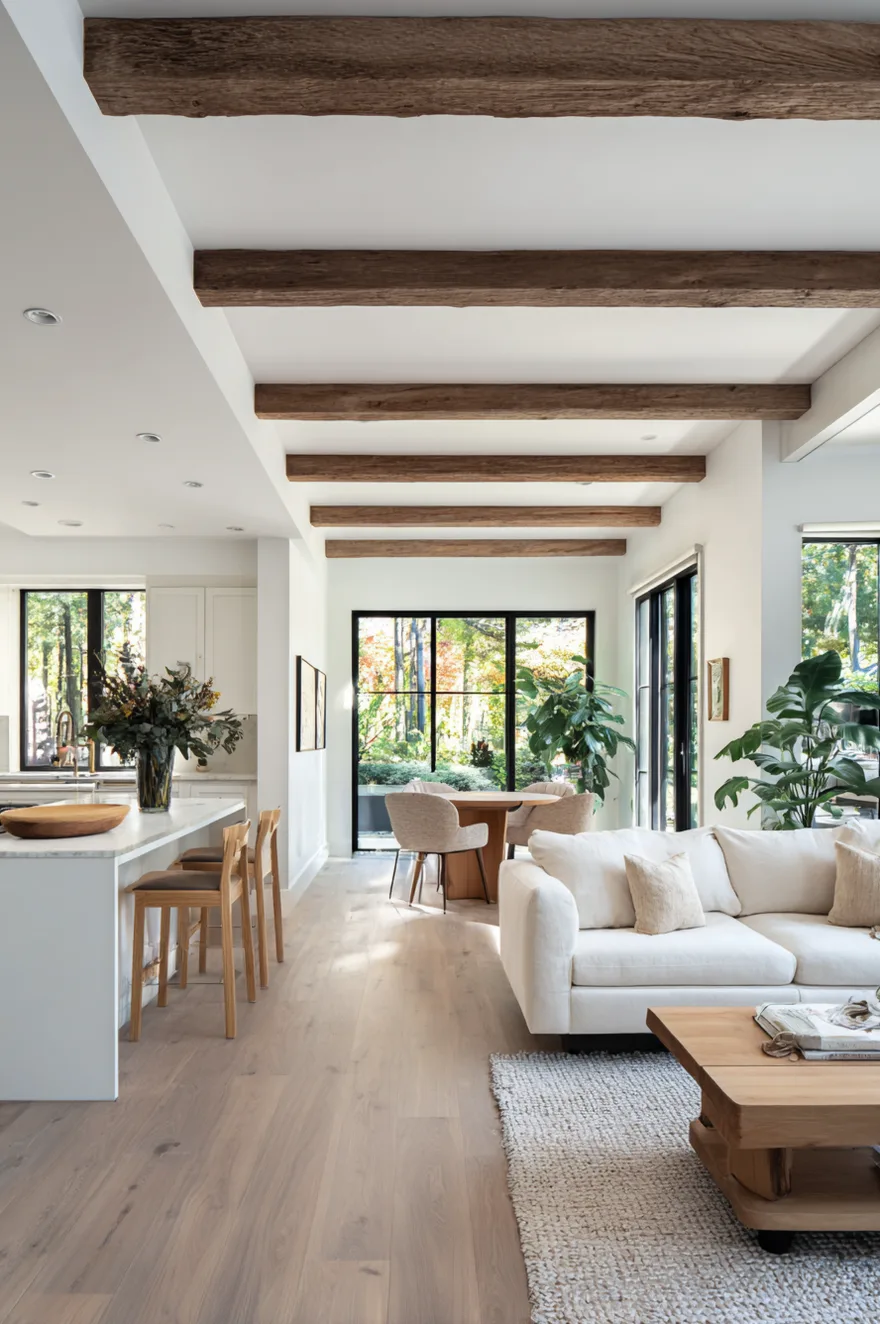
Third – and this is the design principle most often ignored – the furniture arrangement in the living area needs to be reconsidered entirely after a wall removal. Furniture that was arranged against the original wall now floats in a larger space, and it rarely looks right without repositioning. The best open concept kitchen layouts I have worked with always addressed the entire floor plan as a single design problem, not just the kitchen renovation piece of it.
Modern Kitchen Load Bearing Wall Ideas Worth Knowing
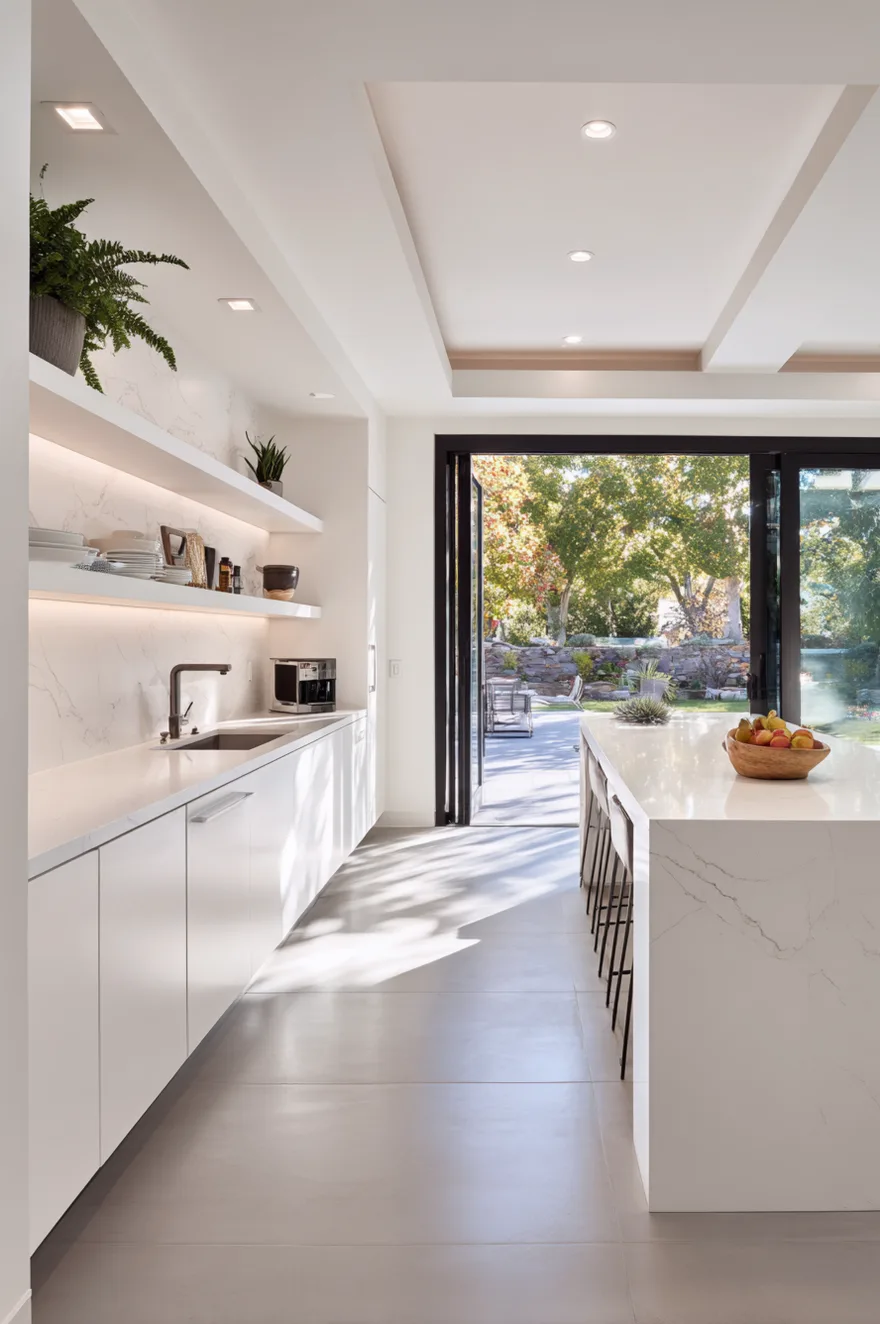
Modern kitchens handle load bearing wall removals differently than farmhouse or traditional kitchens, and the difference is primarily in how structure is treated. Where a farmhouse kitchen celebrates the beam and makes it rustic, a modern kitchen tends to minimize structure or integrate it so cleanly into the architecture that it almost disappears. The goal in modern design is resolved, not revealed.
The most effective modern load bearing wall solutions include the concealed steel beam (where a structural engineer allows the steel to sit within the ceiling cavity and the ceiling remains flat and smooth), the minimal post (a single steel column at the end of an island that takes the structural load while reading as a designed element rather than a structural apology), and the full arch in smooth plaster (where the arch itself is the design feature, and the structure is embedded within it invisibly). All three require a structural engineer’s involvement from the beginning of the project – not as an afterthought.
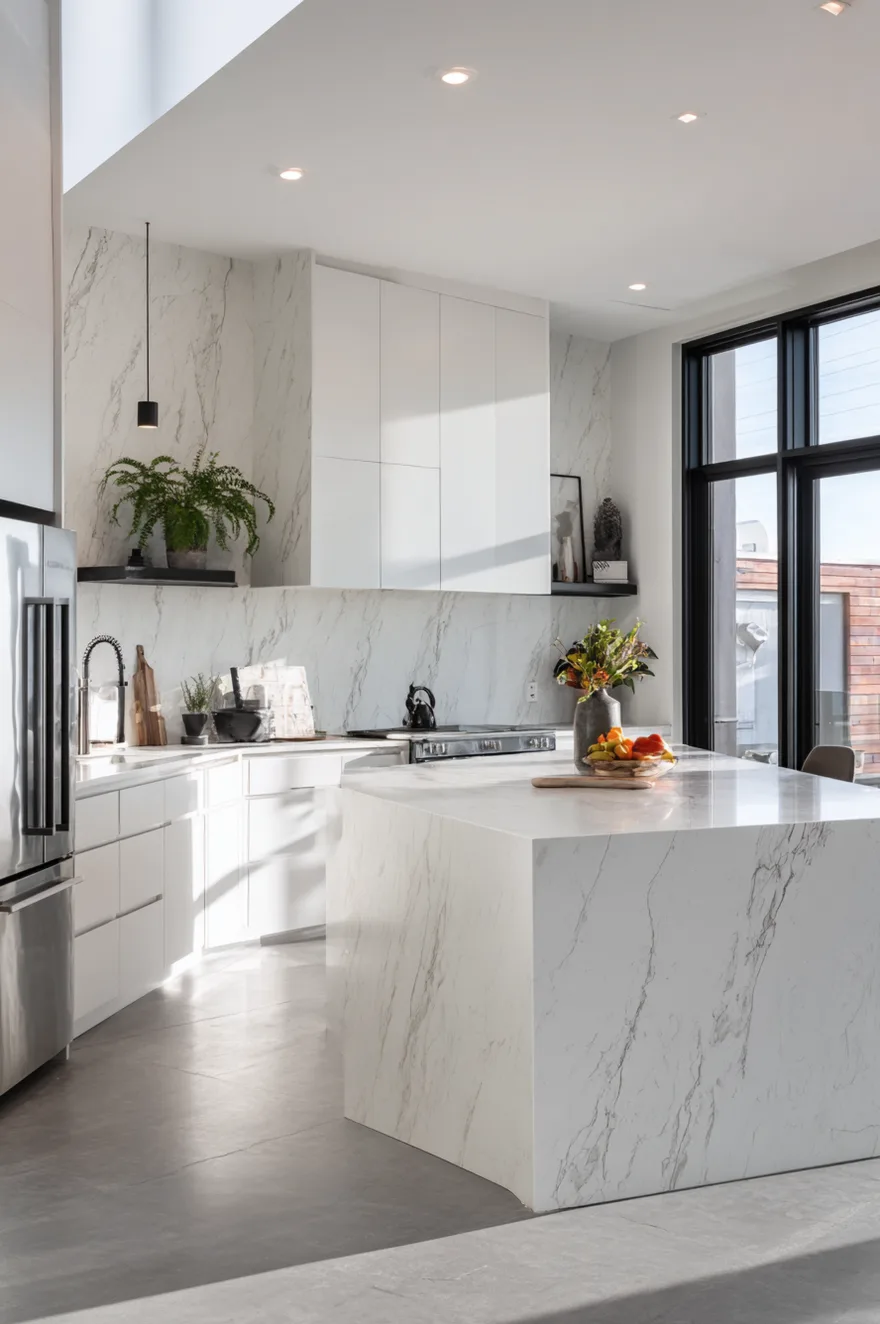
What distinguishes modern kitchen load bearing wall ideas from other styles is the hardware and finish palette. Matte black, brushed nickel, or unlacquered brass on fittings and fixtures. Flat-front or minimal shaker cabinets without heavy molding profiles. Countertops in stone or engineered quartz with minimal veining. These choices keep the focus on the spatial quality of the room – the light, the proportion, the flow – rather than on surface decoration. The result is kitchens that photograph as architecture, not just as decor.
Finding the Right Load Bearing Wall Solution for Your Kitchen
The most important thing I want you to take away from this guide is that a load bearing wall removal is not a demolition project with a design phase at the end. It is a design project from the first conversation with a structural engineer. The structural solution you choose – beam type, beam placement, post locations, transfer loads – determines your layout options, and your layout options determine what your kitchen can actually be.
Start with a structural engineer, not a contractor. Get the engineering completed before you commit to any design decisions that depend on span lengths or beam placement. Then take those structural parameters to a kitchen designer or architect and develop a layout that uses the structural constraints as design opportunities rather than working around them. This sequence is not longer or more expensive – it is simply the order of operations that produces kitchens that look resolved rather than renovated.
The ideas in this guide – from the whitewashed brick arch to the live-edge peninsula, from the half wall breakfast bar to the plaster arch opening – all work because they were designed as integrated structural and aesthetic solutions from the beginning.
Which of these approaches is right for your kitchen depends on your home’s architecture, your budget, and what you actually need the space to do.
See you soon,
Rachel