
Most living rooms fail because of poor lighting strategy. These living room lighting ideas for 2026 teach you how to layer ceiling lights, floor lamps, and wall sconces using proven design principles that create both function and atmosphere. Whether you’re working with low ceilings, high ceilings, or apartment constraints, these modern living room lighting solutions deliver results.
Here’s what most people get wrong about living room lighting: they treat it as an afterthought.
You spend weeks choosing the perfect sofa, debating paint colors, arranging furniture – then you stick with whatever ceiling fixture came with the space. The result? A room that looks good in photos but feels completely off in person.
The reason this matters is simple. Lighting isn’t decoration. It’s infrastructure. It determines how you use the space, how the room feels at different times of day, and whether your design choices actually work. One overhead fixture can’t do all of that, no matter how expensive it is.
In this guide, I’m breaking down 17 living room lighting ideas that solve real problems. You’ll learn how to layer different light sources, work with challenging ceiling heights, and create flexible lighting that adapts to how you actually live. These aren’t trends – they’re principles that work regardless of your style. Function first, always.
Wall Sconces For Ambient Living Room Lighting
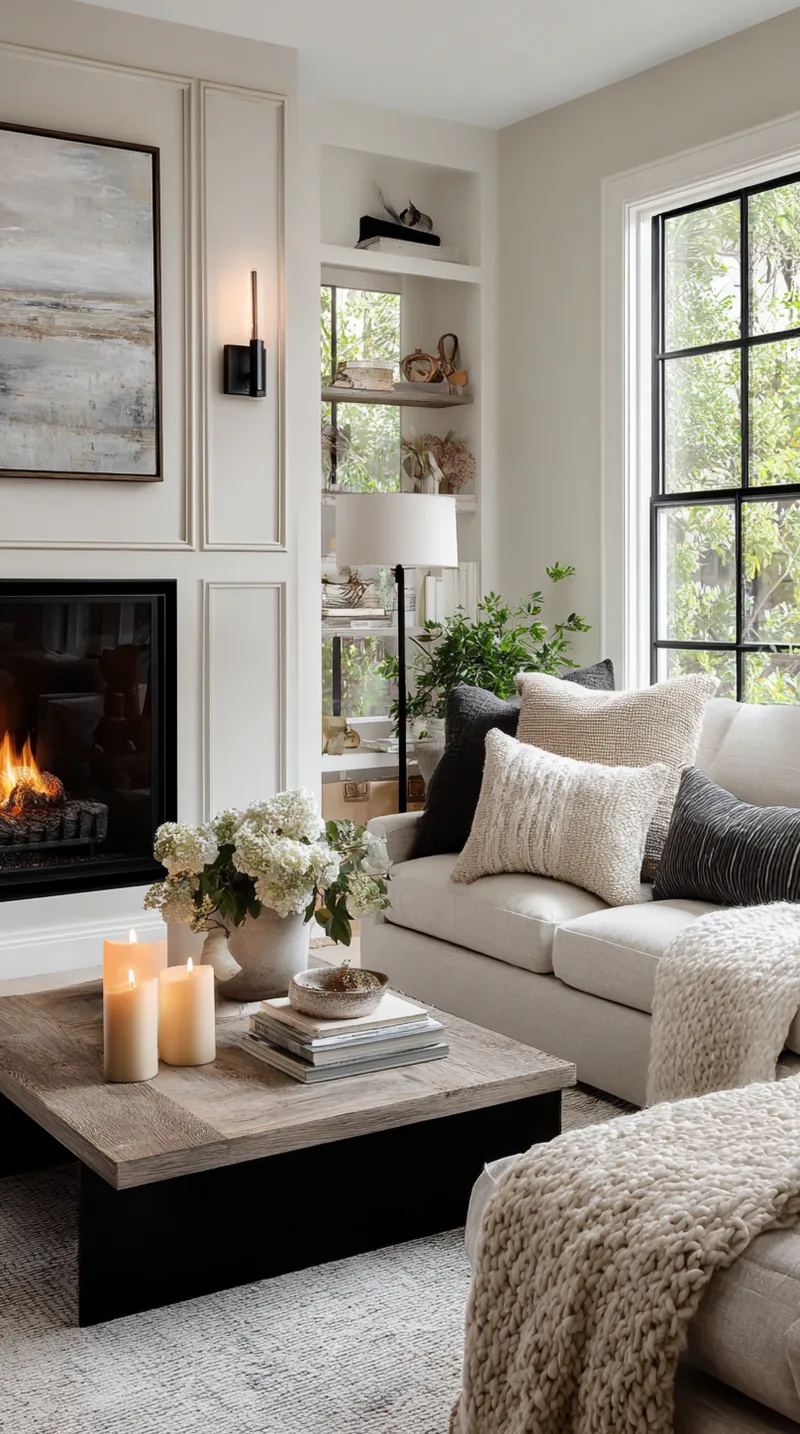
Wall sconces solve a problem most people don’t realize they have – insufficient vertical lighting.
The reason this matters is that relying only on overhead fixtures and table lamps creates a horizontal plane of light that feels flat. Wall sconces add vertical dimension. They create shadows and highlights that make your space more dynamic and architectural. Position them flanking a TV, fireplace, or artwork at 60-66 inches from the floor – roughly eye level when standing.
Most people overlook this, but plug-in sconces are game-changers for renters. You get the look and function of hardwired fixtures without calling an electrician. Choose sconces with exposed Edison bulbs or warm LED filaments for a soft, ambient glow. This is particularly effective in apartments where ceiling options are limited and you need to maximize every available surface.
Plug-In Lighting Solutions For Apartment Living Rooms
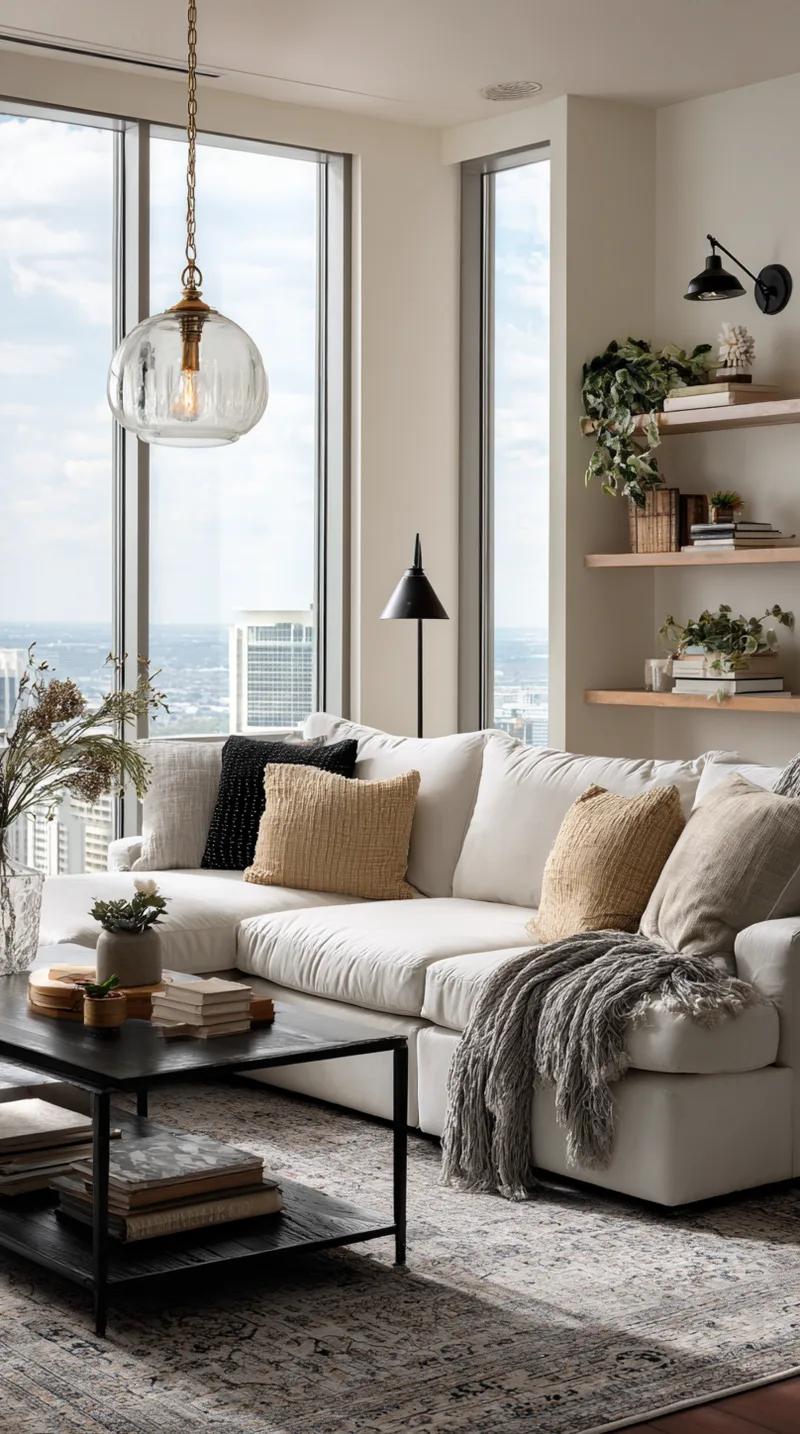
Apartments require strategic thinking about lighting since you can’t modify the electrical.
The solution is maximizing plug-in options. Swag pendant lights from ceiling hooks (completely removable), plug-in wall sconces, and multiple floor lamps create a layered lighting scheme without permanent installation. Add plug-in dimmer switches between your outlets and lamps – instant mood control with zero wiring.
The best part? LED strip lights. Run them behind your TV console, under floating shelves, or along the back of your sofa for indirect ambient lighting that’s completely renter-friendly. Stick to warm white (2700-3000K) to avoid the harsh, institutional feel of cool white LEDs. This approach gives you apartment living room lighting that rivals hardwired setups in homes.
Candles And Ambient Lighting For Cozy Living Rooms
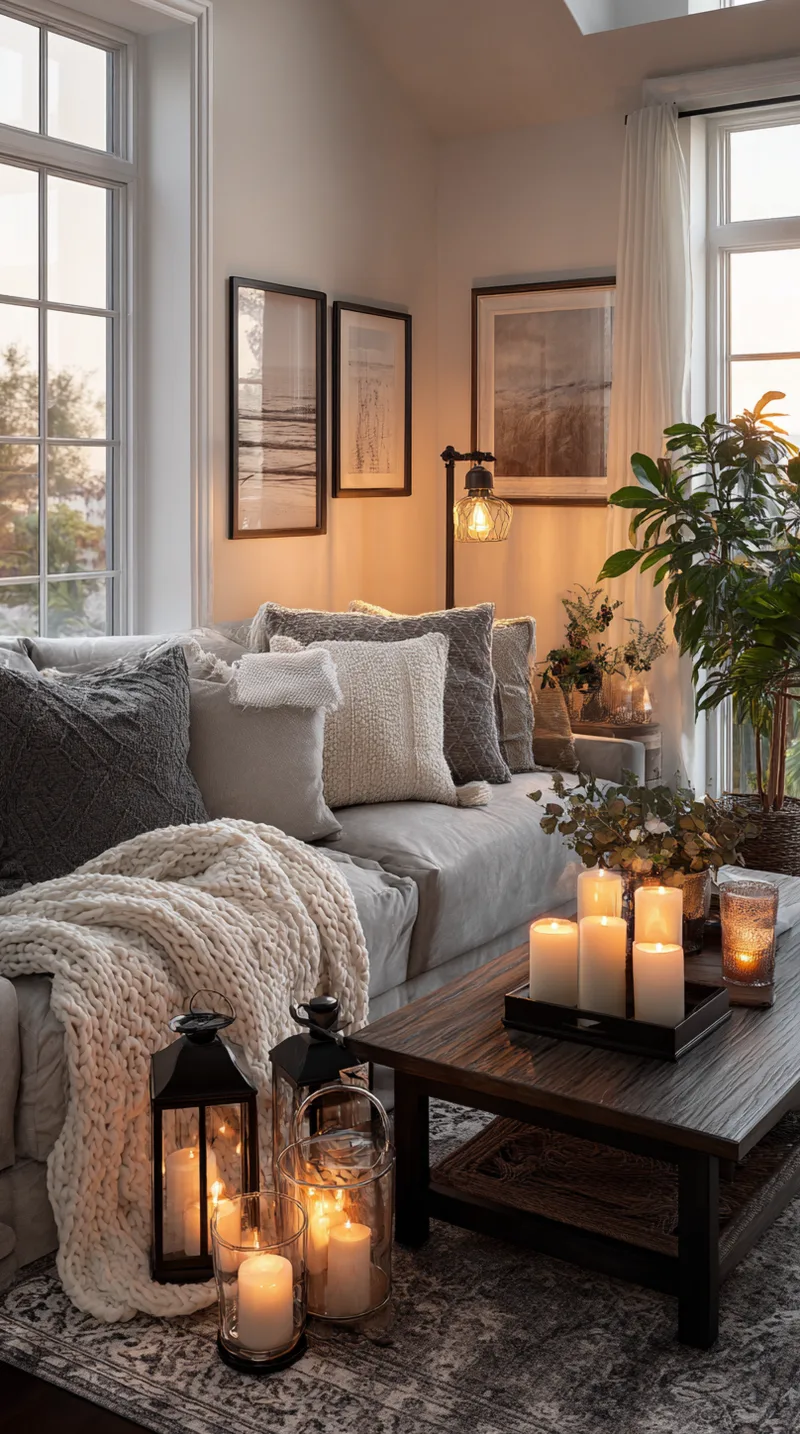
Candles complete a layered lighting strategy – but they’re the final touch, not the foundation.
The reason they work is flickering, warm light that electric fixtures can’t replicate. Group pillar candles on your coffee table, place votives on shelves, or use lanterns to contain the flame. Real or battery-operated, they add a layer of visual warmth that softens the entire lighting scheme. Stick with unscented options or subtle scents like vanilla or cedar that don’t overwhelm.
Here’s the key distinction: candles are accent lighting. They enhance your existing lamps and fixtures but can’t replace them. The combination of candle glow with strategically placed floor lamps and table lamps creates the cozy living room lighting everyone wants but few achieve. It’s about layering different light sources with different qualities – electric for function, candles for atmosphere.
Flush Mount Ceiling Lights For Low Living Room Ceilings
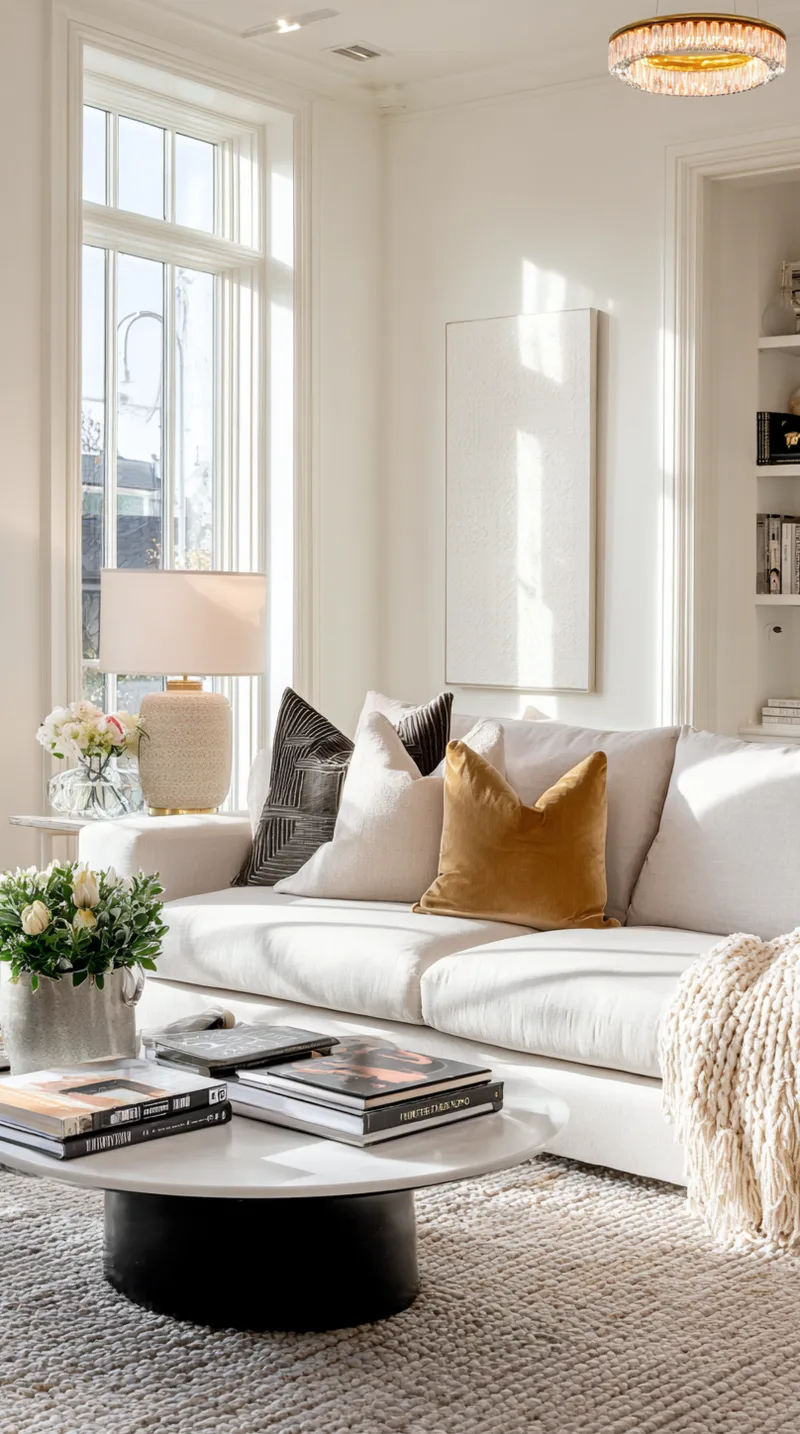
Low ceilings limit your options, but that doesn’t mean settling for boring fixtures.
The key is choosing flush mounts that sit flat against the ceiling while still making a visual impact. Look for ones with textured glass, interesting geometric shapes, or quality materials like brass or natural linen. The fixture becomes architectural detail rather than just a light source.
Here’s what I’ve learned: go slightly oversized. A larger flush mount draws the eye up and creates the illusion of height. Pair it with dimmable LED bulbs so you can adjust the intensity throughout the day. This gives you functional overhead light without the visual weight of a pendant or chandelier that would make the space feel cramped.
LED Strip Lights For Modern Indirect Living Room Lighting
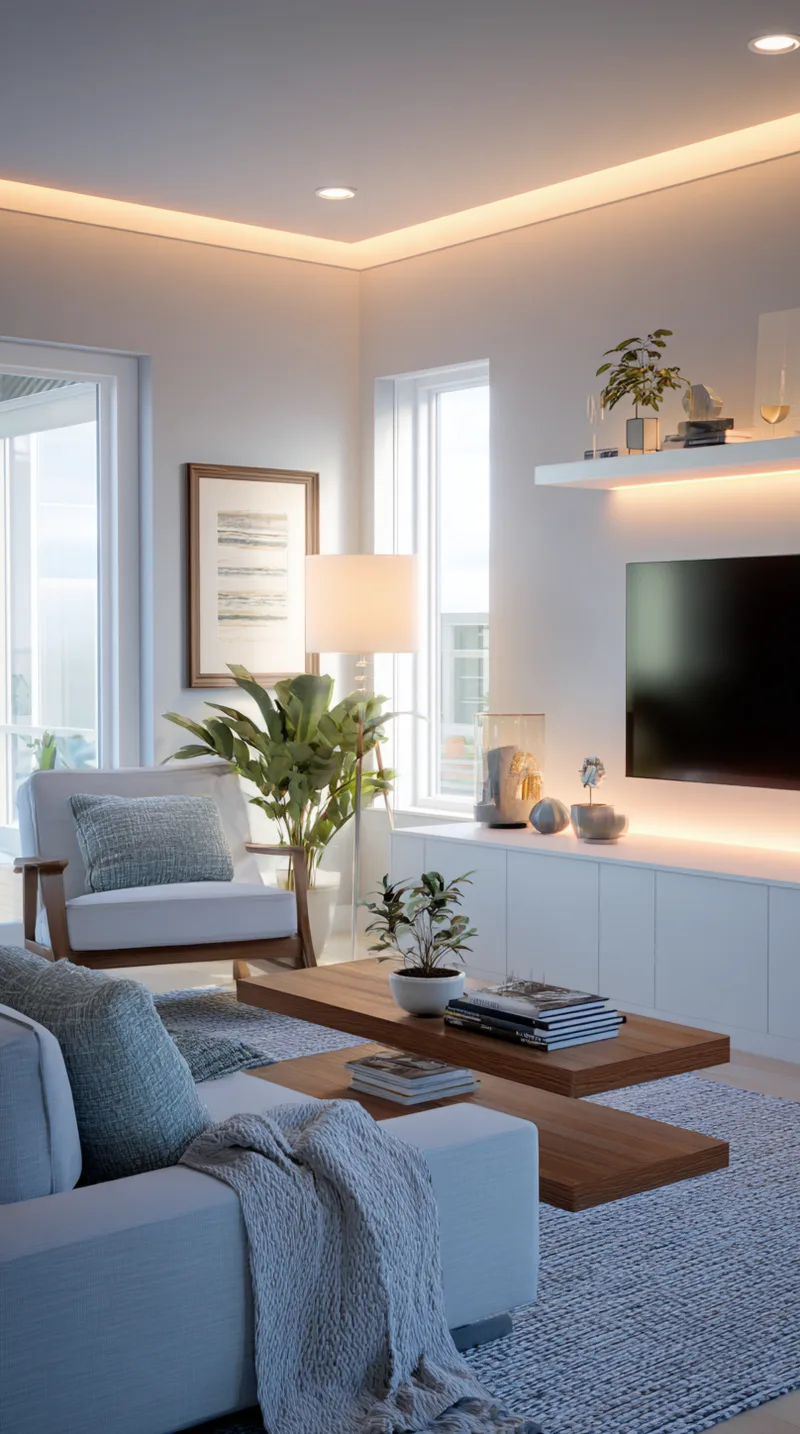
LED strips create ambient light without visible fixtures – that’s their primary advantage.
The reason indirect lighting works is subtlety. Hide LED strips behind your TV console, under floating shelves, along the back of your sofa, or at the ceiling perimeter. The light reflects off walls and surfaces to create a soft, diffused glow without any harsh direct light or visible bulbs. This is particularly effective in modern living rooms where minimalism is the aesthetic goal.
Function first, always. Choose LED strips with adjustable color temperature so you can go warmer (2700K) in the evening and slightly cooler (3000K) during the day. This flexibility lets you tune the lighting to match your activities and the natural light levels in the room. Combined with floor lamps and table lamps, LED strips provide that final layer of sophisticated ambient lighting.
Ceiling Lighting That Highlights Exposed Beams
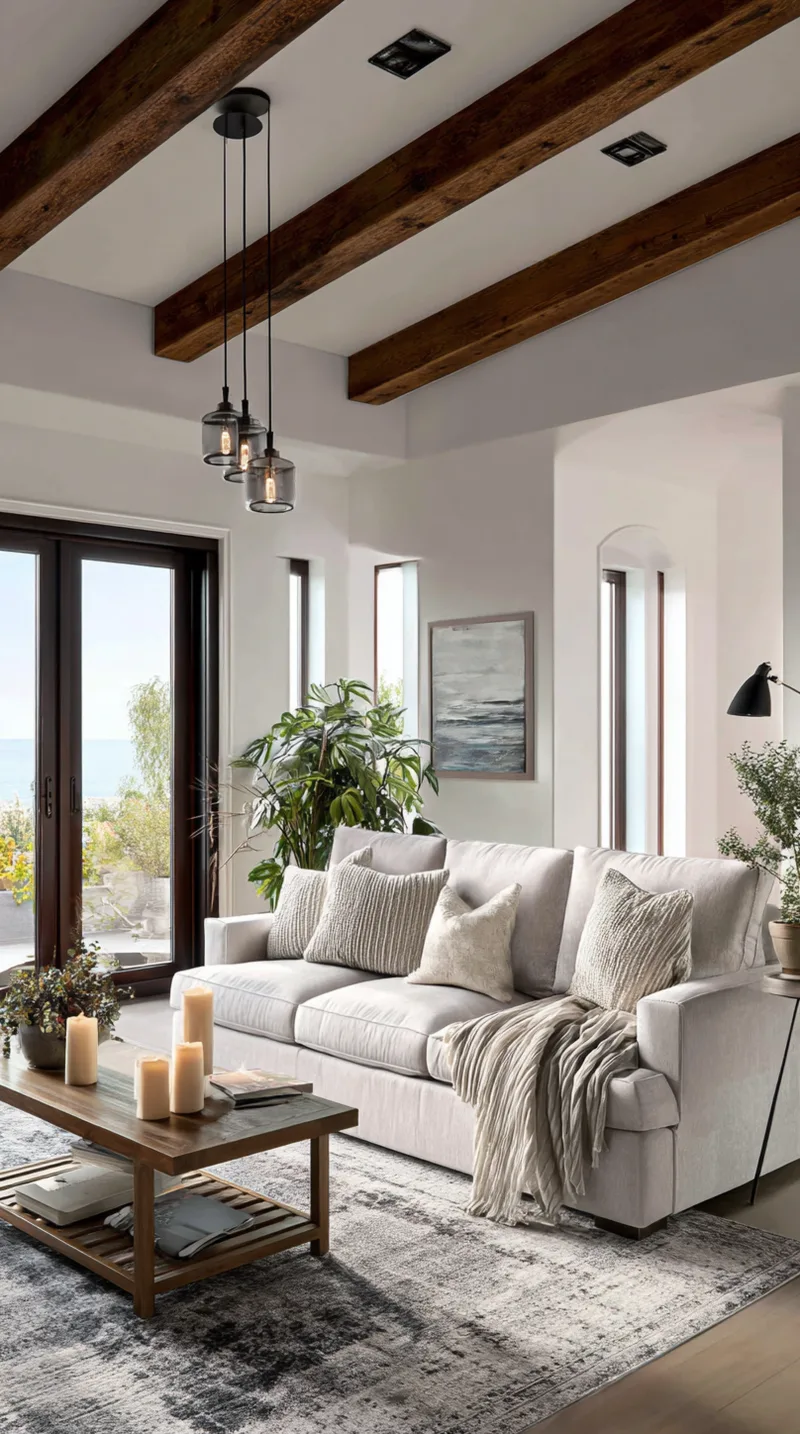
Exposed beams are architectural features that deserve intentional lighting.
The strategy is highlighting them rather than fighting against them. Install recessed lights between beams to create rhythm and definition. Hang pendants directly from the beams to emphasize their structural role. Or use uplighting aimed at the beams and ceiling to wash them with soft, indirect light that adds drama without harshness.
Here’s the critical part: beams can make ceilings feel lower, so you need compensating light sources at lower levels. Floor lamps and table lamps bring illumination down into the living space, creating balance. This prevents the room from feeling top-heavy or cave-like. The combination of highlighted beams above and functional lighting below creates visual interest while maintaining livability.
Modern Pendant Lights As Living Room Lighting
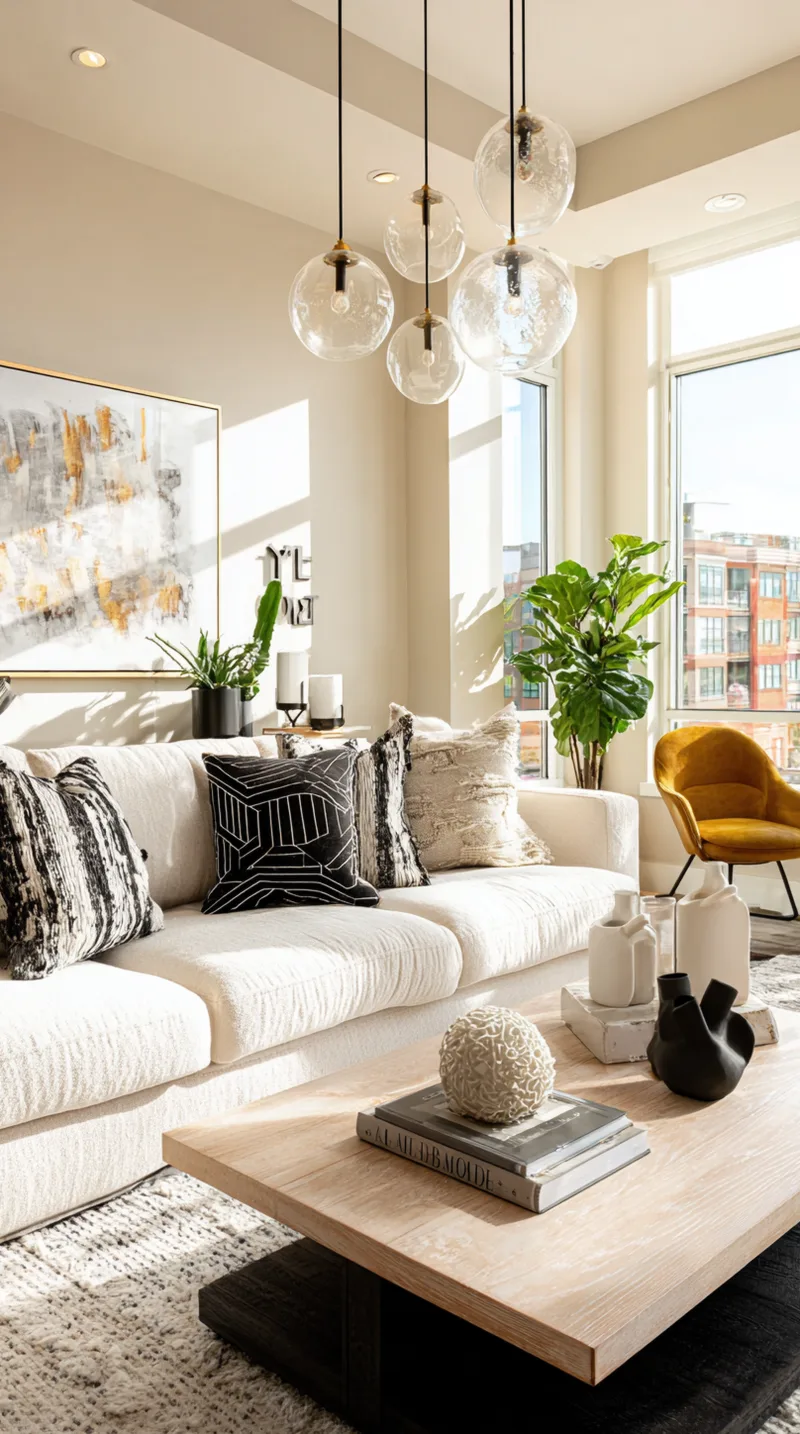
The key to using pendant lights in living rooms is understanding their purpose – they define zones.
Hanging two or three pendants at staggered heights over your coffee table or seating area creates a visual anchor point. The light draws people into the conversation zone while adding architectural interest. Choose clean-lined designs in materials like smoked glass, brushed metal, or simple globe shapes that complement rather than compete with your other design elements.
Function first, always. Keep pendants at least 7 feet from the floor for clearance, but low enough that they feel intimate – around 30-36 inches above the surface they’re illuminating. Put them on a dimmer switch. This gives you bright task lighting when you need it and ambient mood lighting for evenings. That flexibility is what makes modern living room lighting actually work in daily life.
Table Lamps On Side Tables For Warm Living Room Lighting
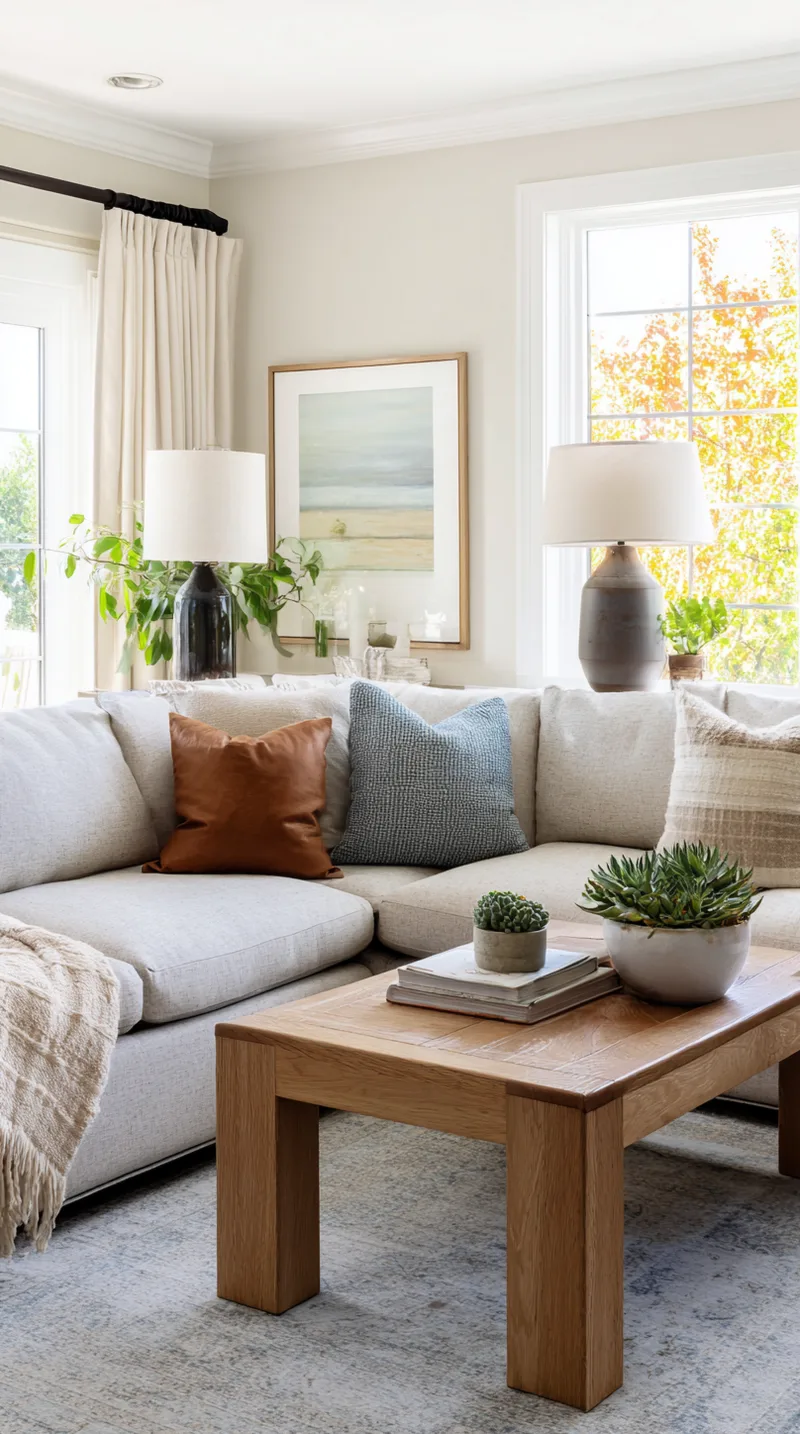
Here’s what designers know: table lamps are non-negotiable for balanced lighting.
The reason is simple – they bring light down to the human scale. Ceiling fixtures illuminate the room, but table lamps illuminate the people in it. Place them on side tables flanking your sofa, and you create symmetry while solving a functional problem: you need light for reading, working on a laptop, or setting down a drink in the evening.
The best approach is pairing lamps of similar height (24-28 inches tall) but varying the base material or shade texture to add visual interest. Ceramic and glass, linen and metal – the combination keeps things from looking too matched. This works particularly well for apartment living room lighting because it’s completely portable and requires zero installation.
Statement Chandeliers For High Ceiling Living Rooms
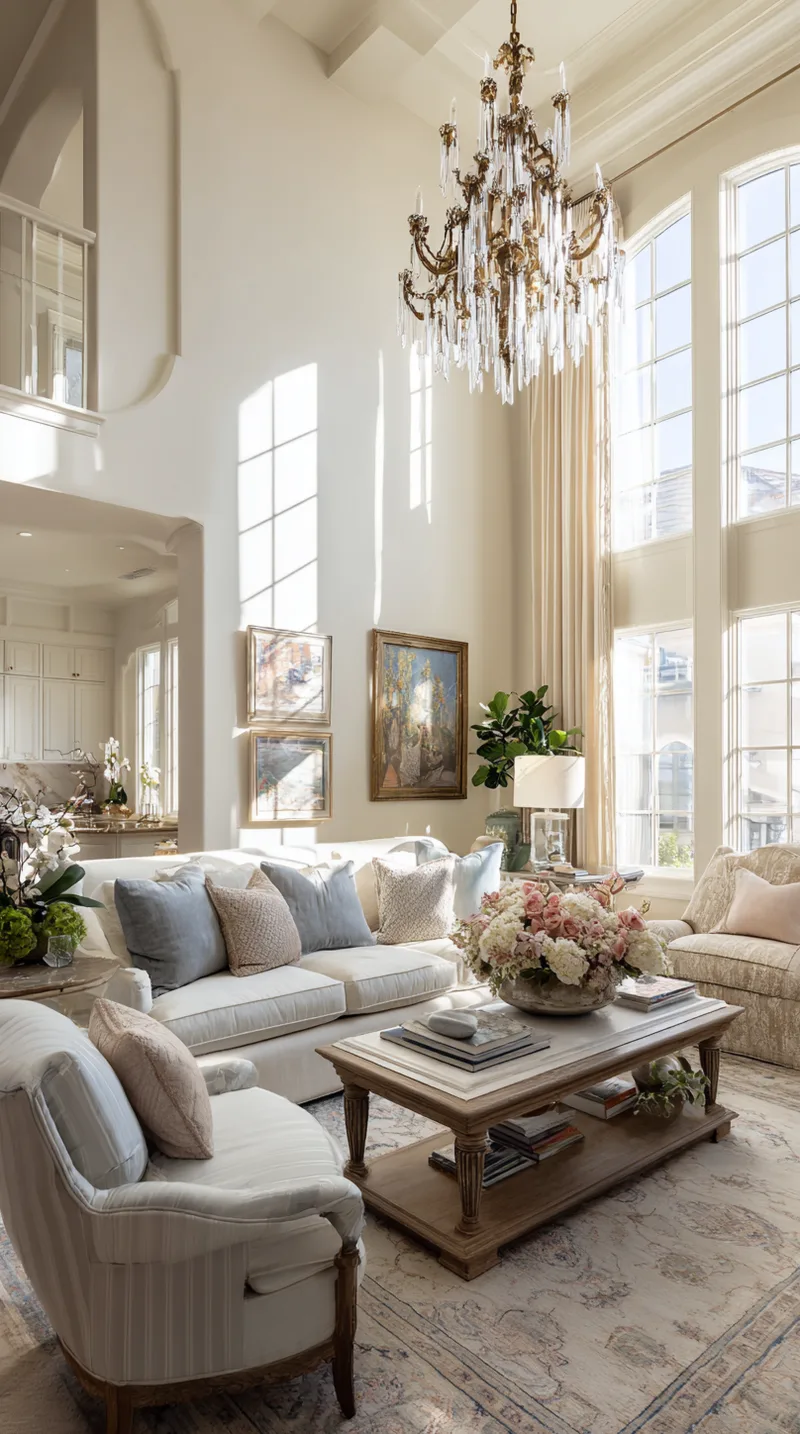
High ceilings demand scale, not subtlety.
The biggest mistake people make with high ceiling living rooms is choosing fixtures that are too small. A chandelier that looks dramatic in the store completely disappears when hung 12 feet up. You need something substantial – at least 30-36 inches in diameter for most spaces, hanging 3-4 feet down from the ceiling to create proper visual weight.
Here’s the critical part: the chandelier handles drama and ambient light, but you still need layered lighting at lower levels. Add floor lamps and table lamps to bring light down into the living space. Without that lower layer, your room will feel like a lobby – impressive but not livable. The combination of statement ceiling lighting with functional lower sources is what makes high spaces feel both grand and comfortable.
Ceiling Fans With Lights For Living Rooms
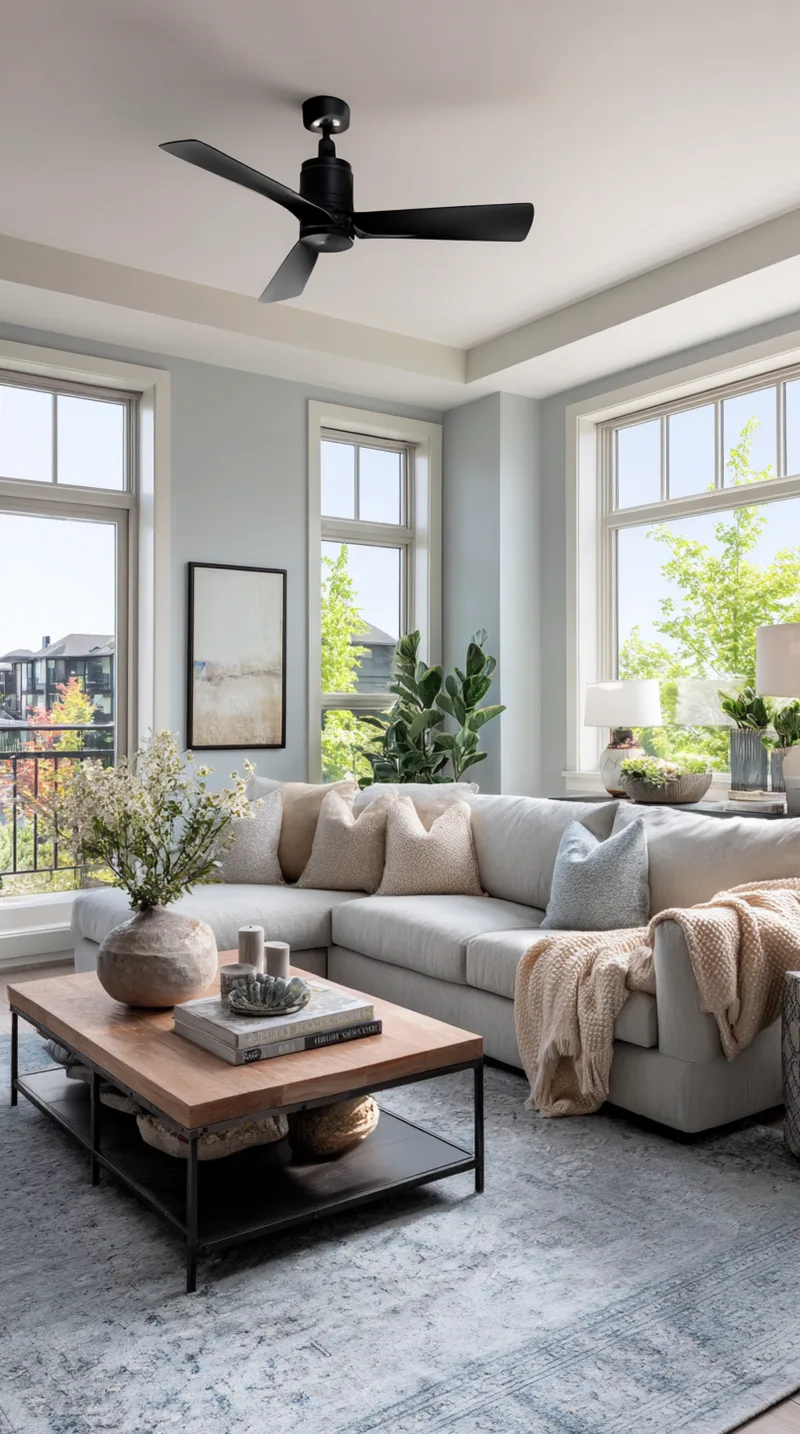
If you need a ceiling fan, choose one that does double duty well.
Modern ceiling fans have evolved significantly – retractable blades, integrated LED lighting, clean-lined designs in matte black or brushed nickel. The key is selecting one that fits your ceiling height: low-profile fans for ceilings under 8 feet, standard downrod mounts for 8-9 feet, and extended downrods for anything higher.
Here’s what I’ve learned: ceiling fan lights provide adequate ambient lighting, but they’re not sufficient on their own. The light is too diffused and too high to create the warmth you need in a living room. Use the fan light as your base layer, then add floor lamps and table lamps for task and accent lighting. That layered approach is what transforms functional lighting into comfortable lighting.
Hanging Lamps That Add Drama To Living Rooms
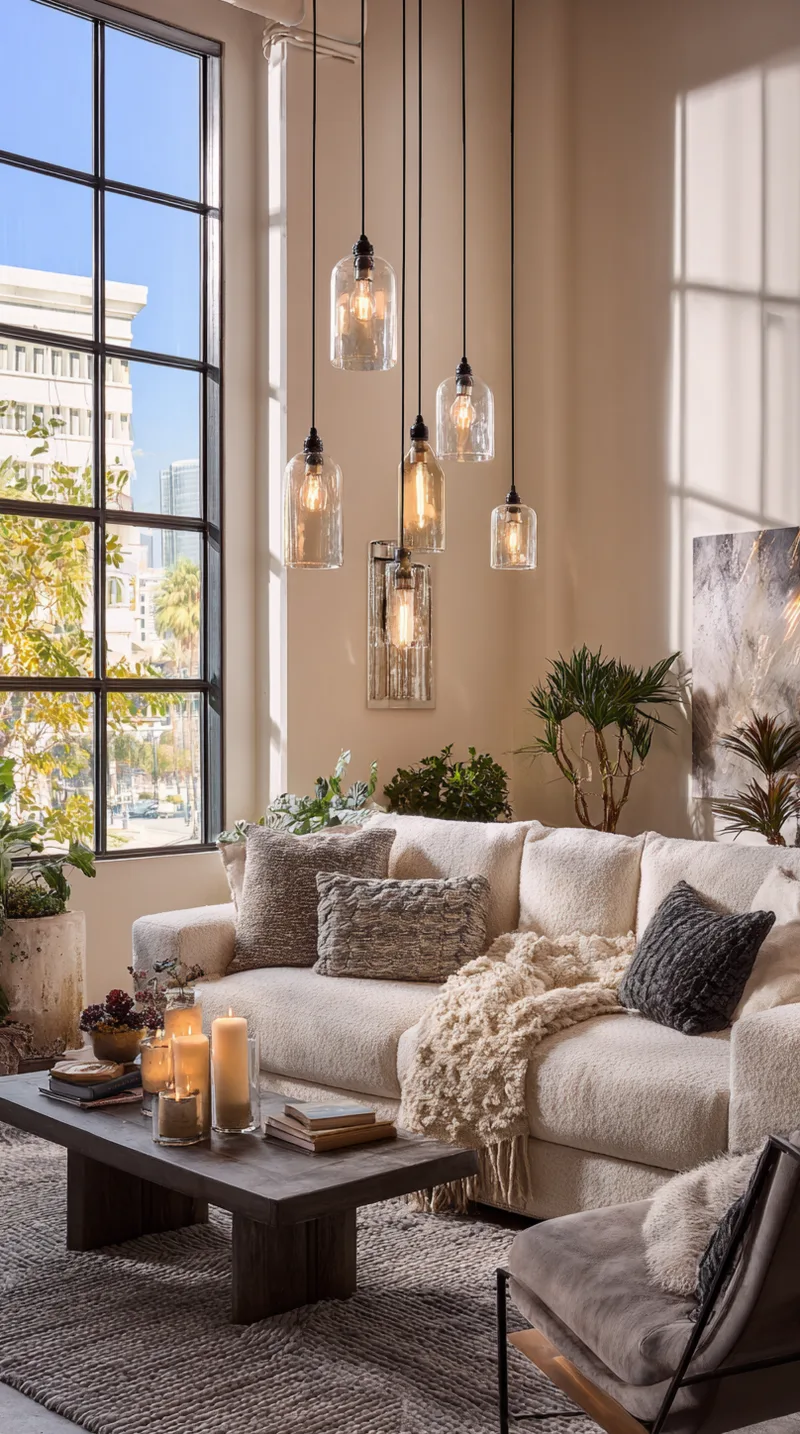
The reason hanging lamps work is intentional placement.
Most people default to centering lights, but that’s rarely the most interesting choice. Cluster three glass pendants at staggered heights in one corner, or hang a single large pendant over the end of your sectional rather than in the middle of the room. The unexpected placement creates visual interest while solving functional lighting needs in specific zones.
Here’s the strategy: let the cords be visible – they’re part of the design language now. Choose pendants that complement your existing style but don’t match too perfectly. A bit of contrast in material or finish adds depth. Designers know that hanging lamps are most effective when they feel deliberately placed rather than simply installed where the junction box happened to be.
Modern Floor Lamps That Transform Living Room Lighting
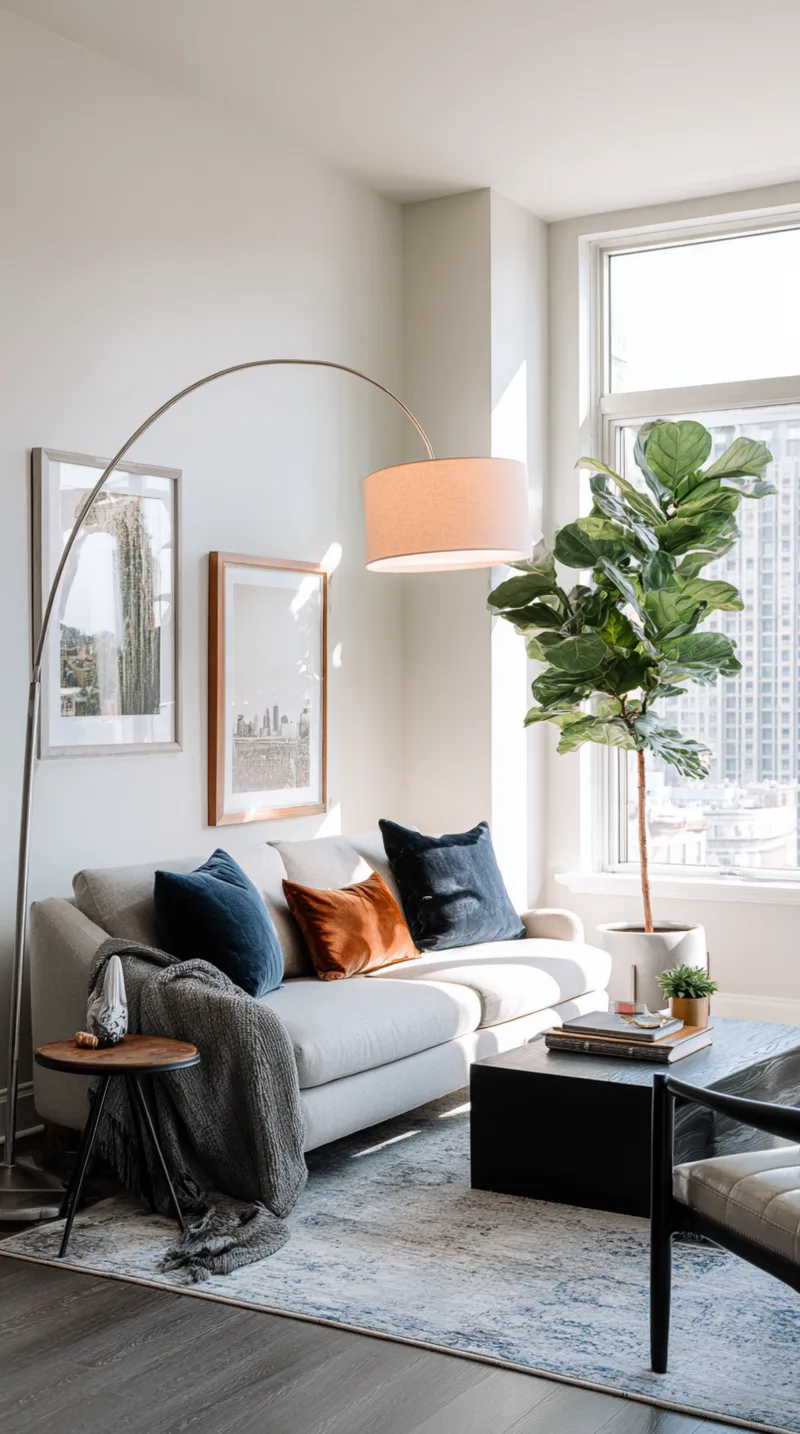
The key advantage of modern floor lamps is adaptability.
Your lighting needs shift throughout the day – bright task lighting for morning coffee and reading, softer ambient light for evening relaxation. Floor lamps with adjustable arms, multiple brightness settings, or smart bulbs give you that flexibility. An arc lamp reaches exactly where you need it. A tripod lamp with a dimmer adapts to any situation.
Function first, always. Look for lamps with built-in dimmers or use smart LED bulbs that adjust via phone. This lets you create different “scenes” – bright for working, medium for conversation, low for watching TV. Modern living room lighting is about having options, not just illumination. Fixed, single-brightness fixtures can’t deliver that level of functionality.
Recessed Ceiling Lighting For Clean Modern Living Rooms
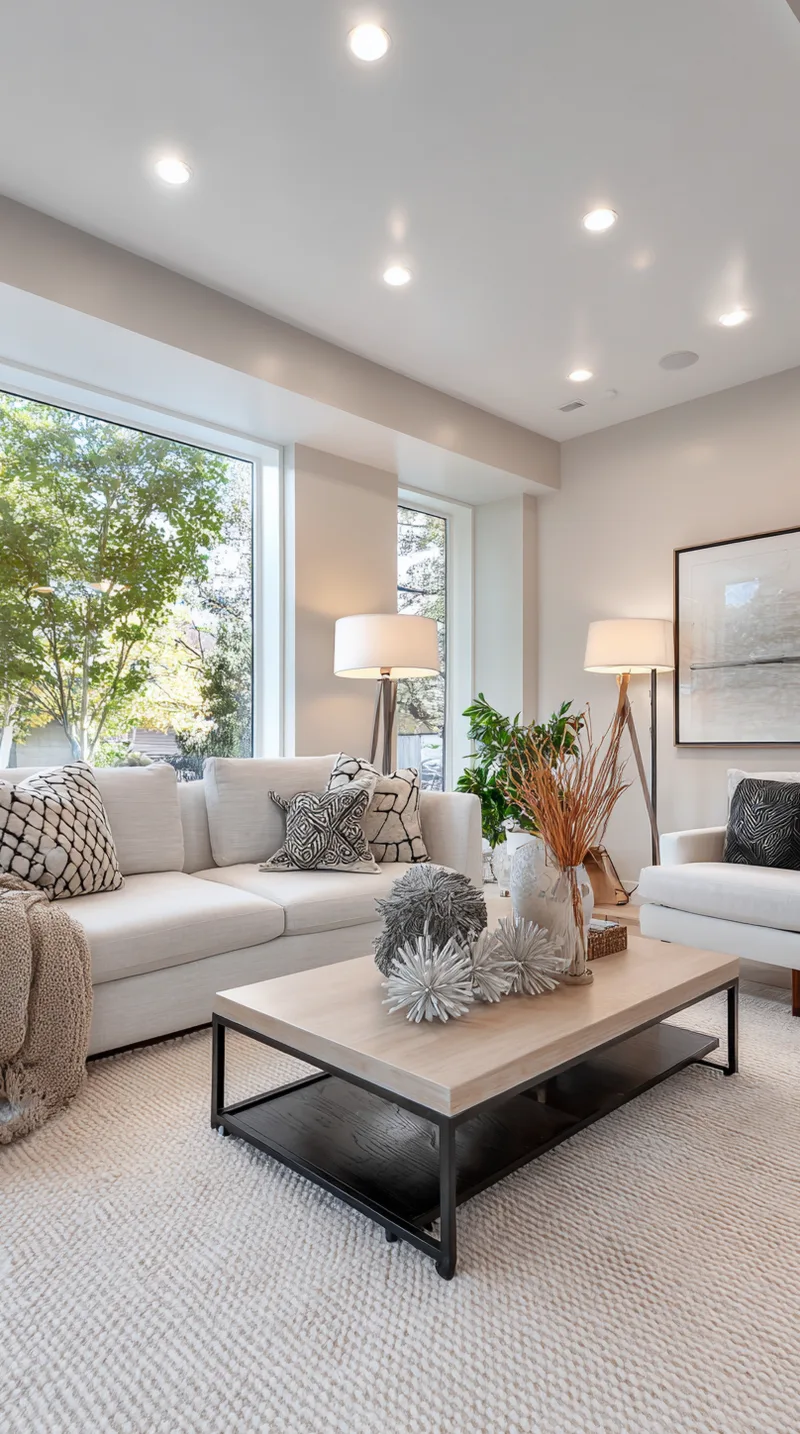
Recessed lighting provides clean, architectural illumination – but only if you layer it correctly.
The biggest mistake is relying on recessed lights alone. Yes, they’re sleek and modern, providing even ambient light without visible fixtures. But they create a flat, commercial feel if they’re your only light source. Space them 4-6 feet apart on a dimmer switch for functional overhead lighting, then add floor lamps and table lamps to introduce warmth and variation.
Here’s what works: use recessed lights for general illumination and task lighting – highlighting artwork or defining zones in open-concept spaces. Then layer in softer lighting at lower levels. This combination gives you the clean aesthetic of recessed lighting without the cold, office-like atmosphere. The layering is what makes it livable.
Adjustable Track Lighting For Living Room Ceilings
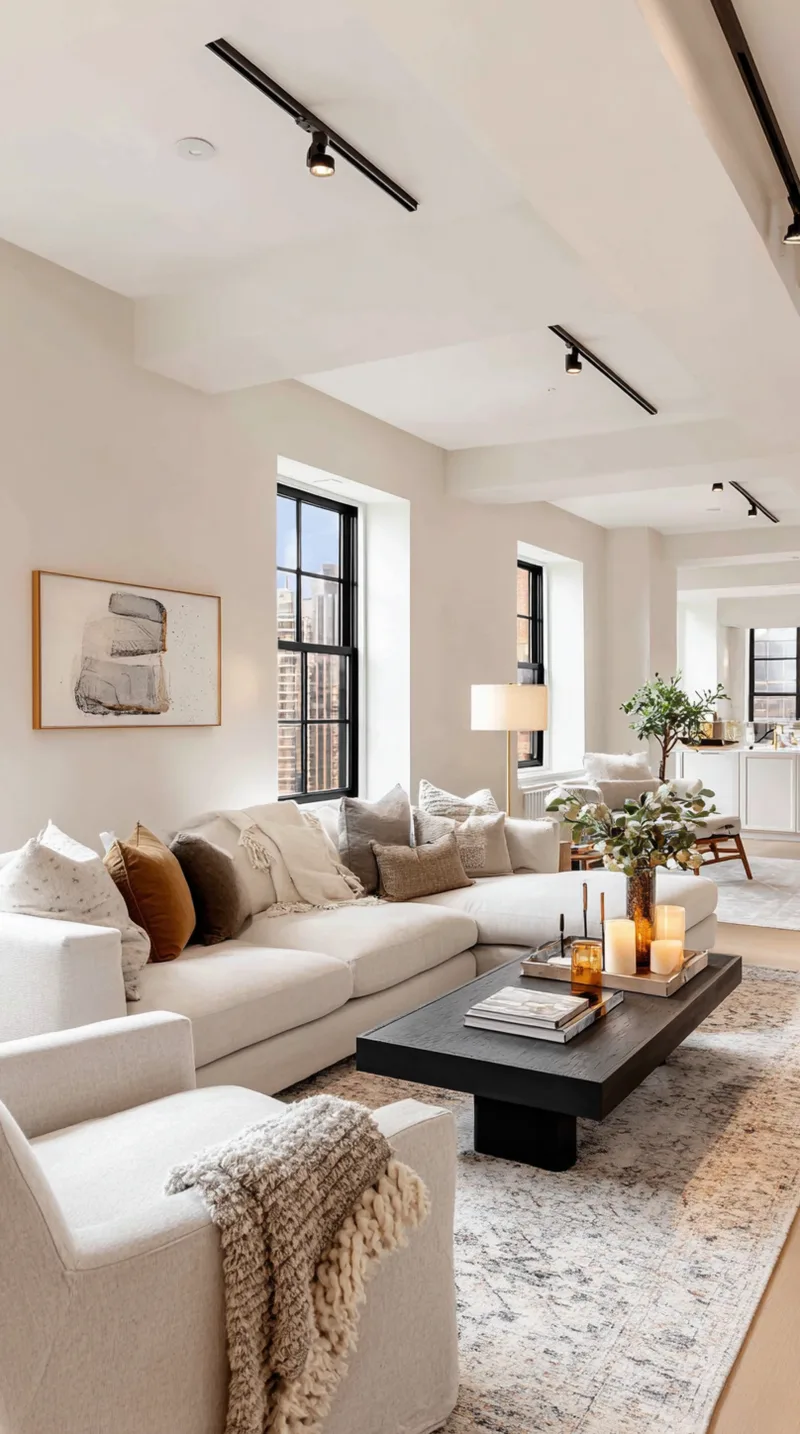
Track lighting solves a specific problem: directional lighting without multiple fixtures.
The reason it works is flexibility. Each head on the track adjusts independently, letting you aim light exactly where it’s needed – at the seating area, on artwork, into dark corners. This is particularly effective for living rooms with low ceilings where pendant lights aren’t practical. Modern track systems in black, brass, or brushed nickel integrate seamlessly with contemporary design.
Most people overlook this, but track lighting works best as one component of a layered system. Use the track for ambient and task lighting, then add floor lamps for warmth and depth. Three or four adjustable heads can handle most of your overhead lighting needs, while lamps at lower levels prevent the space from feeling too utilitarian.
Corner Floor Lamps For Full Living Room Coverage
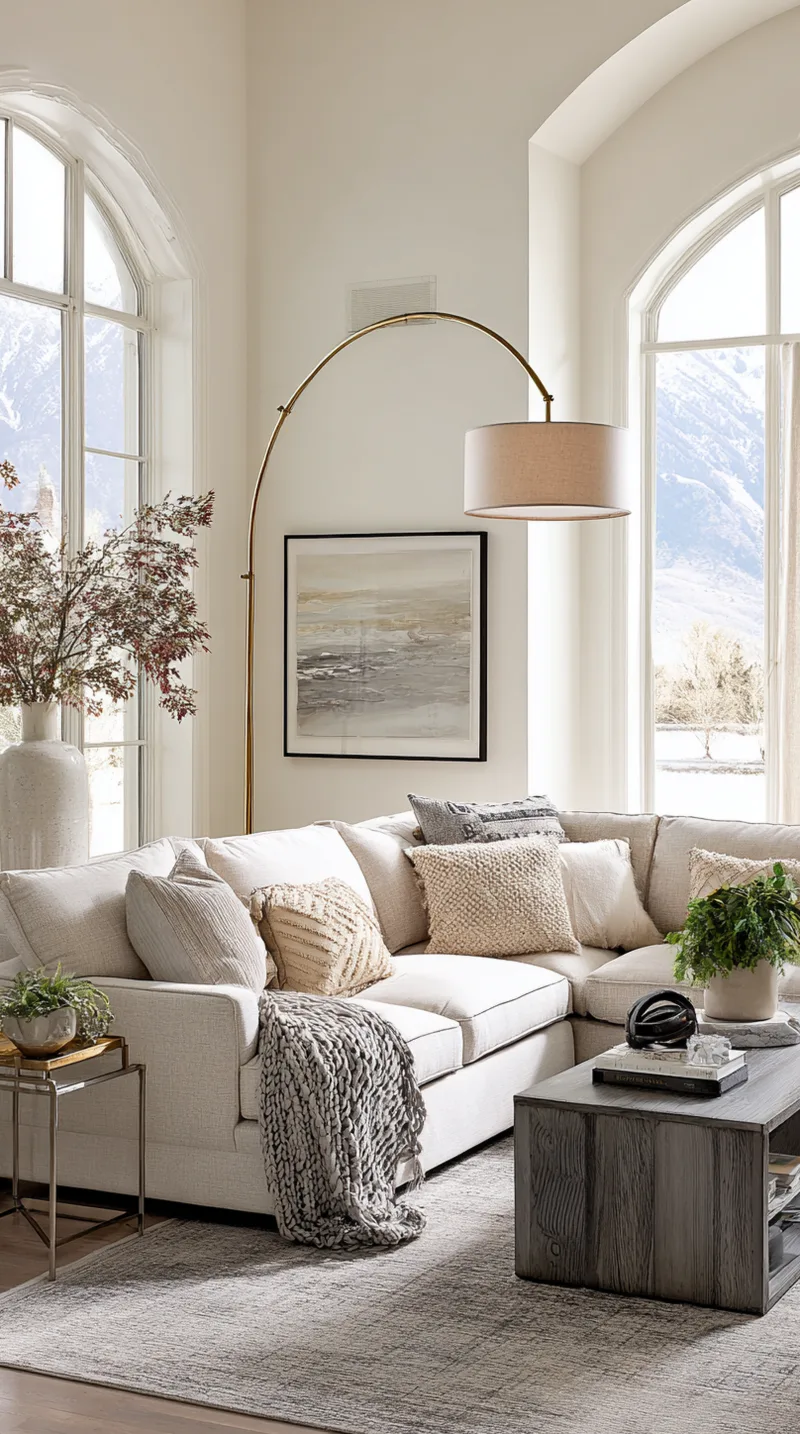
Here’s what designers know: corner placement is strategic, not decorative.
Putting tall floor lamps (60+ inches) in corners serves two purposes. First, it eliminates dark zones that make rooms feel smaller. Second, it creates visual height that draws the eye up, making ceilings feel taller. Use a mix of lamp styles – an arc lamp in one corner, a drum shade lamp in another – to add variety while maintaining function.
The key is choosing lamps that cast light both up and down. Uplighting bounces off the ceiling to expand the space visually. Downlighting provides functional illumination for seating areas. This combination makes corner floor lamps work harder than traditional single-direction fixtures. It’s one of the simplest ways to create cozy living room lighting that feels intentional rather than accidental.
Smart Bulbs In Living Room Lamps For Easy Control
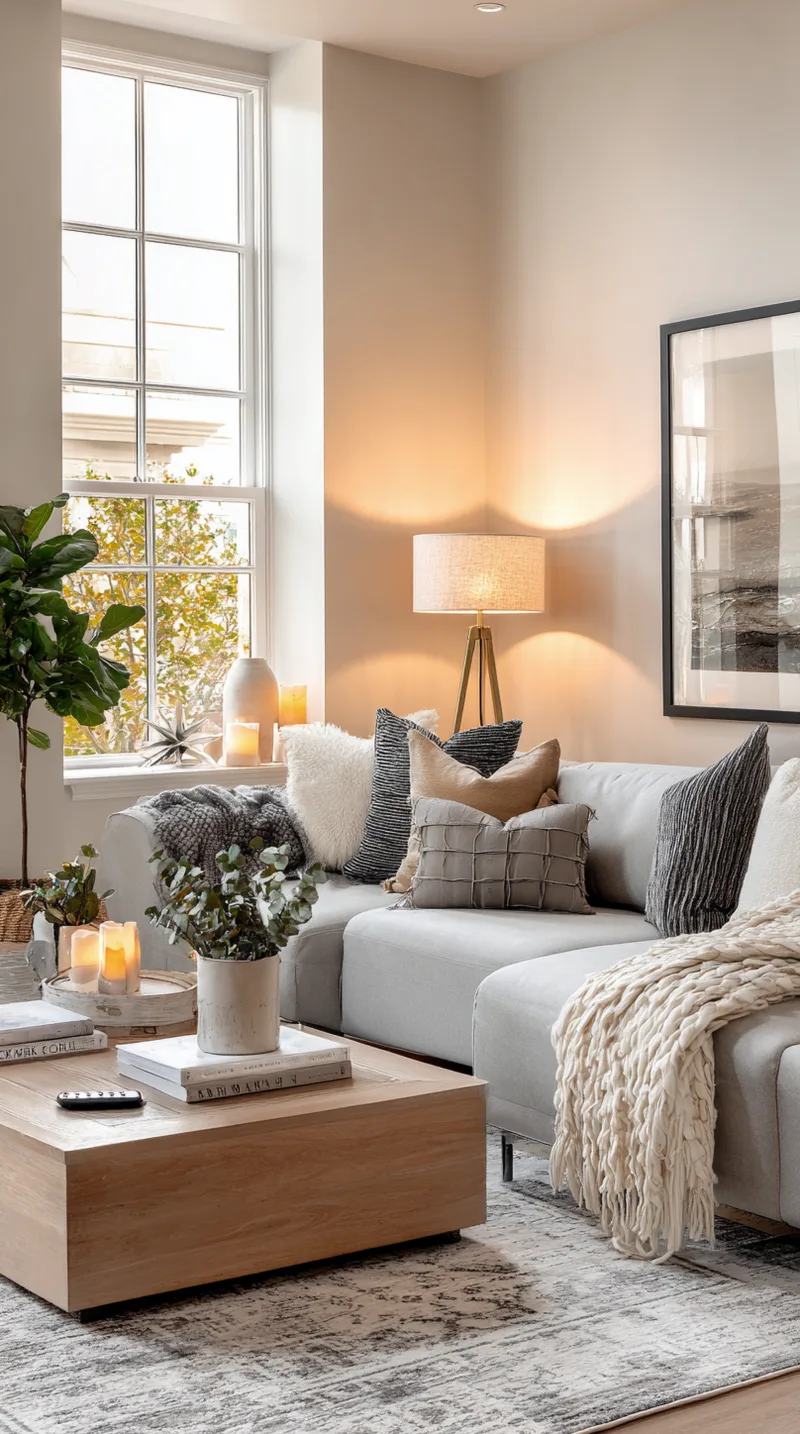
Smart bulbs transform fixed fixtures into flexible lighting systems.
The advantage is control without rewiring. Adjust brightness, change color temperature (warm for evening, slightly cooler for daytime), set schedules, and create preset scenes – all from your phone. The “reading” scene might be bright and focused. The “movie” scene dims everything. The “entertaining” scene creates warm, ambient light throughout.
Here’s the strategy: group your lights logically. Put all floor lamps in one group, table lamps in another. Control them independently for maximum flexibility. This is particularly effective for apartment living room lighting where you can’t install dimmer switches or smart wall controls. Smart bulbs give you sophisticated lighting control with zero installation – just screw them in and connect to your phone.
Low Profile Lighting For Living Rooms With Low Ceilings
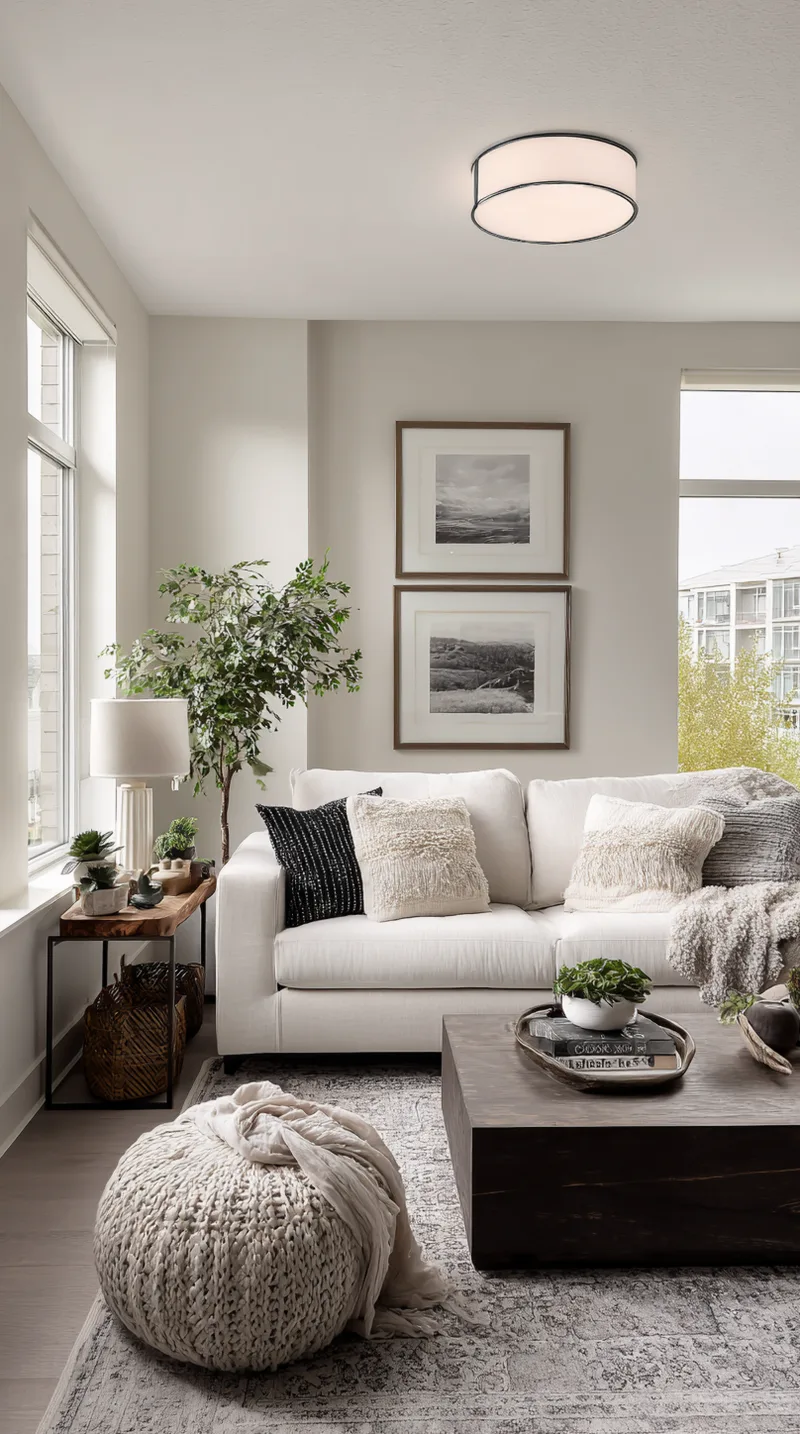
Low ceilings require fixtures that maximize vertical space without sacrificing style.
Semi-flush mount lights – which hang just a few inches from the ceiling – provide better light distribution than true flush mounts while maintaining clearance. Choose designs with drum shades, geometric shapes, or interesting details that add visual interest without dropping too far into the room. A slightly oversized fixture (18-20 inches diameter) creates impact and draws the eye upward.
Most people overlook this, but the fixture is only part of the solution. Layer in floor lamps and table lamps to bring light down to the living level. This prevents your low ceiling from feeling oppressive by creating multiple focal points at different heights. The overhead fixture provides ambient light; the lamps provide warmth and functionality.
Adjustable Floor Lamps For Living Room Reading Nooks
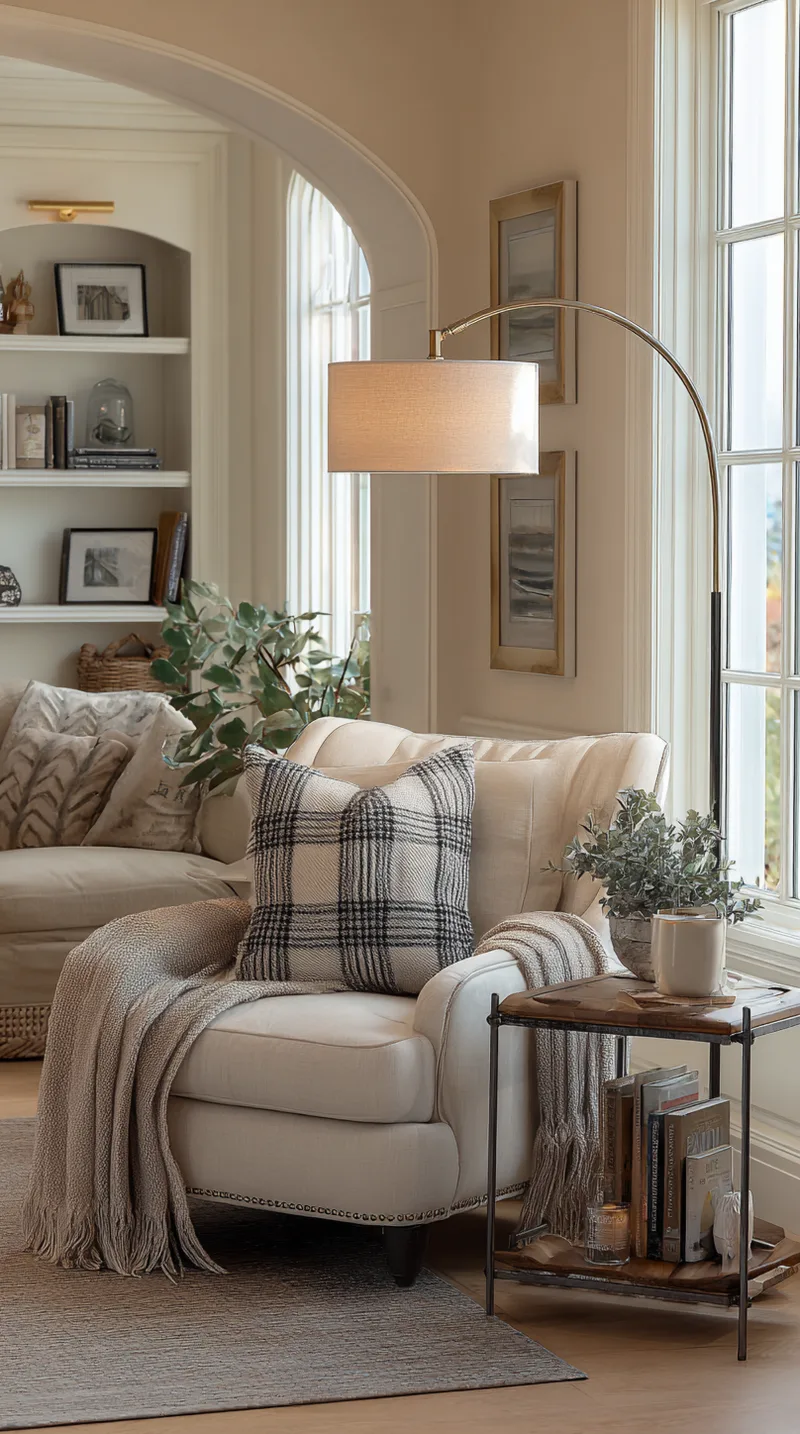
Reading requires specific lighting – focused, bright, and positioned correctly.
The reason task lighting matters is simple: inadequate light causes eye strain. An adjustable floor lamp with a downward-facing shade positions light exactly where you need it – slightly behind and to the side of your reading position to eliminate shadows on the page. Look for lamps with built-in cord dimmers for easy adjustment and LED bulbs rated at least 60-watt equivalent.
Here’s what works: arc floor lamps that reach over your chair or traditional task lamps with flexible arms. Both solve the same problem – delivering concentrated light without taking up table space next to your seat. This is one of those living room lighting ideas that serves a clear functional purpose rather than just adding ambient glow. Purpose-driven design always performs better.
Conclusion
Good living room lighting comes down to understanding layers and purpose.
You need multiple light sources at different heights – ceiling fixtures for ambient light, floor lamps for flexibility, table lamps for task lighting, wall sconces for dimension. Each serves a specific function. Together, they create a space that works for reading, conversation, entertaining, and relaxation.
The most important principle? Never rely on a single overhead fixture. Add at least three additional light sources, install dimmers or use smart bulbs for control, and choose warm white (2700-3000K) over cool white. That’s the difference between lighting that’s merely adequate and lighting that actually enhances how you live.
Which of these living room lighting ideas solves your biggest challenge? Start there, then build your layered system from that foundation.
See you soon,
Rachel