French country living rooms blend European sophistication with relaxed, livable charm. These 2026 French country living room ideas showcase how to mix rustic elements, elegant fabrics, and vintage finds to create spaces that feel collected over time. From neutral palettes with linen upholstery to bold accent walls and layered textures, these design concepts help you achieve that effortlessly chic French countryside aesthetic in your own home.
French Country Living Room Design Ideas
What makes a living room feel truly inviting? Is it the perfect sofa, the right lighting, or something less tangible?
Here’s what I’ve learned after years of studying French country interiors: the magic is in the mix. It’s the way weathered wood beams contrast with soft linen. How antique pieces sit comfortably next to modern elements. The balance between elegance and ease.
French country design has staying power because it rejects the idea that rooms should look perfectly pulled together from a single shopping trip. Instead, it celebrates collecting meaningful pieces over time, mixing high and low, old and new. The result feels personal, lived-in, and genuinely comfortable rather than staged.
These 20 French country living room ideas cover the essential elements – from architectural details and color palettes to furniture choices and styling approaches – that create this timeless aesthetic. The reason these concepts work is simple: they honor both beauty and function, creating spaces where people actually want to spend time.
Exposed Wood Beams With Soft Neutral Furniture
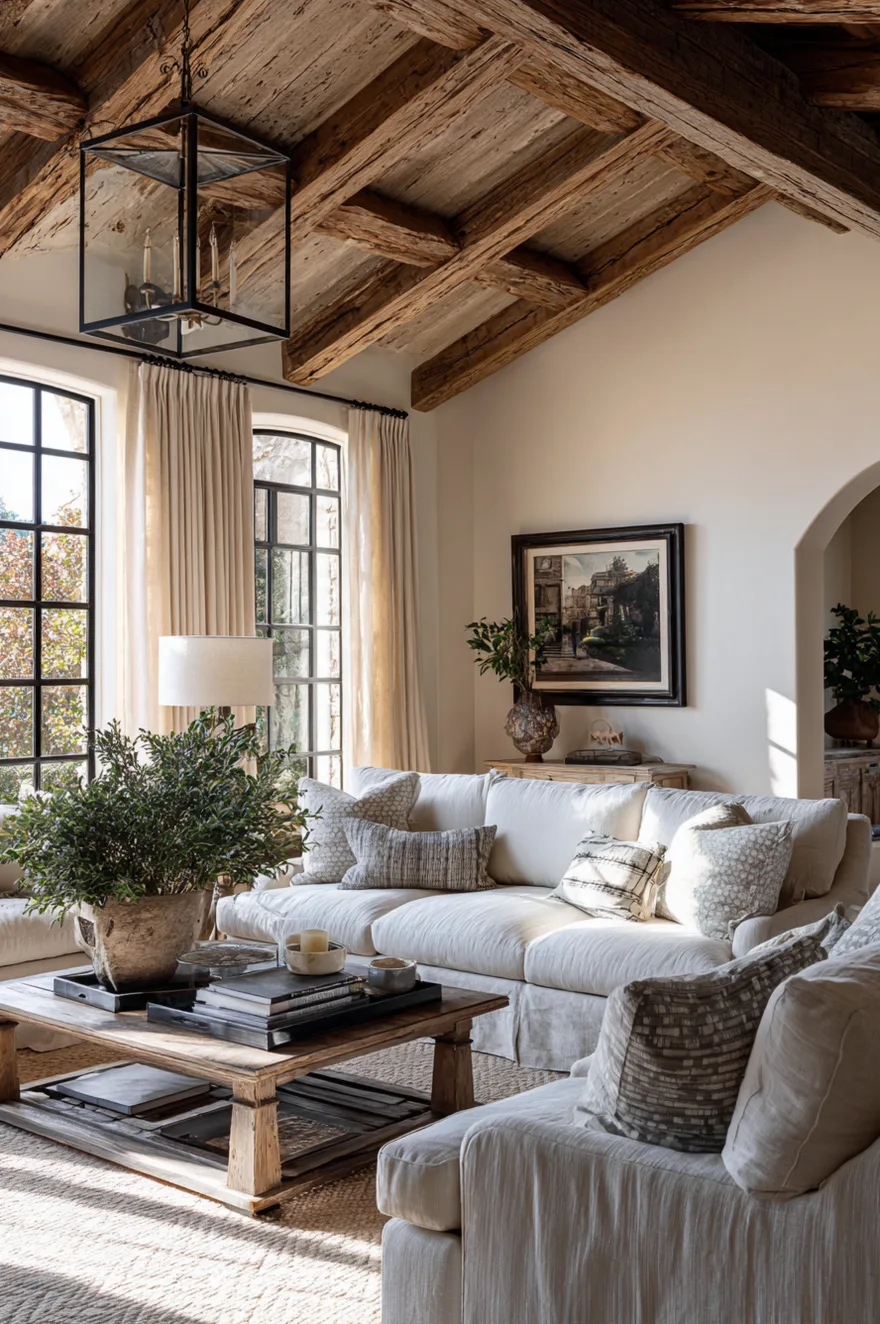
Architectural character is the secret weapon of French country design. It creates instant visual interest that no amount of decorating can replicate.
Exposed ceiling beams in natural wood tones bring warmth and rustic authenticity to French country living rooms. When paired with neutral linen or cotton upholstery in creams, beiges, and soft grays, the contrast between rough and refined creates balance. The beams add structure and history while the soft furniture keeps everything approachable and comfortable.
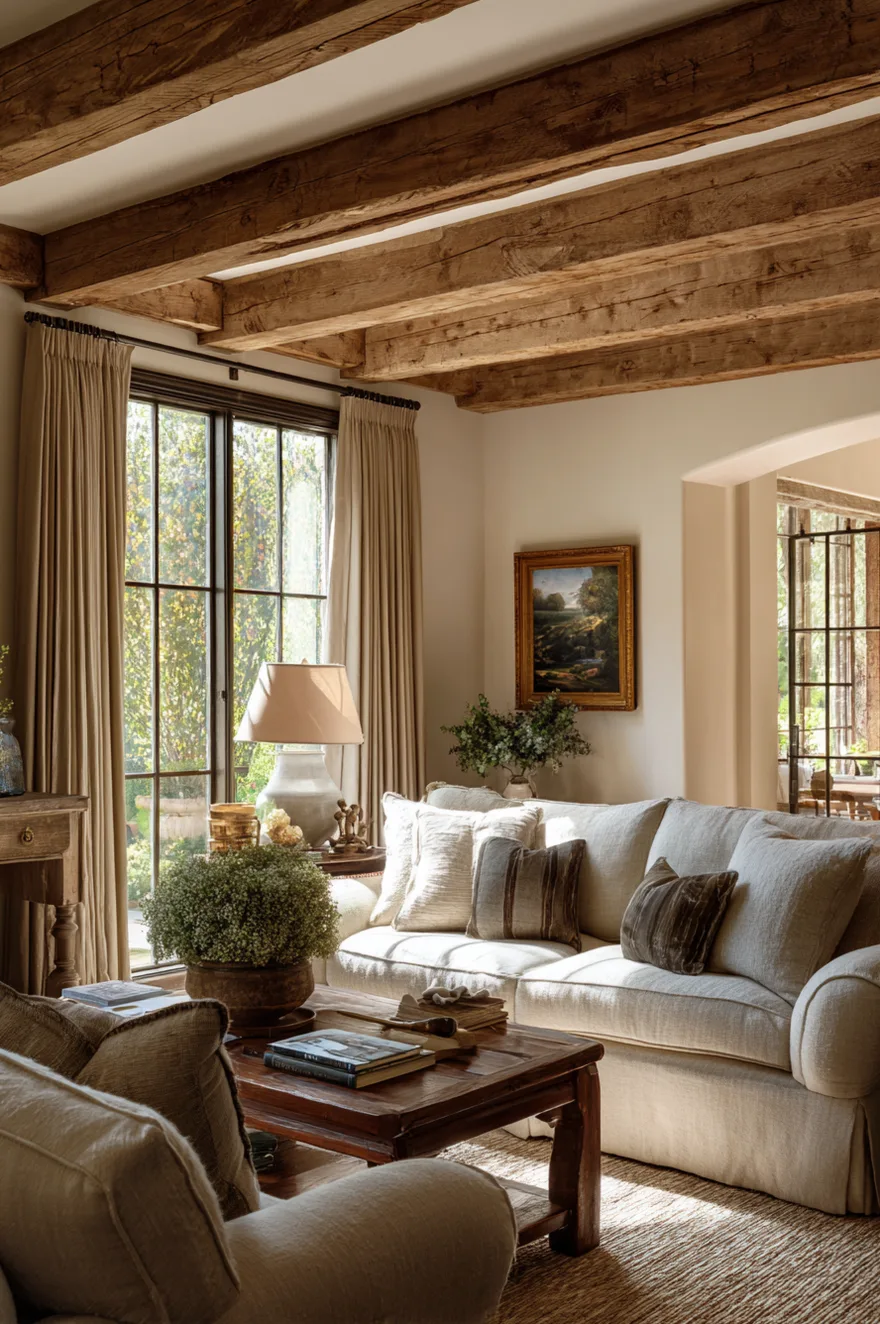
This combination works best in rooms with higher ceilings where the beams have space to breathe. If you’re working with standard 8-foot ceilings, consider adding faux beams in stained wood – they cost significantly less than structural changes and deliver similar visual impact.
Painted Built-In Cabinets With Display Shelving
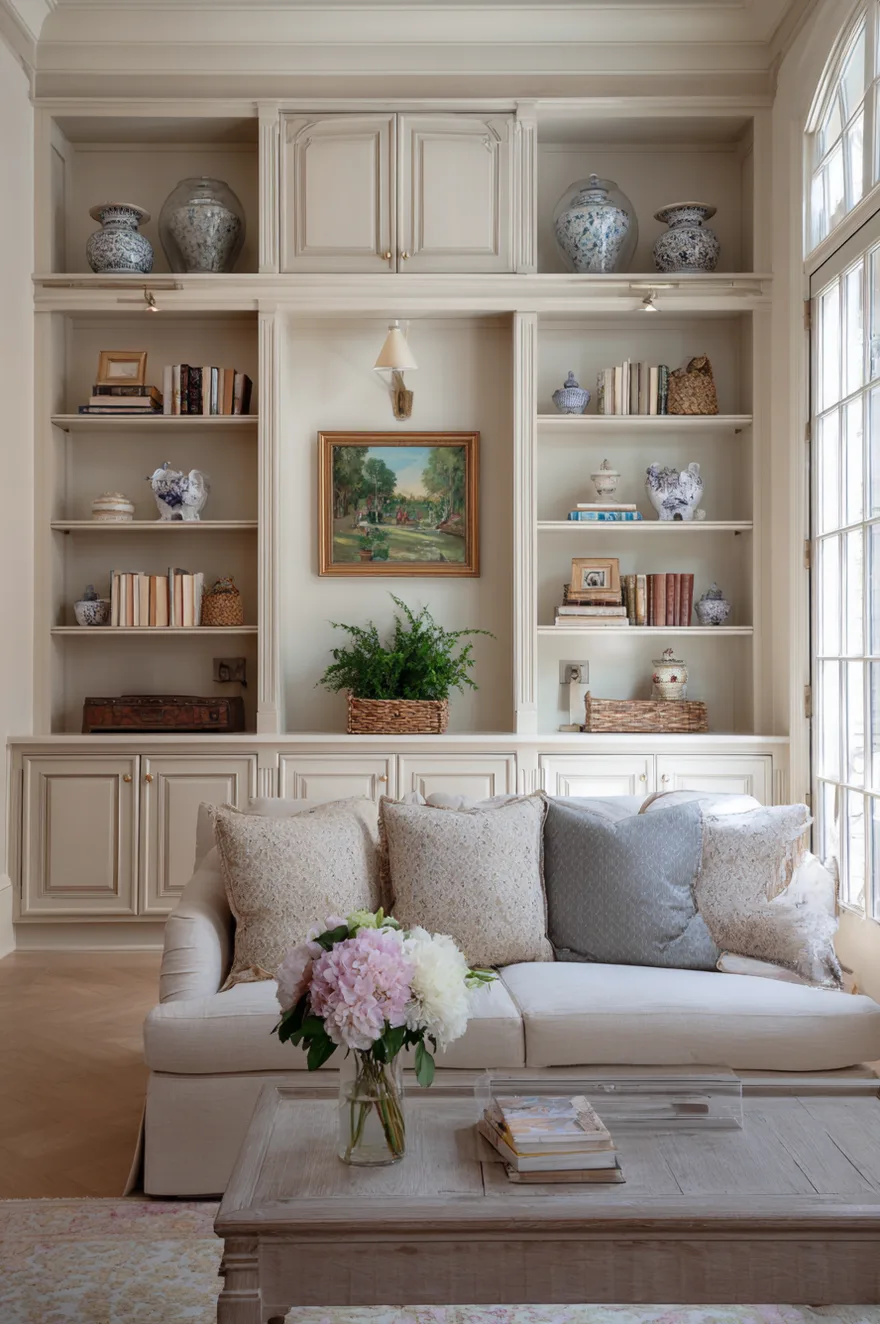
I always recommend built-in cabinetry because it solves storage problems while adding massive architectural presence. It is equally practical and beautiful.
Painted built-ins in soft sage green, dusty blue, or warm gray create focal points in French country living rooms. Open shelving mixed with closed cabinets allows you to display collections of pottery, books, and vintage finds while hiding less attractive necessities. This approach brings custom, high-end character without the luxury price tag if you work with prefab units or skilled carpenters.
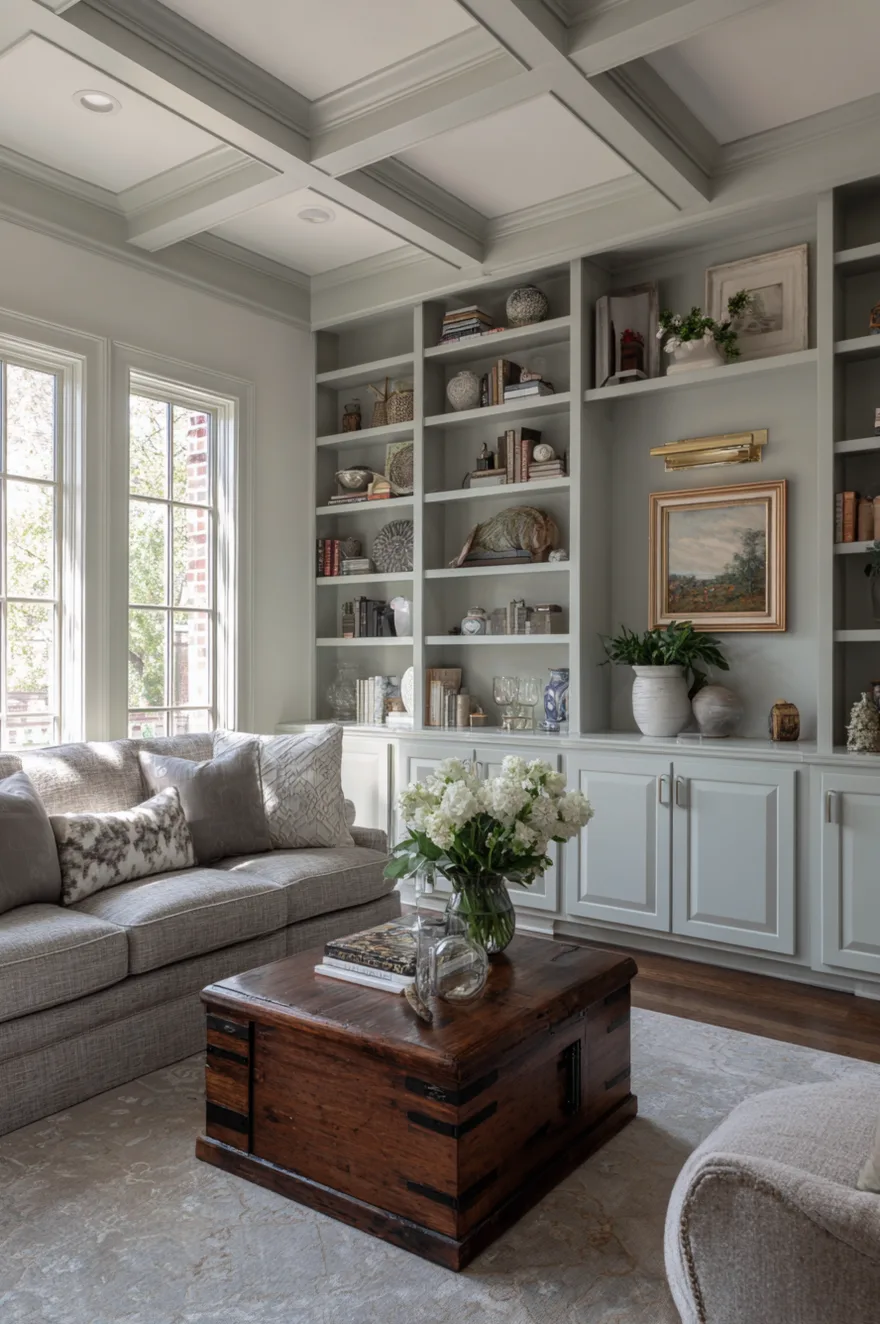
What makes this work functionally is the mix of open and closed storage. You get the beauty of displayed collections without the chaos of everything being visible. The key is editing what you show – choose pieces that tell a story rather than filling every inch.
Vintage Leather Couch With Layered Textiles
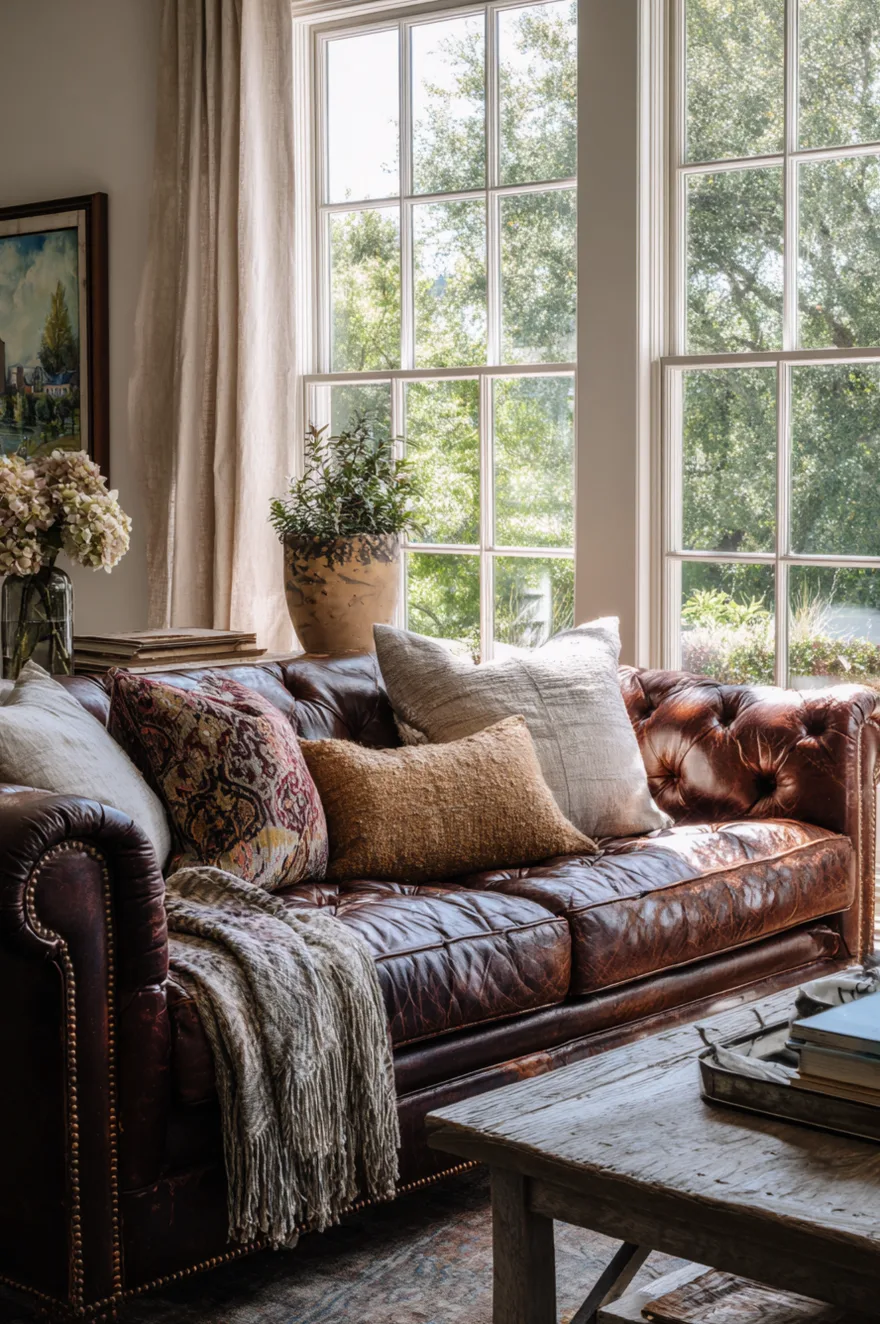
Nothing grounds a soft, feminine space quite like aged leather. It brings an instant patina and character that brand new furniture simply cannot match.
A worn leather sofa or armchairs in caramel, cognac, or chocolate tones add masculine balance to otherwise soft, feminine French country rooms. Layer them with linen pillows, chunky knit throws, and vintage textiles to create that collected, eclectic mix. The leather grounds the space and improves with age, developing richer color and softer texture over time.
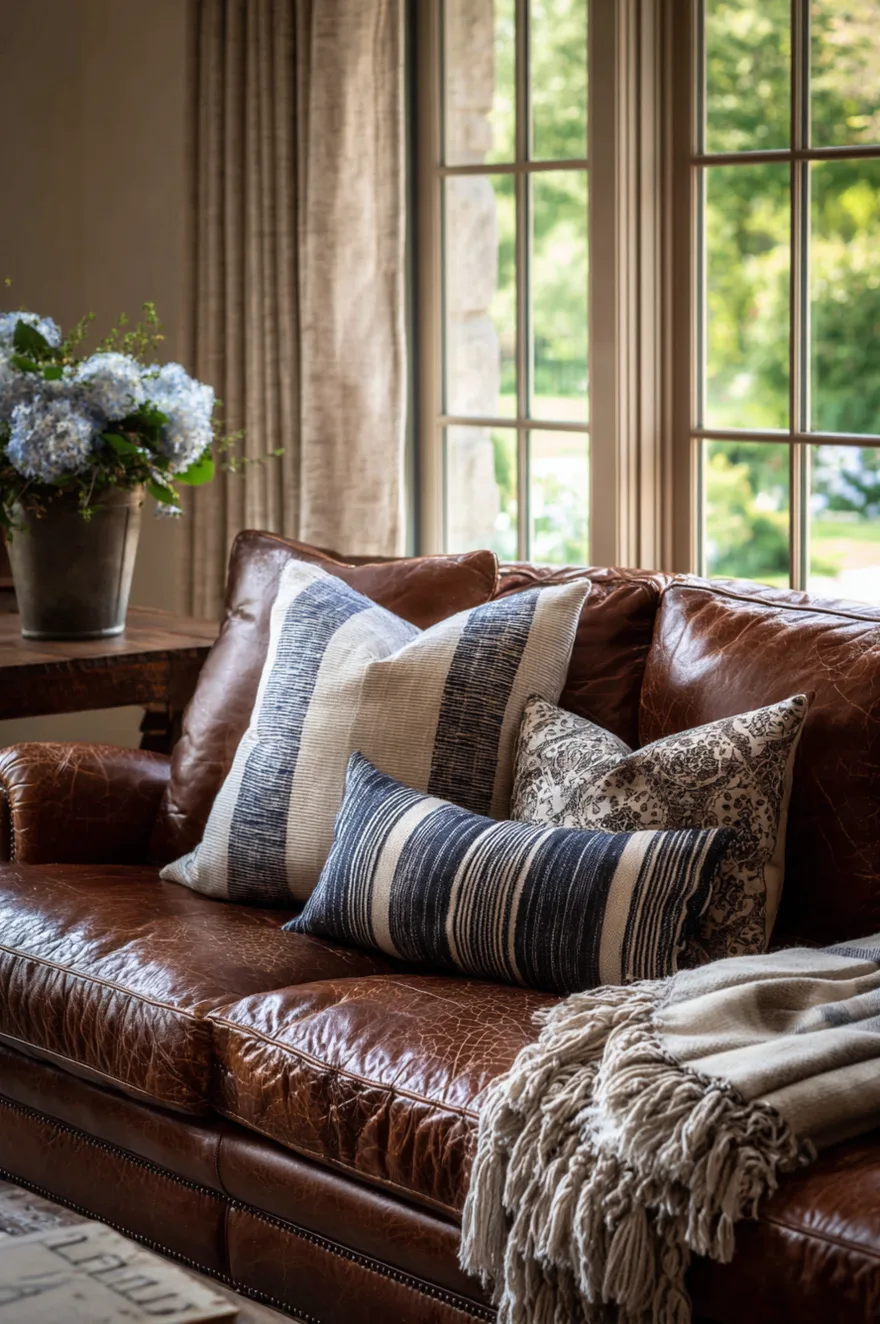
The reason this works is contrast – smooth leather against nubby linen, structured furniture against draped fabrics. Avoid leather that’s too shiny or perfect-looking; you want pieces with natural grain and some wear that suggest history.
Moody Accent Walls With Antique Mirrors
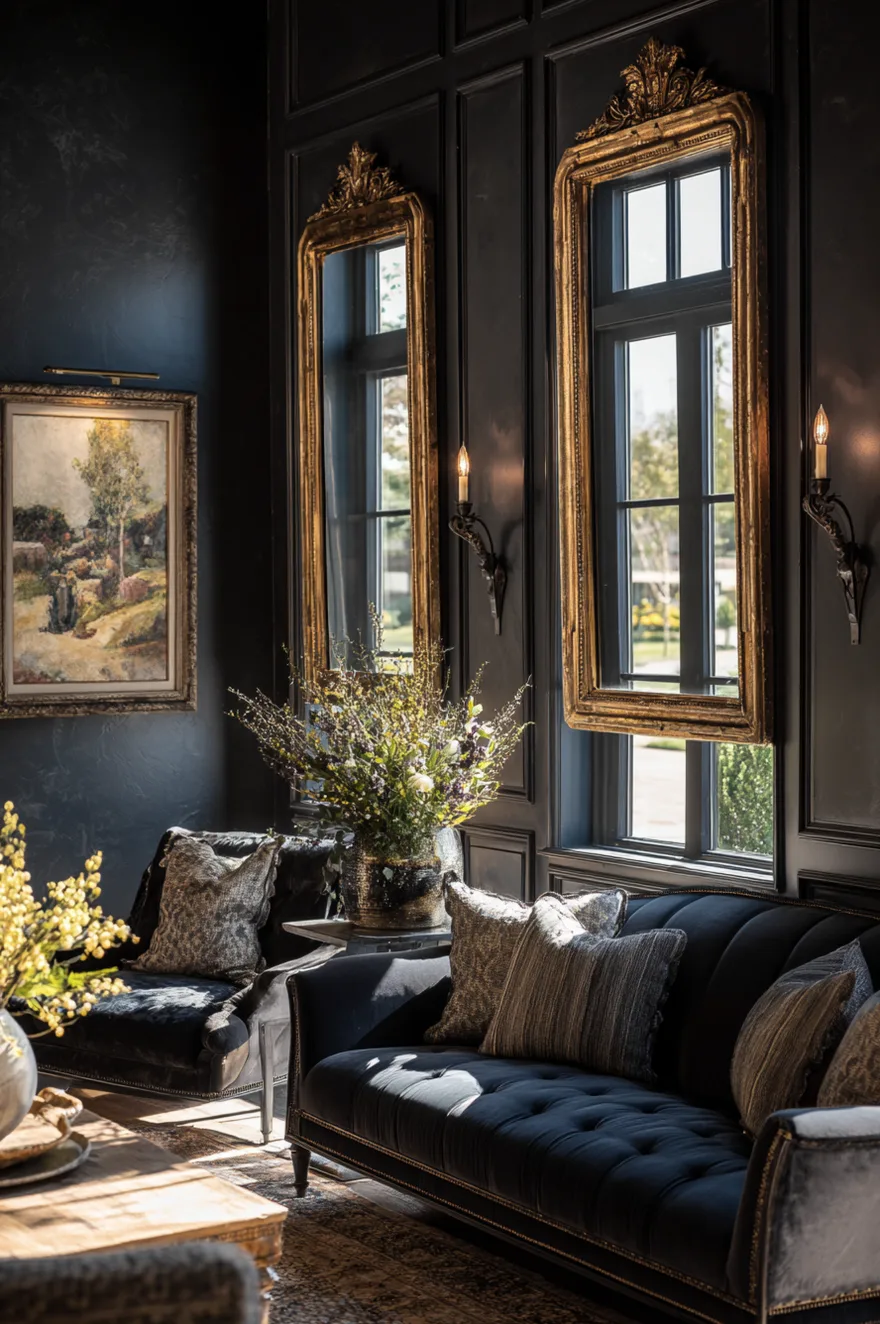
Don’t be afraid to go dark. Saturated wall colors create a beautiful sense of intimacy and drama, making the room feel intentionally designed rather than just playing it safe.
Deep navy, charcoal, forest green, or even black accent walls provide sophisticated backdrops for gilded mirrors and artwork in French country living rooms. The contrast between dark walls and lighter furniture creates depth and makes the space feel layered and complex. Antique mirrors reflect light and break up the darkness, preventing the room from feeling cave-like.
This approach works best in rooms with strong natural light, particularly south-facing spaces where sunlight softens the richness throughout the day. Use the dark color on one feature wall or in lower wainscoting if you’re hesitant about full-room commitment.
Crisp White Slipcovered Sofas
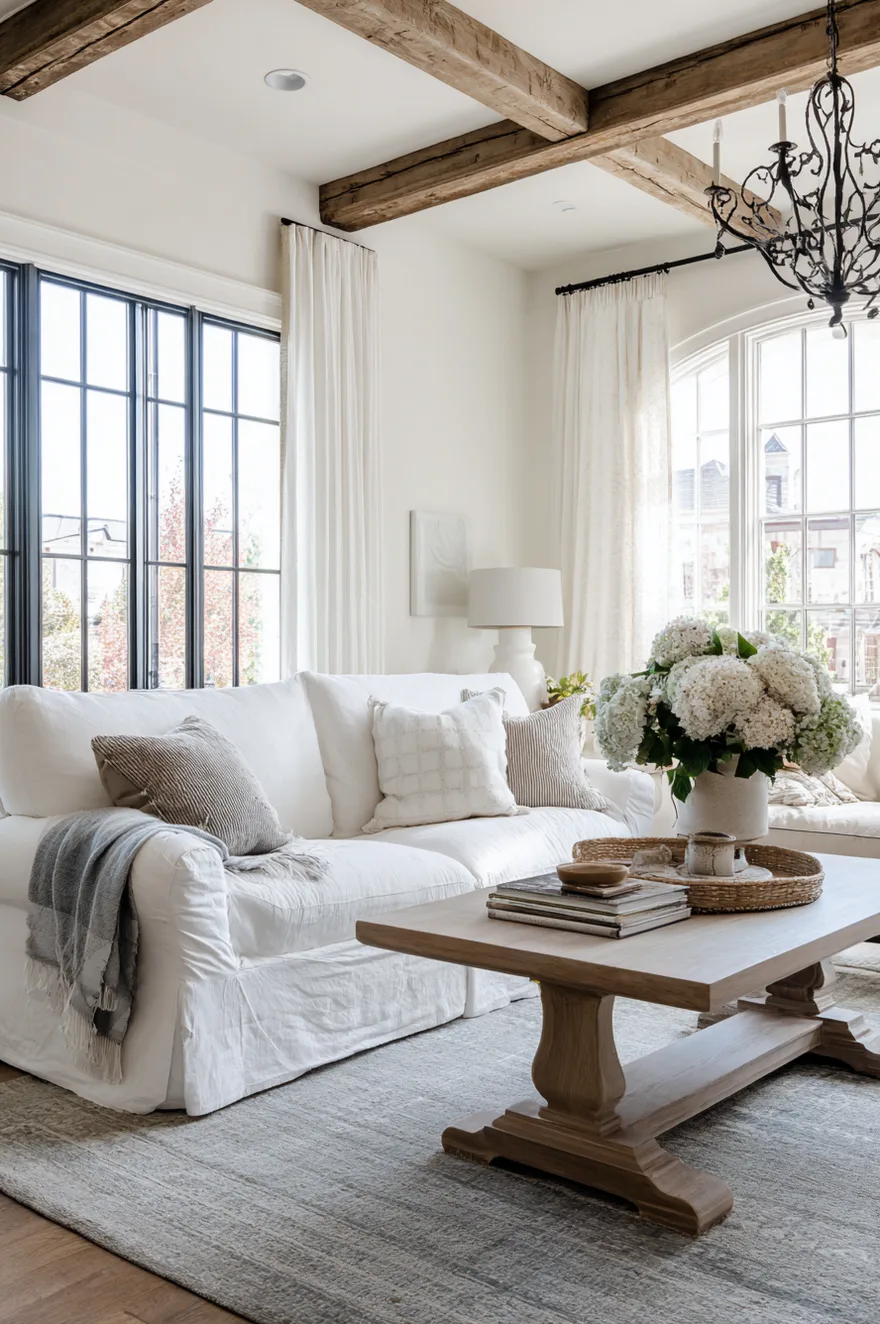
White upholstery is the ultimate blank canvas. It creates a fresh, airy foundation that works perfectly with any accent color or seasonal styling you want to swap in.
White slipcover sofas embody the relaxed elegance central to French country design. They feel casual yet refined, especially when made from durable linen-cotton blends that can be removed and laundered. Position them near French doors or large windows to maximize the bright, open feeling. The white creates a neutral canvas that lets architectural details and accessories shine.
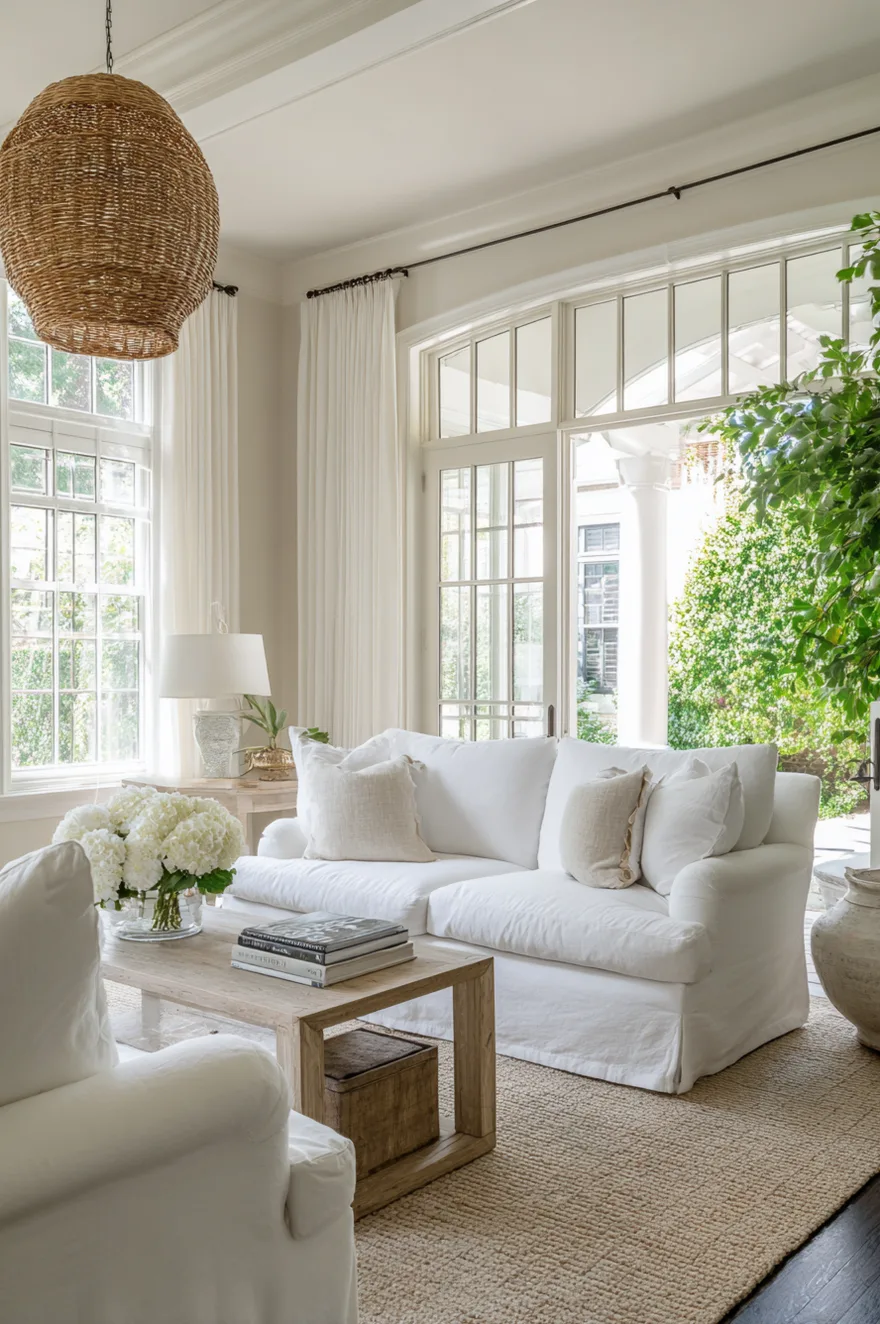
The practicality concern is real, but modern performance fabrics and machine-washable slipcovers have changed the equation. Many homeowners with children and pets successfully maintain white furniture through regular washing and spot treatment. The key is choosing tightly woven, pre-shrunk fabrics that can handle frequent cleaning.
Stone Fireplace As Room Focal Point
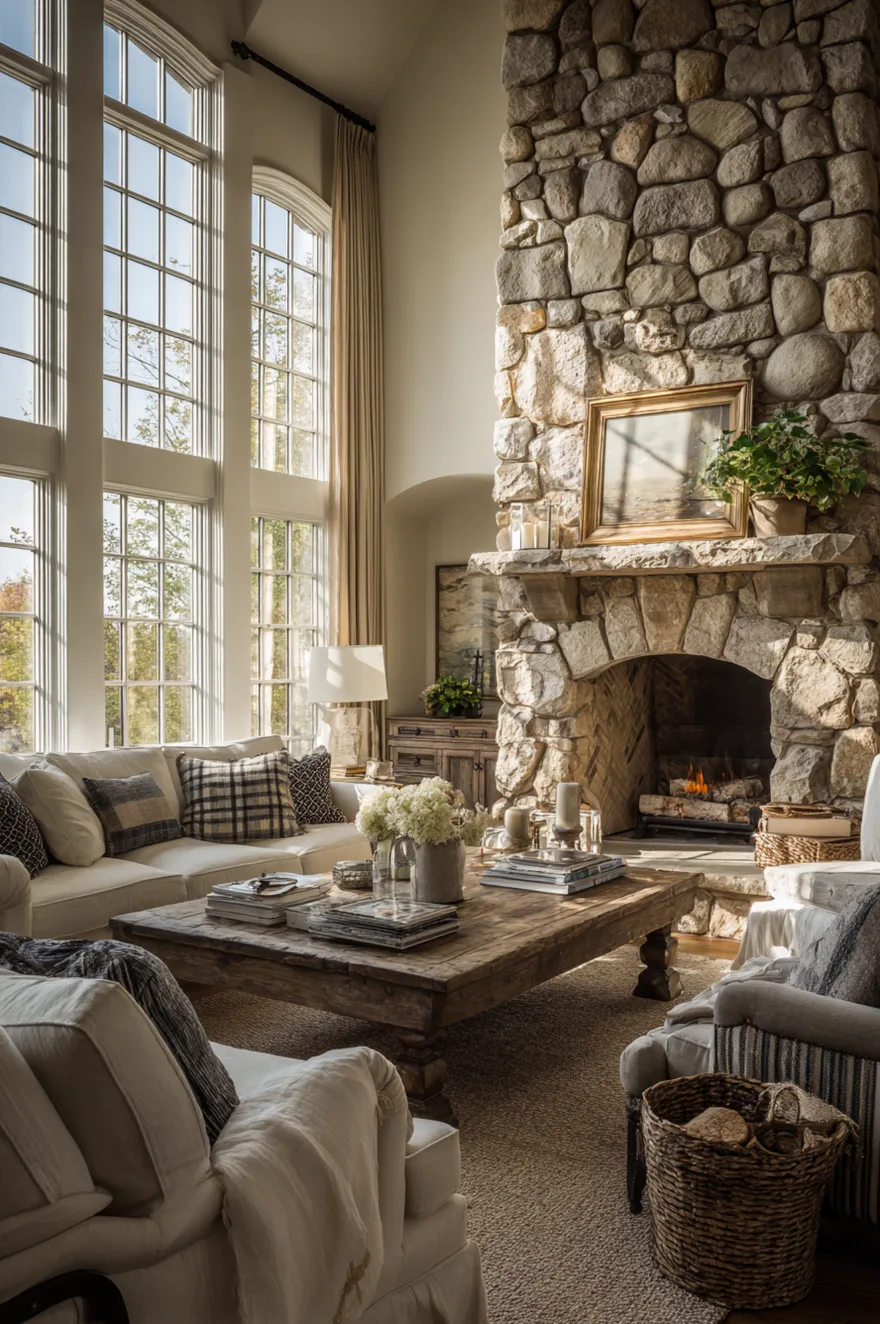
The reason fireplaces work so powerfully in French country rooms is psychological – they create a natural gathering point that anchors the entire space.
Limestone, river rock, or reclaimed stone fireplaces bring texture and permanence to living rooms. Surround them with comfortable seating – perhaps a pair of vintage bergère chairs or a curved sectional – to create an intimate conversation area. The stone provides organic, earthy character that contrasts beautifully with soft furnishings and refined accessories.
Even in climates where fireplaces aren’t functional necessities, they serve as design anchors. Homeowners install gas or electric units purely for aesthetic value, then style the hearth and mantel as focal points. The investment pays off in both visual impact and resale value.
Velvet Accent Chairs In Soft Jewel Tones
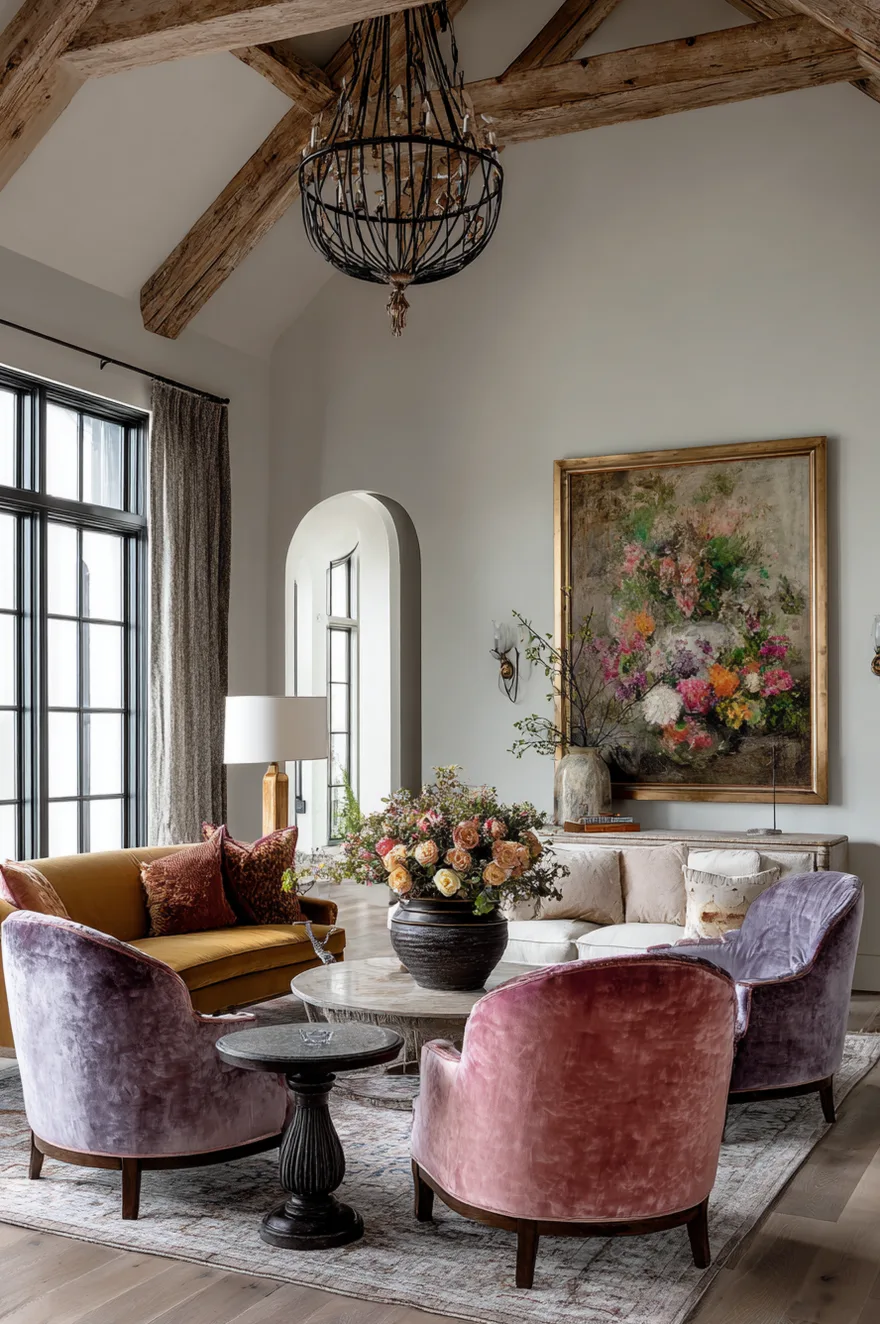
If your room feels a little too muted, jewel-toned velvet is the perfect fix. It adds a layer of richness and luxury without completely taking over the space.
Blush pink, dusty rose, soft sage, or muted teal velvet chairs bring unexpected elegance to French country living rooms. These pieces work beautifully as accent seating flanking fireplaces or positioned near windows. The plush texture contrasts with rougher elements like exposed beams and natural stone, creating the high-low mix that defines the style.
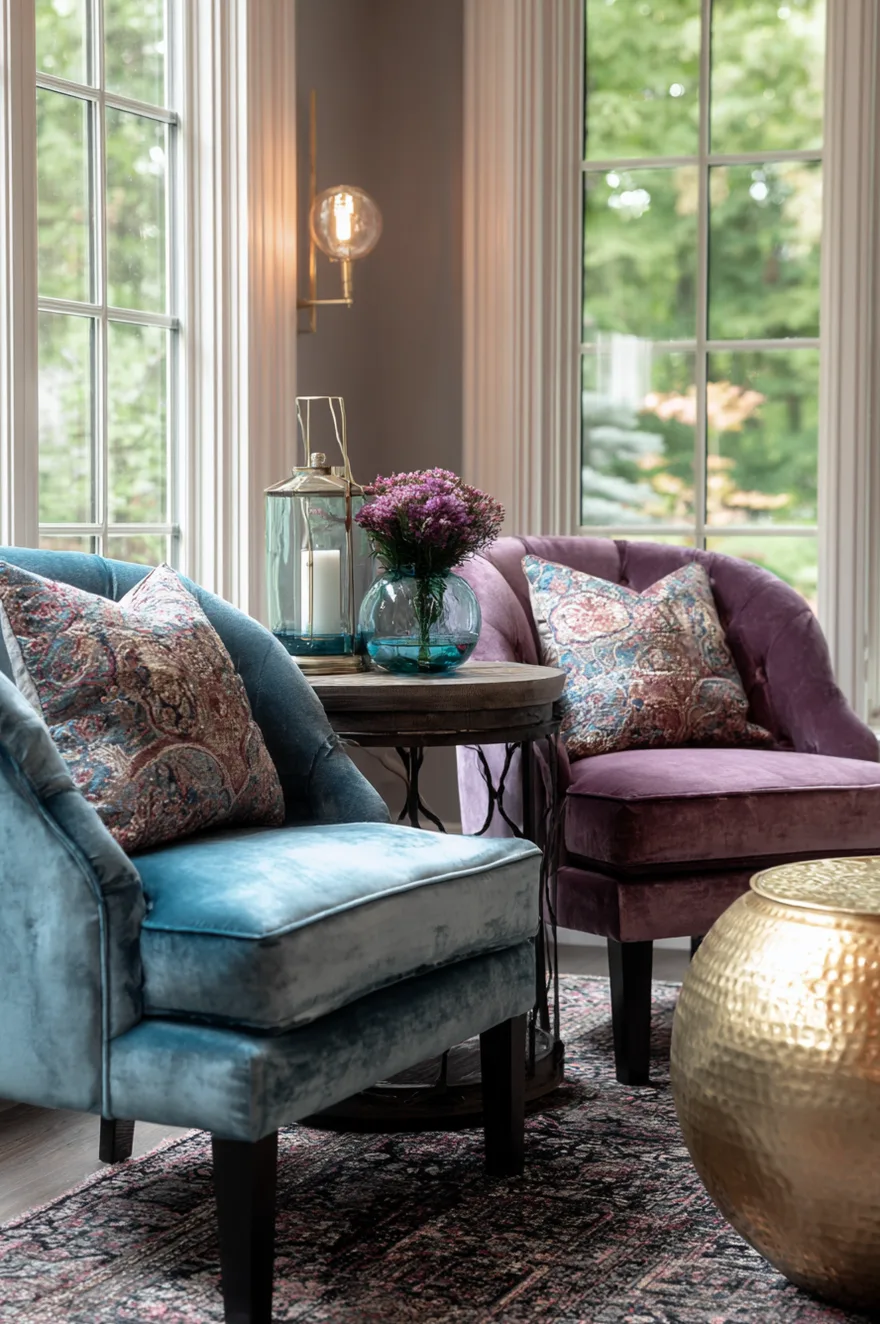
The practical advantage of velvet is its durability – despite looking delicate, quality velvet withstands daily use better than many other upholstery fabrics. Look for pieces with hardwood frames and eight-way hand-tied springs for longevity. Vintage chairs can often be reupholstered in velvet for less than buying new.
Romantic Floral Curtains With Simple Hardware
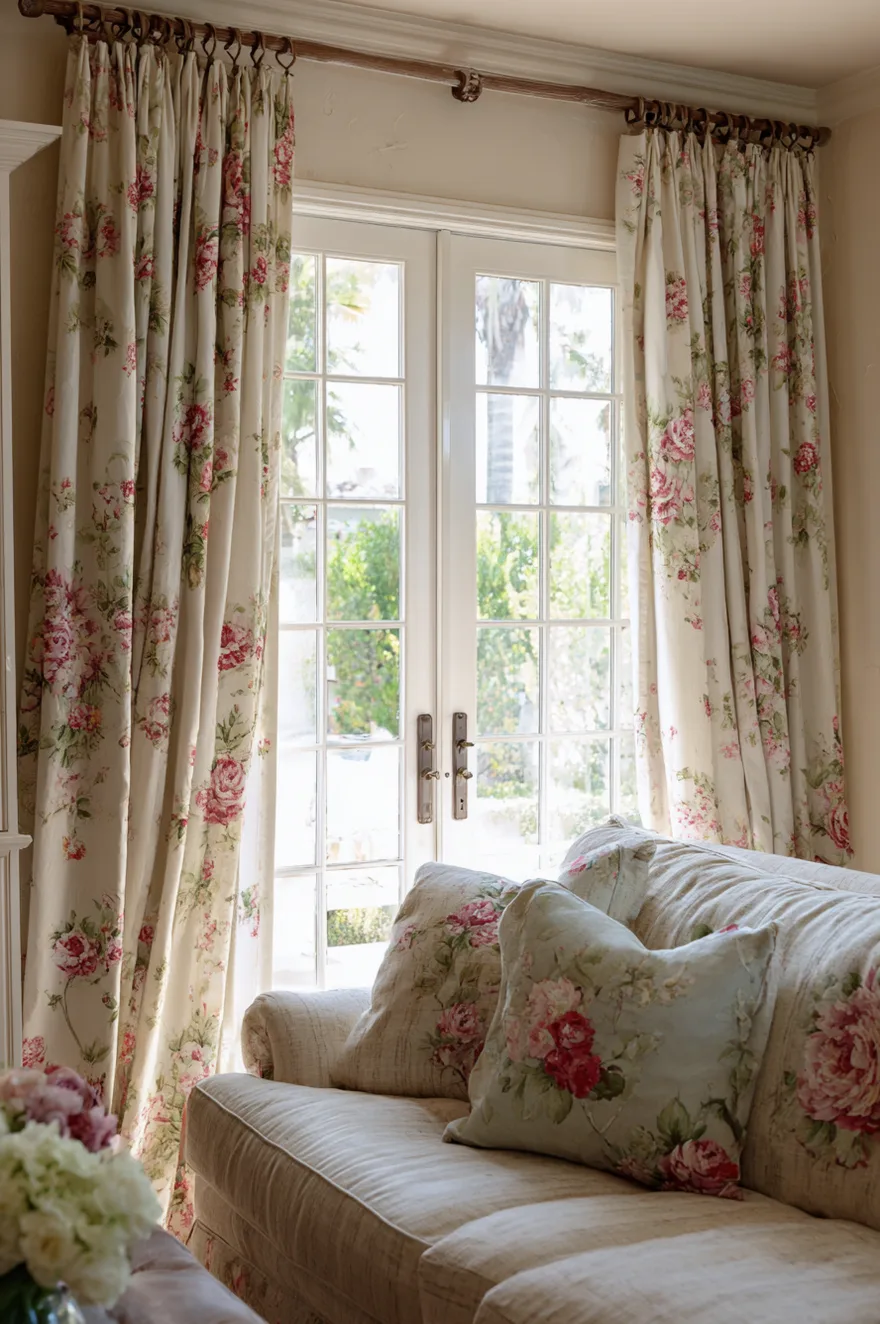
Window treatments do so much heavy lifting in a room. They soften those hard architectural lines while bringing in a necessary pop of pattern and color right at eye level.
Soft floral curtains in muted palettes – faded pinks, dusty blues, sage greens – bring cottage charm to French country windows. Hang them from wrought iron or simple wooden rods with minimal hardware to keep the look unfussy. The florals should feel vintage and subtle rather than bright and bold, like they’ve been sun-faded over decades.
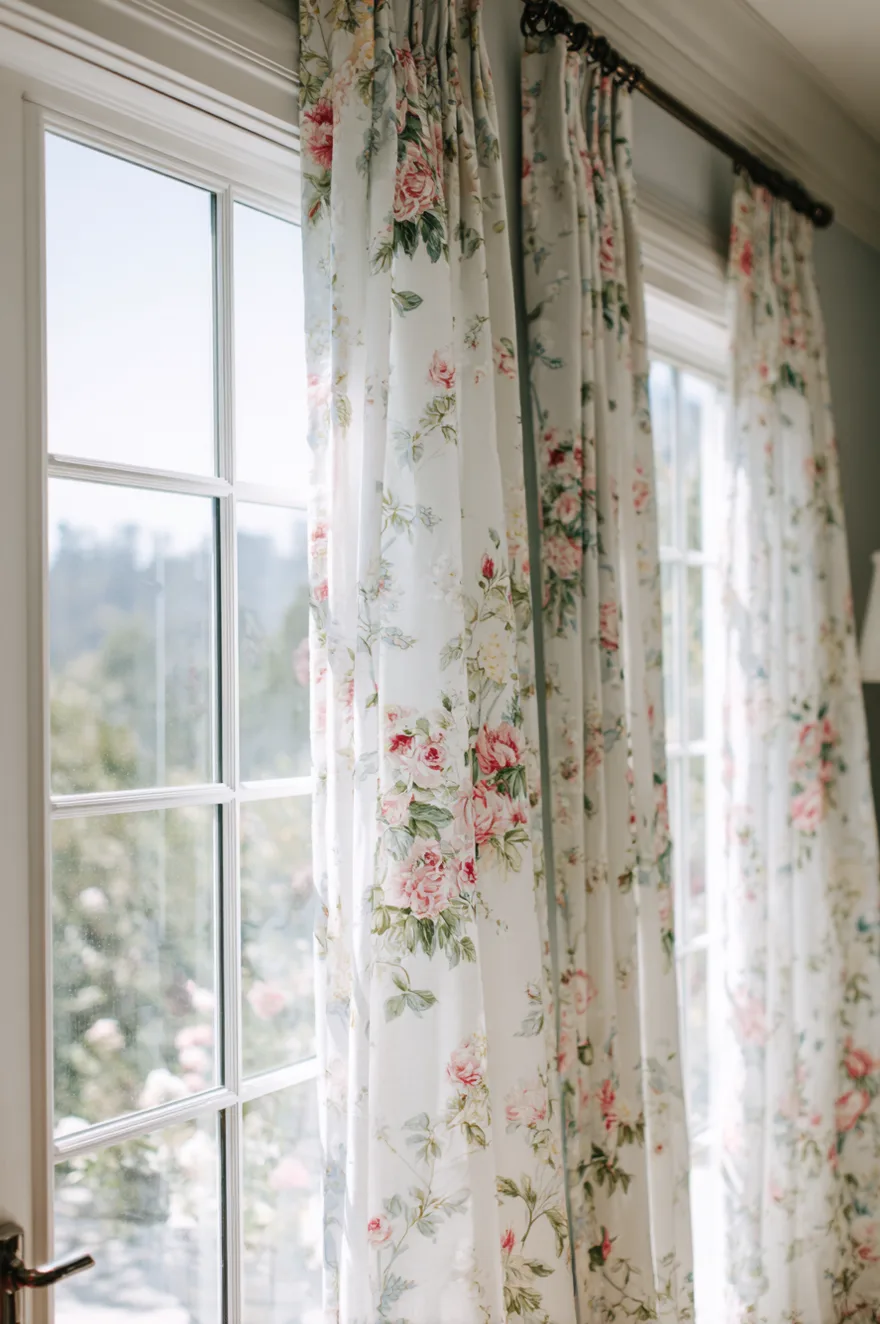
Interior designers recommend hanging curtains high and wide – mount the rod close to the ceiling and extend it several inches beyond the window frame on each side. This creates the illusion of larger windows and taller ceilings. Let the curtains just kiss the floor or puddle slightly for that relaxed, European aesthetic.
Natural Stone Flooring With Layered Area Rugs
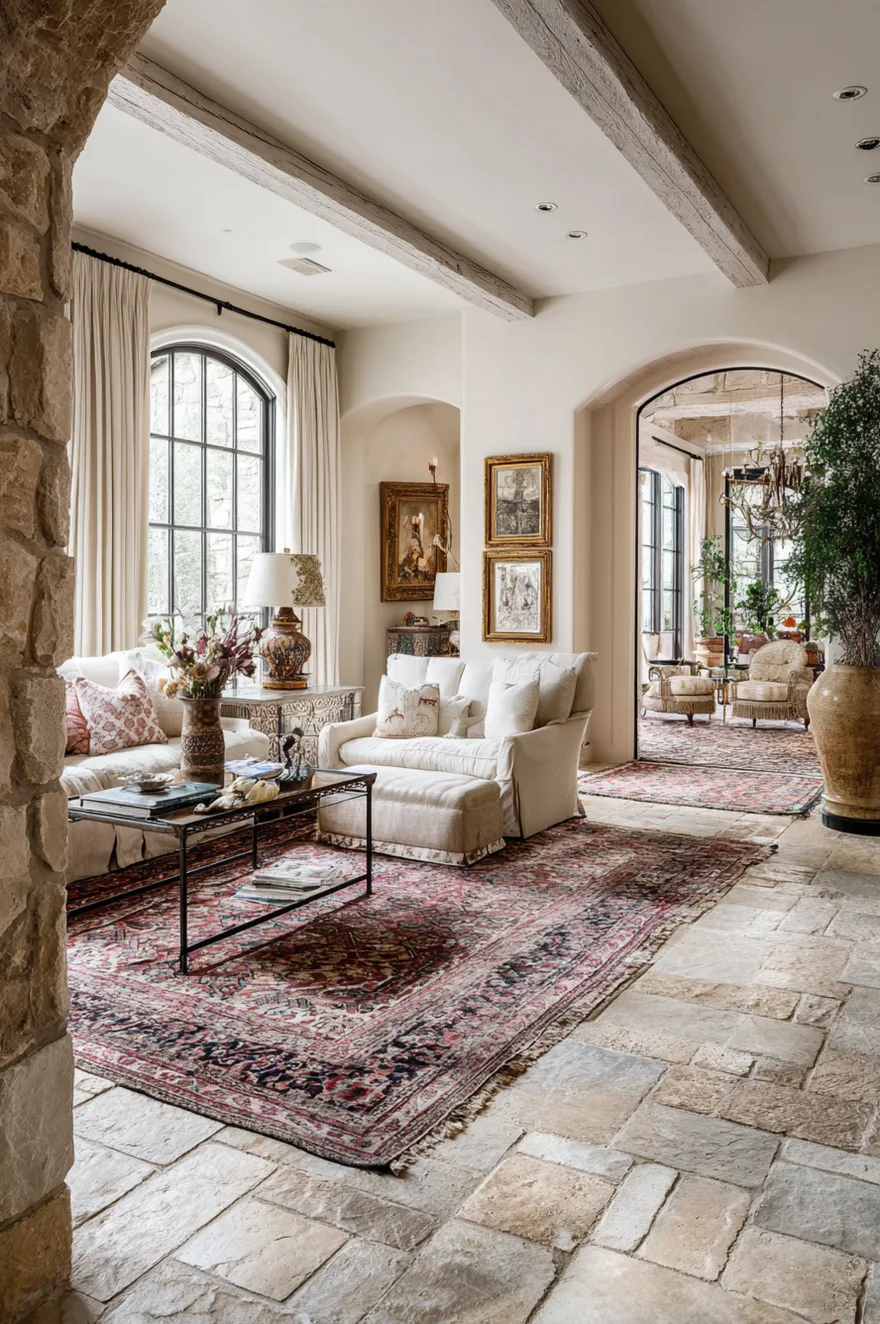
Here’s what stone floors deliver: authentic European character and practical durability that improves with age.
Limestone, travertine, or slate flooring creates a cool, elegant foundation that instantly evokes French countryside estates. Layer vintage or antique-style area rugs over the stone to add warmth, pattern, and defined seating zones. The combination of hard and soft surfaces, permanent and changeable elements, creates visual and tactile interest.
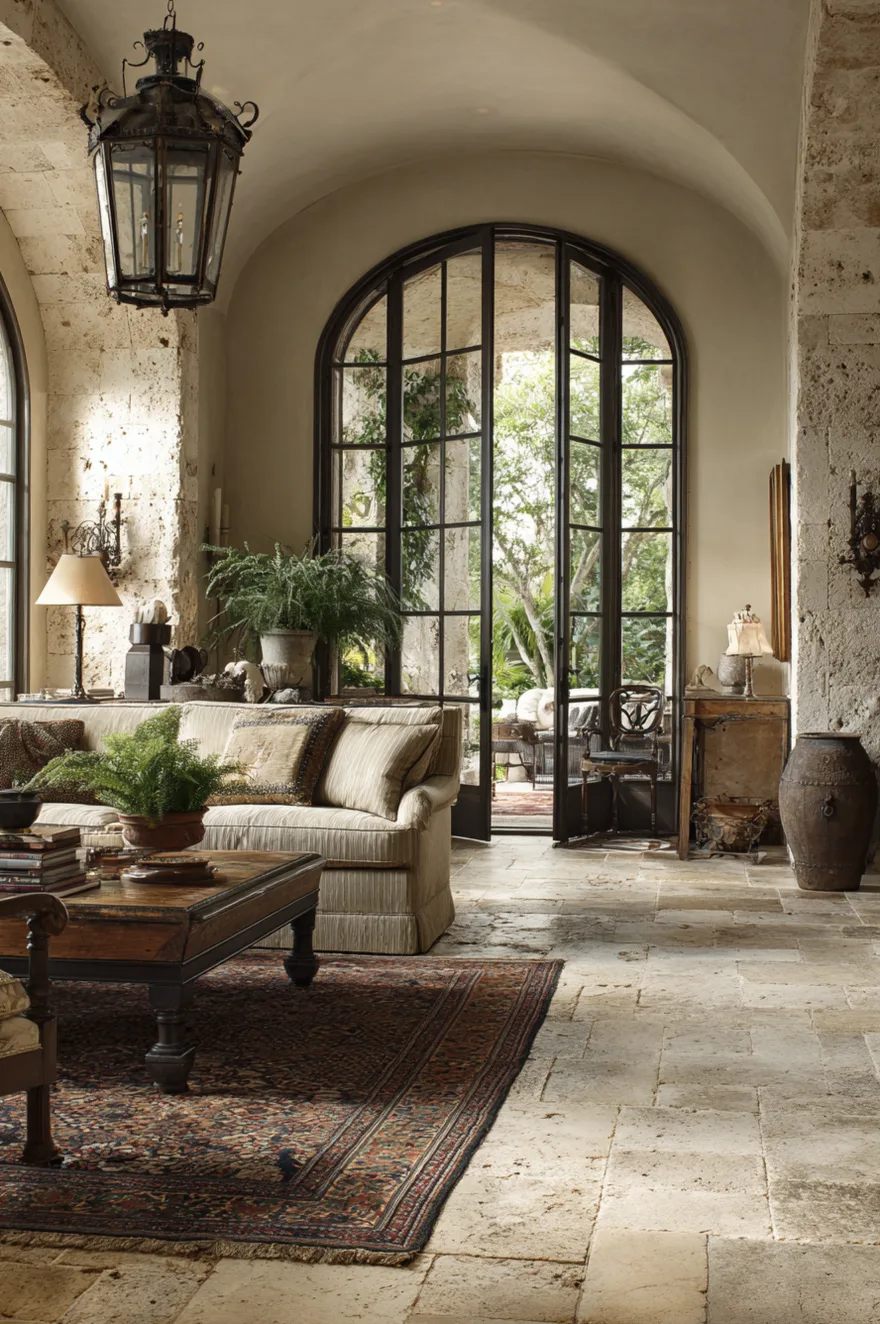
This flooring choice works especially well in warmer climates where the stone’s thermal mass helps regulate temperature. In colder regions, radiant floor heating makes stone comfortable year-round. The patina that develops over time only enhances authenticity – wear patterns and slight discoloration tell a story.
Clean-Lined Modern Furniture In Rustic Setting
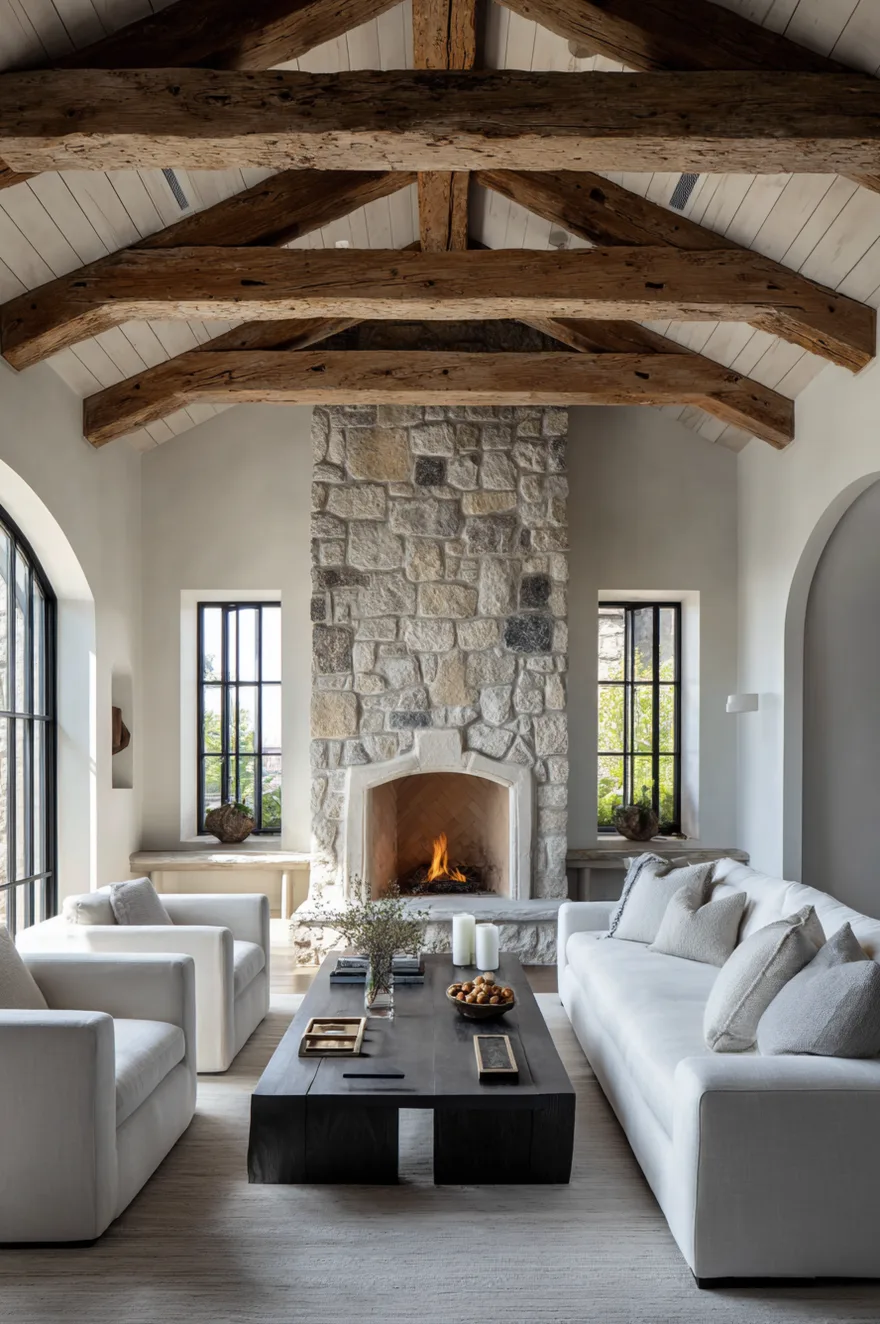
There is something magical about putting clean, contemporary furniture inside traditional architecture. You end up with a fresh, updated elegance that never feels fussy.
Sleek modern sofas and chairs with simple silhouettes create striking contrast against exposed beams, stone walls, and plastered surfaces. This approach appeals to those who love French country architecture but prefer less ornate furnishings. The clean lines let the architectural character shine while keeping the space feeling current and uncluttered.
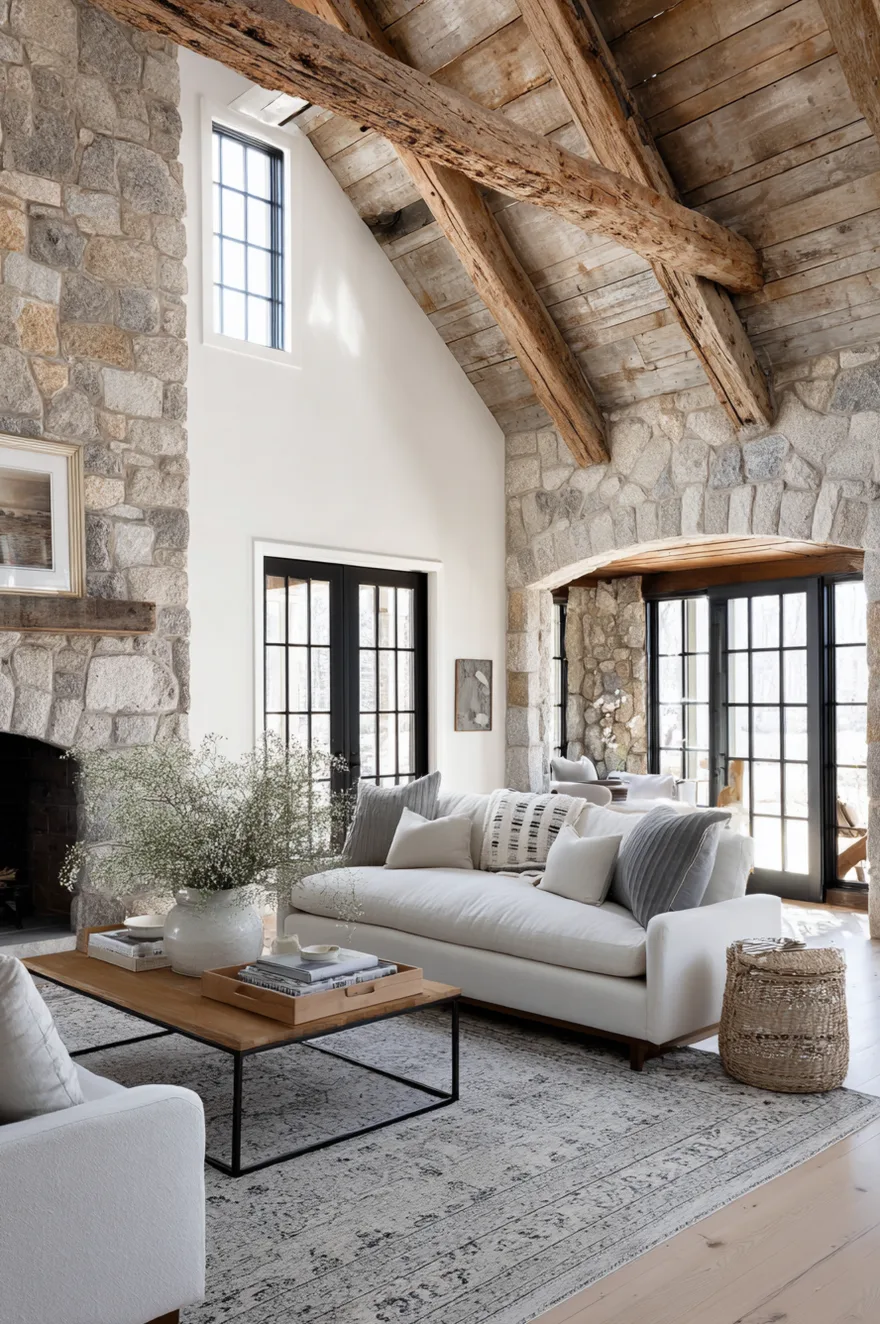
The key to making this work is restraint – choose one or two statement pieces of modern furniture and let the architecture provide the character. This works particularly well in converted barns, lofts, or homes with strong original features that deserve to be the focal point.
Deep-Toned Cabinetry With Natural Counters
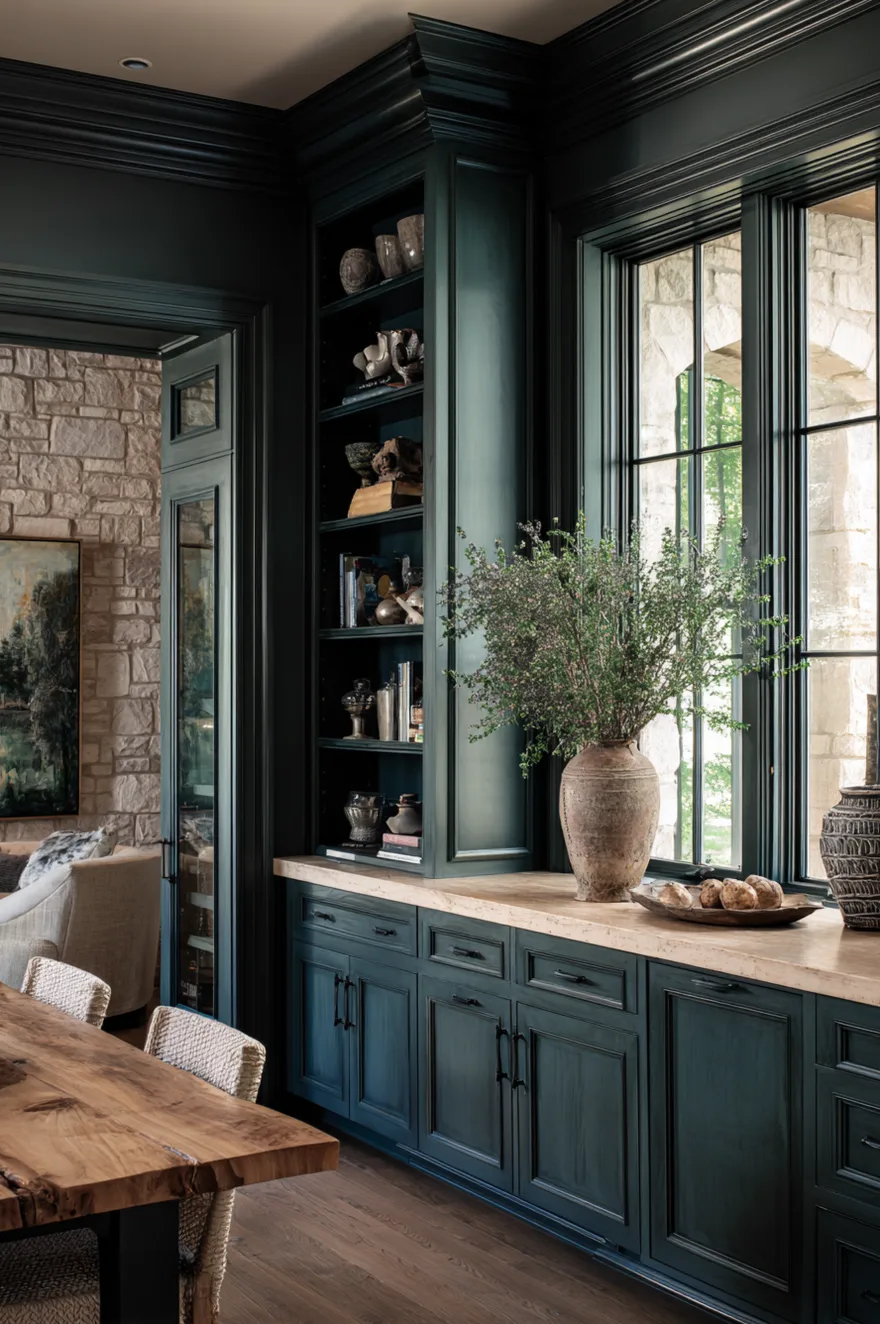
Rich, saturated cabinet colors are surprisingly versatile. They create immediate drama and sophistication while remaining neutral enough to work for years to come.
Deep olive, forest green, or charcoal cabinetry in built-ins or entertainment centers brings grounded elegance to French country living rooms. Top them with natural stone, butcher block, or marble for practical surfaces that add another layer of texture. The dark cabinets provide visual weight and contrast against lighter walls and upholstery.
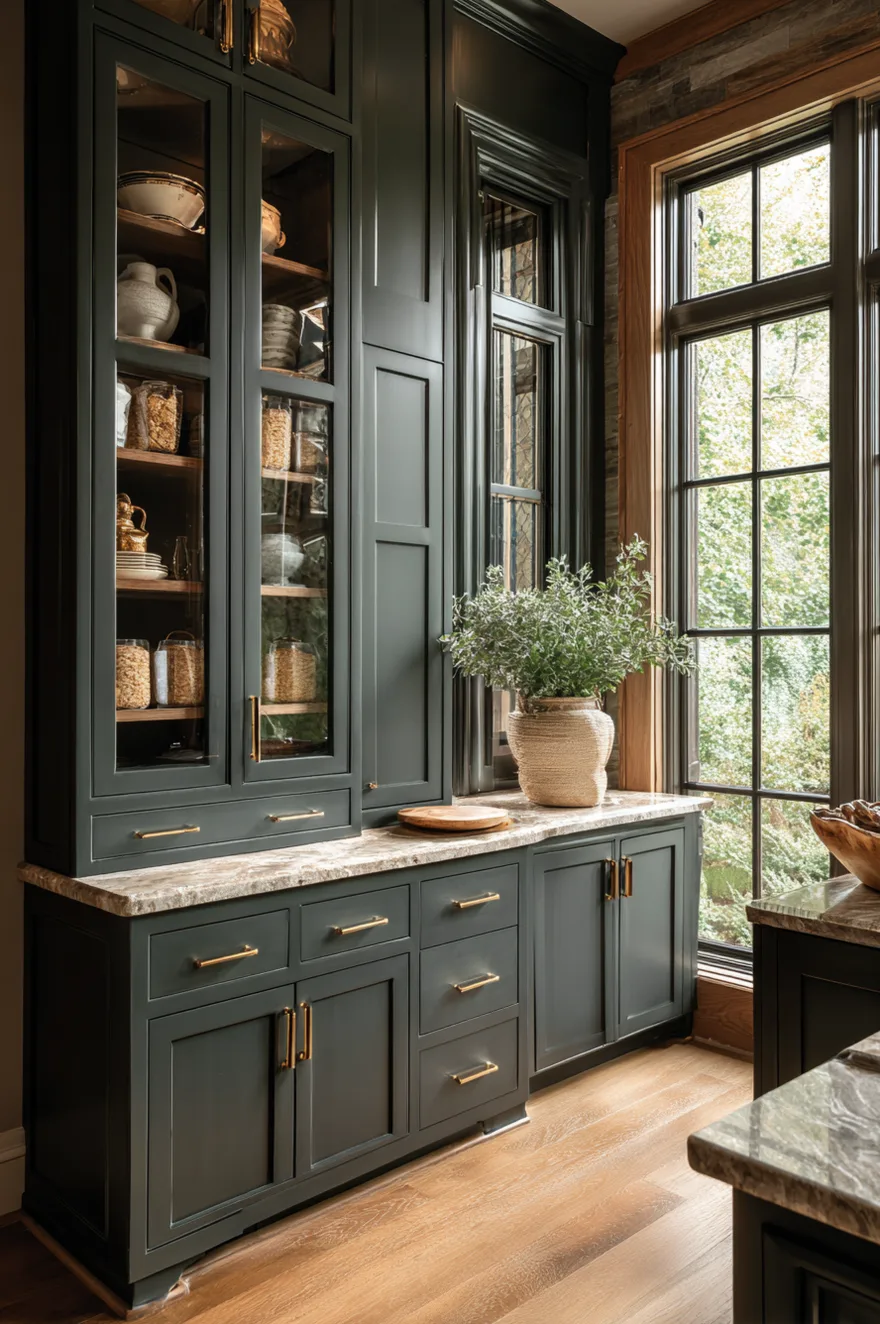
What makes this successful is choosing colors with enough gray or brown to feel earthy rather than primary. Test samples in your actual space at different times of day to see how natural light affects the color. Complex, grayed-down tones have longevity that brighter shades lack.
Gallery Wall Of Botanical Prints
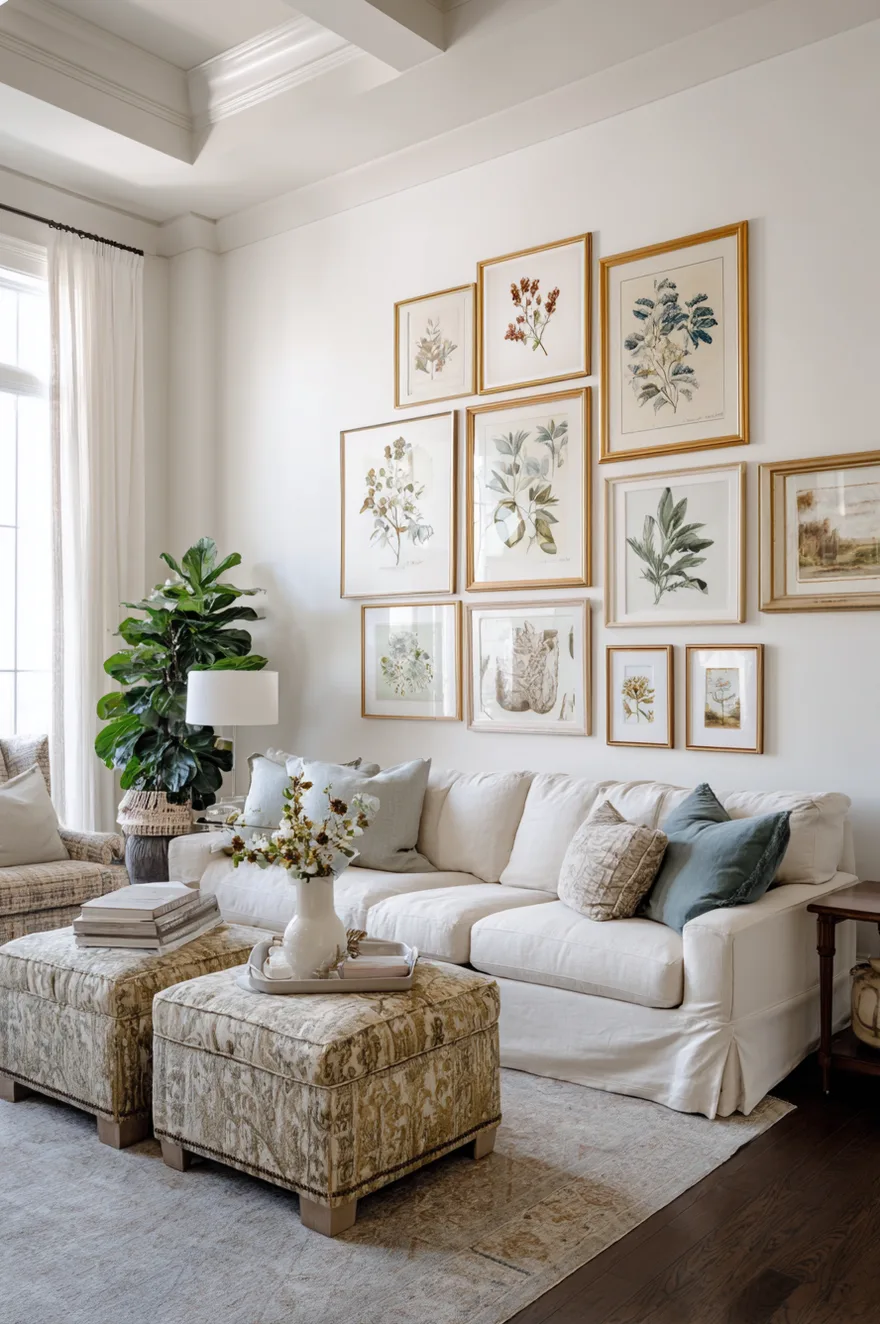
Here’s what curated wall displays accomplish: they add personality and visual interest without requiring large-scale furniture investments.
Collections of framed botanical prints, architectural drawings, or vintage maps create sophisticated focal points above sofas or along empty walls. The repetition of similar frames in a grid or salon-style arrangement feels intentional and collected. This approach brings nature indoors through imagery while maintaining the refined aesthetic French country rooms require.
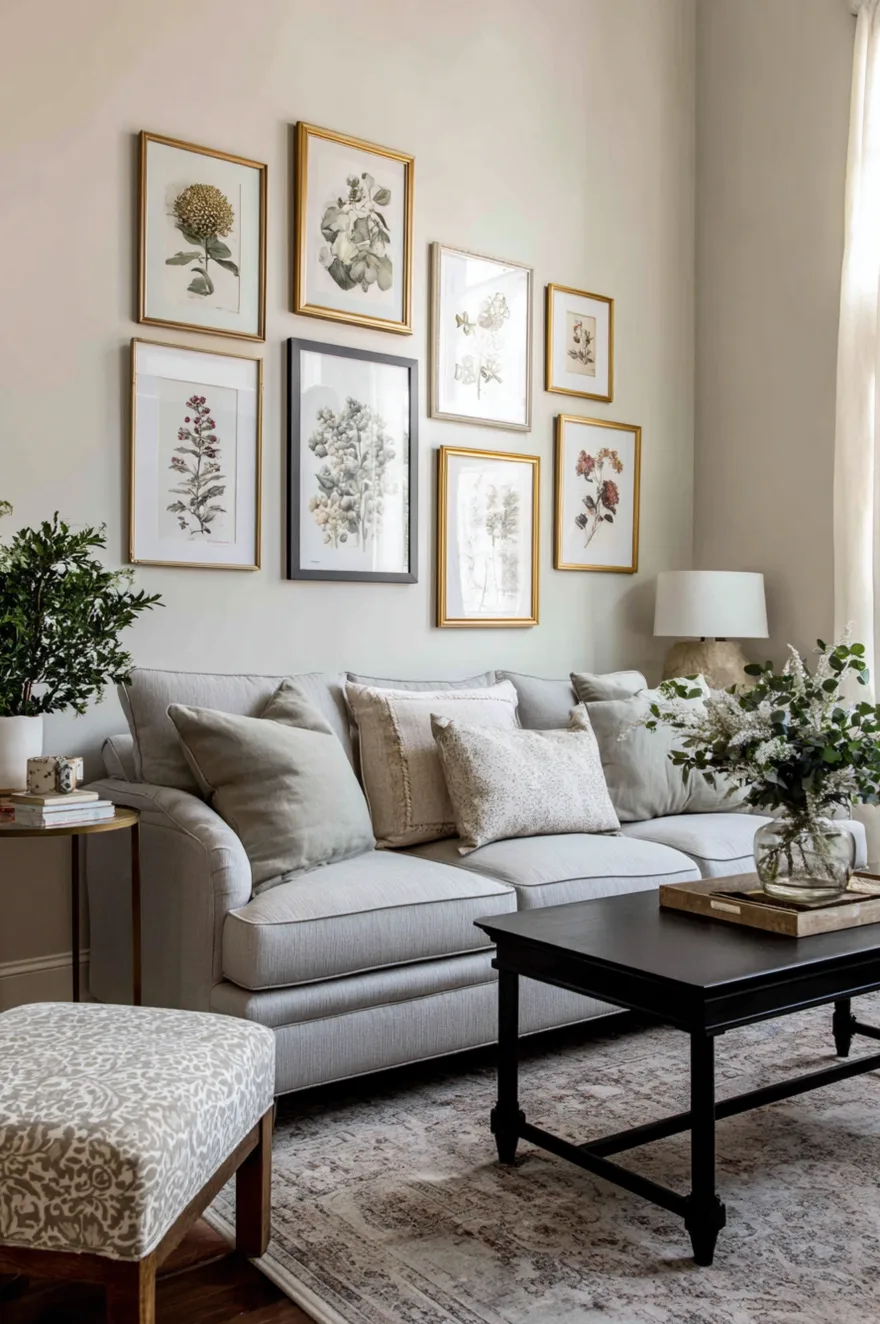
The practical advantage is affordability – downloadable prints from museum archives and print-on-demand services make high-quality art accessible. The trick is maintaining consistency in color palette, frame style, and mat treatment so the collection feels cohesive even if sourced from different places.
Window-Side Reading Corner With Comfortable Chair
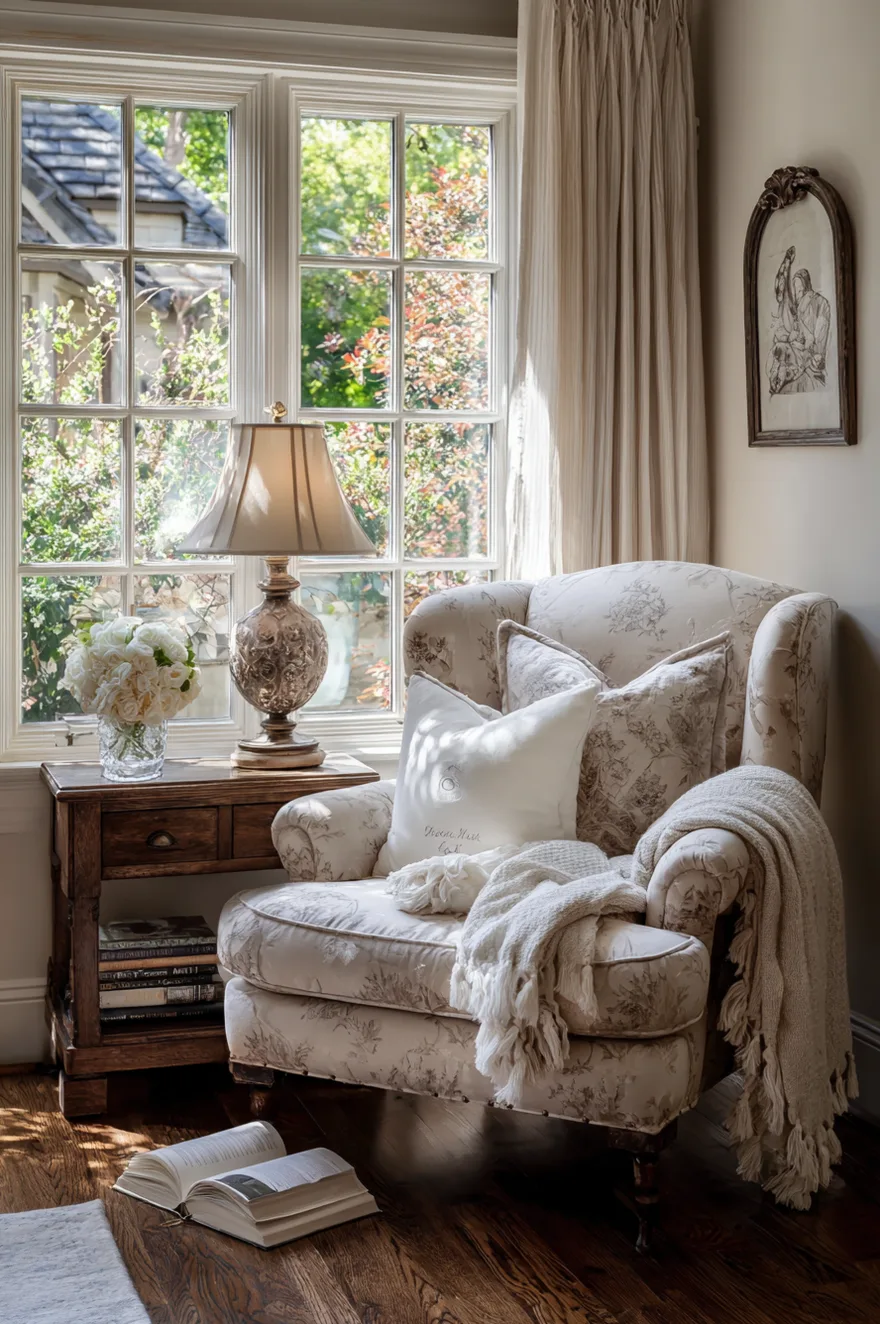
The reason dedicated reading nooks work so well is they create intimate moments within larger spaces – rooms within rooms that serve specific functions.
A well-cushioned armchair positioned near a window with good natural light becomes a personal retreat for reading, coffee, or quiet conversation. Add a small side table, reading lamp, and soft throw to complete the vignette. This layering of function reflects the French approach to living spaces – rooms should accommodate different activities and moods throughout the day.
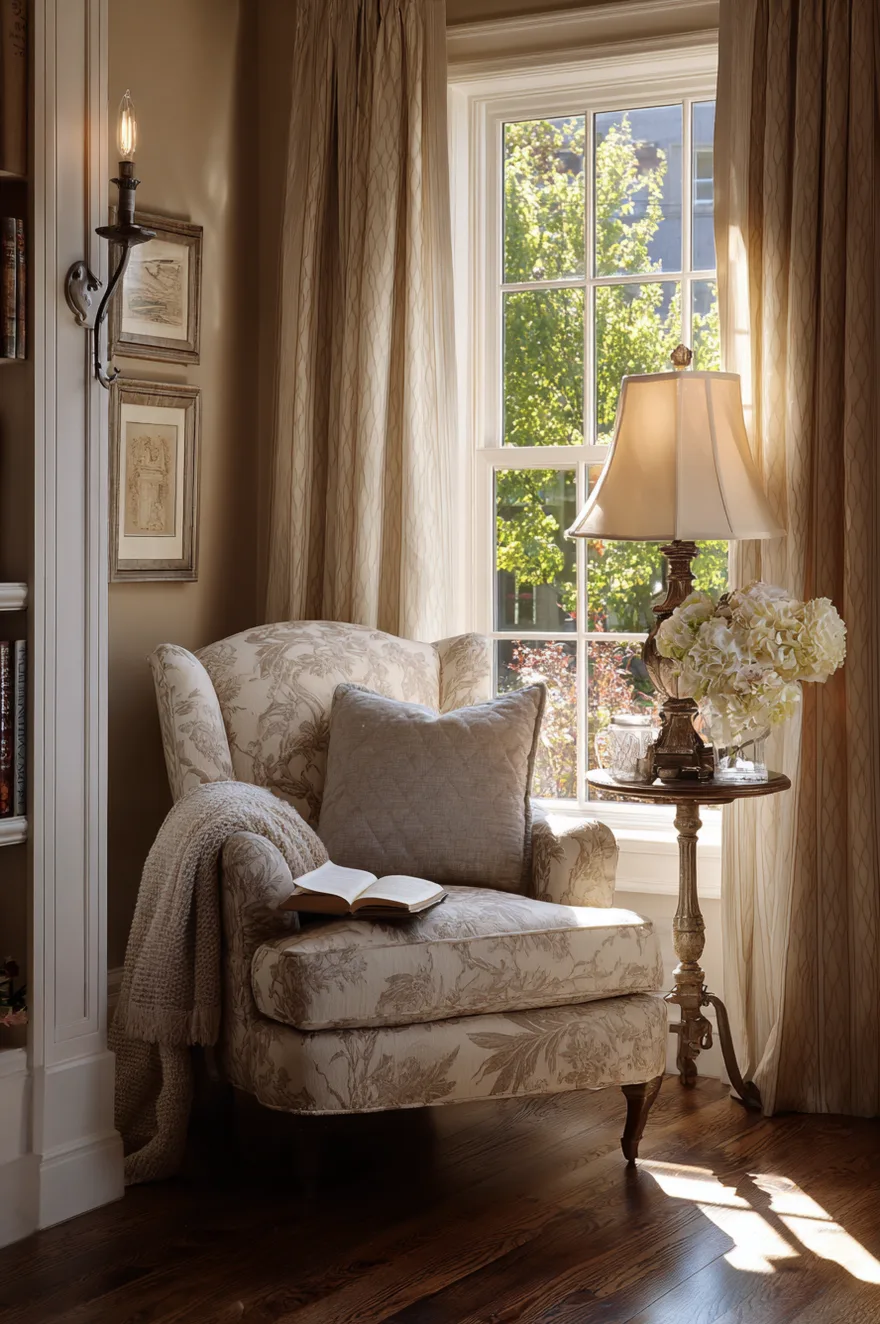
This works best in bay windows, corners, or alongside fireplaces where the nook feels naturally separated from the main seating area. Consider sight lines from the chair – what you see matters as much as the comfort of the seat itself.
Soft Blue-Gray Palette With Natural Wood
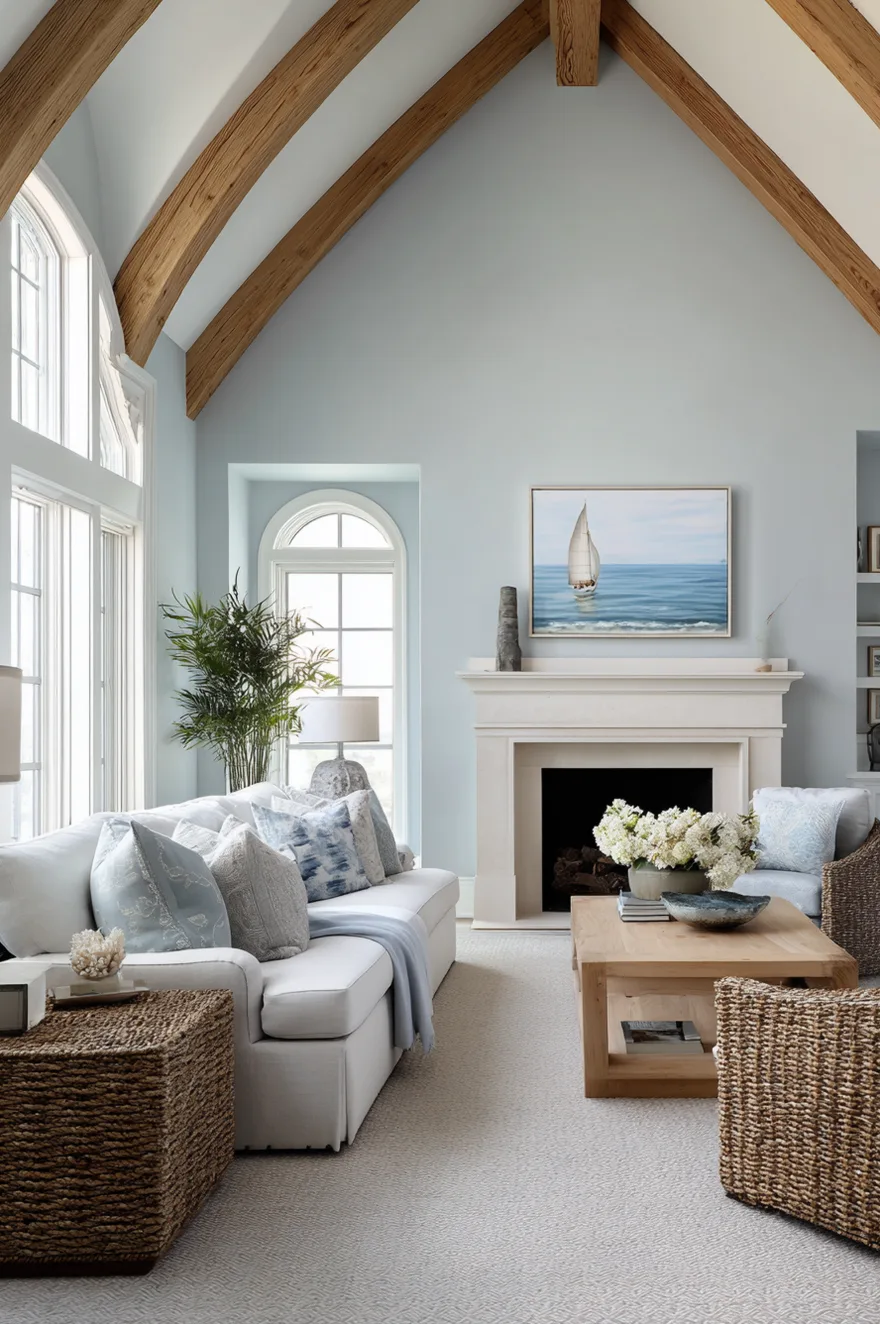
Here’s what blue-gray tones deliver: a calmer, cooler alternative to warm neutrals that still feels inviting and sophisticated.
Soft blue-grays on walls or upholstery create serene, elegant spaces when paired with natural wood furniture and white accents. This palette evokes coastal French regions while remaining versatile enough for any climate or architecture. The blues provide subtle color without committing to bold saturated hues, and they pair beautifully with both warm and cool undertones.
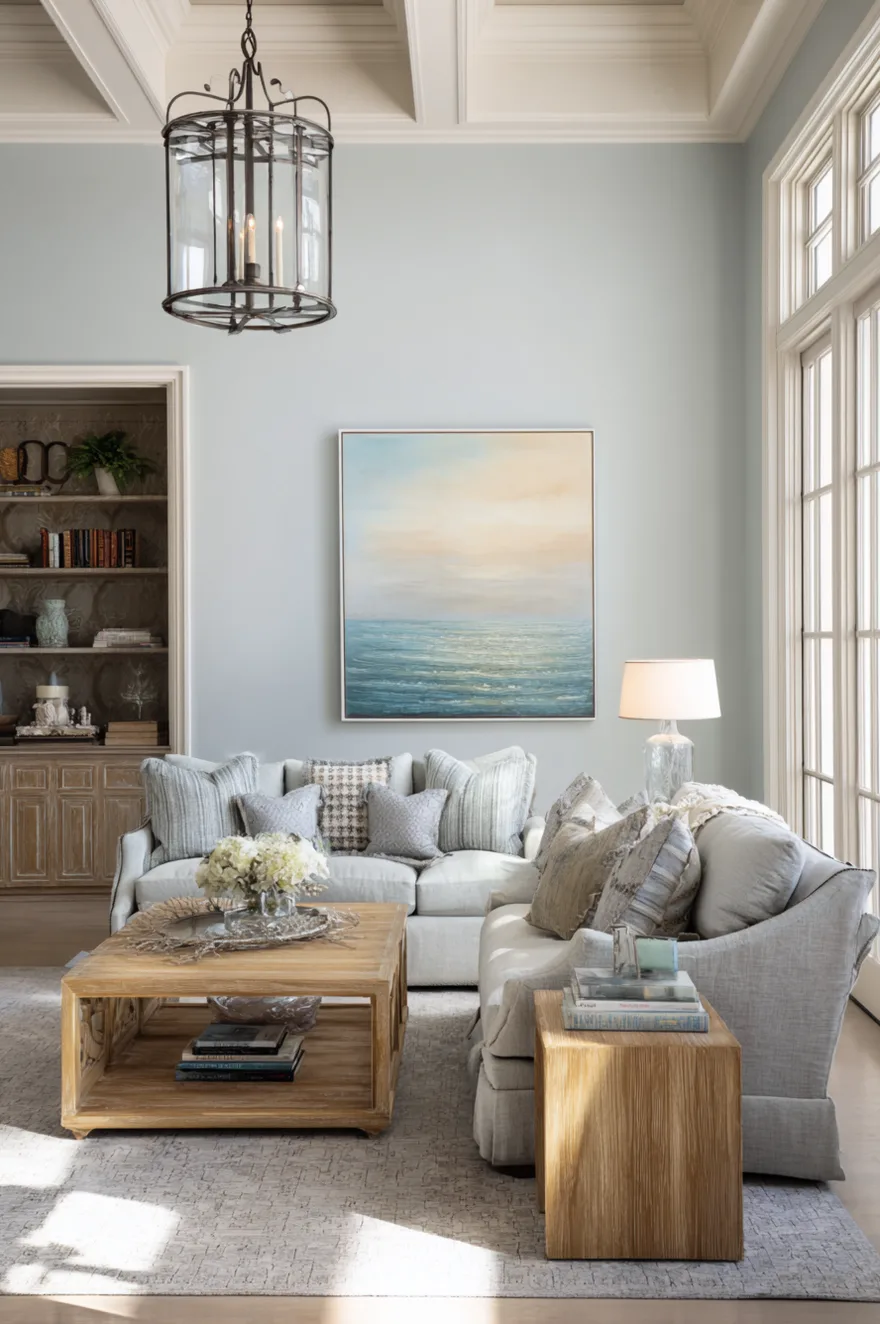
This color scheme works particularly well in rooms with abundant natural light, where the blue-gray shifts throughout the day from cool morning tones to warmer afternoon shades. In darker rooms, consider using these colors as accents rather than dominant hues to avoid feeling too cold.
Rich Wood Paneling With Decorative Mirrors
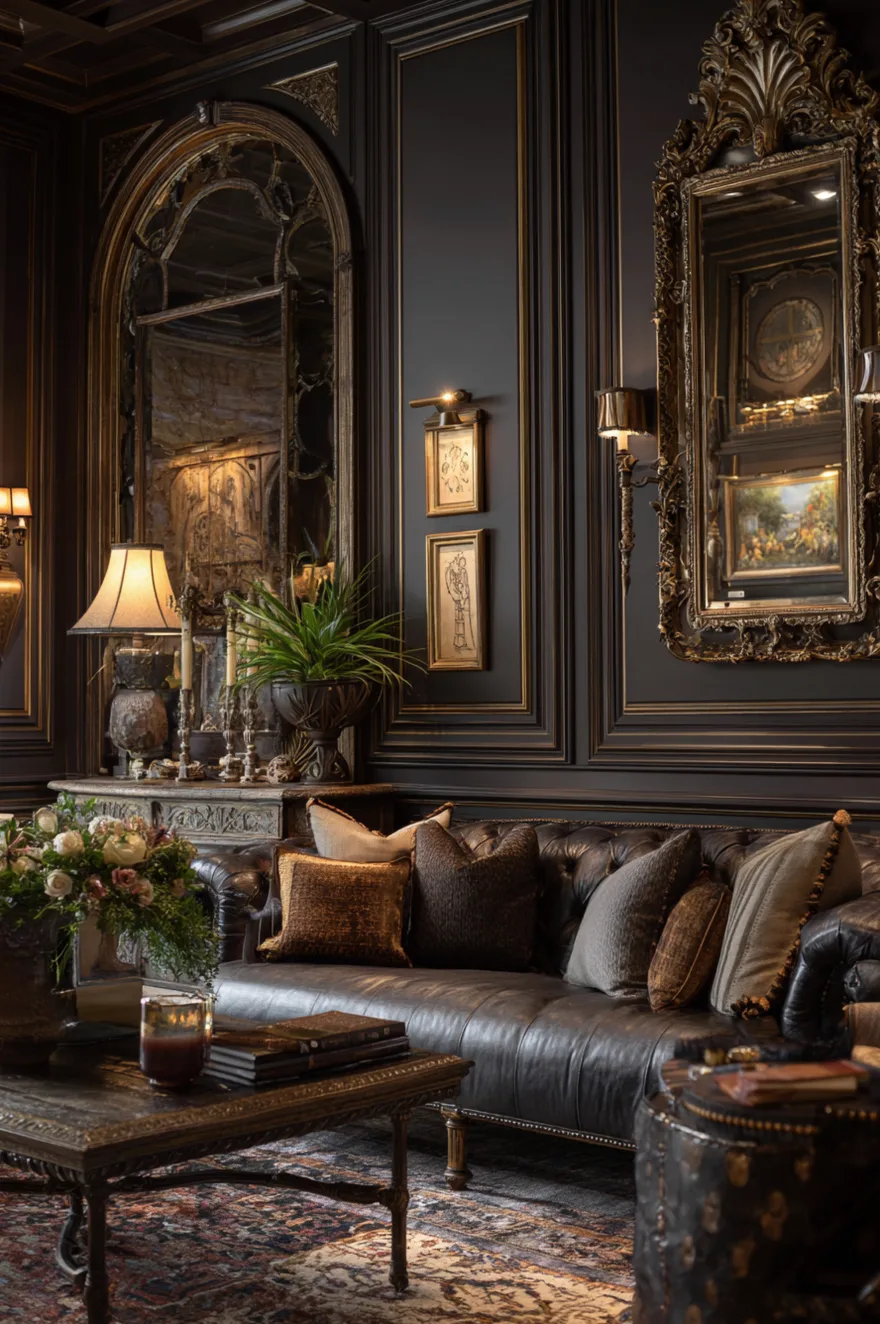
The thing about wood paneling is it creates architectural drama and warmth simultaneously – it’s both structural and atmospheric.
Dark-stained wood paneling or wainscoting brings library-like sophistication to French country living rooms. Balance the richness with gilded or ornate mirrors that reflect light and prevent the space from feeling too heavy. This approach suits larger rooms and those willing to embrace a moodier, more intimate aesthetic.
The practical consideration is lighting – dark walls require multiple light sources at different heights to avoid feeling cave-like. Layer overhead lighting with table lamps, floor lamps, and wall sconces. The interplay between dark surfaces and reflected light creates depth and visual interest.
Classic Toile Fabric Accents
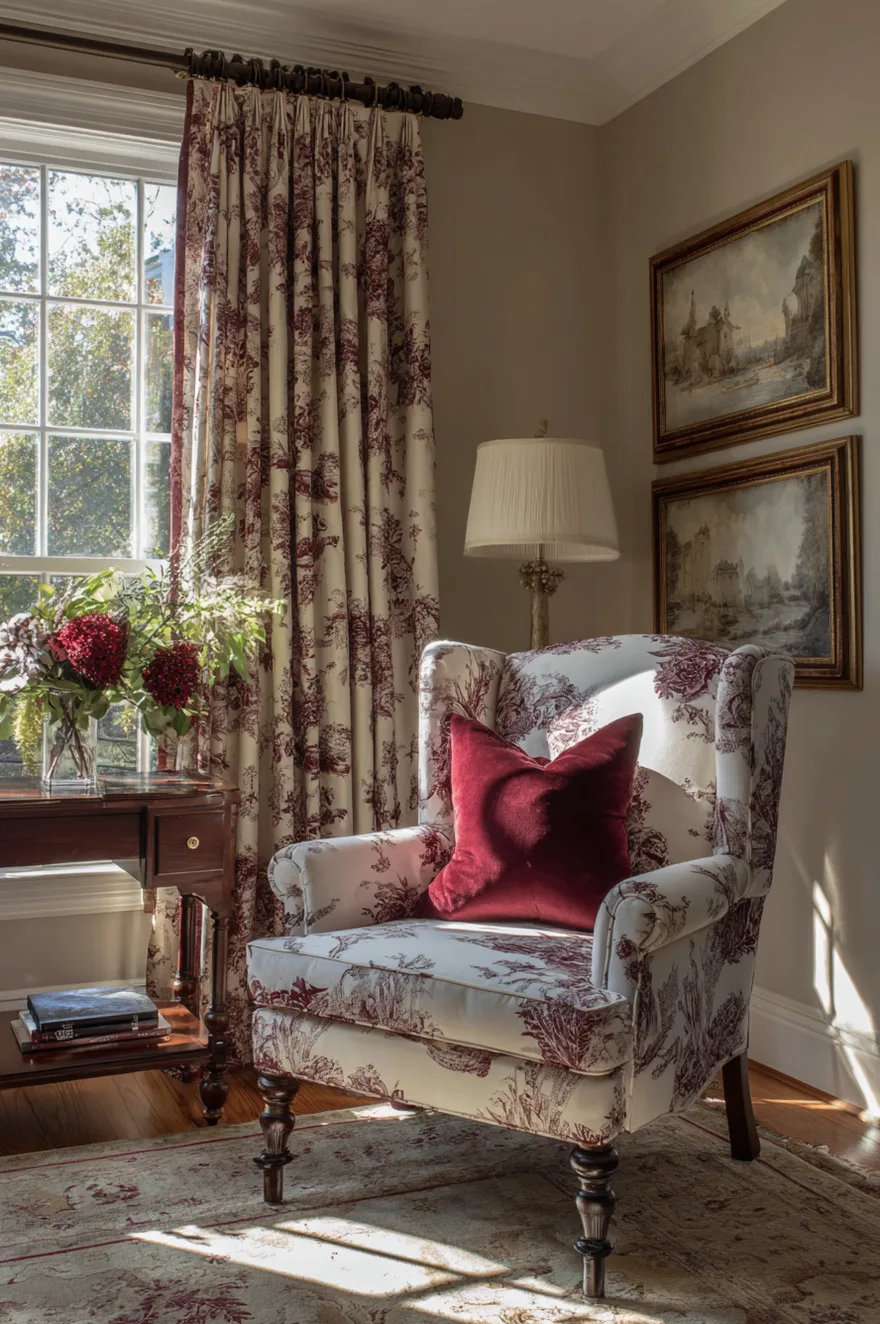
Here’s what toile brings to French country rooms: instant traditional character and narrative detail that tells stories.
Toile de Jouy patterns in classic navy, burgundy, or black on cream backgrounds add French provincial charm through curtains, pillows, or upholstered chairs. The scenic patterns depict pastoral scenes, historical events, or romantic landscapes. Use toile sparingly as accent elements rather than covering every surface – restraint keeps it sophisticated rather than overwhelming.
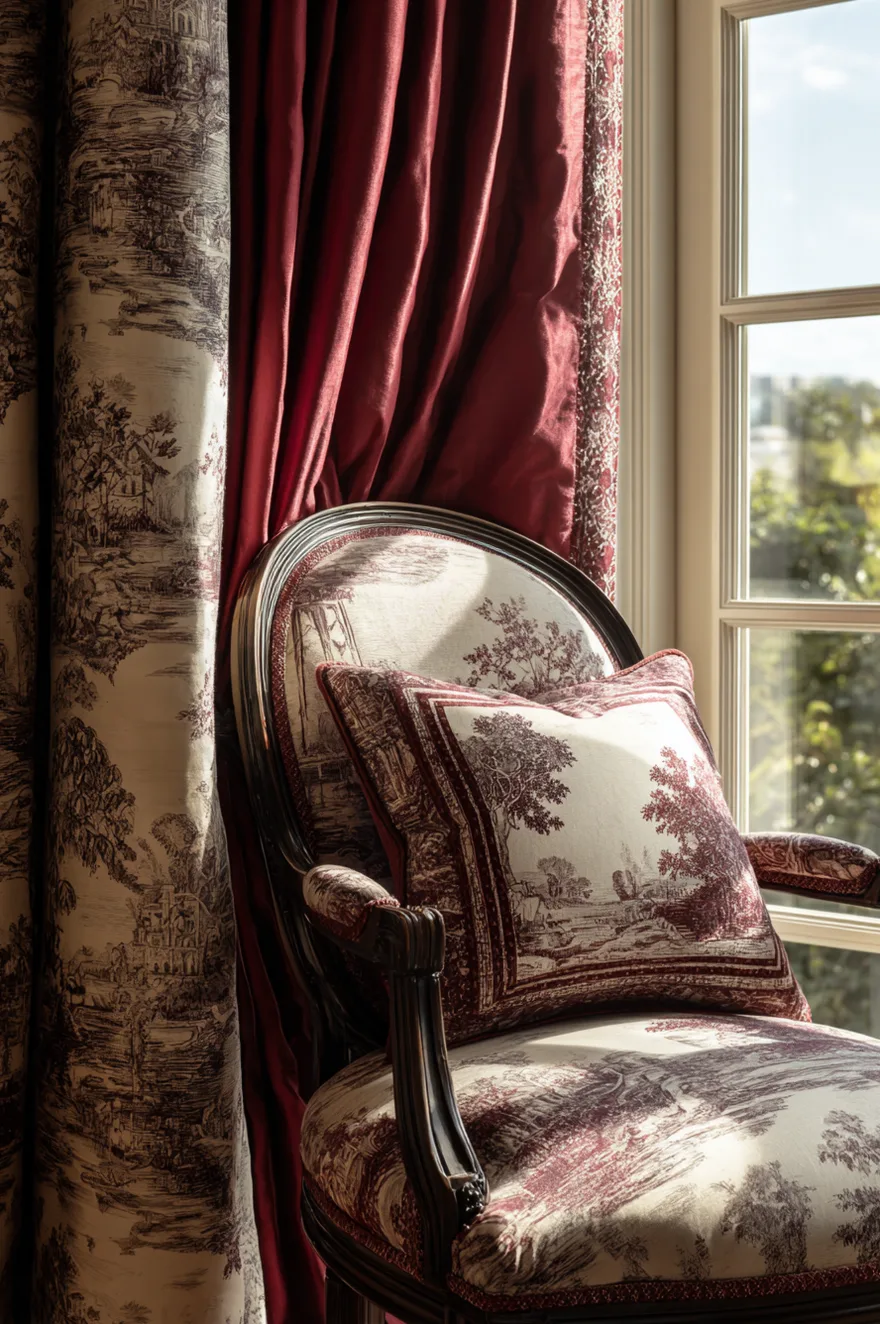
This works best in rooms with otherwise simple, solid-colored elements that let the toile become the focal point. One statement piece – perhaps a pair of toile curtains or a single upholstered chair – provides enough pattern without dominating the space.
Open Shelving Styled With Collections
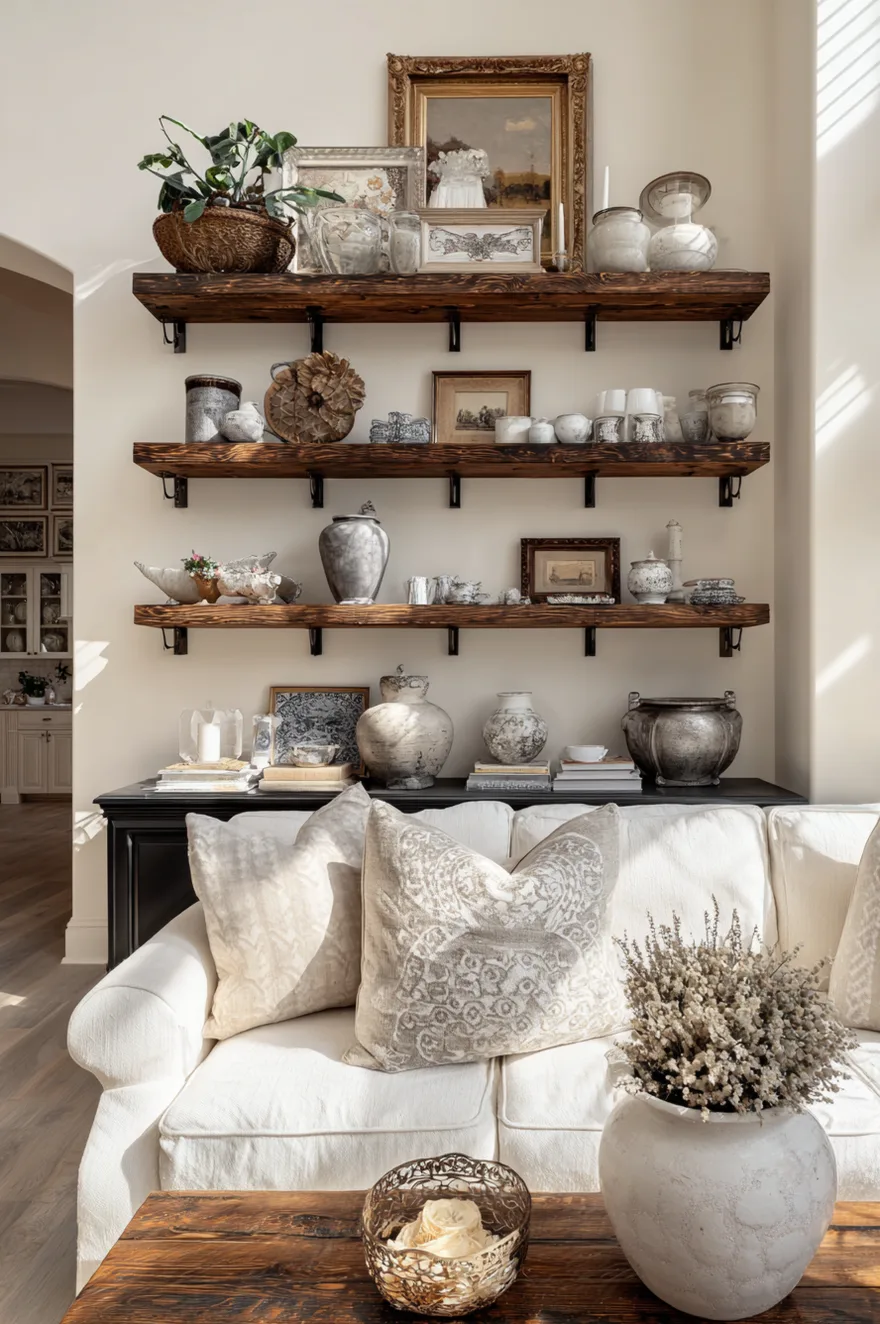
The reason open shelving works in living rooms is visibility – displayed objects become part of the decor rather than hidden away.
Floating wooden shelves or built-in open units showcase collections of white ironstone, pewter, vintage books, or pottery. This approach celebrates the imperfection and patina of vintage pieces while providing practical storage. The neutral palette of whites, creams, and natural materials creates visual calm despite the number of objects displayed.
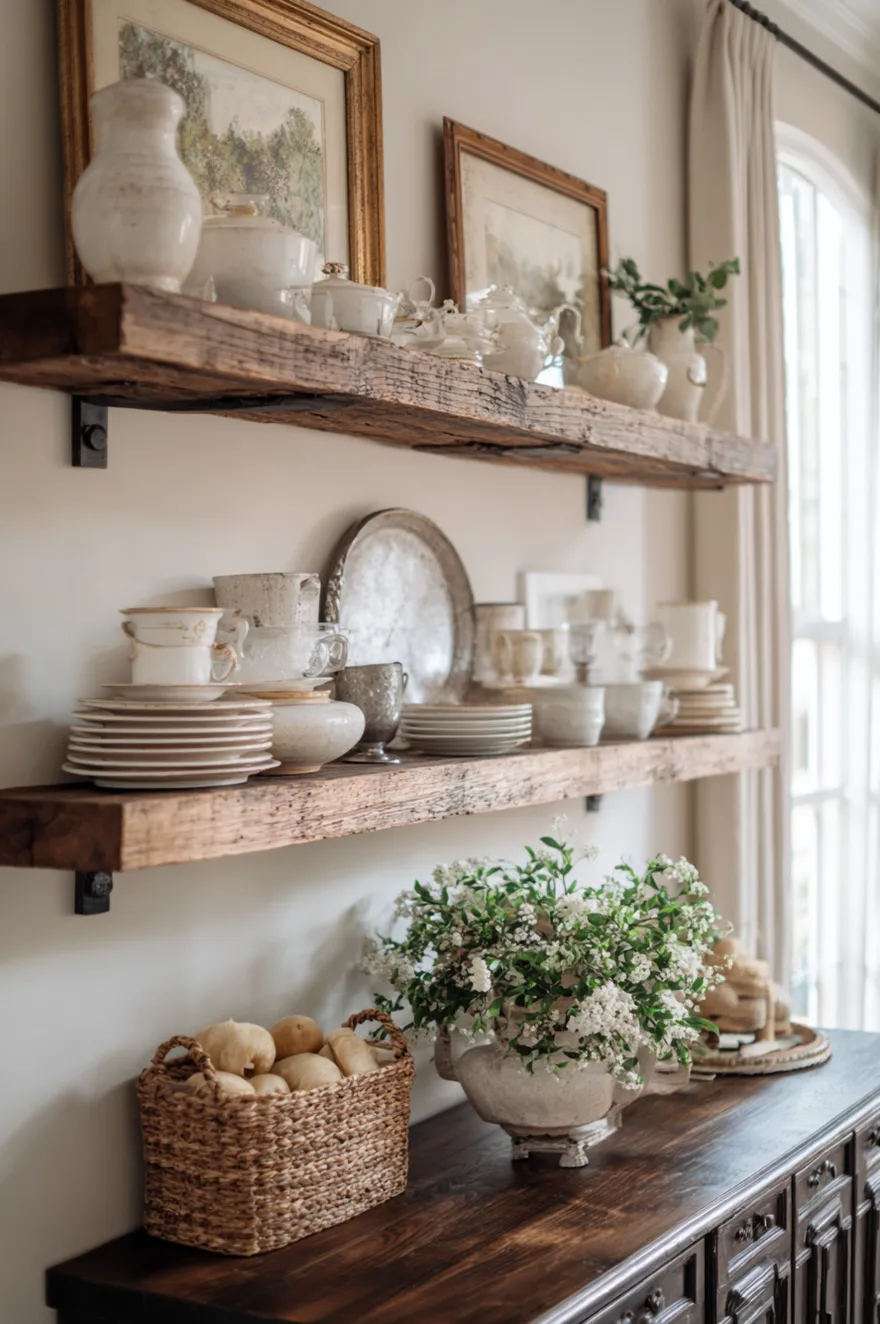
What makes this successful is curation – edit collections seasonally and group similar items by color, size, or material. Too many disparate objects create visual clutter. The goal is a collected-over-time feeling, not a chaotic garage sale aesthetic.
Warm Provençal Color Scheme
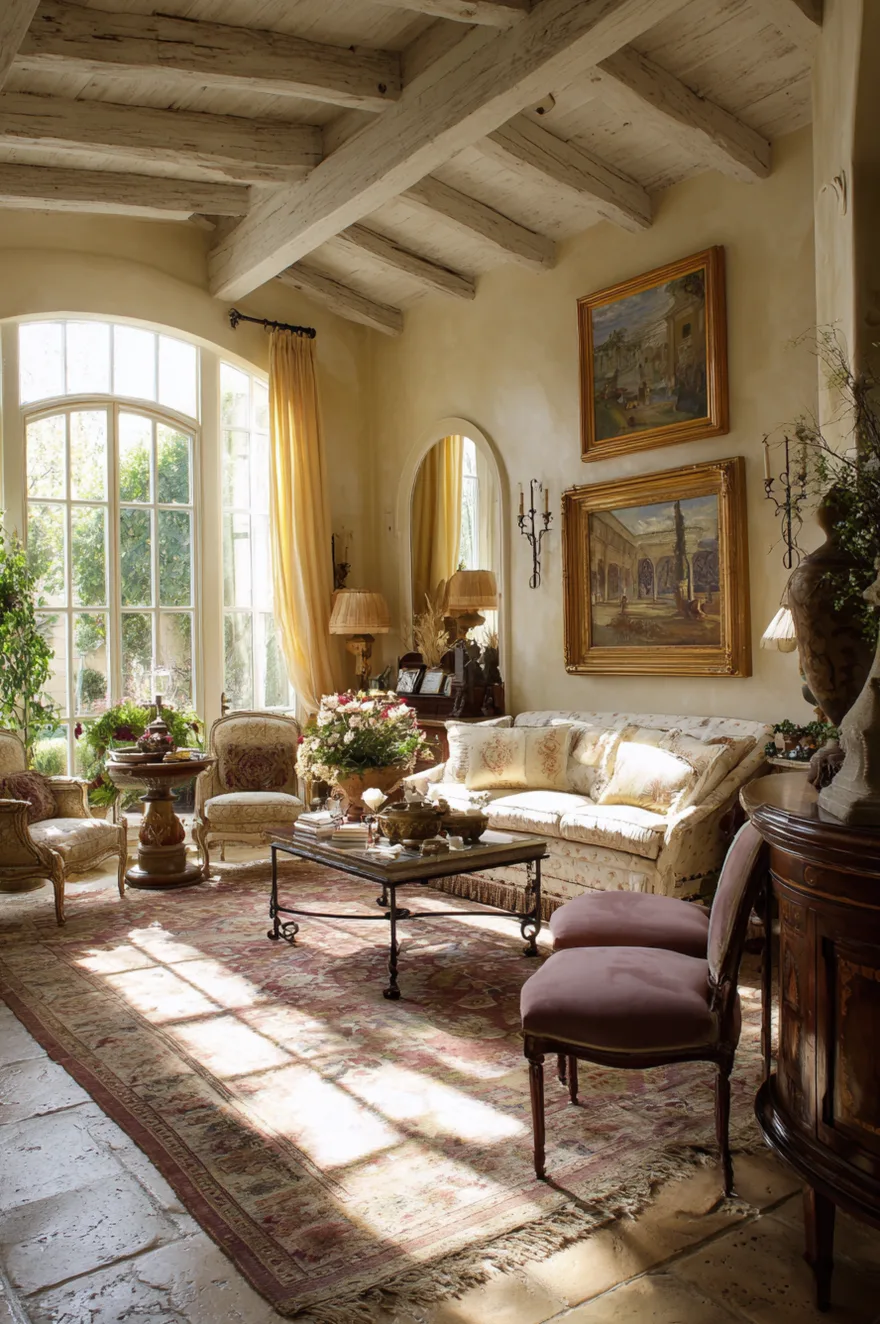
Here’s what sun-inspired palettes accomplish: they bring warmth and light even in rooms without strong natural light.
Soft lavenders, warm honeys, peachy terracottas, and creamy ivories evoke the sunlit fields and countryside of southern France. These colors work beautifully with natural materials like aged wood, woven textiles, and terra cotta pottery. The result feels romantic and grounded simultaneously – colors that glow in natural light.
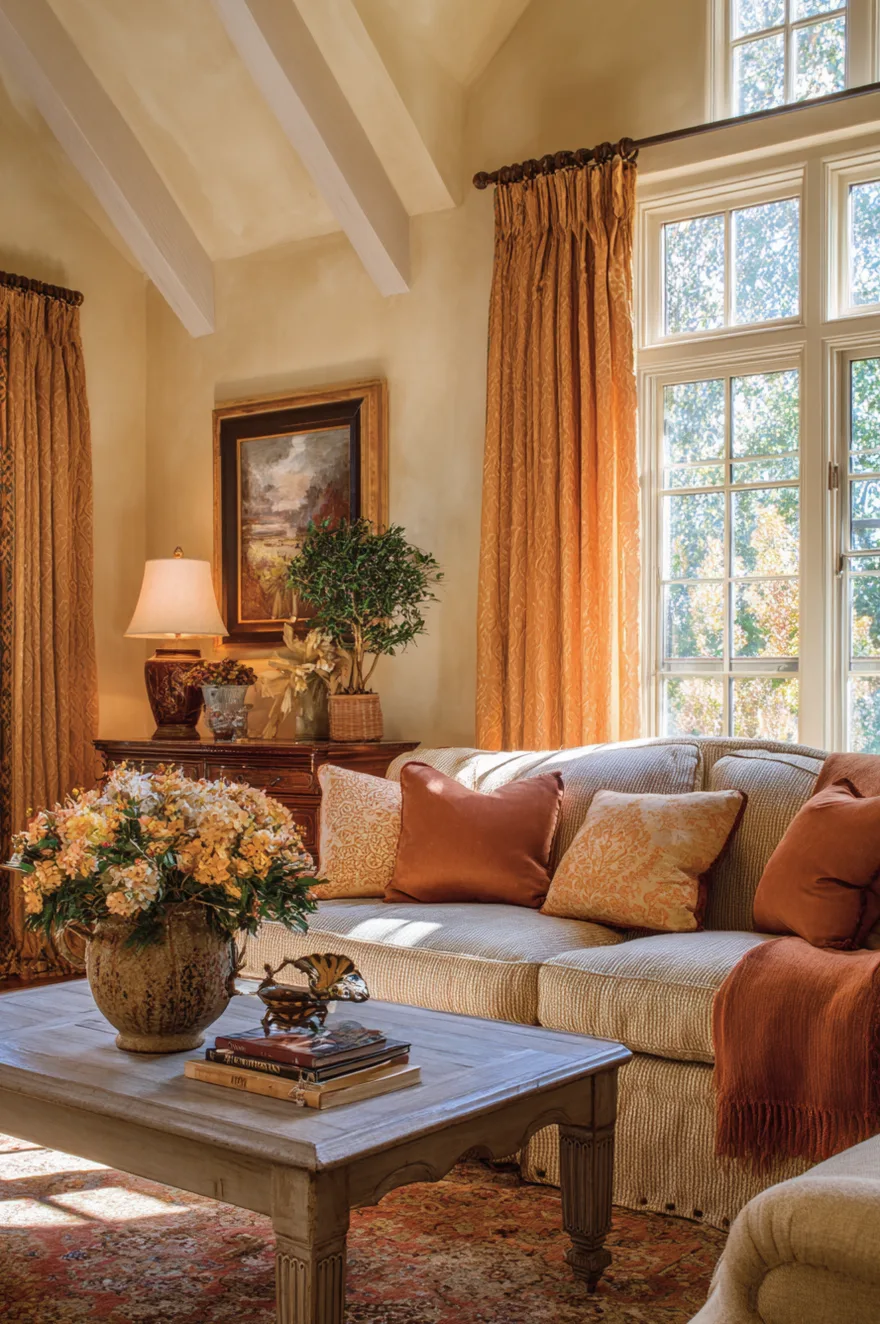
This palette has found particular success in warmer climates where the intense sunlight echoes Provence’s luminous quality. The colors age beautifully, developing a sun-faded softness over time that only enhances the authentic French country aesthetic.
Mixed Pattern And Texture Layering
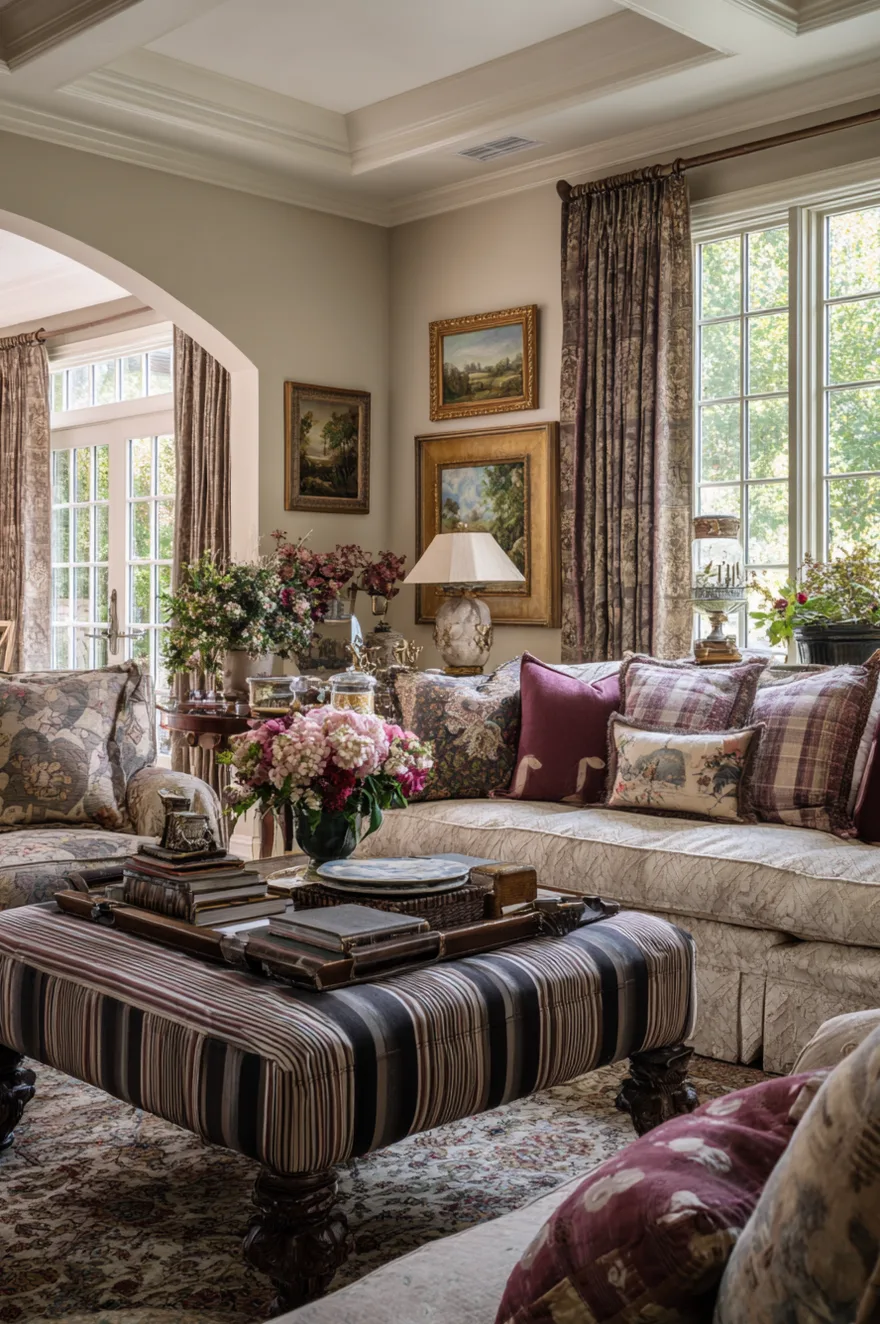
The thing about successful pattern mixing is it requires a unifying element – usually color palette – to create cohesion within diversity.
Layer florals, stripes, checks, and solids in the same color family for visual richness without chaos. This collected approach reflects decades of gathering pieces from different sources. Mix scales – large floral, medium check, small stripe – to create visual hierarchy. Include solid textures like velvet, linen, and wool to give the eye places to rest.
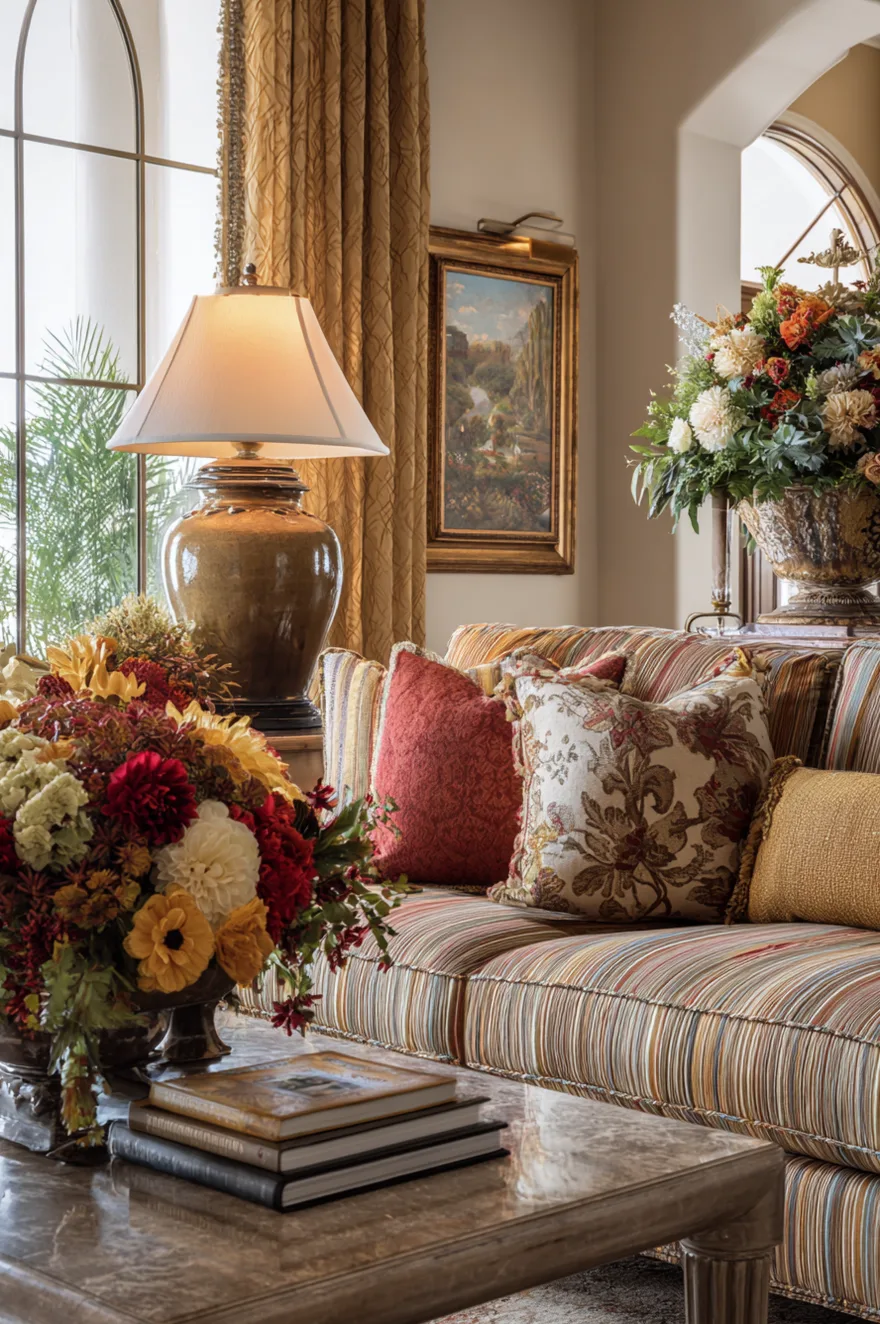
The secret is editing – not everything needs pattern. Aim for 60% solid/subtle texture, 30% medium patterns, and 10% bold patterns. This creates interest without overwhelming. And remember: in French country style, nothing should look like it came from the same store on the same day.
Statement Lighting Fixture As Focal Point
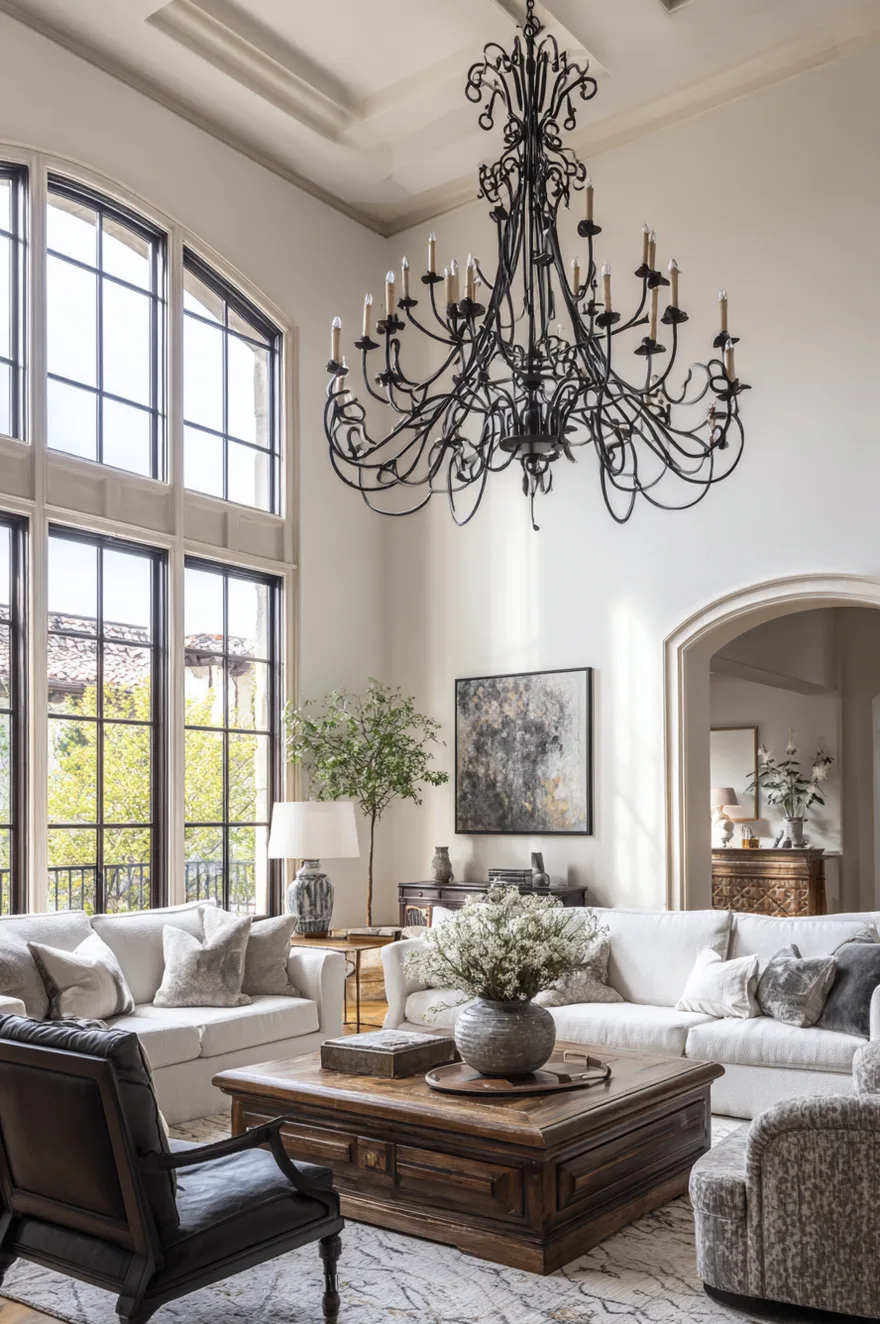
Here’s what an oversized chandelier accomplishes: it draws the eye upward, adds vertical drama, and anchors the seating area below.
Large iron, wood, or crystal chandeliers become sculptural focal points that combine function and beauty. The fixture should feel substantial enough to command attention without overwhelming the space – roughly one-third the width of the seating area below works well. This single bold element transforms ordinary rooms into memorable spaces.
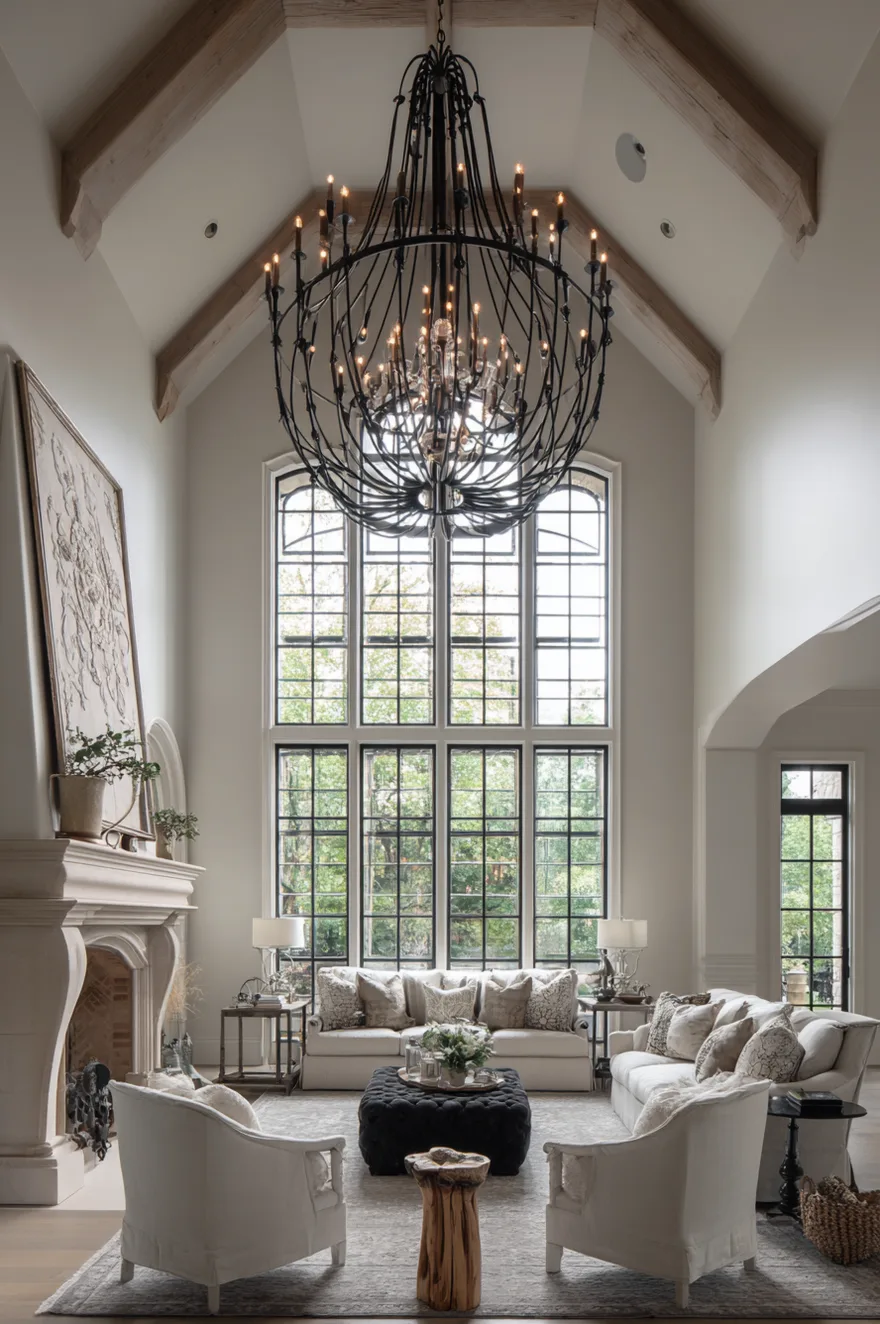
What homeowners consistently underestimate is scale – most choose fixtures that are too small. In rooms with high ceilings (10+ feet), you can go even larger than standard recommendations suggest. Installation by licensed electricians typically costs $150-$300, making this an affordable high-impact update.
Final Thoughts
French country living rooms succeed because they honor both beauty and livability – spaces that look collected over time while functioning for daily life. Whether you’re drawn to moody dark walls, soft neutral palettes, or romantic floral accents, these ideas provide frameworks for creating rooms that feel authentically French without requiring château-level budgets.
The key is mixing elements thoughtfully: rough with refined, old with new, structured with soft. Start with one or two concepts that resonate with your space and lifestyle, then build from there. Share your favorite French country elements in the comments – I’d love to hear which ideas you’re planning to incorporate into your own home.
See you soon,
Rachel