
I’ve been noticing something interesting lately. The most beautiful bedrooms I see aren’t the largest ones. They’re the small rooms designed with intention – where every piece earns its place and nothing feels accidental.
Small spaces get a bad reputation. People assume they’re limiting. Cramped. Difficult. But I’ve come to believe the opposite. A small bedroom forces clarity. It demands you think about what actually matters – rest, comfort, beauty – and eliminate everything else. That constraint becomes creative freedom.
In this guide, I’ll share bedroom ideas for small rooms that I’ve refined through years of design work. These aren’t tricks to make your room look bigger. They’re strategies to make your small room work better. From storage solutions to lighting techniques, each idea serves a purpose. Let’s build a bedroom that feels both cozy and intentional.
Vertical Storage Solutions For Small Spaces
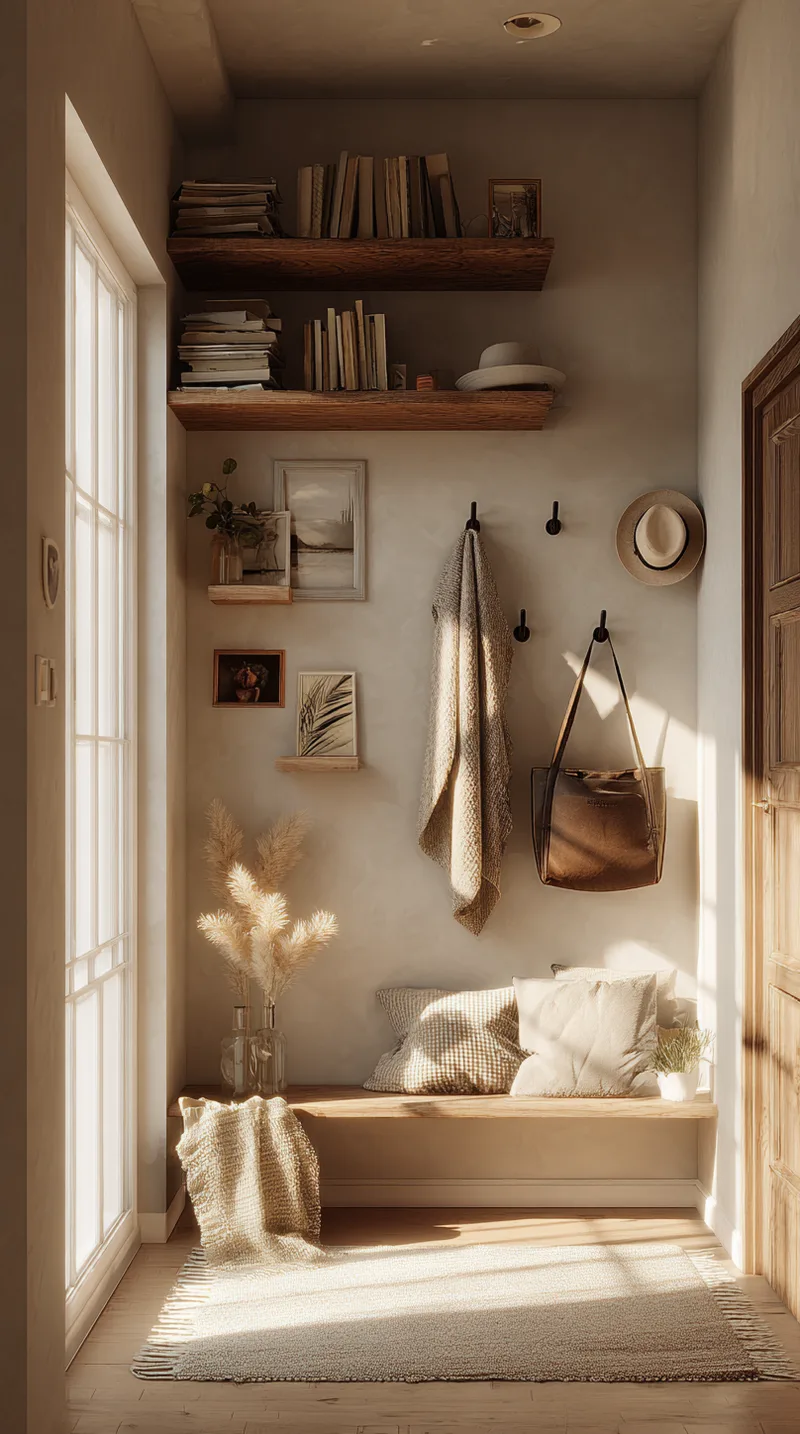
Here’s what I’ve learned about small bedrooms – the walls are your secret weapon.
Most people focus on floor space. That’s a mistake. Vertical storage transforms small rooms by drawing the eye upward and using space that otherwise sits empty. I recommend tall, narrow bookshelves that reach toward the ceiling. Floating shelves stacked in columns. Wall-mounted hooks for bags and jewelry. The floor stays clear while your storage capacity doubles.
In my experience, going vertical makes small spaces feel taller and more open. The key is keeping these vertical elements organized – clutter at eye level feels more chaotic than clutter on the floor.
Platform Beds For A Streamlined Look
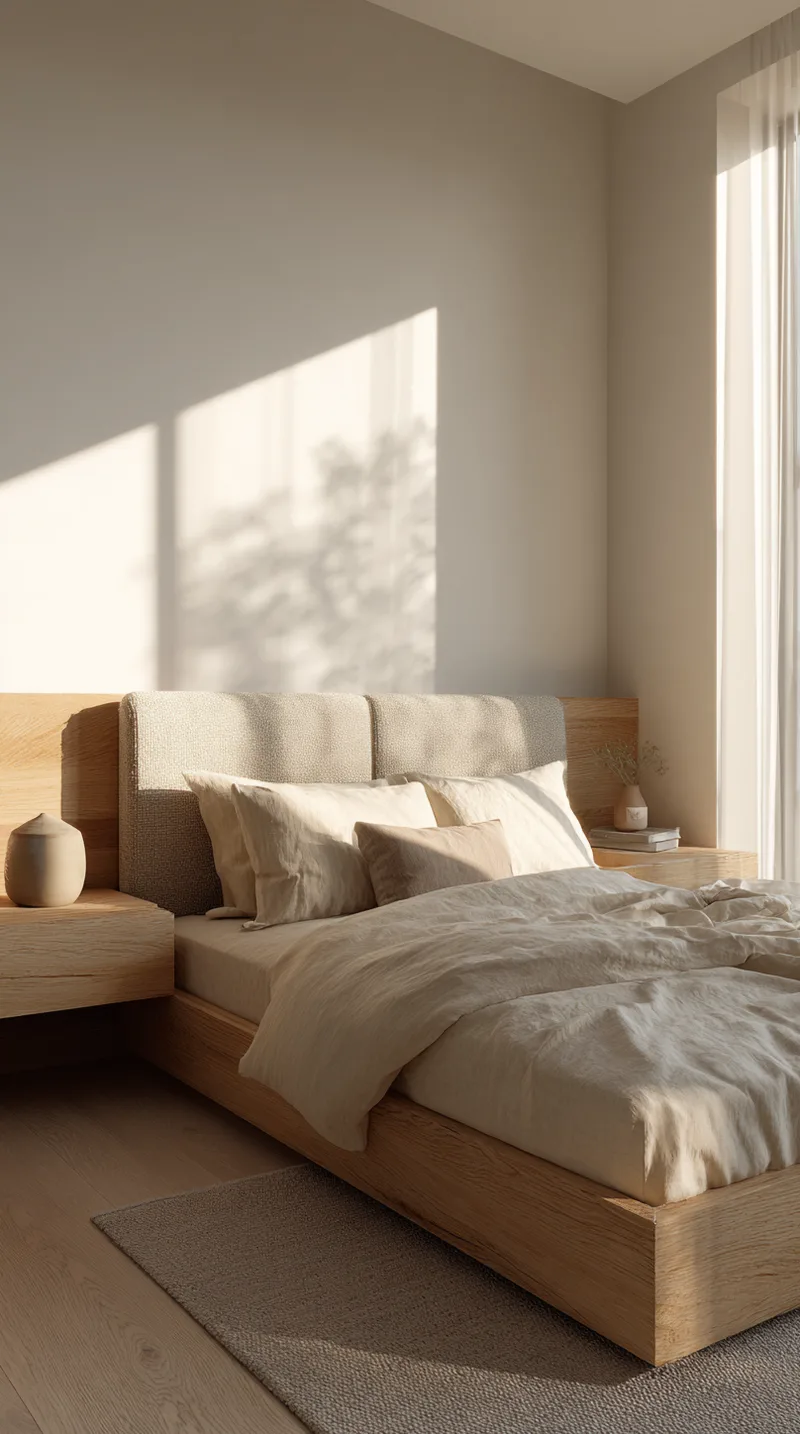
The bed dominates any bedroom. In small rooms, that dominance needs intention.
Platform beds sit low to the ground with clean lines and no box spring required. This matters in small spaces for two reasons. First, the lower profile creates more visual air between the bed and ceiling, making the room feel taller. Second, the streamlined silhouette eliminates visual bulk.
I tend to choose platform beds with simple headboards – upholstered in linen or natural wood frames. Skip ornate footboards entirely. For small rooms, I often recommend platform beds with built-in storage drawers underneath. Function and form working together.
Light Color Palettes That Open Up Small Rooms
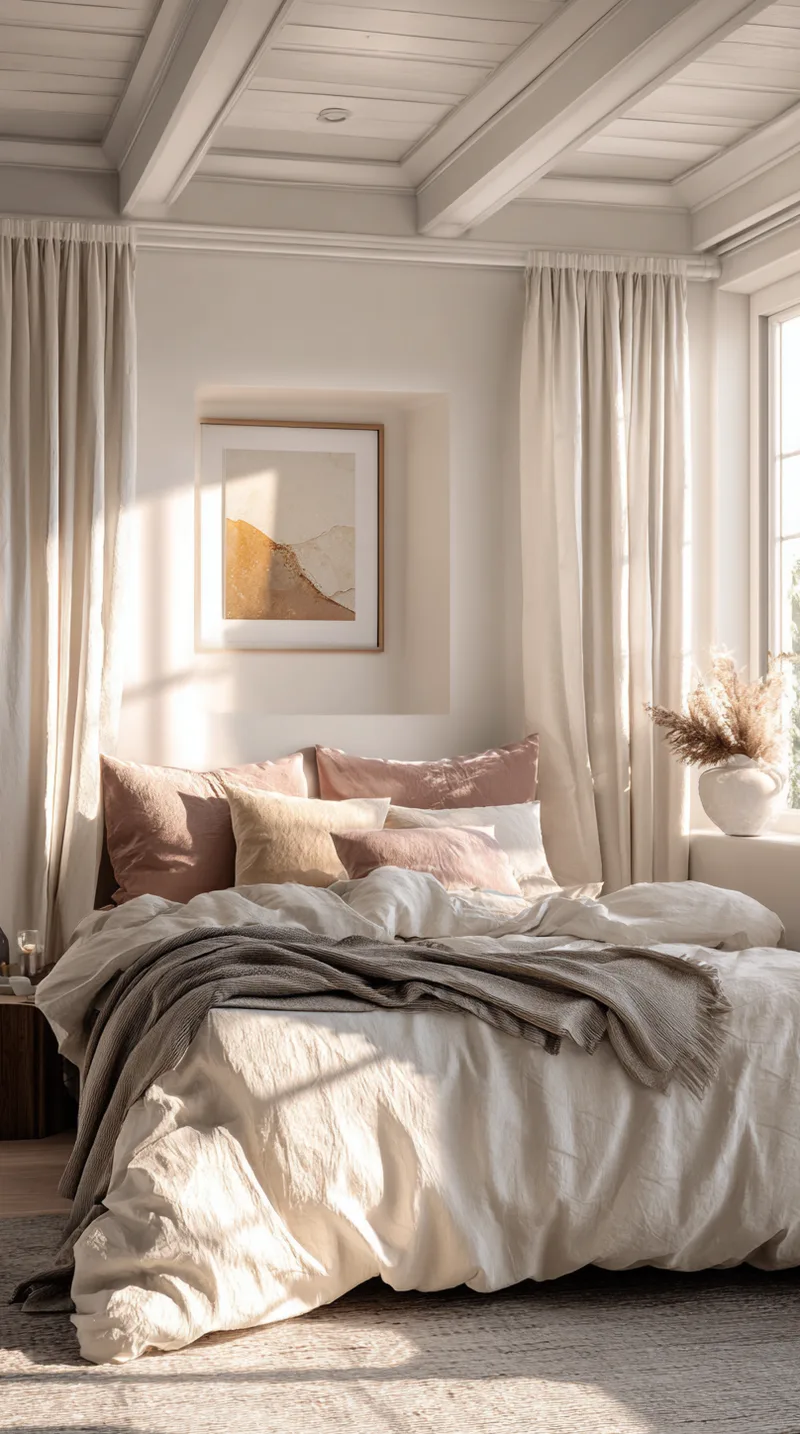
Color theory matters more in small spaces than anywhere else.
Light colors reflect natural light and make walls appear to recede. The room breathes. I gravitate toward warm whites, soft creams, pale grays with warm undertones, and muted blush tones. The key word is warm – cool whites can feel sterile in small bedrooms where you want comfort.
Paint the ceiling the same color as the walls, or slightly lighter. This eliminates the visual boundary that makes ceilings feel lower. In my experience, monochromatic light palettes create the most restful small bedrooms. Add depth through texture, not contrasting colors.
Floating Nightstands For Floor Space
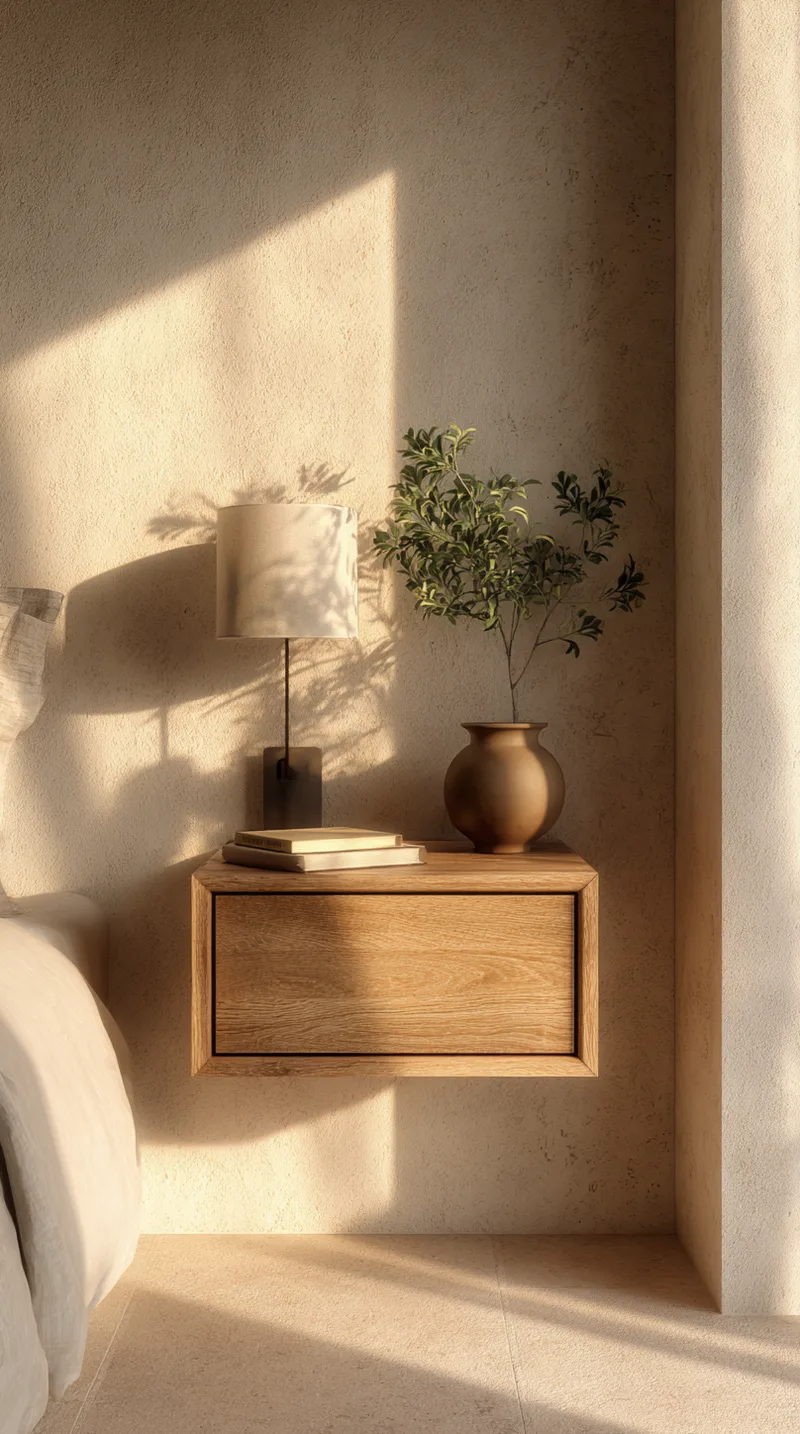
Every inch of floor space matters in a small bedroom.
Traditional nightstands eat valuable square footage. Floating nightstands mount directly to the wall, leaving the floor completely clear beneath them. The visual effect is significant – your eye can travel uninterrupted, making the room feel more spacious.
I prefer simple floating shelves or wall-mounted drawer units in natural wood or white finishes. Keep the surface minimal: a lamp, a book, perhaps a small plant. Position them at the same height as your mattress top for comfortable reach. This small change creates breathing room that traditional furniture cannot.
Mirrors That Create Depth In Small Spaces
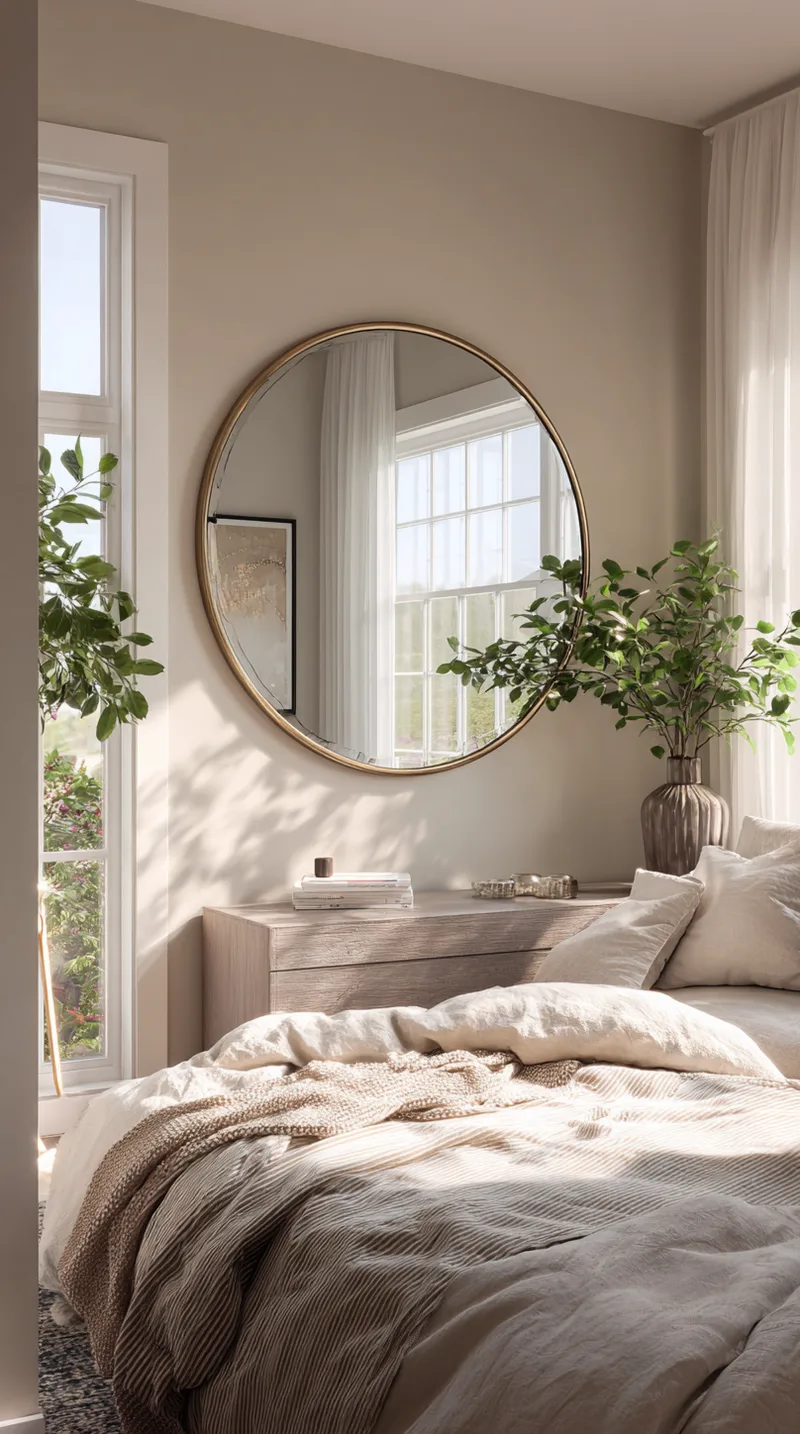
Mirrors are the oldest trick in small space design. They work because physics works.
A well-placed mirror reflects light and creates the illusion of depth, essentially doubling your visual space. I position mirrors to reflect windows whenever possible – this bounces natural light deeper into the room and creates a sense of openness. Full-length mirrors leaning against walls work beautifully in small bedrooms. Round mirrors above nightstands or dressers soften angular rooms.
The key is intention. One large mirror outperforms several small ones. Avoid placing mirrors where they reflect clutter – that doubles the chaos, not the calm.
Multipurpose Furniture For Practical Living
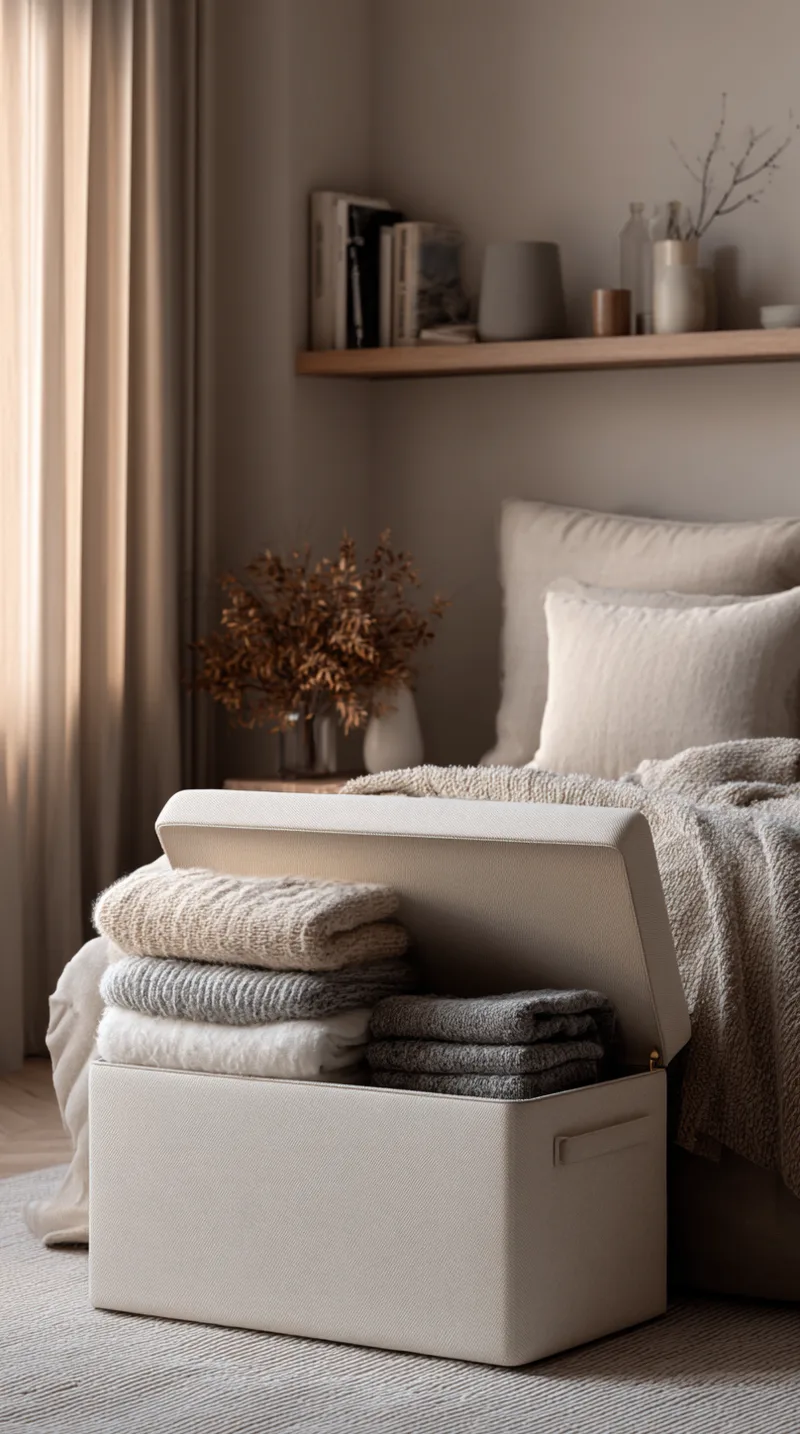
In small rooms, every piece must justify its presence twice.
I look for furniture that serves multiple functions without sacrificing aesthetics. Storage ottomans at the foot of the bed hold extra blankets and double as seating. Desks with drawers eliminate the need for separate filing cabinets. Headboards with built-in shelving replace nightstands entirely. The questions I ask: what does this piece do, and what else could it do? When furniture works harder, you need less of it. Less furniture means more open floor space. More open floor space means a bedroom that actually feels like a retreat, not a storage unit.
Strategic Lighting Layers For Cozy Ambiance
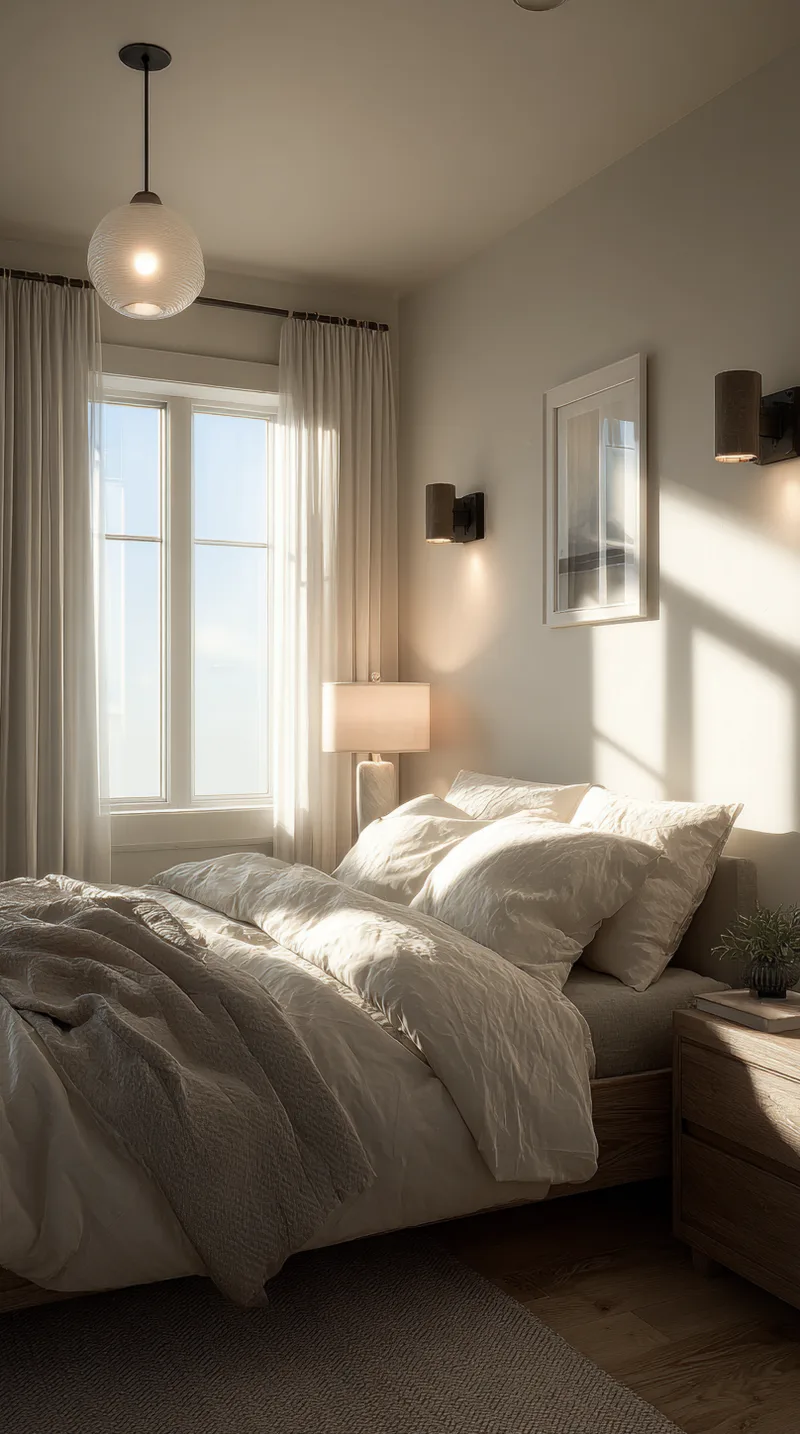
One overhead light is never enough. In small bedrooms, it’s especially insufficient.
Layered lighting creates depth and allows mood control. I plan three layers: ambient for overall illumination, task for reading or working, and accent for atmosphere. In small spaces, wall-mounted sconces beside the bed free up nightstand surface. A single pendant light overhead uses no floor space. LED strips behind headboards or under bed frames create subtle glow. Dimmers on everything – this isn’t optional.
Small bedrooms need the ability to shift from bright and functional to soft and restful. The right lighting makes small rooms feel intentional, not cramped.
Minimalist Bedding For Visual Calm
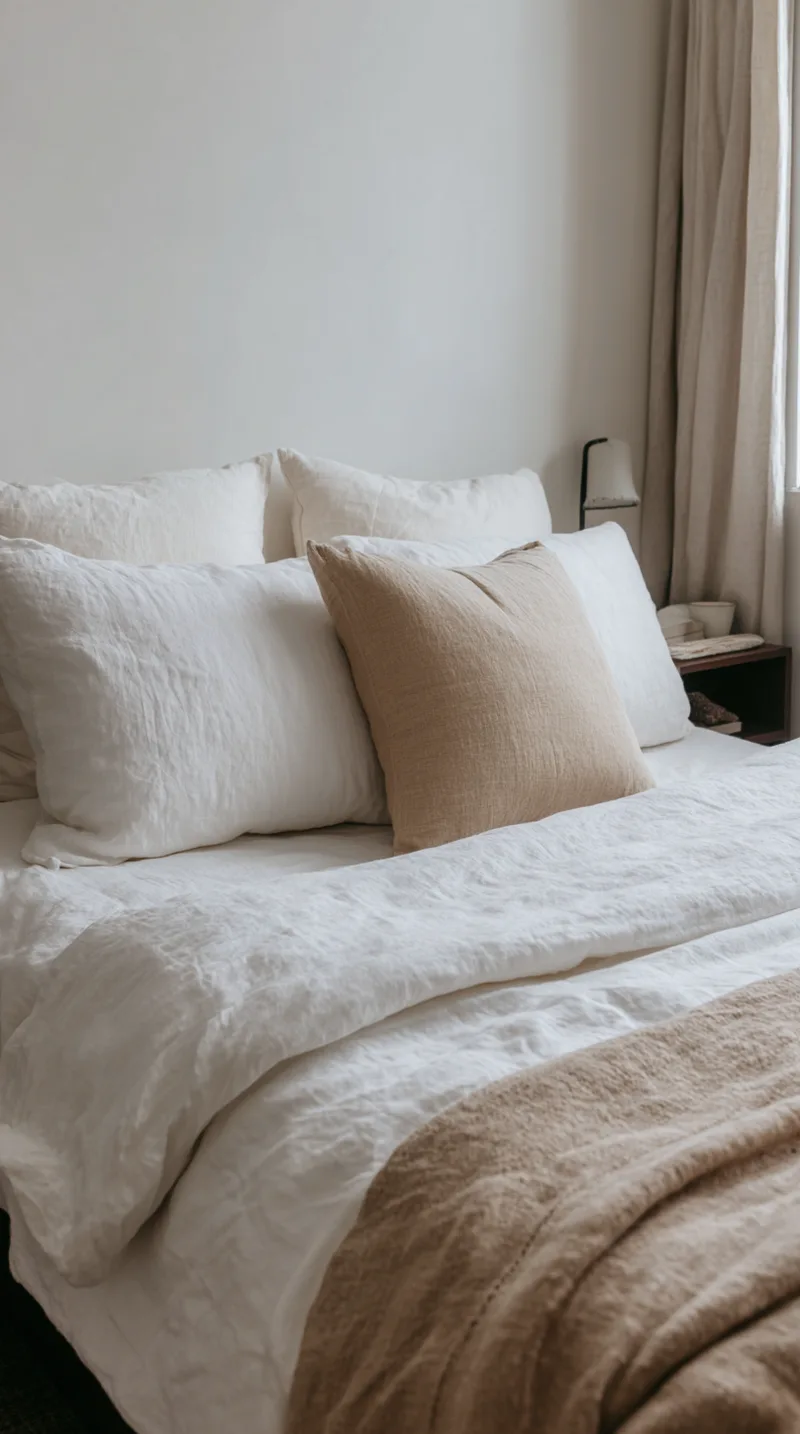
The bed is the largest visual element in any bedroom. Simplify it.
Busy patterns and excessive pillows create visual noise that makes small rooms feel chaotic. I prefer solid colors or subtle textures – linen in warm white, cotton in soft gray, a single textured throw at the foot. Two sleeping pillows plus two euro shams maximum. Maybe one small accent pillow. That’s enough. The goal is a bed that looks restful, not decorated.
In small spaces, this visual calm extends to the entire room. A simplified bed anchors everything else and signals that this space is for rest, not display.
Built-In Wardrobes For Seamless Storage
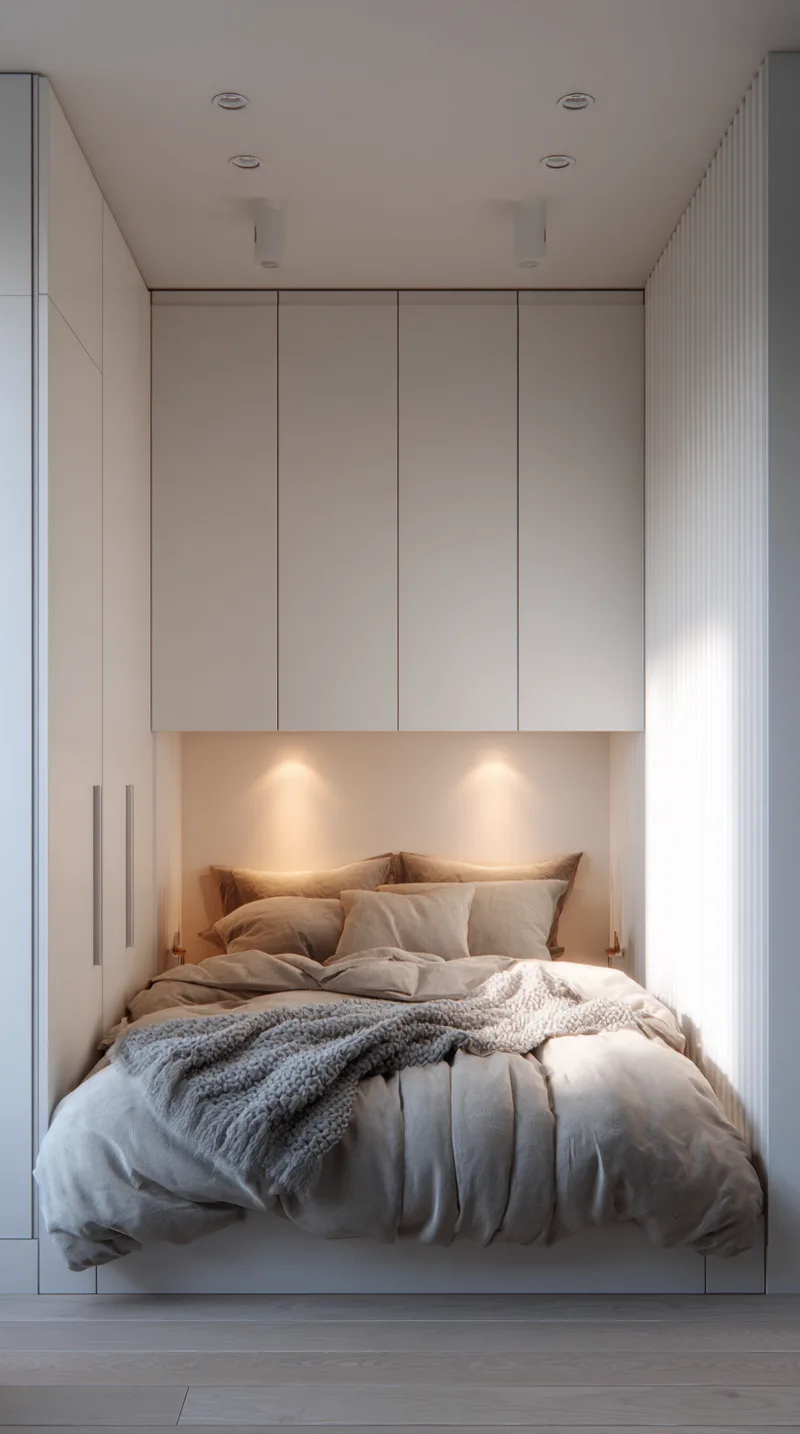
Freestanding wardrobes consume floor space and break visual flow. Built-ins solve both problems.
Floor-to-ceiling built-in wardrobes maximize every vertical inch while creating a seamless wall of storage. Doors flush with walls – or even wall-papered to match – virtually disappear. I often design built-ins around bed alcoves, framing the sleeping area while providing substantial storage on both sides. Yes, built-ins require investment. In small bedrooms, they’re often worth it.
The alternative is bulky furniture that makes the room feel furnished rather than designed. Built-ins feel architectural. Intentional. Like the storage was always meant to be there.
Under-Bed Storage That Stays Hidden
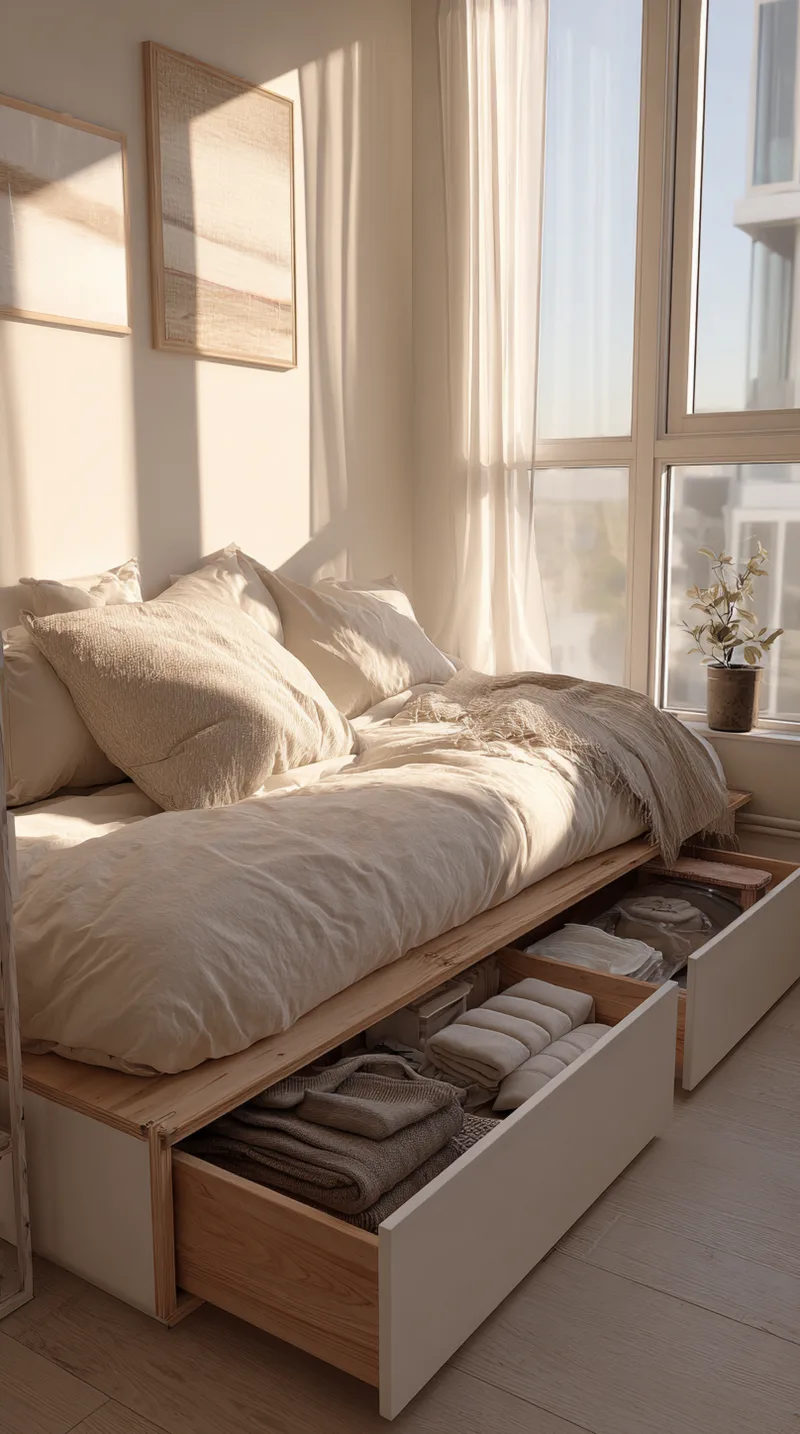
The space beneath your bed is valuable real estate. Use it wisely.
I recommend beds with either built-in drawers or enough clearance for low-profile storage containers. The key word is hidden. Visible under-bed storage creates visual clutter that undermines the calm you’re trying to create. Opt for containers with lids in matching colors. Or choose platform beds with integrated drawers that look like part of the design.
Store off-season clothing, extra bedding, or items you need but don’t use daily. This hidden storage can eliminate the need for a dresser entirely in very small rooms – a significant space savings.
Window Treatments That Maximize Light
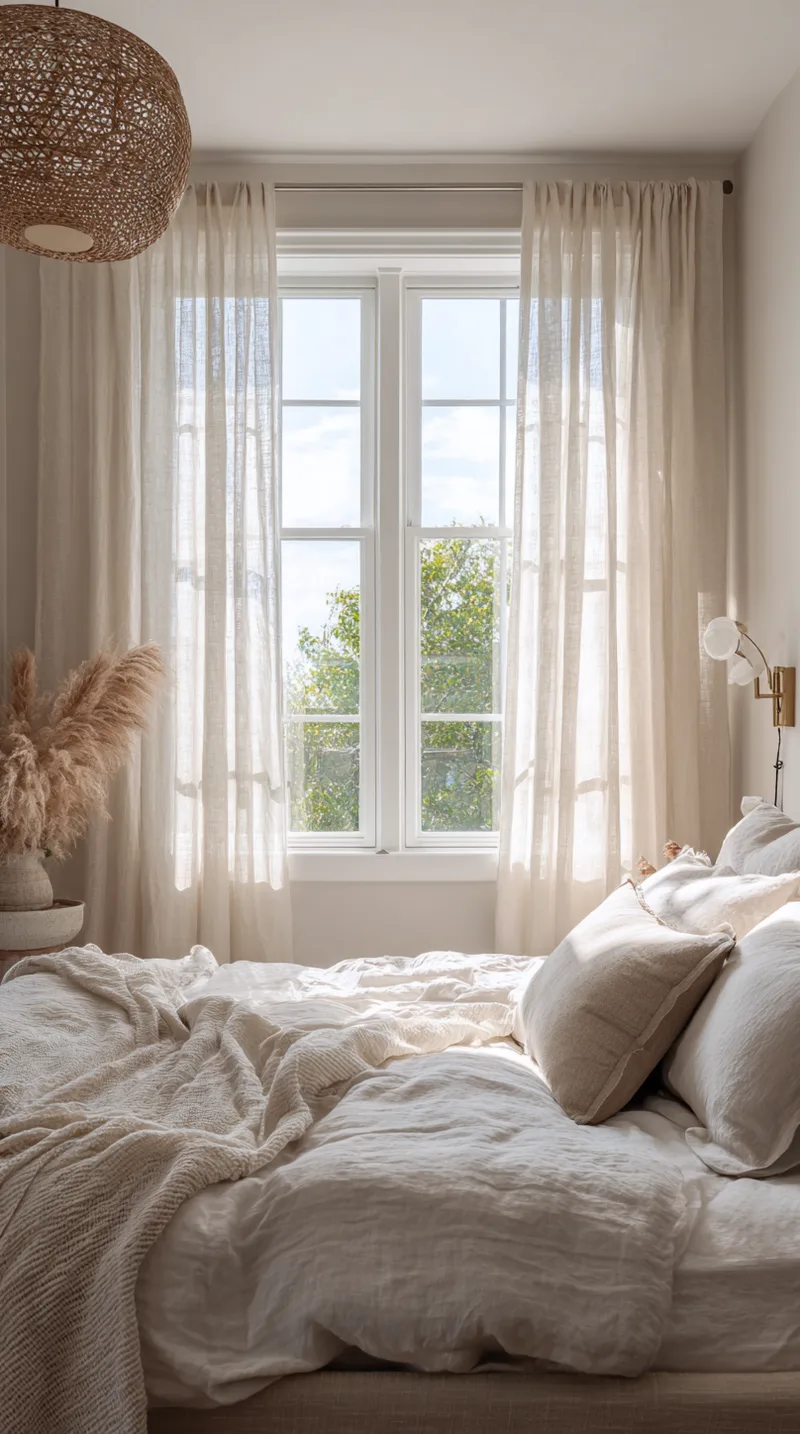
Natural light makes small rooms feel larger. Don’t block it unnecessarily.
I prefer window treatments that can completely clear the glass when open. Curtains mounted wide – at least six inches beyond the frame on each side – stack entirely off the window during the day. Roman shades pull up neatly. Avoid heavy drapes or treatments that permanently cover portions of the window.
For privacy, consider sheer linens that filter light without eliminating it. The color should match or be slightly lighter than your walls. In small bedrooms, windows are precious. Treat them as features, not problems to cover.
Small Room Layouts That Prioritize Flow
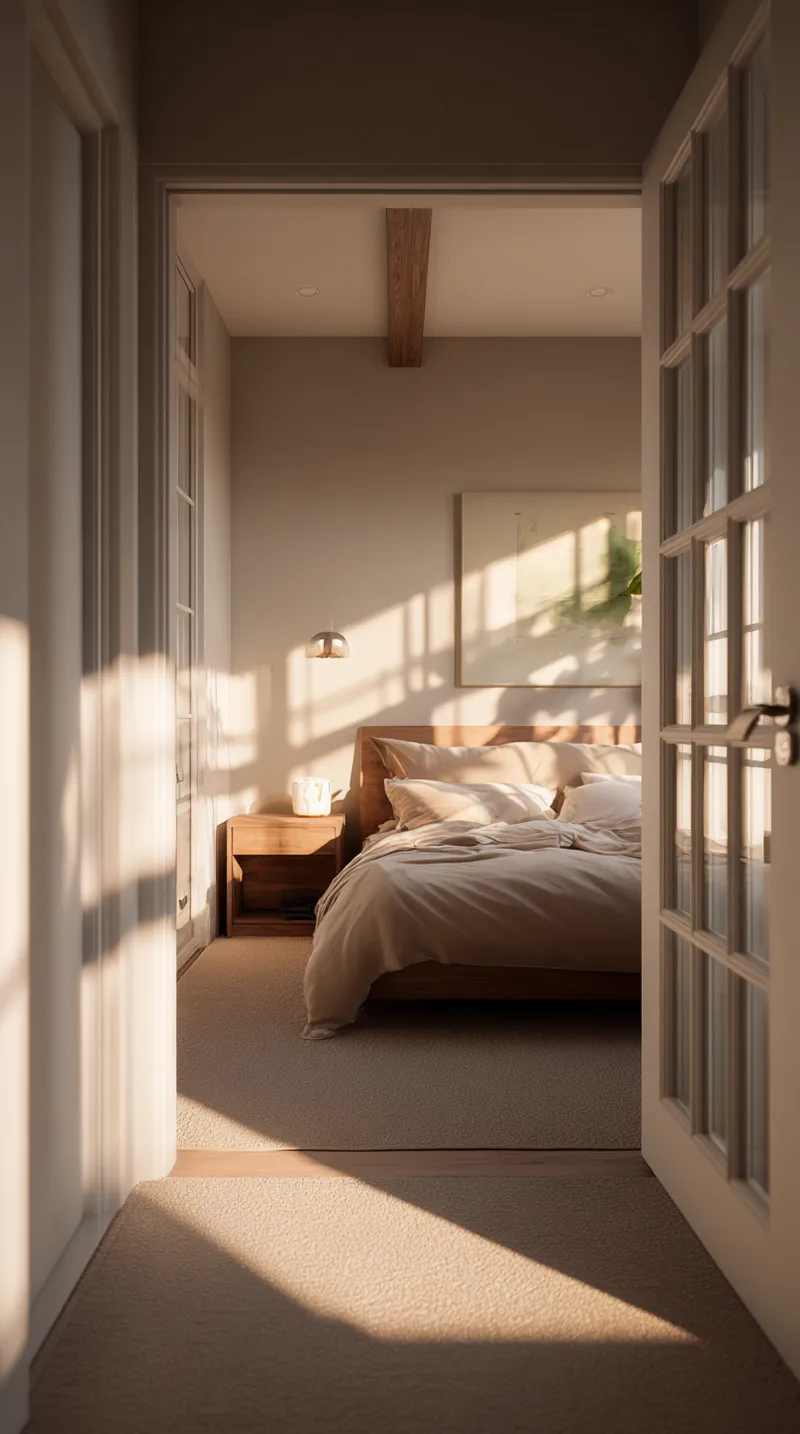
Furniture placement matters more in small rooms than large ones.
The path from door to bed to closet should feel natural, not obstructed. I start every small bedroom layout by identifying the traffic flow, then placing the bed to preserve it. Typically, the bed works best against the longest wall, facing the door. This creates maximum floor space and a sense of arrival when entering.
Nightstands should allow walking space between bed and walls. If they don’t fit, eliminate them for floating shelves. Every layout decision in small spaces is a trade-off. Prioritize movement and the room will feel larger than its measurements suggest.
Accent Walls That Add Depth Without Overwhelm
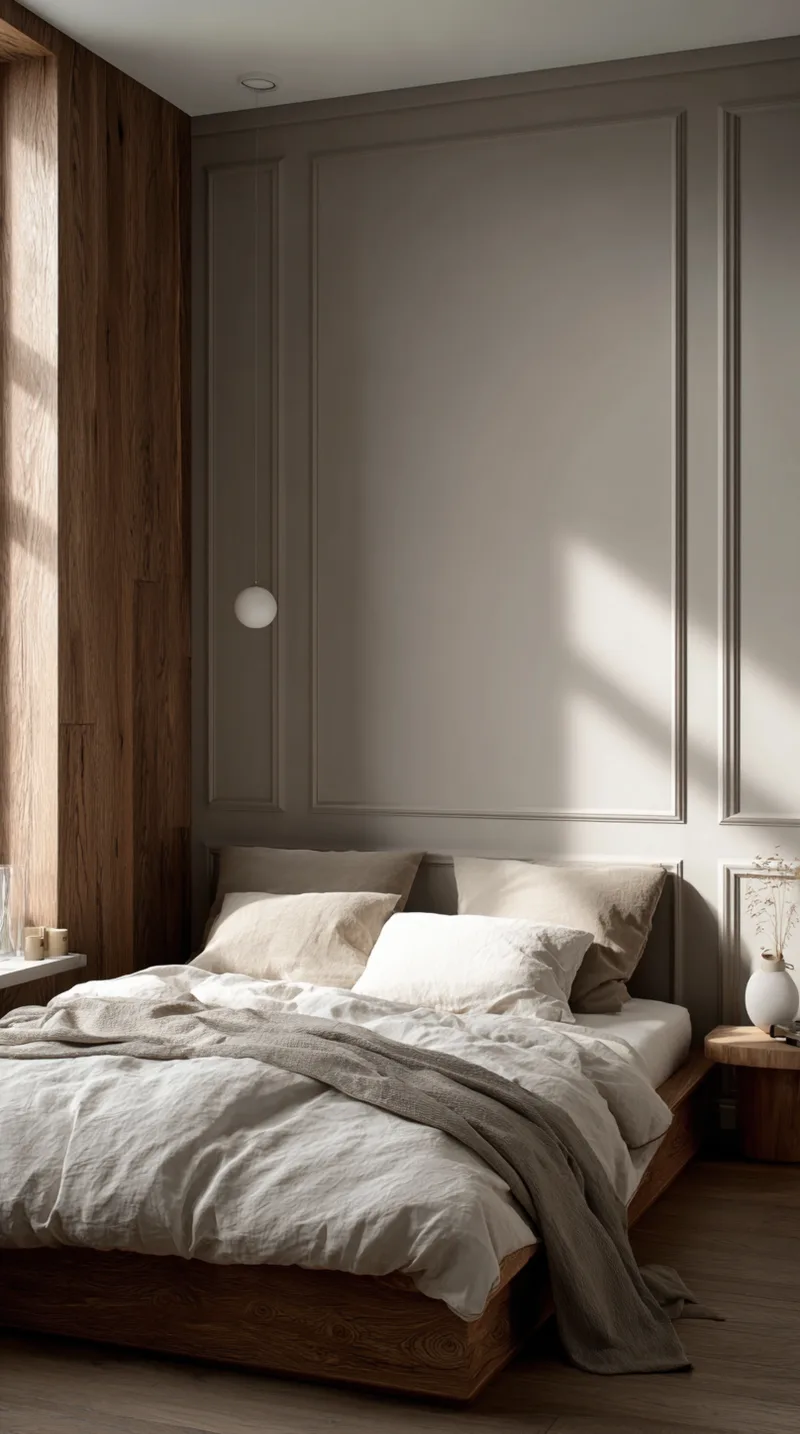
Color or texture on a single wall creates depth without shrinking the room.
I use this technique carefully in small bedrooms. The accent wall should typically be the one behind the bed – it anchors the focal point and adds visual interest where you want attention. Soft colors work better than bold ones in small spaces. Think warm taupe, muted sage, soft clay. Textured options like wood slat panels or subtle wallpaper patterns add dimension without the heaviness of dark color. Keep the other three walls light and neutral. The contrast creates perceived depth, making the room feel less boxy and more designed.
Compact Desks For Work-From-Home Spaces
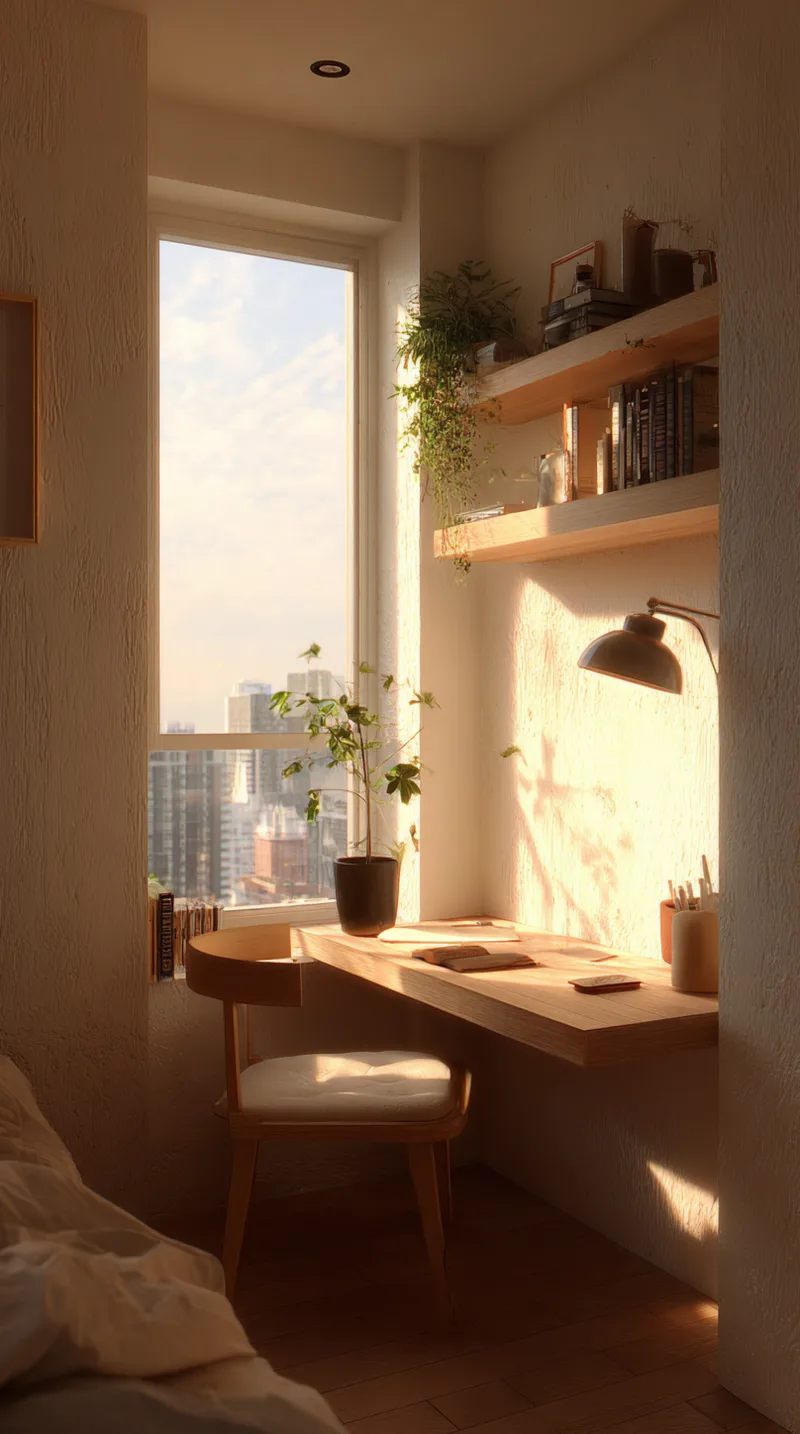
Many small bedrooms must now accommodate work. Design for it intentionally.
Floating desks mount to walls with zero floor footprint. Wall-mounted fold-down desks disappear completely when not in use. If you need a freestanding option, choose narrow writing desks under 36 inches wide. Position the desk near a window for natural light and to avoid the feeling of facing a wall.
The key in small bedrooms is containing the work zone – visually and physically. A desk that sprawls with papers and equipment will dominate the room. Keep surfaces clear. Work supplies in drawers. The desk should feel like part of the bedroom, not a takeover.
Cohesive Color Stories For Visual Expansion
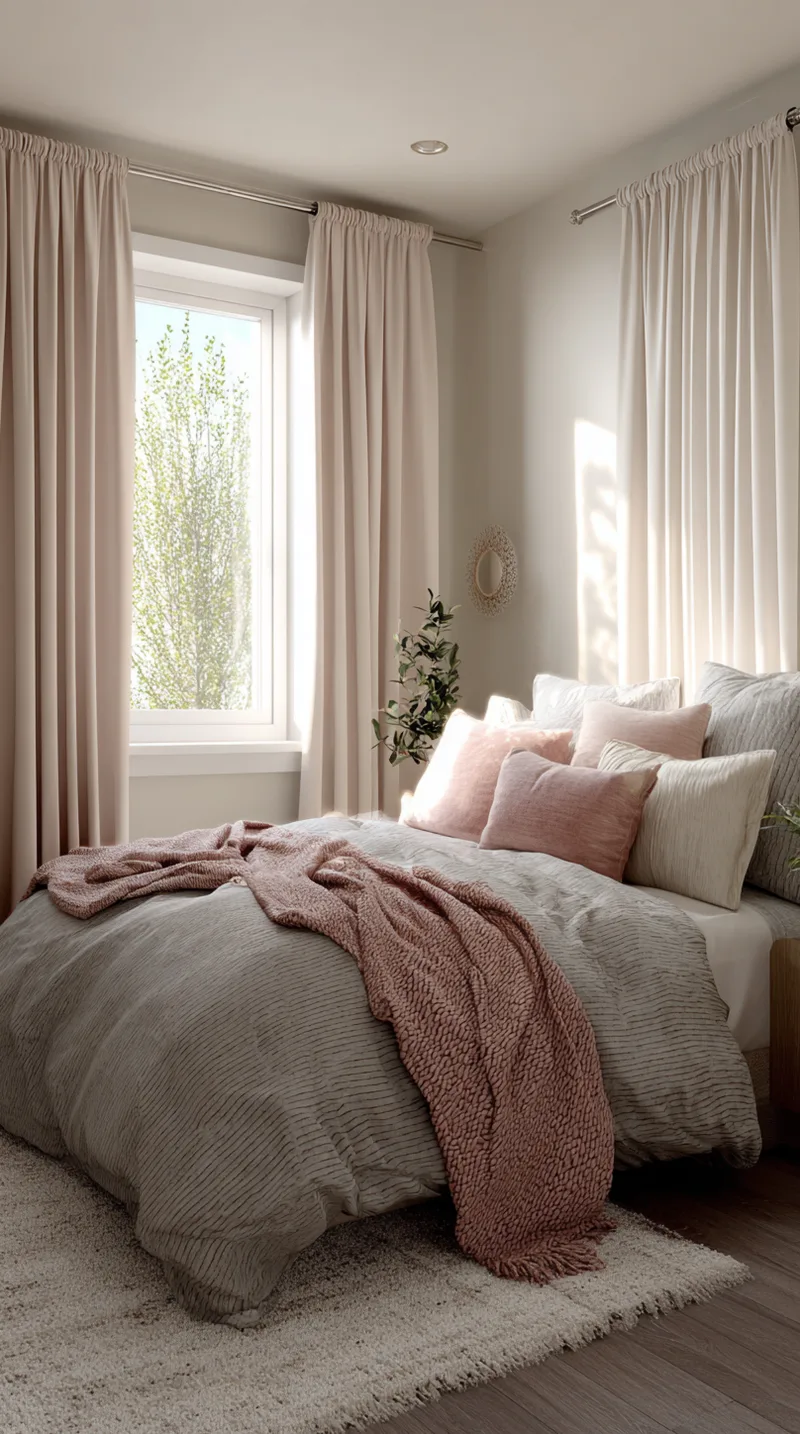
Too many colors make small rooms feel fragmented. Cohesion creates calm.
I work with limited palettes in small bedrooms – typically one neutral base, one warm accent, and one texture color. Everything coordinates without matching exactly. Bedding, curtains, rugs, furniture – they should feel like they belong together. This doesn’t mean boring. It means intentional. A cream, warm gray, and soft blush palette can be just as interesting as a room full of competing colors. The difference is that cohesive colors let your eye move smoothly around the space. In small rooms, that smooth visual flow creates the perception of openness.
Scale-Appropriate Furniture Selection
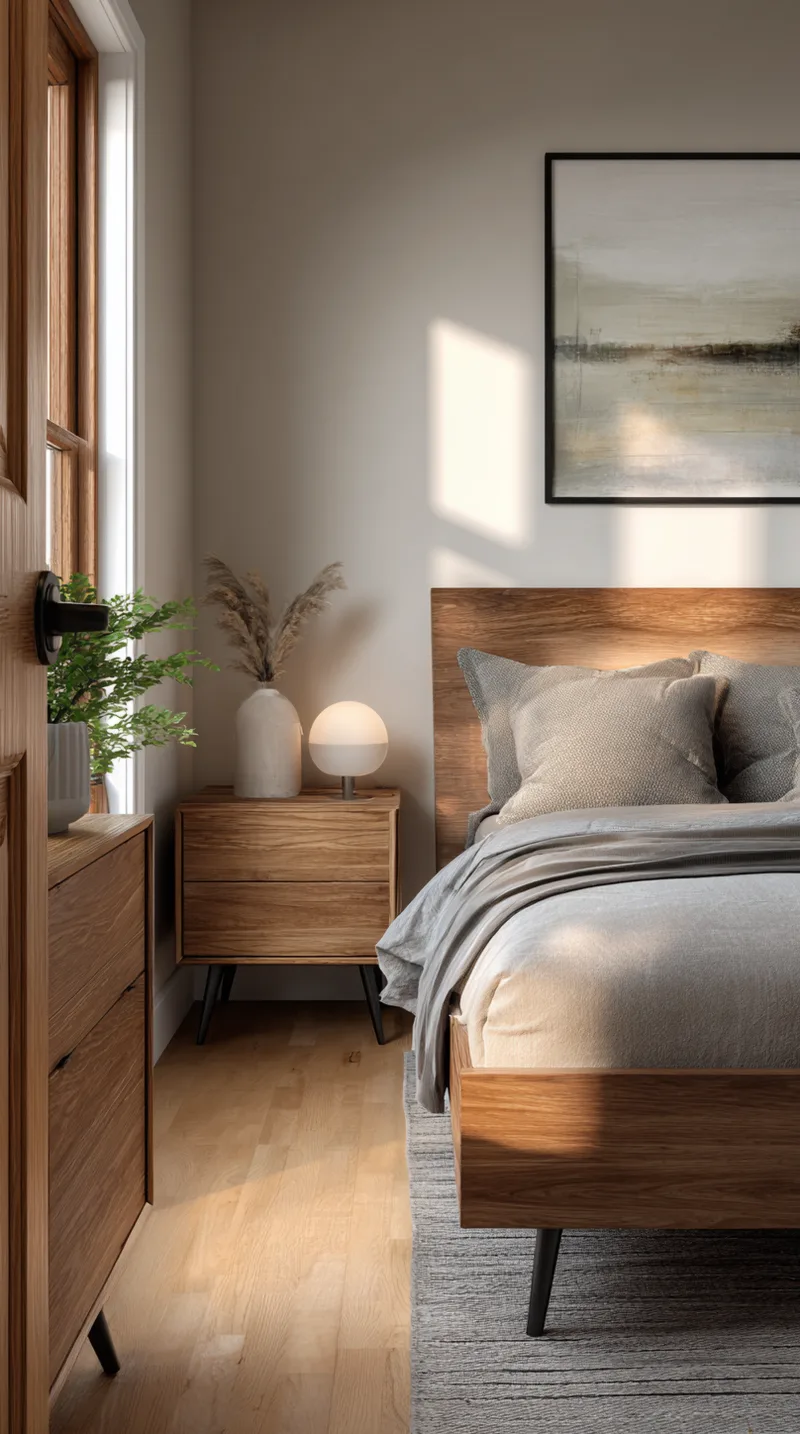
Oversized furniture in small rooms creates instant claustrophobia.
I measure obsessively before selecting any piece. The rule I follow: leave at least 24 inches of clearance for walking paths, more if possible. Nightstands should be proportional to bed height and bed size. Dressers under 36 inches wide suit most small bedrooms. Skip the king bed – a queen or full often works better with proper clearance.
Furniture legs matter too. Raised pieces with visible legs allow sight lines to continue underneath, making floors appear larger. Low, bulky pieces that sit directly on the floor block those sight lines and feel heavier.
Textured Neutrals For Warmth And Interest
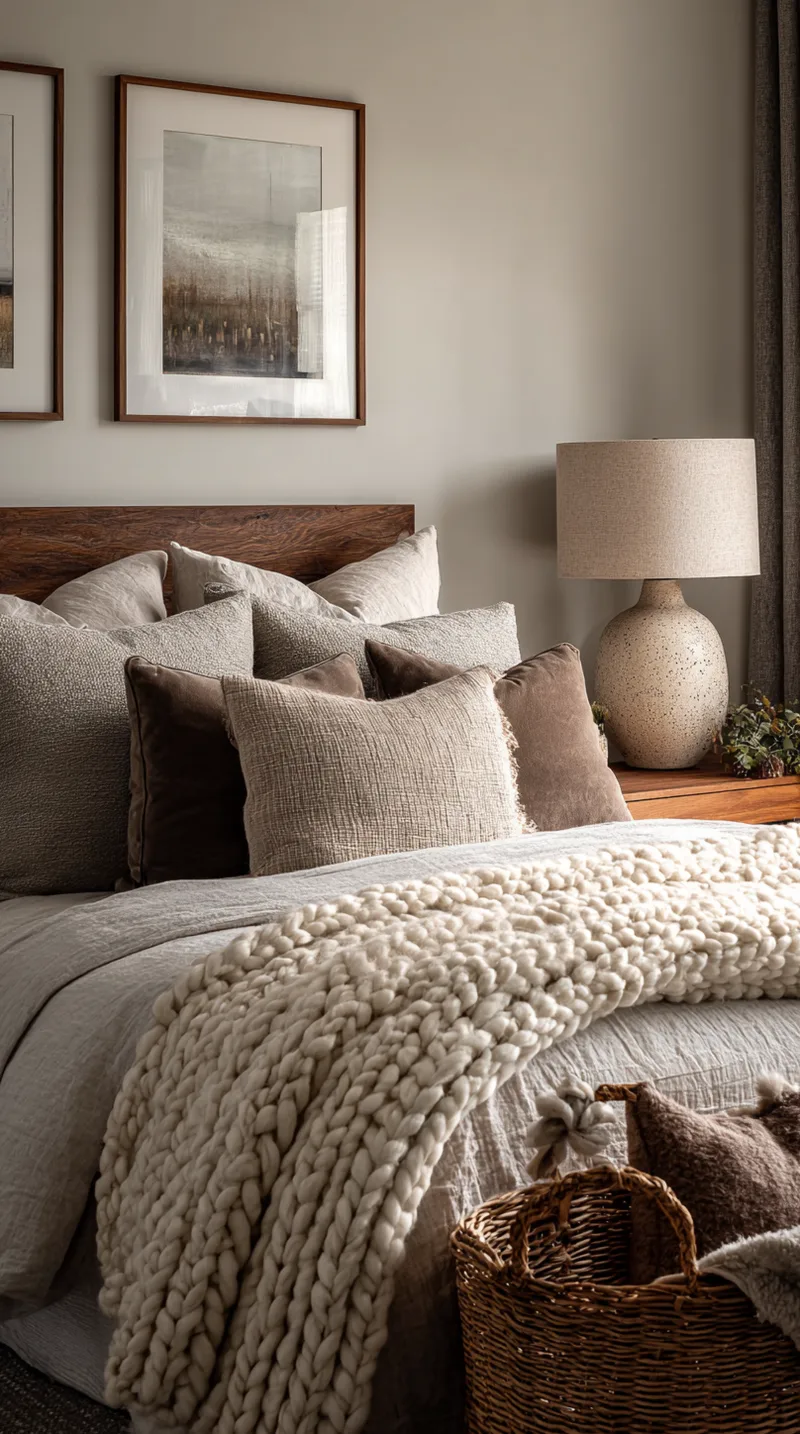
Neutral doesn’t mean flat. Texture creates the richness that color would add in larger rooms.
I layer textures intentionally – linen bedding against velvet pillows against wool throws. Woven baskets beside smooth ceramic lamps. Nubby rugs beneath crisp cotton curtains. Each texture catches light differently and adds visual weight without adding visual noise.
In small bedrooms, this textural layering prevents the space from feeling sterile while maintaining the calm palette that makes rooms feel open. Touch matters as much as sight. A small bedroom should feel cozy against your skin, not just look cozy in photographs.
Smart Closet Organization Systems
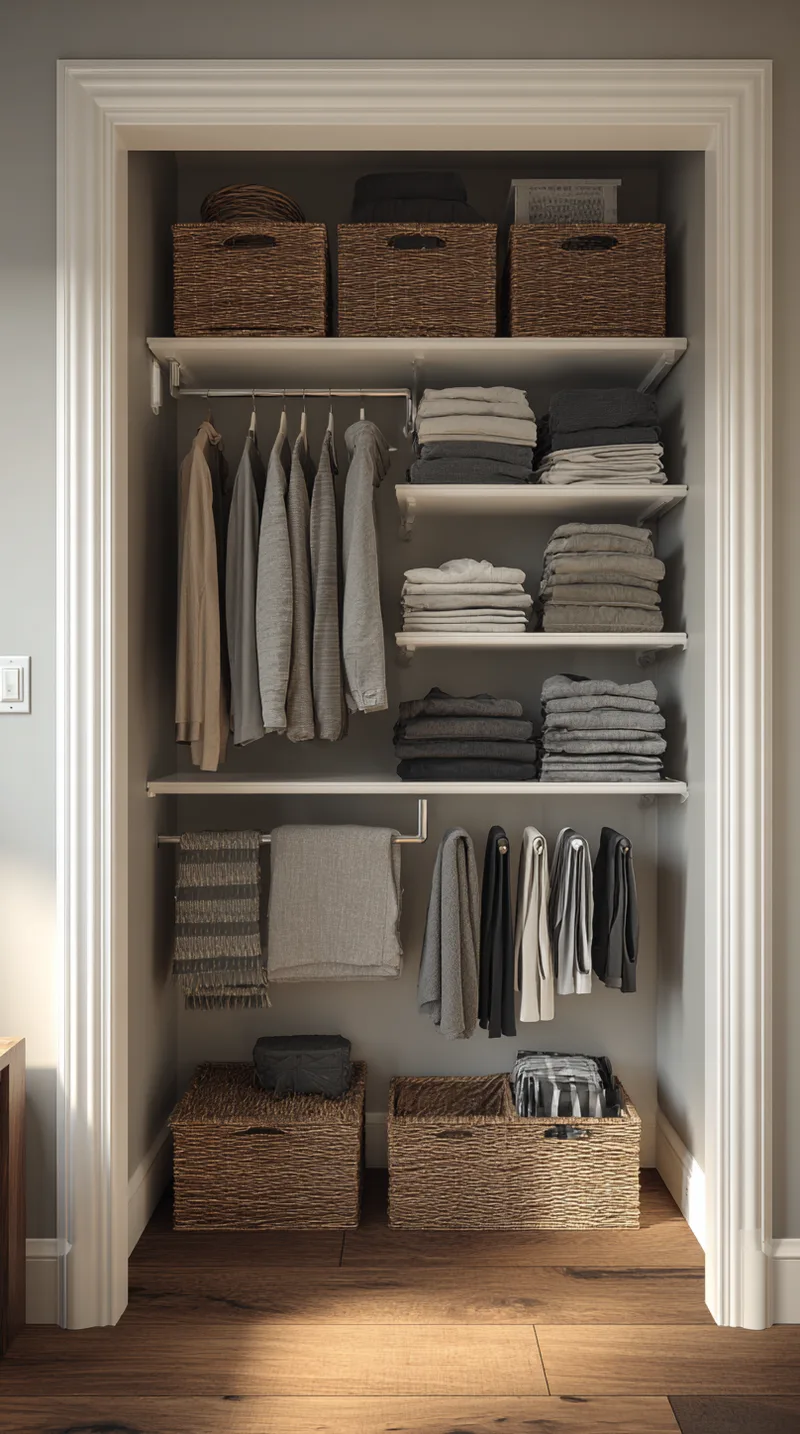
A disorganized closet bleeds chaos into the bedroom. Especially in small spaces.
I treat closet organization as essential infrastructure, not optional upgrade. Double hanging rods maximize vertical space for shorter items. Shelf dividers keep folded clothes from toppling. Clear bins or baskets contain accessories. The floor should remain clear – either for shoes on a rack or completely empty for visual breathing room.
In small bedrooms where closets are also small, I sometimes recommend reducing wardrobe size rather than cramming. Less clothing, well-organized, serves you better than an overflowing closet that stresses you every morning.
Reading Nooks In Unused Corners
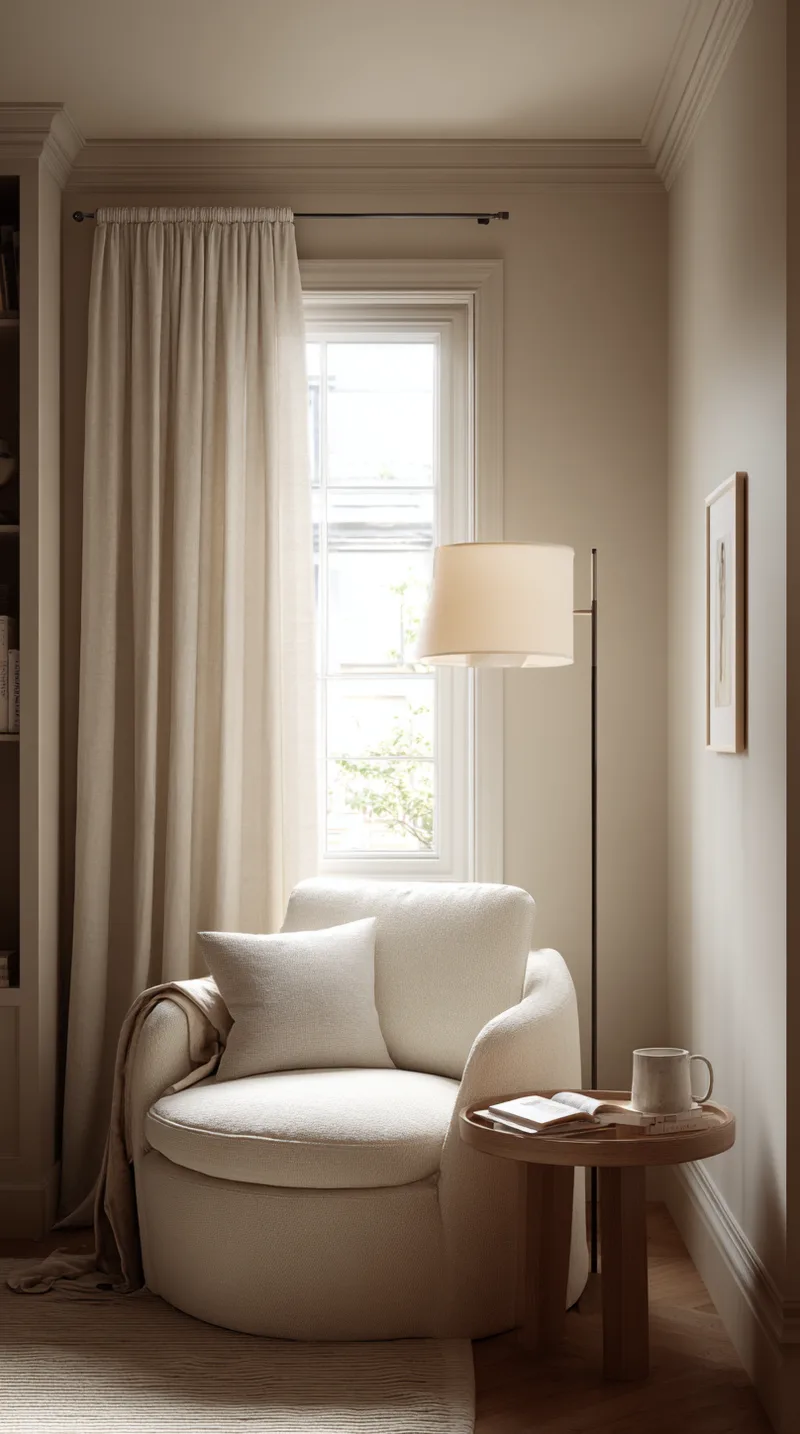
Awkward corners become assets with intention.
A small armchair, a good light, and a narrow side table transform a dead corner into a reading nook. I look for compact chairs with arms – they feel cozy and contained. The reading light is essential: a floor lamp or wall-mounted sconce that provides focused illumination.
This approach serves two purposes. First, it creates function where none existed. Second, it gives the room layers – a sleeping zone and a reading zone – that make small spaces feel more complete. Not every small bedroom has room for this. When it does, the addition feels luxurious.
Rugs That Define And Soften Small Rooms
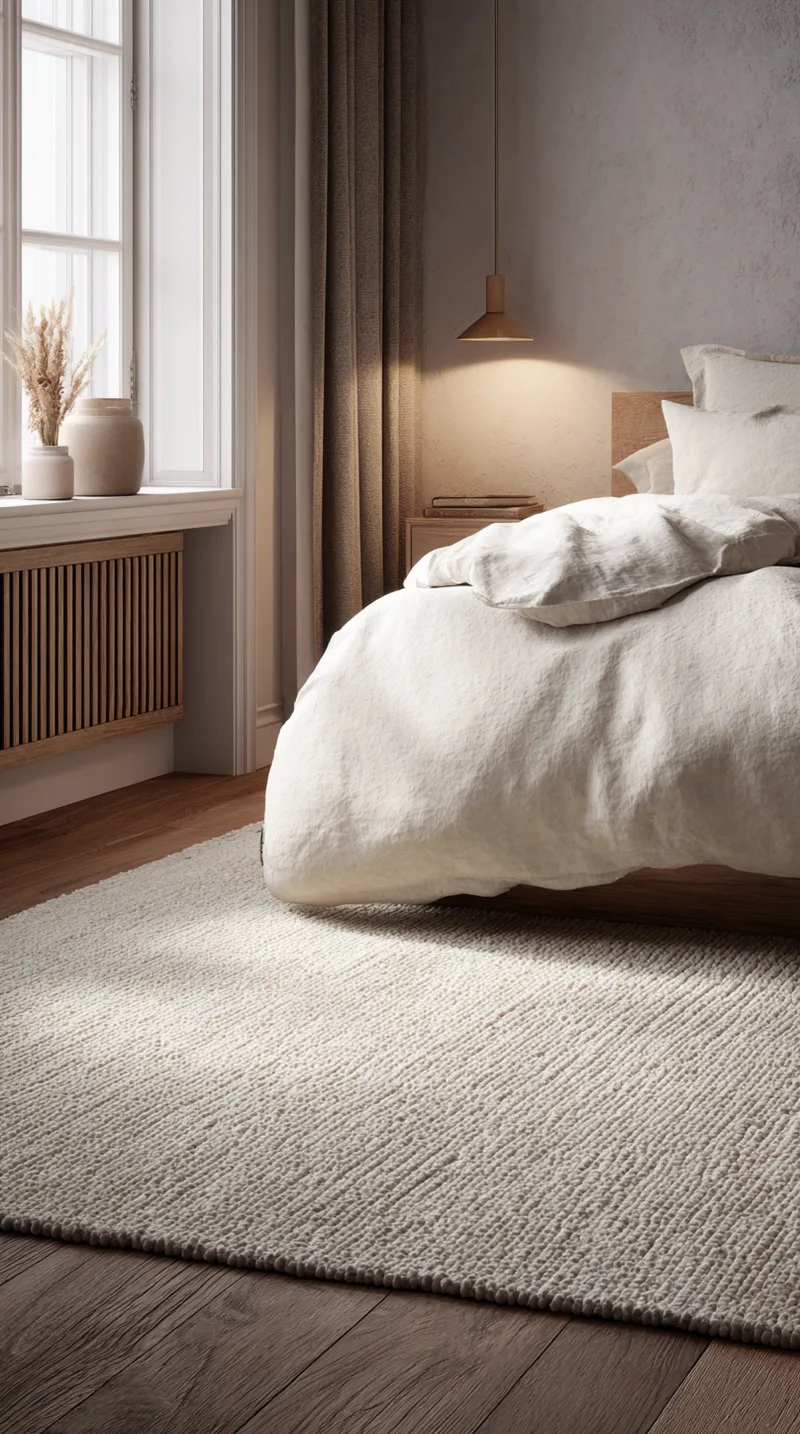
Rugs anchor beds, soften hard floors, and add warmth. In small rooms, they also define space.
I prefer rugs that extend at least 18 inches beyond the bed sides – this creates a soft landing zone and makes the bed area feel intentional. In very small bedrooms, a rug that stops short of the walls on all sides actually makes the floor appear larger by revealing its edges. Stick with light neutrals or subtle patterns. Bold rugs become focal points that shrink the visual space. Texture matters here too – a soft wool or plush cotton rug adds comfort underfoot without competing for attention.
Wall Art Strategy For Small Spaces
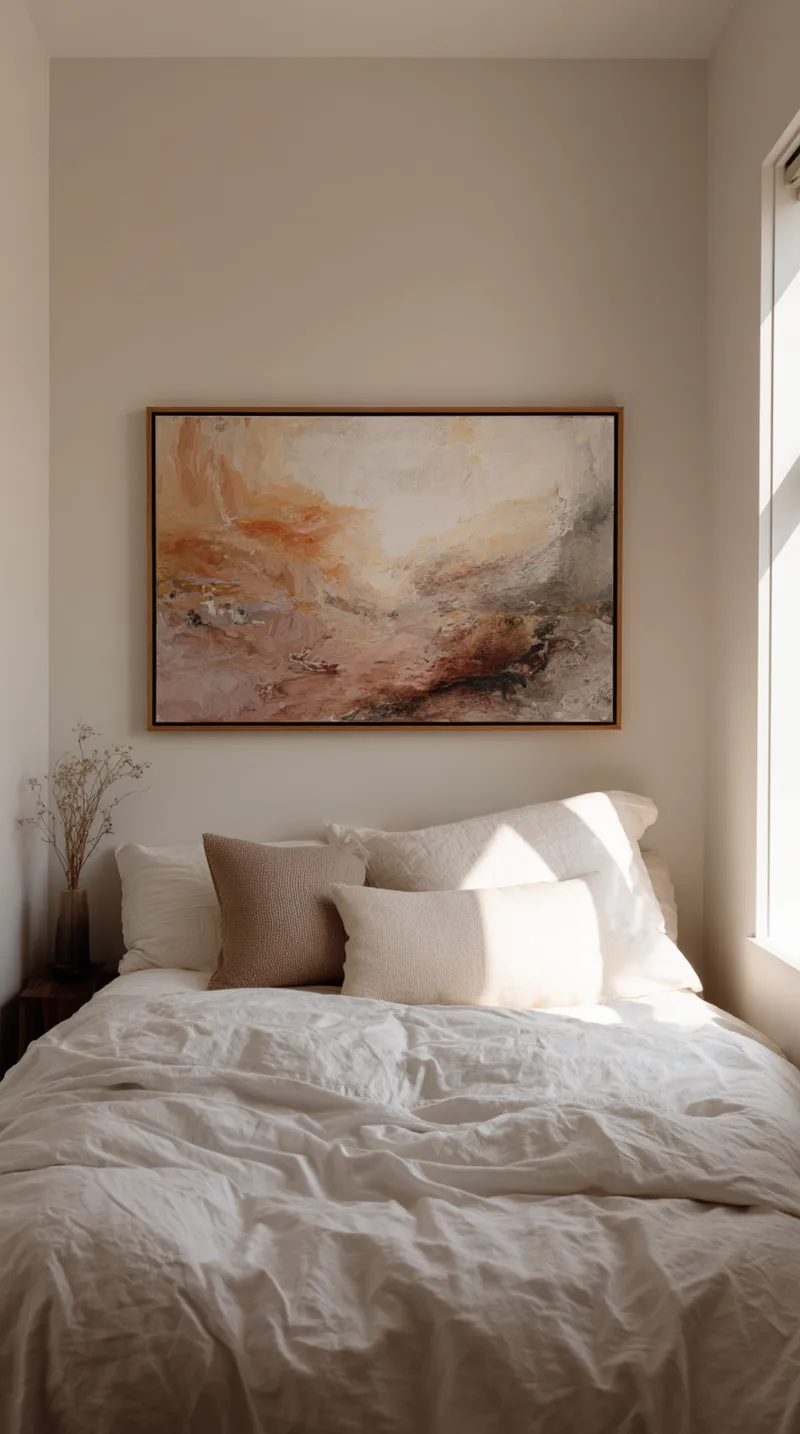
More art doesn’t mean better design. In small bedrooms, restraint wins.
I typically recommend one larger piece rather than a gallery wall in small spaces. Gallery walls can feel busy and shorten visual depth. A single oversized piece – abstract, landscape, photography – draws the eye and creates a focal point without fragmentation.
Position art at eye level when standing, centered above the headboard or on the wall facing the bed. Frame colors should complement, not contrast with, your palette. The goal is integration, not decoration. Art should feel like it belongs, not like it’s competing for attention.
Plant Selection For Bedroom Spaces
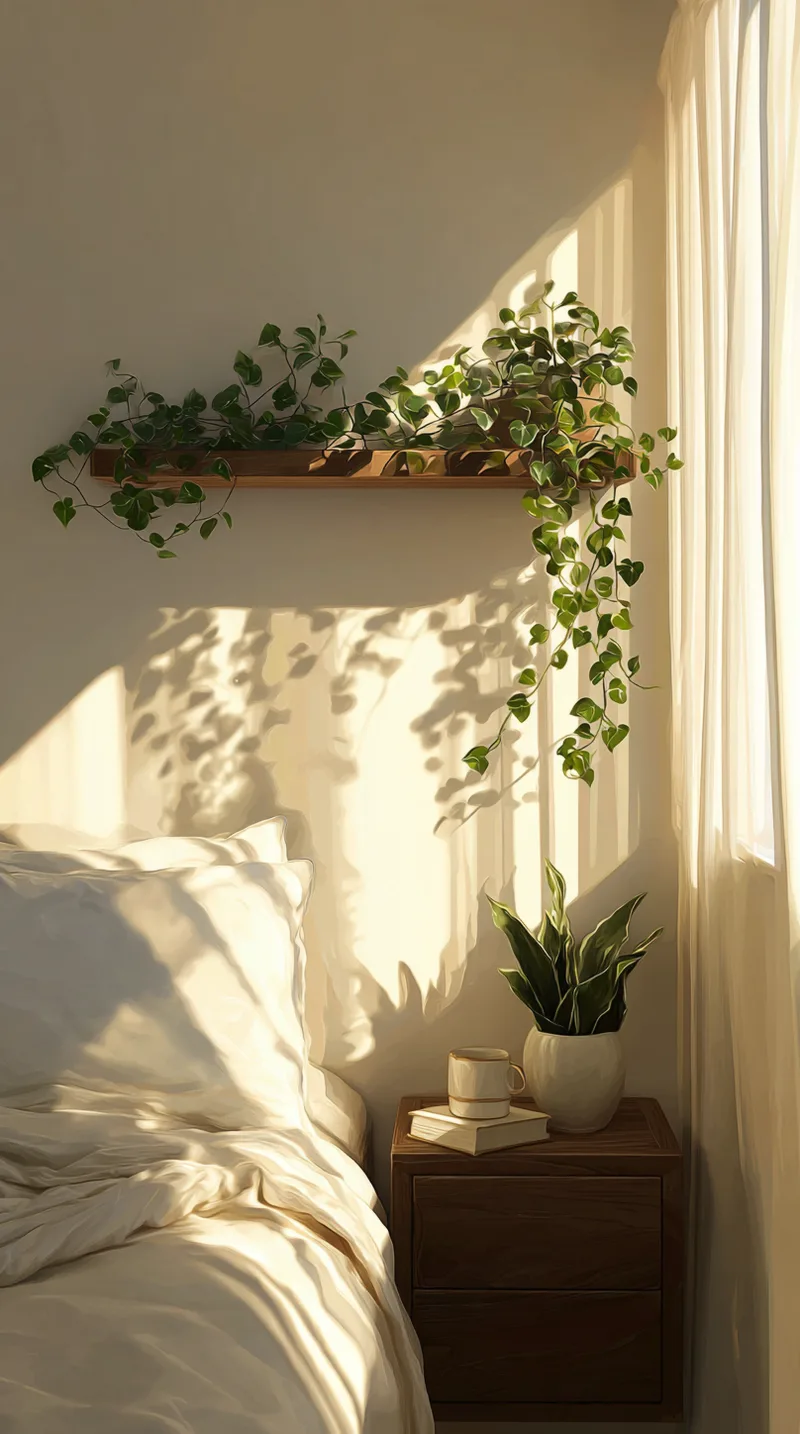
Plants bring life to bedrooms. In small spaces, choose carefully.
Large floor plants eat precious square footage. I prefer trailing plants on floating shelves, small potted plants on nightstands, or wall-mounted planters. Snake plants and pothos thrive in bedroom light conditions and require minimal attention.
One or two plants is enough – more becomes a jungle that competes with rest. Position plants where they catch natural light and where you’ll actually notice and enjoy them. In small bedrooms, plants serve as living decor. They soften hard edges and add organic texture to otherwise minimal spaces.
Door Solutions For Tight Spaces
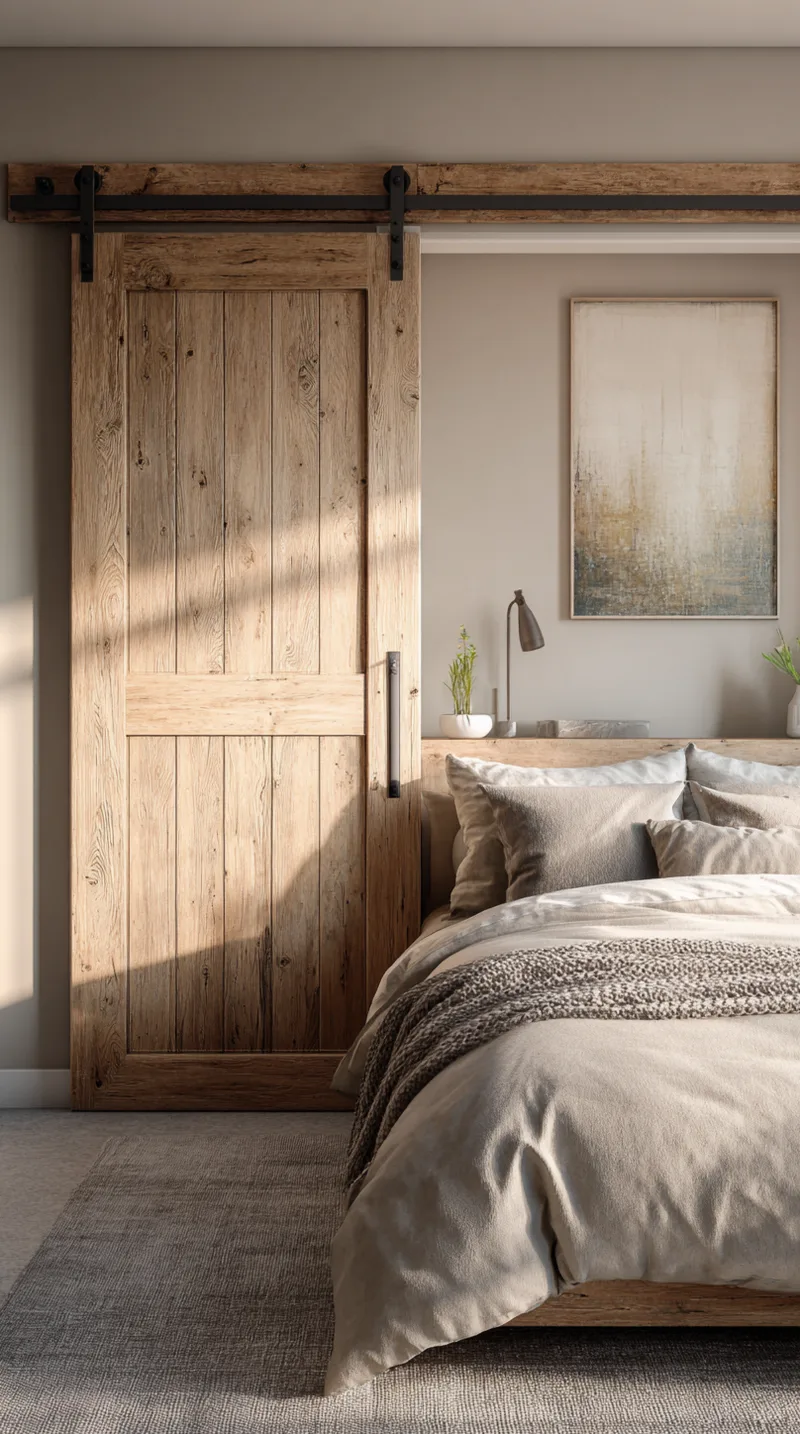
Traditional swinging doors steal square footage when open. Consider alternatives.
Barn doors slide along the wall and require zero swing clearance. Pocket doors disappear entirely into the wall cavity. Even simple changes – like reversing a door to swing outward – can reclaim usable space inside small bedrooms. Closet doors present similar opportunities. Bifold or sliding doors need less clearance than hinged doors. Curtains replacing closet doors create soft texture while eliminating the door footprint entirely. These are small changes that compound. In rooms where every inch matters, door strategy is worth serious consideration.
Nighttime Ambiance With Subtle Lighting
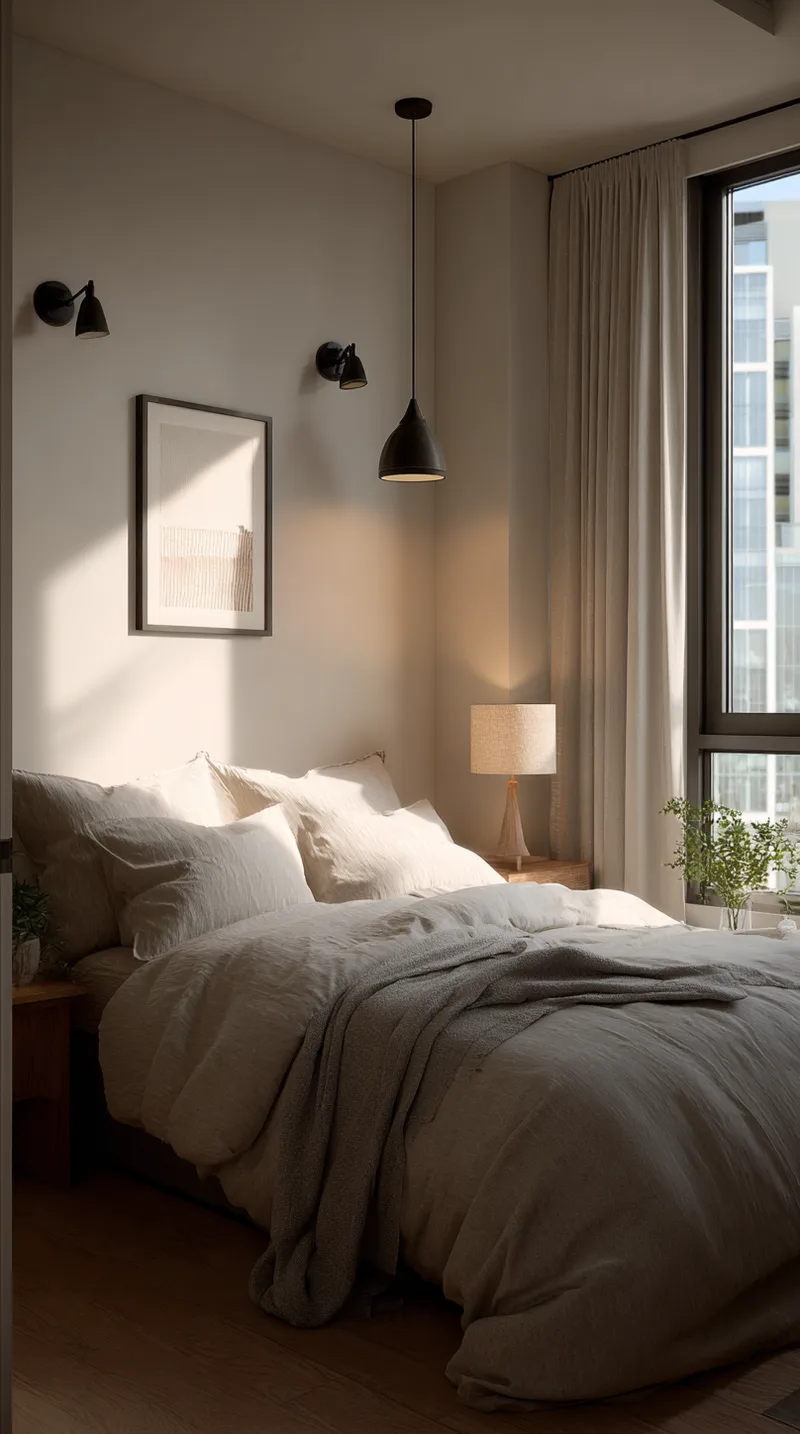
The bedroom should transition from day to night with you.
I design small bedrooms with nighttime specifically in mind. Warm-toned bulbs in all fixtures – 2700K maximum. Wall sconces on dimmers beside the bed. Perhaps a small table lamp with a linen shade that diffuses light softly. No overhead lighting at full brightness after dark.
The goal is a room that feels like it’s settling down when you are. In small spaces, this soft lighting also minimizes the visibility of imperfections and creates intimacy. The room wraps around you rather than exposing itself fully.
Personal Touches Without Clutter
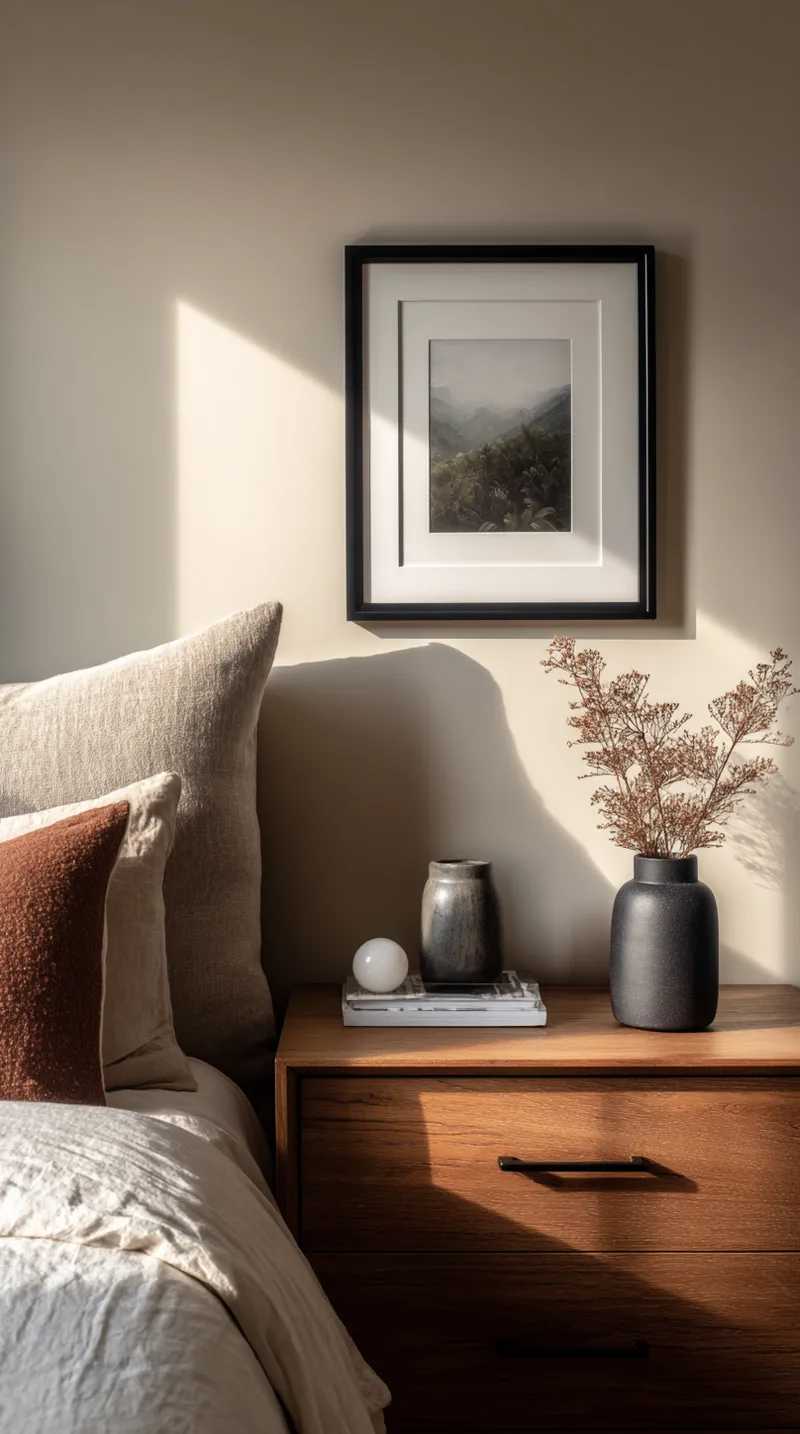
A bedroom should feel like yours. But personal doesn’t mean crowded.
I help clients identify the few items that truly matter – a photograph, a collected object, a meaningful book. These get prominent placement. Everything else gets edited. In small bedrooms, one personal item displayed well has more impact than ten items crammed onto surfaces.
The discipline is curation. What represents you? What brings you joy or calm? Put those things where you’ll see them daily. Let go of the rest. Personal touches in small spaces should feel intentional, not accumulated.
Morning And Evening Routines By Design
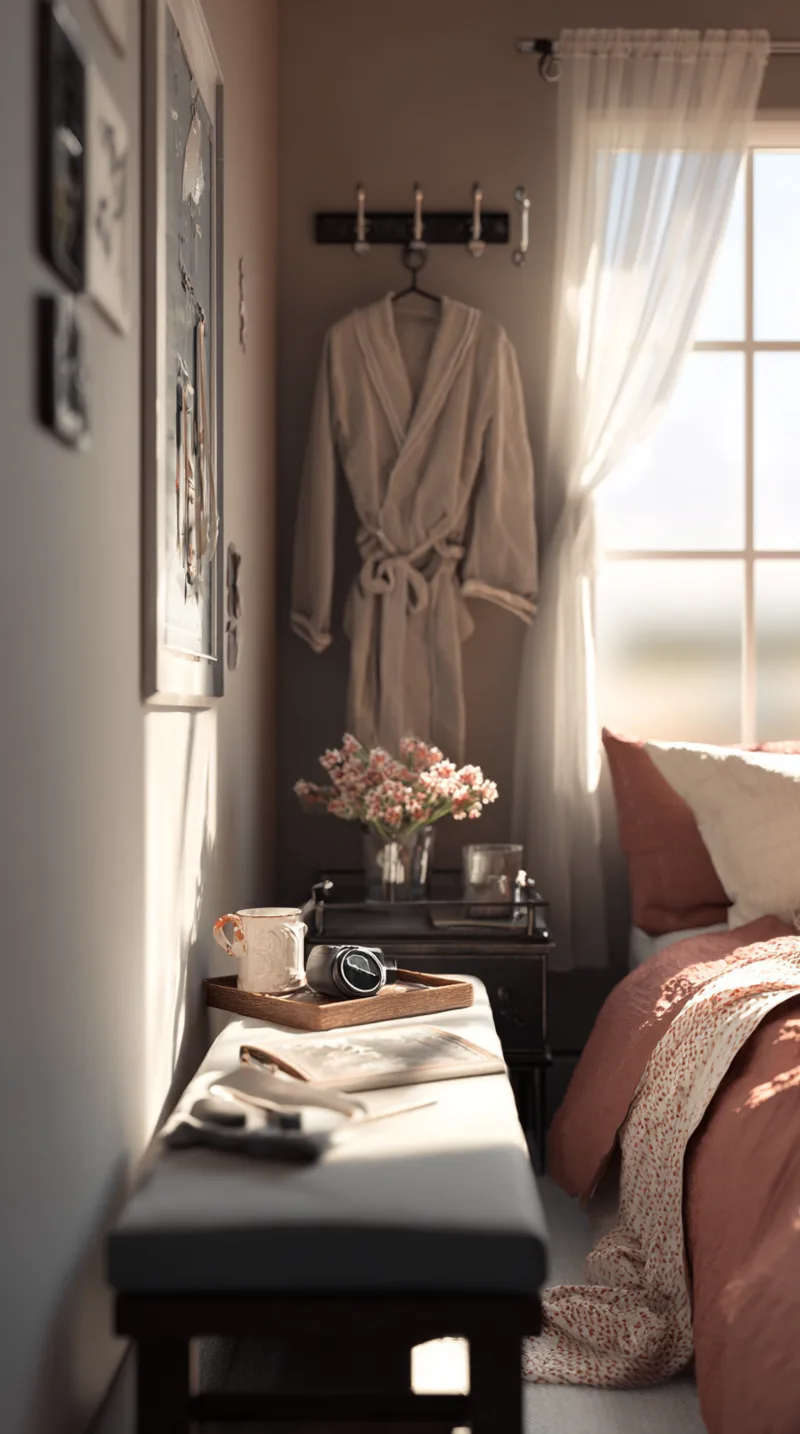
The best small bedrooms anticipate how you actually live.
I ask clients about their routines. Where do you set your phone at night? Where do you put clothes when undressing? Where do you sit to put on shoes? Each answer suggests a design decision. A small tray for phone and watch. Hooks behind the door for tomorrow’s outfit. A small bench at the bed’s foot.
When the room supports your habits, you need less space because nothing is fighting against how you naturally move. This is the difference between a small room that frustrates and one that flows. Design for your life, not for photographs.
These bedroom ideas for small rooms share a common thread: intention. Every decision matters more when space is limited. That constraint isn’t a disadvantage – it’s an invitation to design with clarity. Choose what you need. Eliminate what you don’t. Create a small room that feels not smaller, but more essentially yours. The best small bedrooms aren’t trying to be large. They’re trying to be exactly right.
See you soon,
Rachel