Planning an art deco interior without understanding the style leads to rooms that miss the mark. These art deco interior design ideas show you how to blend geometric patterns, luxe materials, and 1920s glamour into modern spaces that feel sophisticated without looking like a museum. Whether you’re tackling an art deco interior living room or art deco interior bedroom, these art deco interior design style tips will help you create rooms with the right balance of drama and livability.
Want rooms that feel like stepping into a 1920s Manhattan penthouse?
Wondering how art deco interior design modern actually works in today’s homes? Curious if you can pull off the art deco interior aesthetic without it feeling like a costume?
I get asked about art deco more than almost any other style, and I think it’s because people are drawn to the glamour but worried about going too far. The truth is, art deco interior design isn’t about recreating a specific decade. It’s about understanding a set of design principles – geometric repetition, luxurious materials, bold contrast – and applying them to the rooms you actually live in.
I spent years designing commercial spaces before switching to residential work, and art deco was always my favorite style to reference. There’s an architectural logic to it that makes sense once you see the patterns. The style emerged in the 1920s and 30s as a celebration of modern materials and machine-age precision, which is why it loves chrome, glass, and symmetry. But it also embraced exotic influences and handcrafted luxury, which is where you get the rich velvets and inlaid wood.
In this guide, I’ll walk you through art deco interior ideas that work in real homes – from art deco interior living room layouts to art deco interior kitchen details to art deco interior bedroom styling. We’ll cover the materials, the patterns, the colors, and the furniture shapes that define this style. Some of these ideas are subtle nods to the era. Others are full-commitment glamour. You’ll know which ones fit your space.
Black and White Color Schemes That Stay Bold
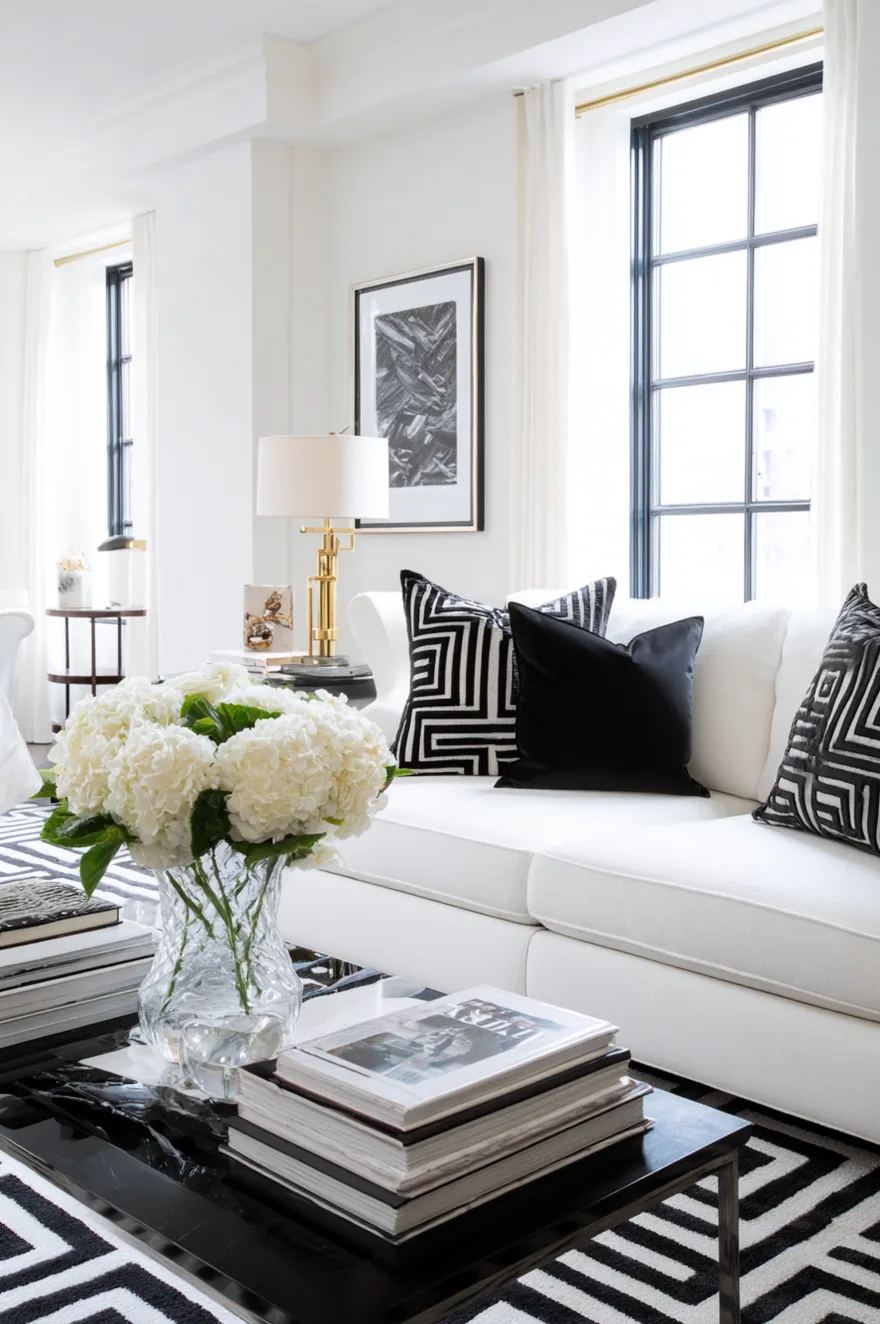
The contrast of black and white is fundamentally art deco. High-gloss black floors with white walls. Black lacquered furniture against white plaster. A black and white geometric rug anchoring a room. The starkness is intentional – it’s part of the drama.
I use black as an accent color in art deco interior design modern spaces. Black window frames, black baseboards, black cabinet hardware – these small touches create definition and keep a room from feeling washed out. If you want to go bigger, a black accent wall behind a bed or a black-painted ceiling in a powder room will give you that bold, committed look.
Balance the black with warm metallics. Brass or gold pulls the palette back from feeling too severe and adds the warmth that makes art deco livable.
Mirrored Furniture That Expands Small Spaces
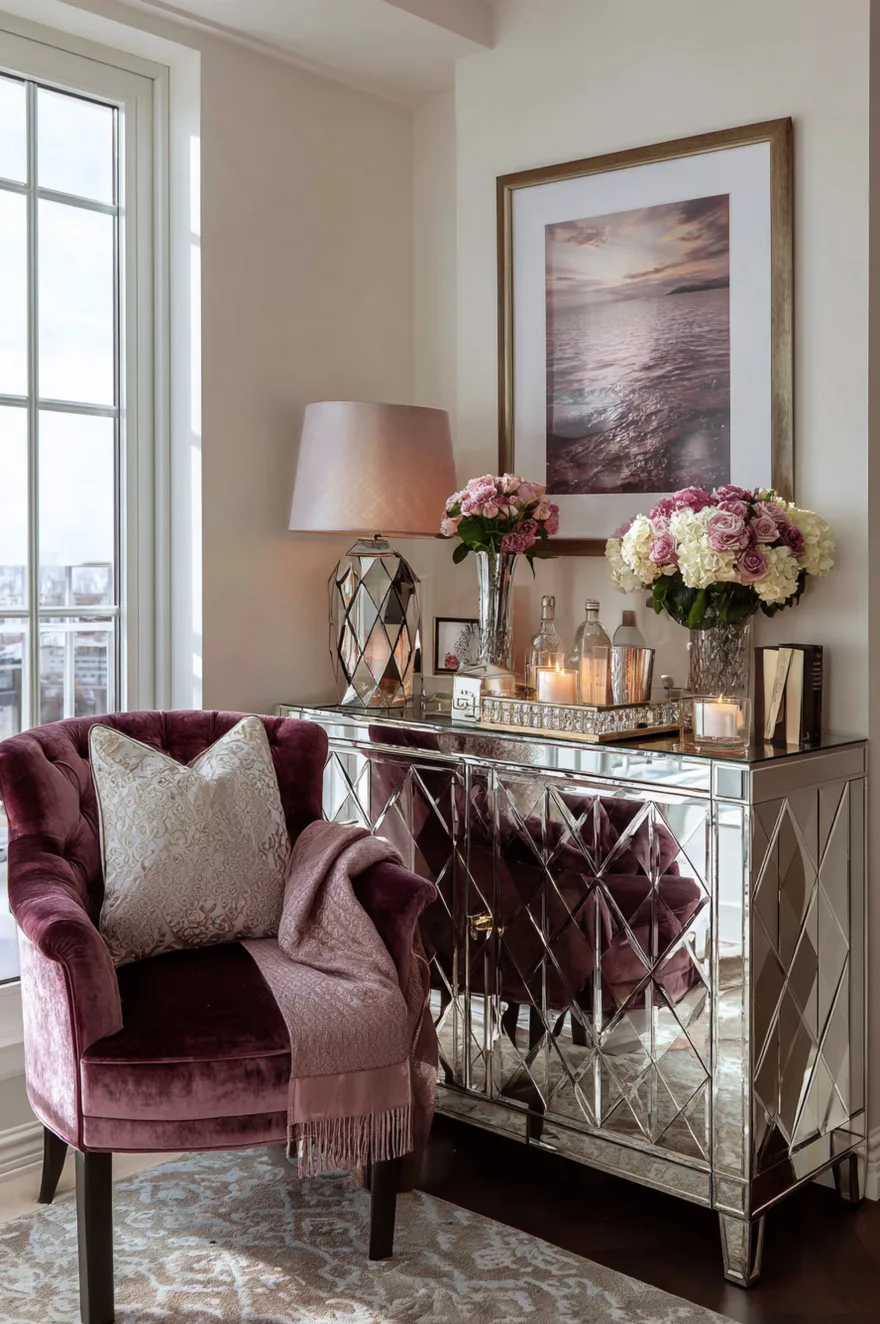
Mirrored furniture is a divisive choice, but it’s pure art deco. A mirrored console table, a mirrored bar cart, mirrored nightstands – these pieces reflect light and visually double the space, which is why they work so well in art deco interior apartment layouts where square footage is tight.
The key is using mirrored pieces as accents, not anchors. A mirrored coffee table can feel unstable as the centerpiece of a living room, but a mirrored side table next to a velvet sofa adds just enough sparkle without overwhelming the room. I also like mirrored trays on dressers or vanities – they’re functional and they bounce light around in a way that makes the whole surface feel more intentional.
Clean the mirrors often. Smudged or dusty mirrored furniture loses its impact fast.
Statement Lighting Fixtures You’ll Actually Use
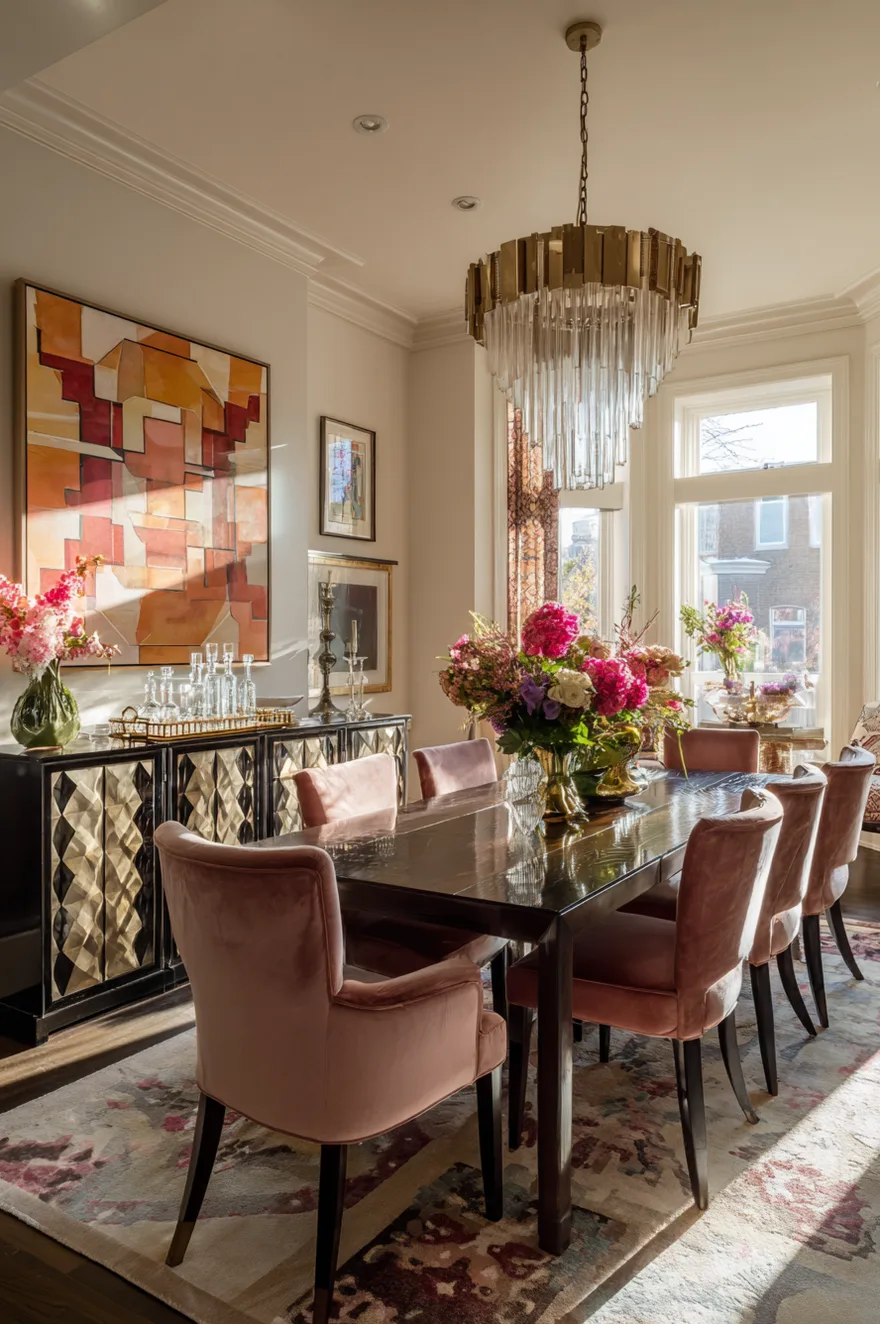
Art deco lighting is sculptural. Think tiered chandeliers, geometric pendants, and sconces with frosted glass shades that diffuse light in interesting ways. The fixtures aren’t just functional – they’re architectural elements that define the room.
I look for lighting with stepped or sunburst shapes. A brass pendant with concentric circles works over a dining table. A floor lamp with a tripod base and a milk glass globe works next to a reading chair in an art deco interior bedroom. The fixture should feel substantial enough to hold its own in the space.
Warm white bulbs at 2700K are the right temperature for art deco interiors. The style leans warm and glamorous, and cool white light kills that immediately.
Floor-to-Ceiling Drapery In Rich Fabrics
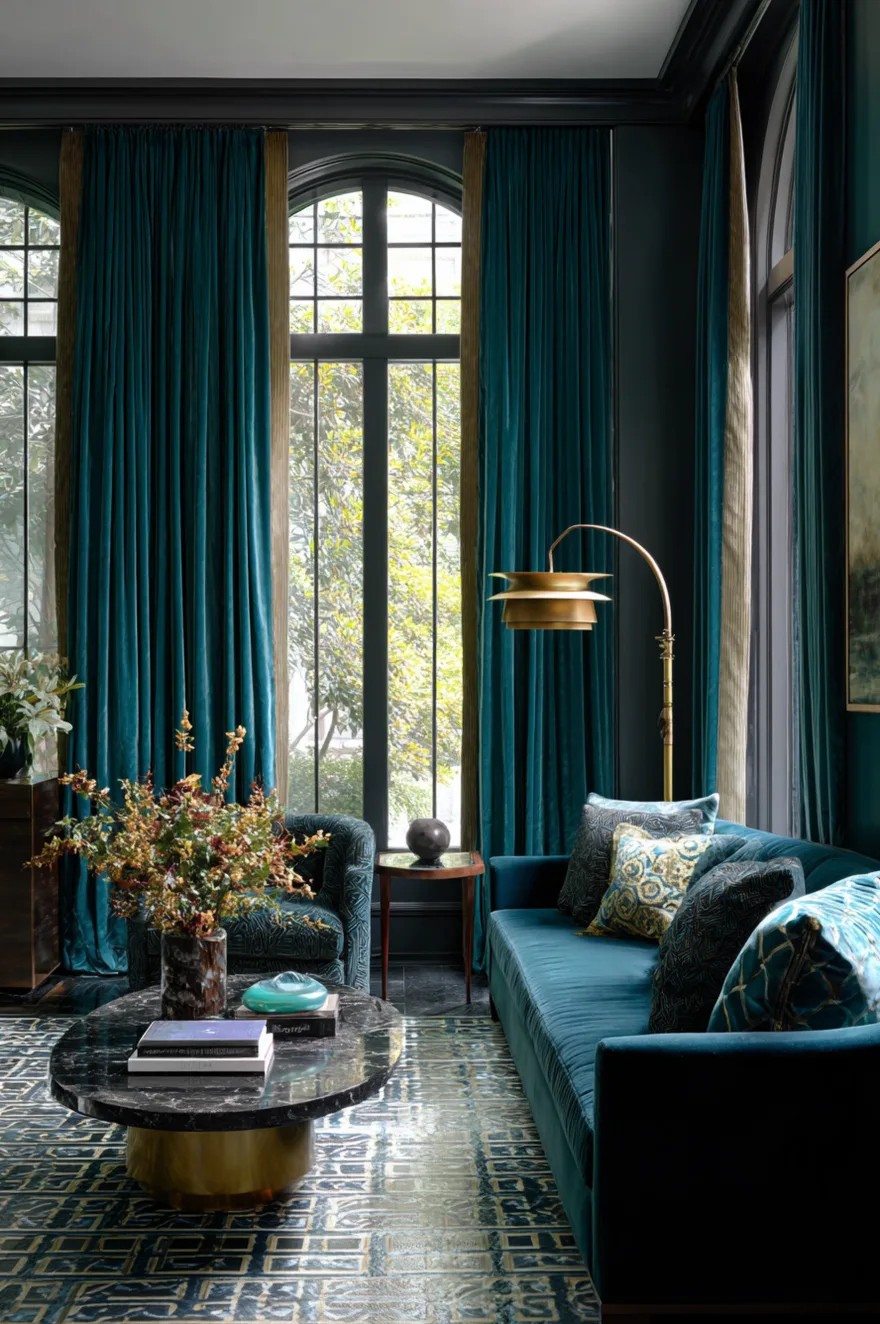
Art deco rooms often had dramatic window treatments – full-length curtains in velvet or silk that pooled slightly on the floor. The fabric adds softness and warmth, and the height draws your eye up and makes ceilings feel taller.
I hang curtain rods as close to the ceiling as possible, even if the window itself is lower. The vertical line creates the illusion of height. For fabric, velvet in a jewel tone is classic art deco, but heavyweight linen or silk also work if you want something lighter.
Keep the curtains simple – no fussy tiebacks or elaborate valances. Art deco drapery is about clean lines and luxurious fabric, not ornamentation.
Mixing Art Deco With Modern Pieces
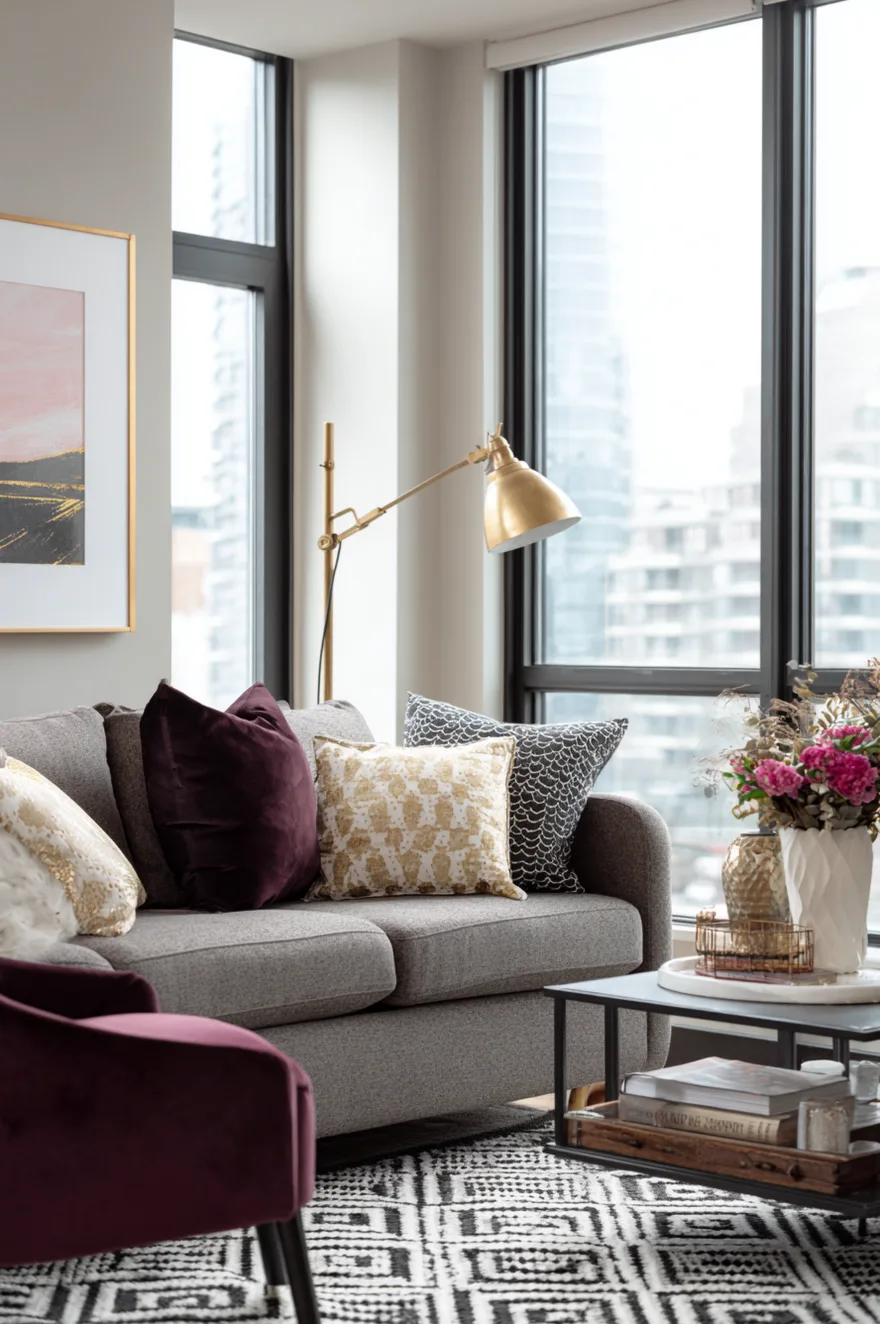
You don’t need a house full of vintage furniture to pull off art deco interior design modern. In fact, mixing a few key art deco pieces with contemporary furniture often works better than going full period. A vintage brass floor lamp next to a modern sofa. A geometric rug under a minimalist dining table. The contrast keeps the style feeling current instead of costume-y.
I use art deco as an accent layer. Start with a neutral, modern base – simple furniture, clean lines – and layer in art deco elements through lighting, accessories, and a few statement pieces. A lacquered console table in an otherwise modern entryway. A velvet armchair in a contemporary living room. The style comes through without overwhelming the space.
The key is committing to the materials and finishes. If you’re mixing modern and art deco, the brass should be real brass, the velvet should be actual velvet. Half-measures read as confused rather than intentional.
Art Deco Interior House Ideas That Feel Cohesive
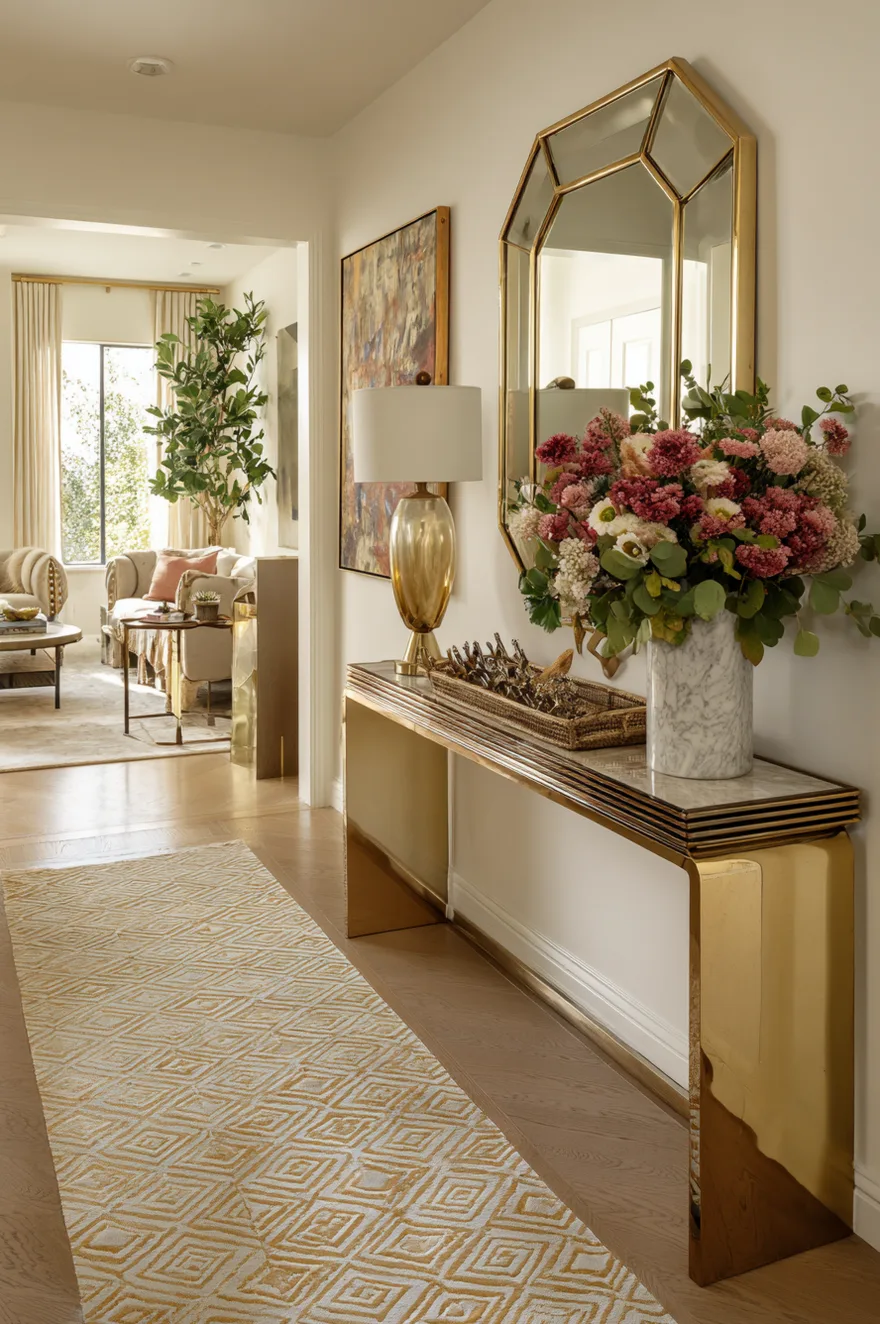
If you’re working on a whole art deco interior house rather than a single room, consistency matters. Pick a metal finish – brass or chrome – and use it throughout. Choose a core palette of two or three colors and repeat them in different rooms. The repetition creates flow and makes the house feel intentional rather than like a collection of individual rooms.
I also like carrying one pattern through multiple spaces. A geometric runner in the hallway that picks up the same shape as the rug in the living room. Hexagonal tile in both bathrooms. The subtle echoes tie the rooms together without being heavy-handed about it.
Don’t feel like every room needs the same level of art deco intensity. A full-commitment art deco living room can live next to a quieter bedroom that just nods to the style with brass hardware and a velvet headboard. The variation keeps the house from feeling like a showroom.
Artwork That Emphasizes Geometry and Abstraction

Art deco interiors pair well with abstract art – particularly pieces with geometric shapes, bold color blocks, or stylized figures. The art should feel intentional and curated, not random. I look for pieces with strong verticals or symmetrical compositions that echo the architectural quality of the style.
Frame artwork in simple frames – black, brass, or chrome. Ornate gilded frames compete with the art deco elements in the room. Keep the framing clean and let the art itself be the focus.
Hang artwork at eye level and center it over furniture when possible. Art deco loves symmetry, so a centered piece above a sofa or bed reinforces that formal, balanced feeling.
Lacquered Furniture For High Shine
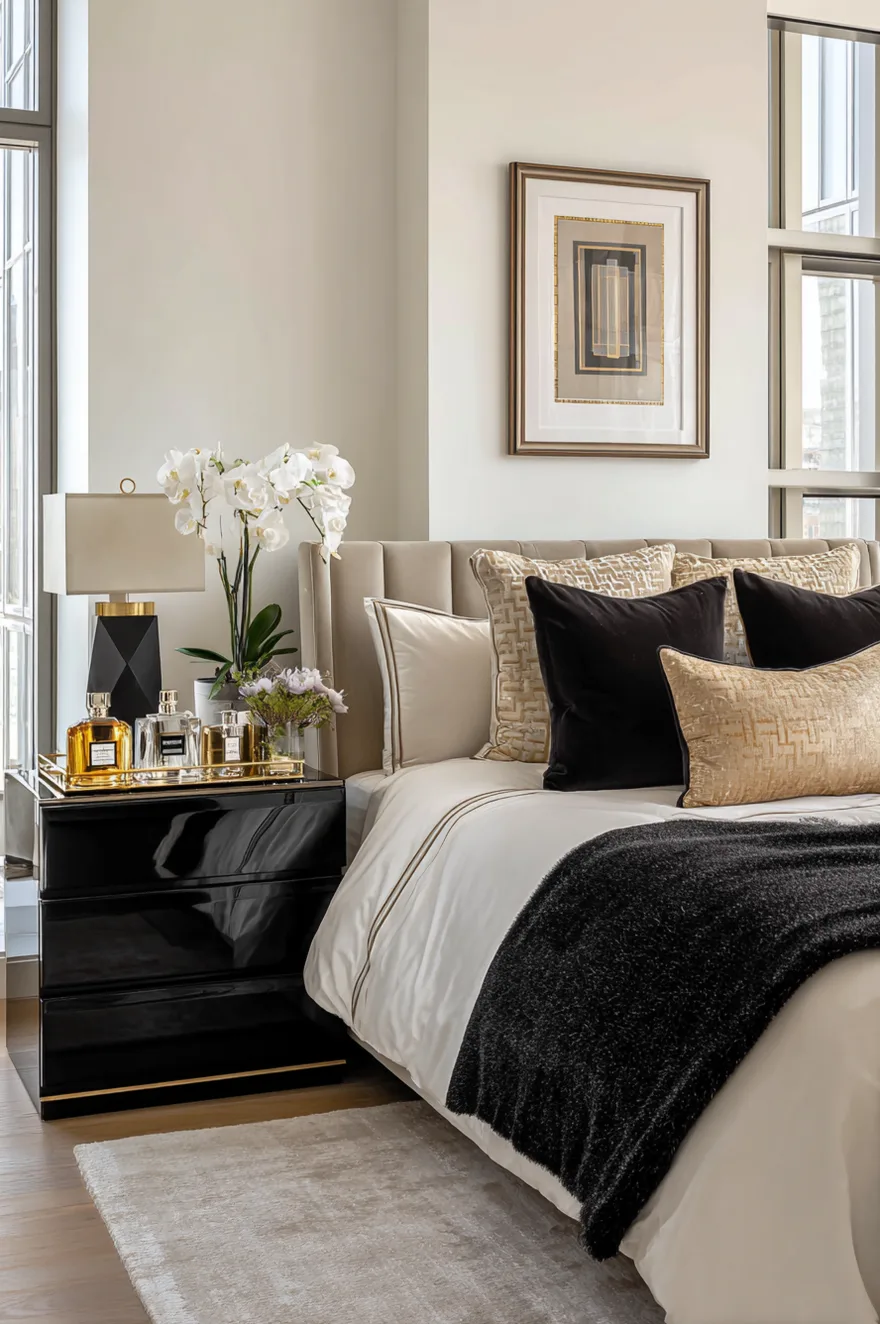
Glossy black lacquer was everywhere in the 1930s, and it still works now because it reflects light and creates depth. A lacquered console table in an entryway or a set of lacquered nightstands in an art deco interior bedroom – the shine gives you that polished, intentional look without requiring a lot of square footage.
The trick with lacquer is keeping the rest of the finishes in check. If you’re going glossy on the furniture, keep the walls matte. The contrast is what makes the lacquer pop. I also like pairing black lacquer with brass or gold hardware – the warm metal softens what could otherwise feel too severe.
You don’t need custom pieces. A simple IKEA dresser painted in high-gloss black lacquer with brass pulls swapped in will give you the look for a fraction of the cost.
Art Deco Interior Living Room Layouts That Work
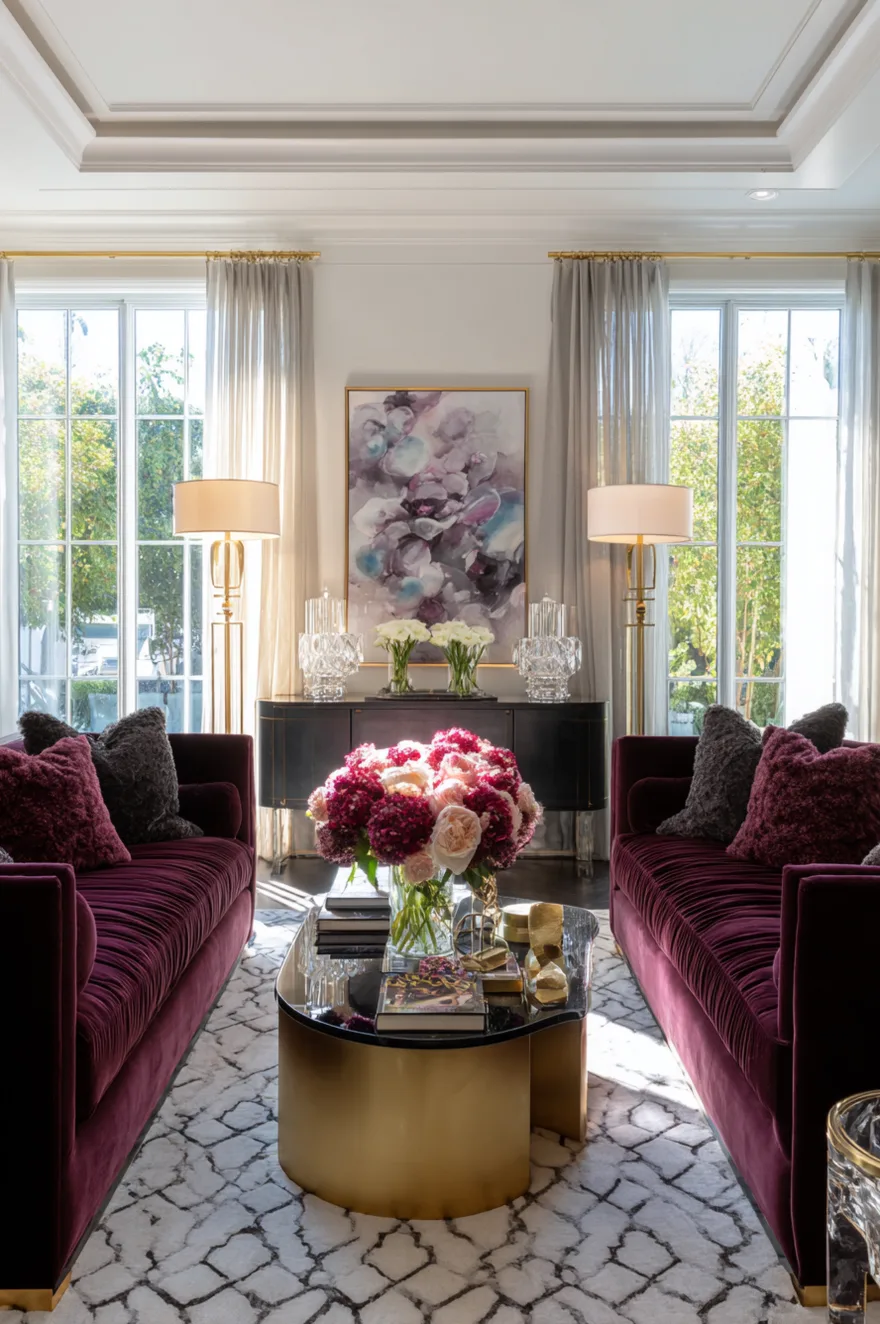
Symmetry is non-negotiable in art deco interior design. The style emerged during an era obsessed with balance and order, and that shows up in how furniture is arranged. I almost always anchor an art deco living room with a centered focal point – a fireplace, a large piece of art, a dramatic window – and then mirror the furniture on either side.
Two matching sofas facing each other, flanked by identical side tables and lamps. A pair of armchairs angling toward a central coffee table. The repetition creates a formal, composed feeling that’s distinctly art deco. It’s the opposite of the asymmetrical, casual layouts you see in contemporary design, and that formality is part of the appeal.
If your room doesn’t naturally have a center point, create one with a large mirror or a statement light fixture. Once you have that anchor, the rest of the layout falls into place.
Brass and Chrome Hardware Details
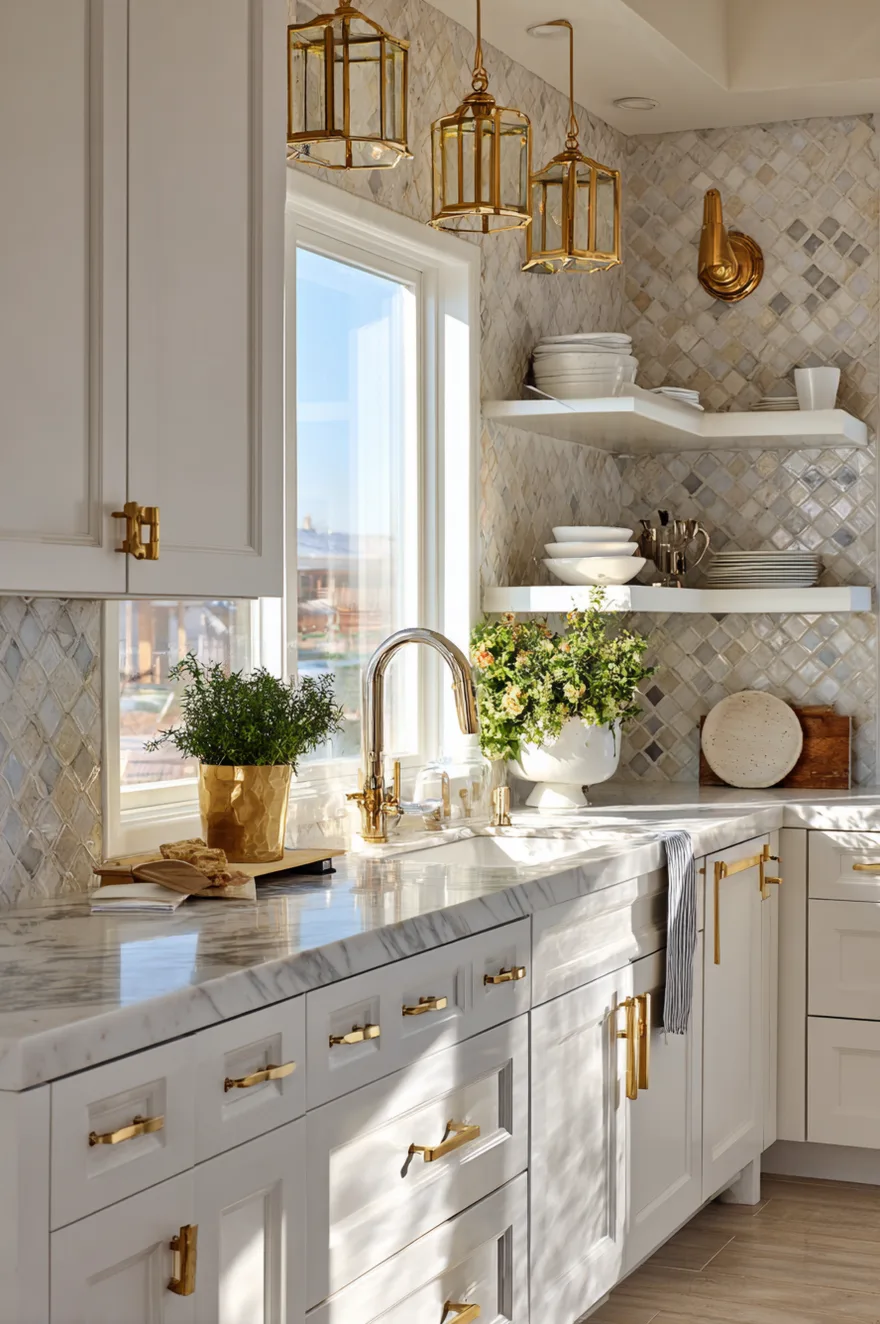
Unlacquered brass and polished chrome were the metals of choice in the 1920s and 30s, and they still define the art deco interior aesthetic. I use them on cabinet hardware, light fixtures, and furniture accents – anywhere you’d typically see metal finishes.
Brass warms up a space and develops a patina over time that feels earned. Chrome stays bright and reflective, which works better in spaces that need a cooler, more modern edge. In an art deco interior kitchen, I’ll often mix the two – brass cabinet pulls with a chrome faucet – because the slight contrast keeps things from feeling too matchy.
The weight matters. Art deco hardware should feel substantial in your hand. Those hollow, lightweight pulls you find at big box stores won’t give you the same effect. Look for solid brass or chrome-plated steel.
Inlaid Wood Details For Subtle Texture
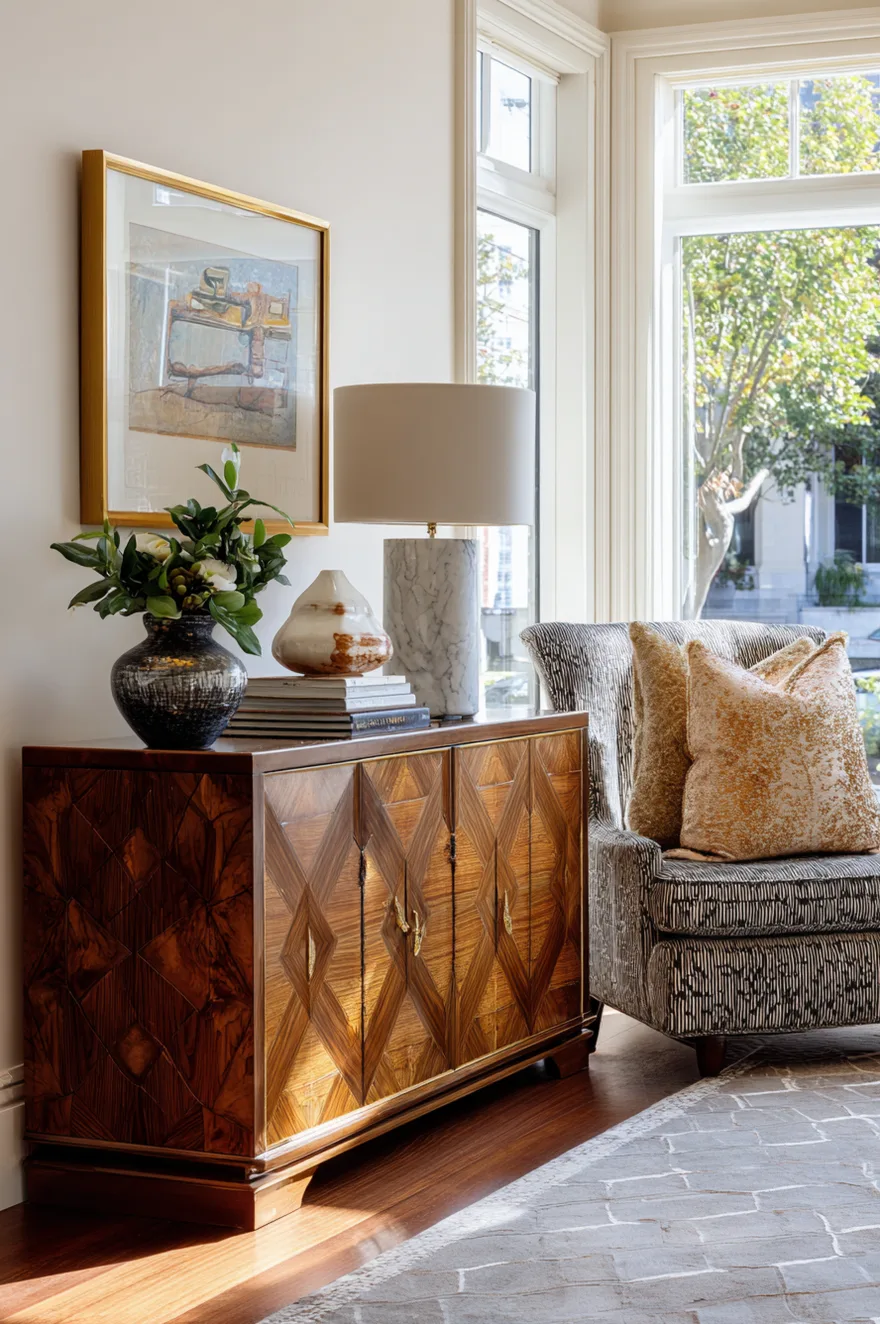
Art deco furniture often featured exotic wood veneers and inlaid patterns – usually geometric shapes or stylized floral motifs. You’ll see this on vintage credenzas, side tables, and headboards. It’s a quieter way to bring the style in without committing to bold color or heavy pattern.
I look for pieces with walnut or rosewood veneers and lighter wood inlays that create contrast. A credenza with a sunburst inlay pattern on the drawer fronts or a side table with geometric marquetry – these pieces work as focal points without needing much else around them.
If you can’t find vintage pieces, look for reproductions or commission a local woodworker. Inlay work is having a resurgence, and there are craftspeople who specialize in it.
Geometric Patterns That Define The Look
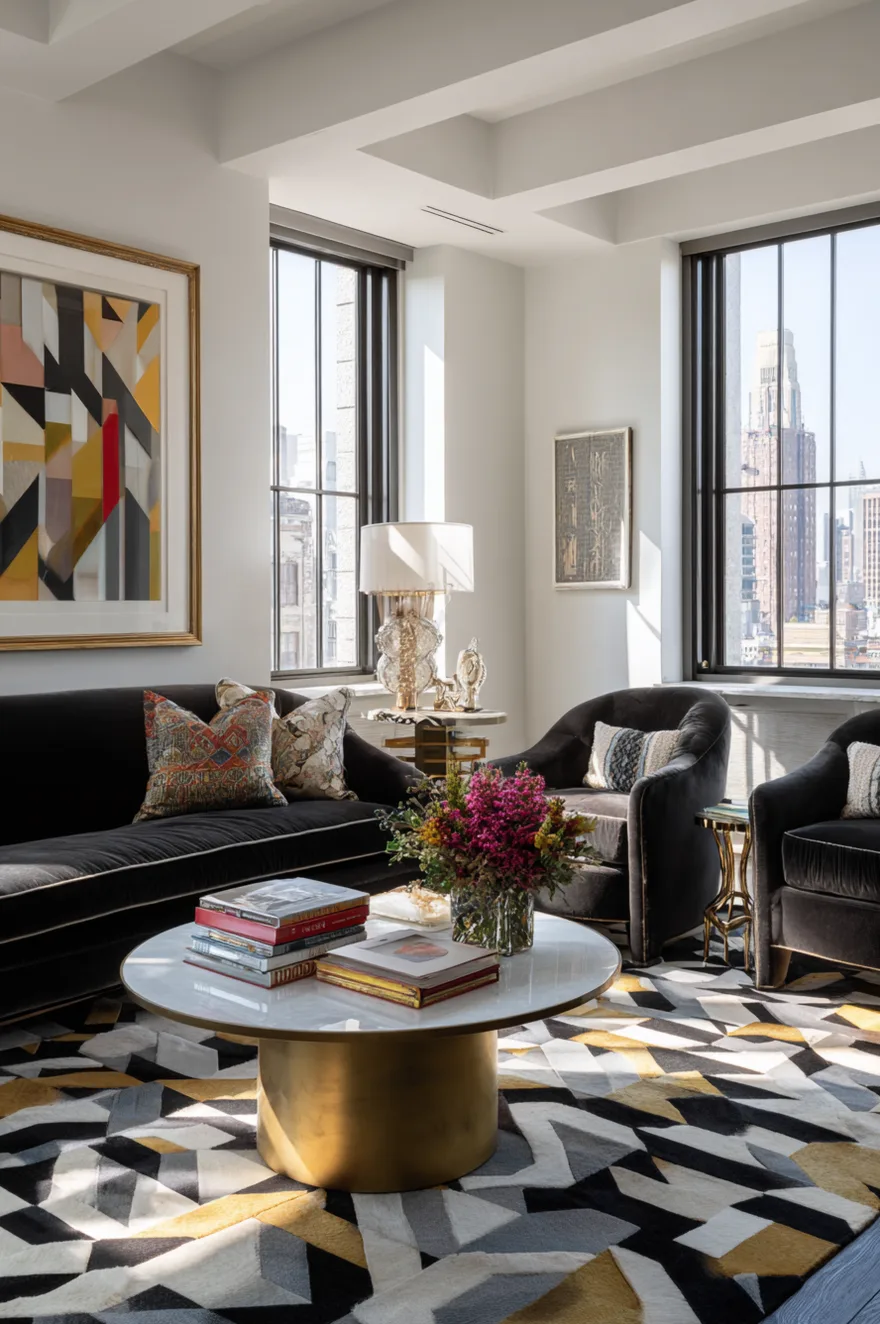
Art deco interior design style is built on repetition and geometry. Chevrons, sunbursts, zigzags, stepped forms – these aren’t random decorative choices. They’re visual shorthand for the machine age and the idea that modern life could be both efficient and beautiful.
I use geometric patterns in three places: rugs, wallpaper, and tilework. A black and white chevron runner in a hallway immediately signals art deco without requiring you to overhaul the entire space. Hexagonal bathroom floor tiles in a contrasting grout color do the same thing. The pattern does the work, so the rest of the room can stay relatively simple.
Start with one bold geometric element per room. More than that and you’re competing with yourself. A sunburst mirror over the mantel or a zigzag-patterned rug under the dining table – pick one and let it anchor the space.
Art Deco Interior Bedroom Ideas That Feel Restful
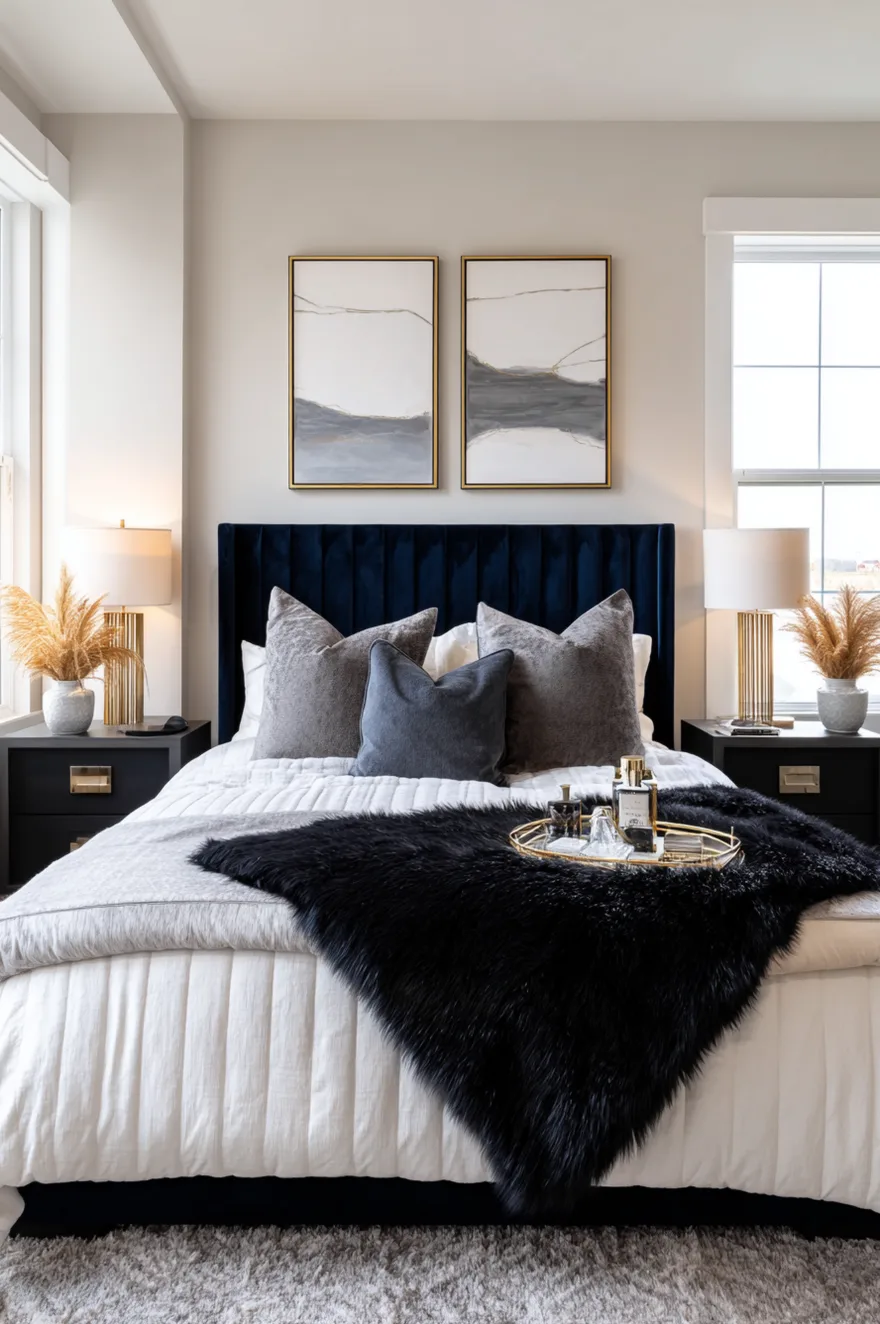
An art deco bedroom walks a line between glamour and comfort. You want the visual drama, but you also need it to function as a place to sleep. I start with the bed – usually an upholstered headboard in velvet or a wooden headboard with geometric detailing. Keep the bedding simple so the headboard can be the statement.
Symmetry matters here too. Matching nightstands, matching lamps, matching artwork above the bed. The repetition creates a sense of order that actually helps with sleep. I also like low-profile furniture in bedrooms – a low platform bed, low dressers – because it keeps the sightlines open and the room feeling calm.
Layer in texture with a velvet throw at the foot of the bed or a faux fur rug beside it. The softness balances the harder geometric elements.
Curved Furniture Shapes To Soften Hard Lines
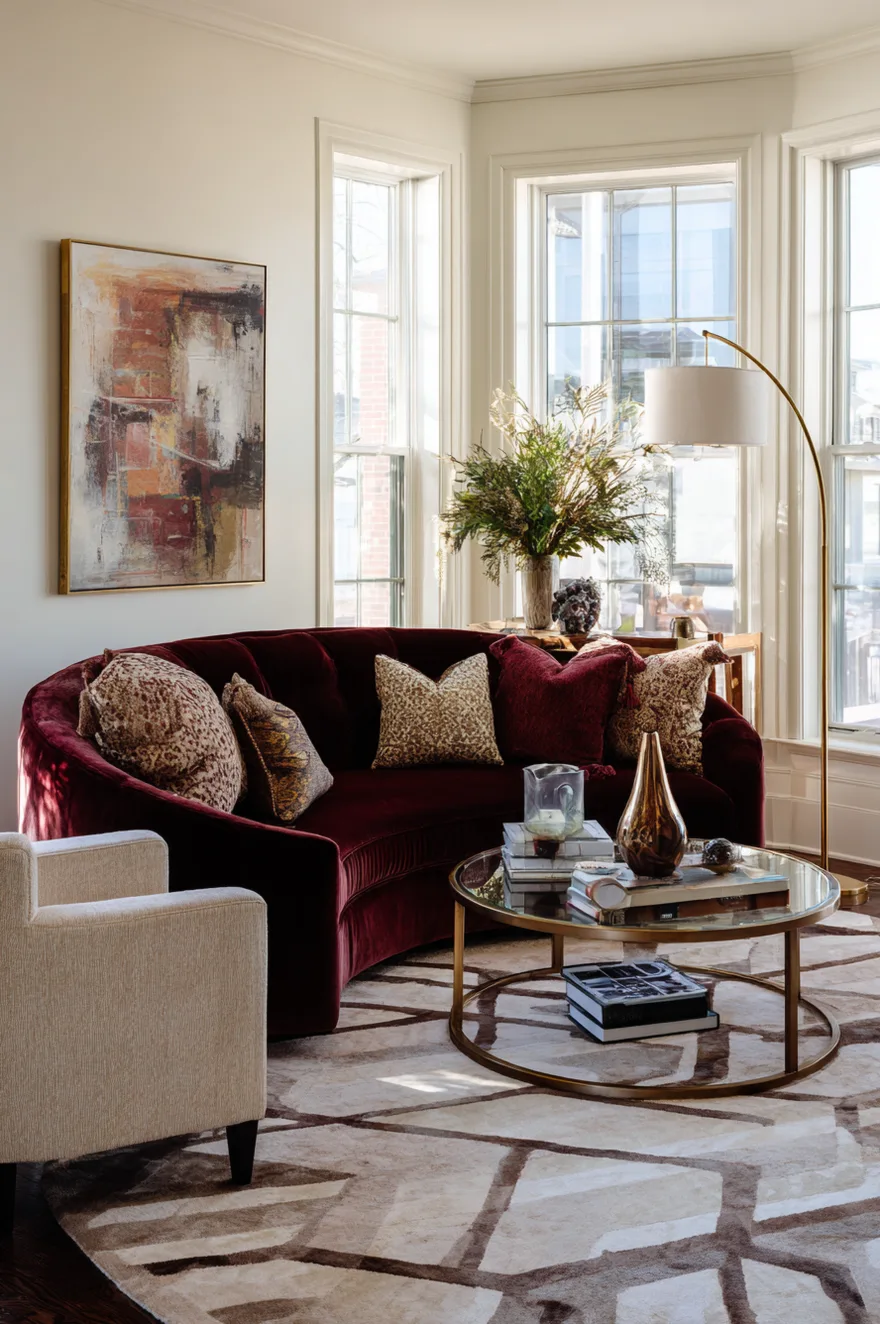
Art deco loves geometry, but it also loves curves. Rounded armchairs, curved sofas, circular coffee tables – these shapes soften the zigzags and chevrons happening in the patterns and keep a room from feeling too rigid.
I look for furniture with rounded backs and armrests. A barrel chair is quintessentially art deco. So is a curved sectional or a kidney-shaped desk. The curves add movement and make the space feel more dynamic than it would with only straight lines and right angles.
Mix curved and angular furniture in the same room. A round coffee table with a rectangular sofa. A curved bench at the foot of an angular bed. The contrast is what makes it interesting.
Marble Accents That Add Instant Luxury
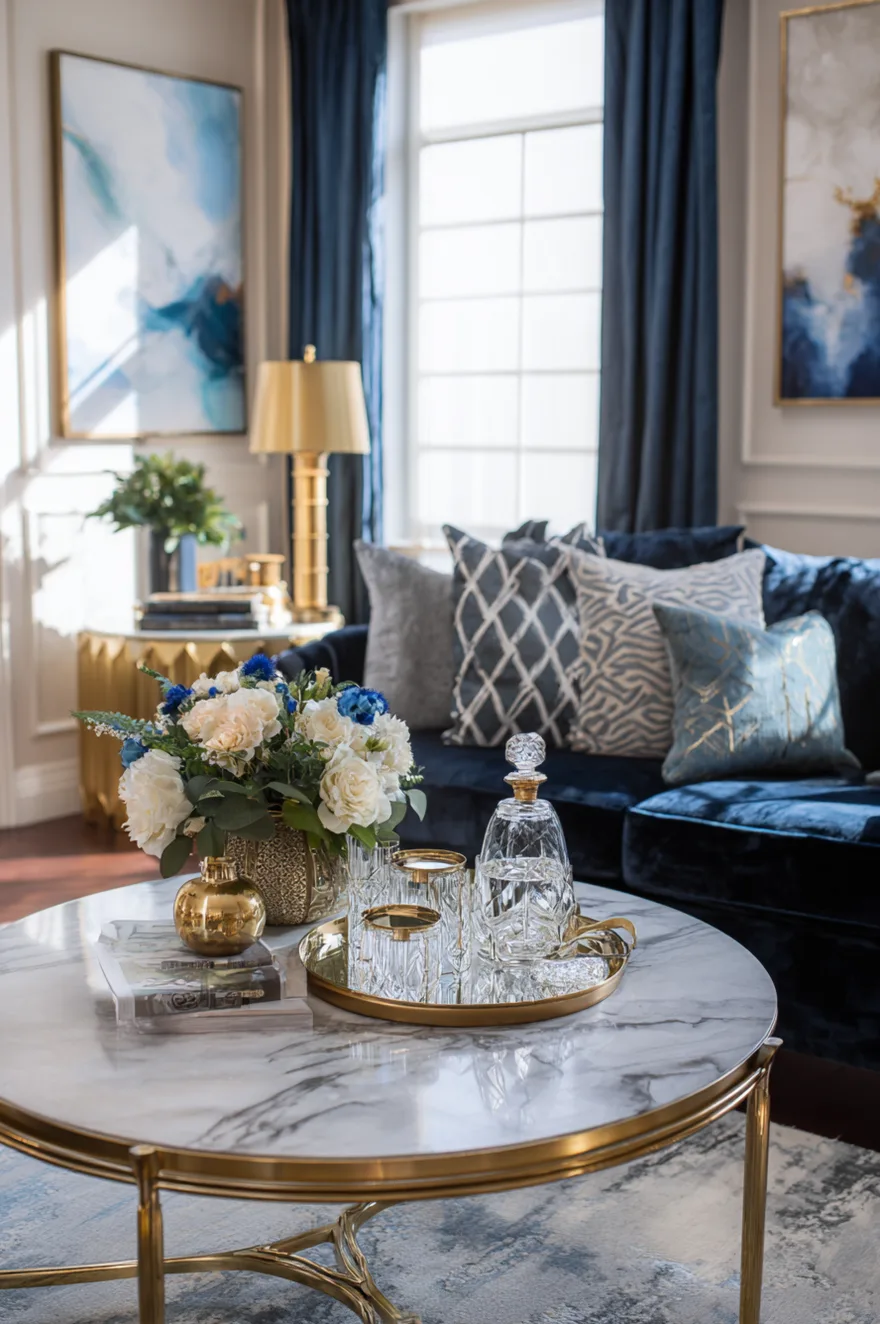
Marble was a status symbol in the 1920s and it still reads as luxurious now. I use it sparingly – a marble coffee table top, a marble side table, a marble tray on a dresser. The veining adds natural pattern to a room without requiring you to introduce another geometric print.
White marble with gray veining is classic, but I also like green marble or black marble for a moodier take on art deco interior design ideas. Pair marble with brass or gold – the combination is as art deco as it gets.
Keep the marble polished. Honed marble is beautiful in other contexts, but art deco wants that high shine.
Wallpaper Patterns That Make A Statement
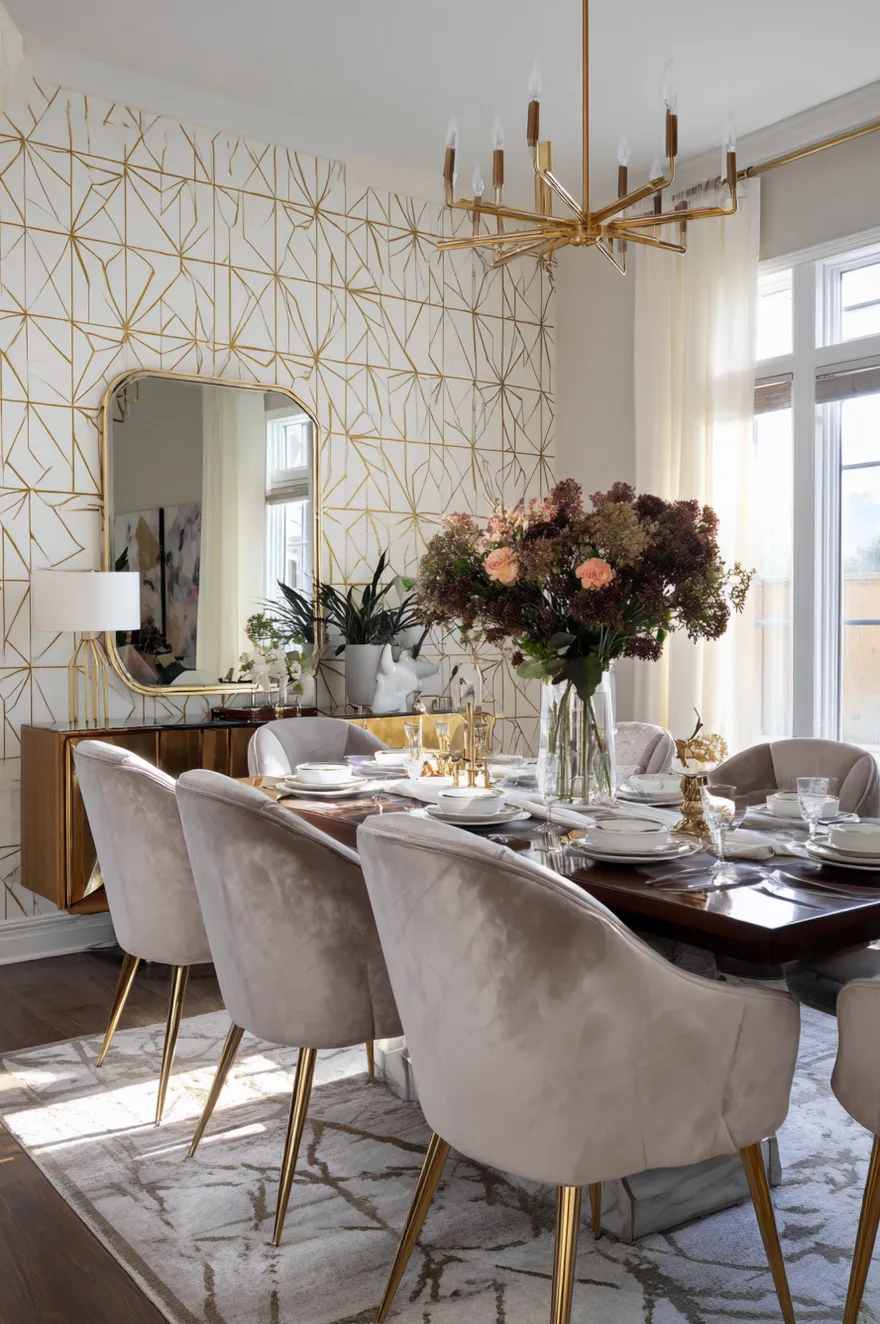
Art deco wallpaper tends to be bold. Geometric repeats, stylized florals, metallic accents – these aren’t subtle choices, but they’re what give you that instant art deco interior aesthetic. I use patterned wallpaper on one accent wall or in a smaller space like a powder room where you can commit fully without it feeling overwhelming.
Look for papers with metallic ink – gold, silver, or copper. The shimmer catches light and adds dimension to the pattern. Grasscloth with a subtle geometric weave is another option if you want texture without busy pattern.
If wallpaper feels like too much, try a large-scale stencil in a geometric pattern. You get the visual impact without the commitment or the cost.
Art Deco Interior Kitchen Updates You Can Actually Do
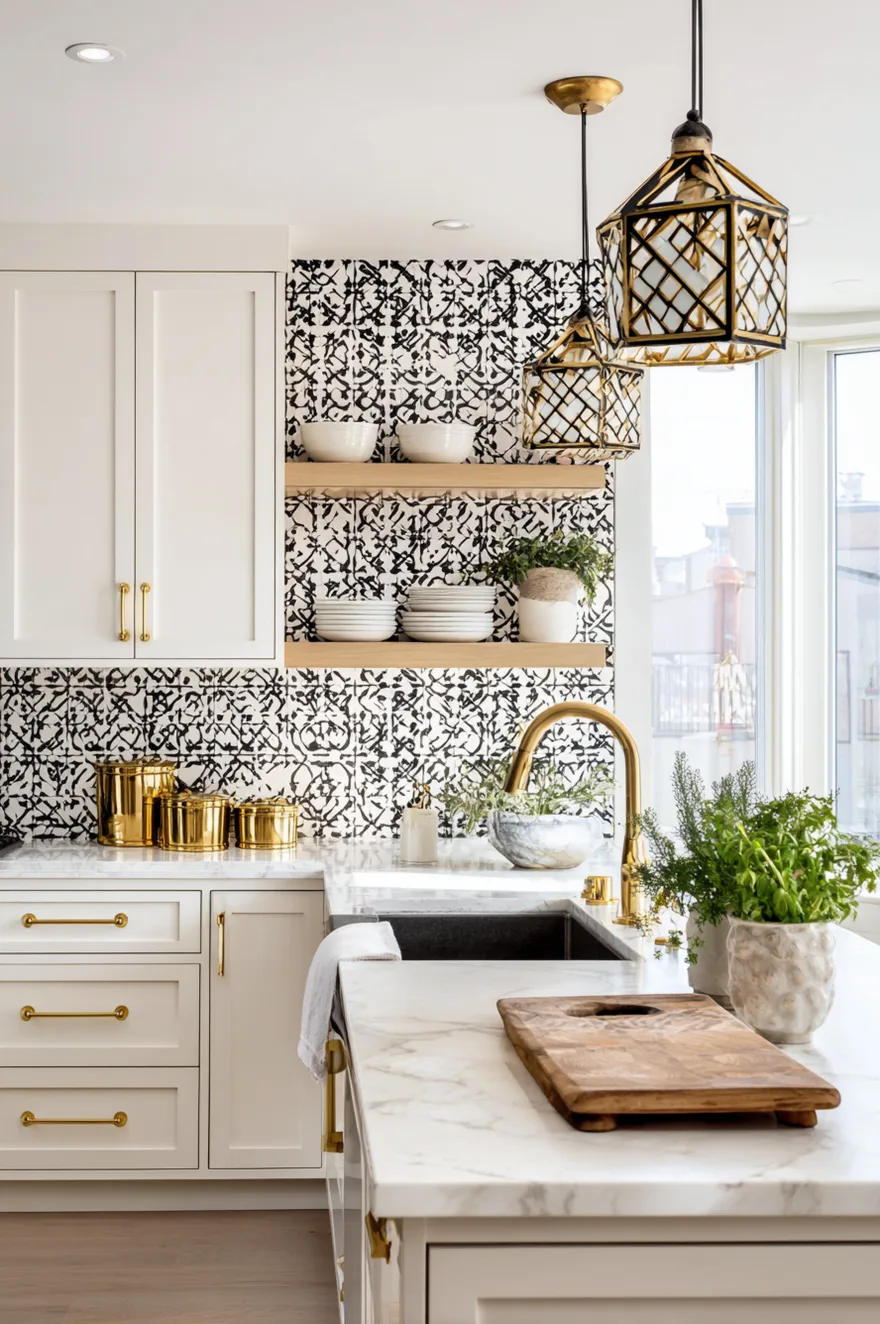
An art deco kitchen doesn’t require a full gut renovation. Start with the hardware – brass or chrome pulls and knobs on your existing cabinets will shift the look immediately. Add a geometric backsplash tile in a black and white pattern or a metallic subway tile with dark grout.
Lighting makes a big difference too. Swap builder-grade pendants for geometric brass or chrome fixtures over the island or sink. A single statement chandelier over a breakfast nook pulls the whole thing together.
If you’re replacing countertops, consider marble or a marble-look quartz. The veining ties into the luxe materials that define the style, and it’s practical for actual cooking.
Velvet Upholstery In Jewel Tones
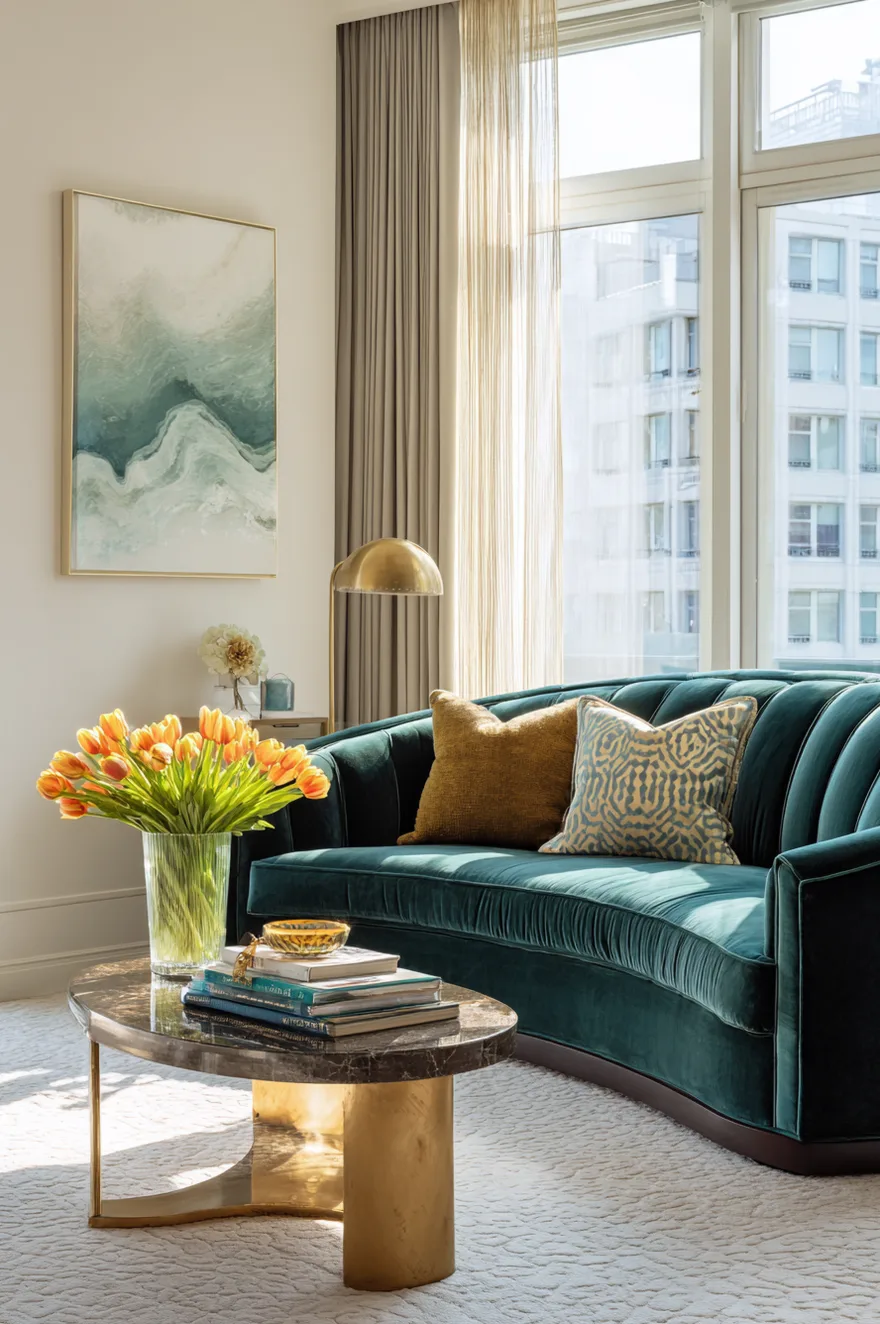
The 1920s loved saturated color, and velvet was the fabric that showed it off best. Emerald green, sapphire blue, ruby red – these aren’t timid choices, but they work because velvet has enough visual weight to hold them.
I prefer curved silhouettes when using velvet in an art deco interior living room. A channel-tufted sofa in deep teal or a pair of barrel chairs in burnt orange – the rounded shapes soften the hard geometry happening elsewhere in the room. Velvet also catches light in a way that makes it feel active rather than static, which is part of what makes art deco interiors feel alive instead of stuffy.
If a full velvet sofa feels like too much commitment, start with accent chairs or a velvet bench at the foot of the bed. You get the texture and the color without overwhelming the room.
Textured Walls For Depth Without Pattern
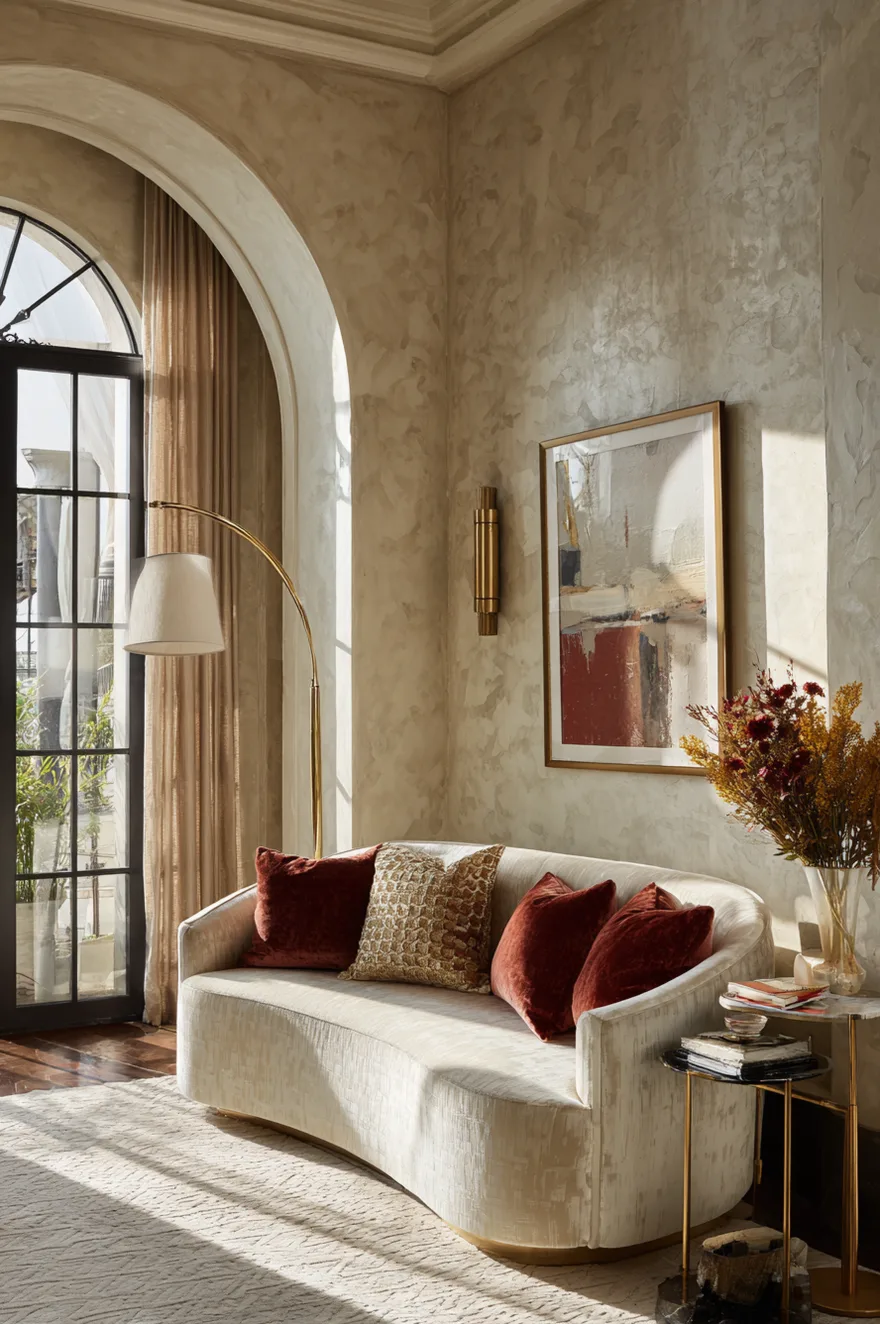
If bold wallpaper isn’t your thing, textured walls give you a quieter way to add dimension. Venetian plaster, stucco, or even a high-build paint technique creates subtle variation that catches light throughout the day. Art deco interiors often had textured plaster walls in soft neutrals – cream, ivory, pale gray – that provided a backdrop for the bolder furniture and accessories.
I like pairing textured walls with high-gloss trim. The contrast between the matte wall surface and the glossy baseboards or crown molding is distinctly art deco and adds architectural interest even in rooms without original details.
You can DIY a textured finish with joint compound and a trowel if you’re comfortable with that level of mess. Otherwise, hire a plasterer – the labor cost is worth it for the result.
Bar Carts That Double As Sculpture
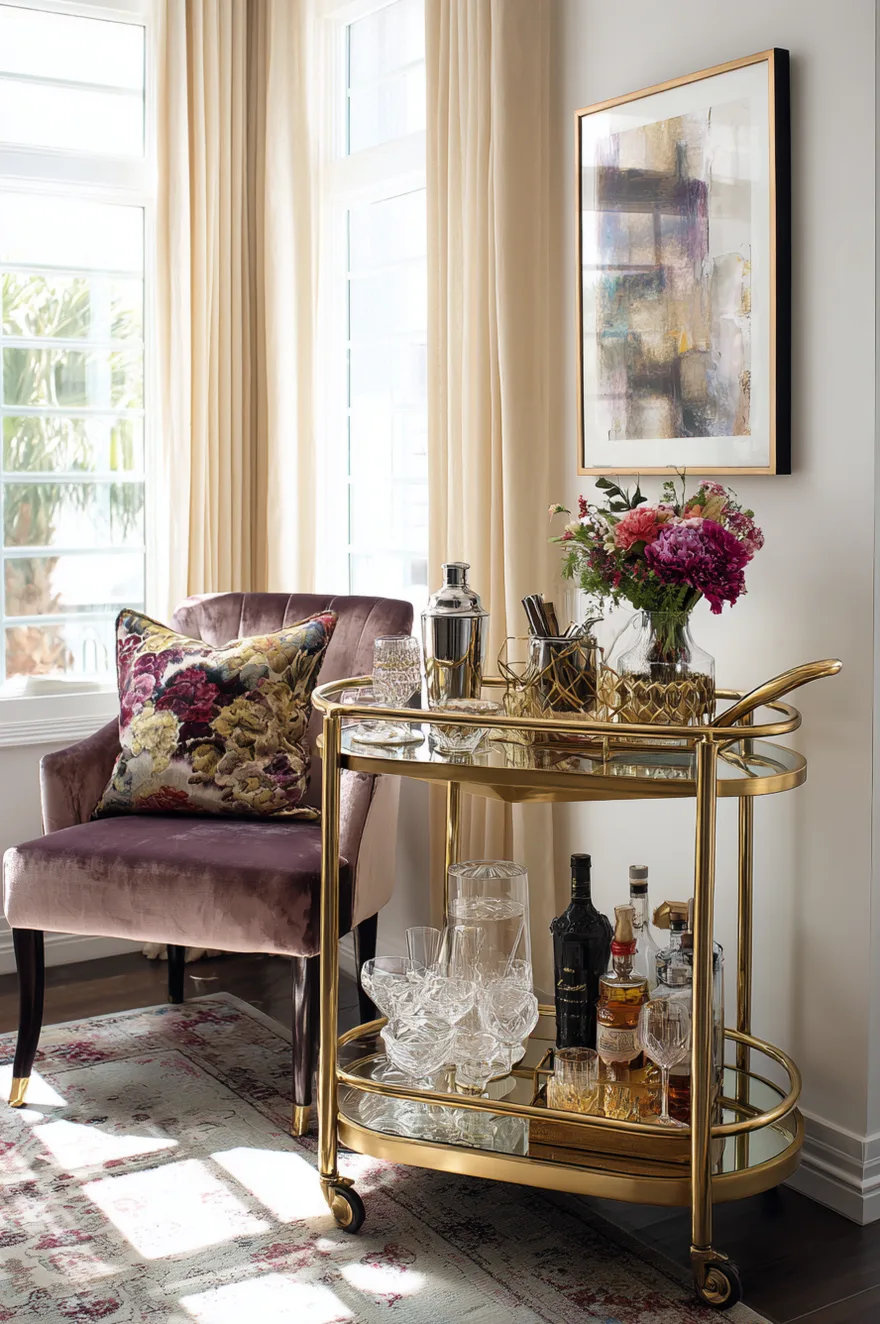
The art deco era loved entertaining, and a well-styled bar cart is both functional and decorative. Look for carts with geometric frames – tiered brass or chrome designs with glass shelves. The transparency keeps them from feeling heavy in a room, and the metal framework becomes a sculptural element.
Style the cart with cut crystal glassware, a cocktail shaker, and a few bottles with interesting labels. Add a small plant or a decorative object on the top tier to break up the glass and metal. The cart should look intentional even when you’re not actively using it.
Position it near a seating area so it’s accessible but not in the way. A bar cart in a corner or against a wall between two windows works well.
Bringing Art Deco Interior Design Into Your Home
Art deco interior design ideas work because they’re grounded in strong principles – geometry, symmetry, luxurious materials, bold contrast. Whether you’re tackling an art deco interior living room, an art deco interior bedroom, or working on an entire art deco interior apartment, these elements give you a framework to build on.
Start with one or two statement pieces and build around them. A velvet sofa, a brass chandelier, a geometric rug – pick what excites you most and let that set the tone for the rest of the room. The style is forgiving enough to work with what you already own, especially if you’re willing to swap hardware, add mirrors, and layer in the right textiles.
Which of these art deco interior ideas are you most excited to try? I’d love to hear what you’re working on or what questions you have about making this style work in your space.
See you soon,
Rachel