Master bedroom decor ideas for couples require balancing aesthetic preferences with functional needs. These master bedroom design strategies for 2026 cover modern approaches, cozy layering techniques, and color-specific solutions – from moody master bedrooms in black and dark wood to simple green and blue master bedroom decor. Whether you’re working with rustic bones or contemporary architecture, these ideas prioritize how the room functions as a shared retreat, not just how it photographs.
It’s 10:47pm on a Tuesday. You’re sitting on the edge of your bed taking off your socks. The overhead light is on because that’s the only switch by the door. Your phone is charging on a nightstand that’s six inches too high. There’s a pile of clothes on the chair you bought because the room “needed seating.”
This is the reality of most master bedrooms I walk into during consultations. Beautiful in theory. Dysfunctional in practice.
I’ve designed eleven master bedrooms in the past two years – from a Gold Coast penthouse to a Pilsen loft conversion. The couples I work with consistently struggle with the same tension: one person wants a space that looks like a hotel, the other wants a place where they can actually relax. Both are valid. Neither works alone.
These master bedroom decor ideas address that fundamental conflict. They’re organized around the principle that a bedroom should function first for the two people who use it 50 hours a week, and photograph second.
Light Layers Replace Overhead
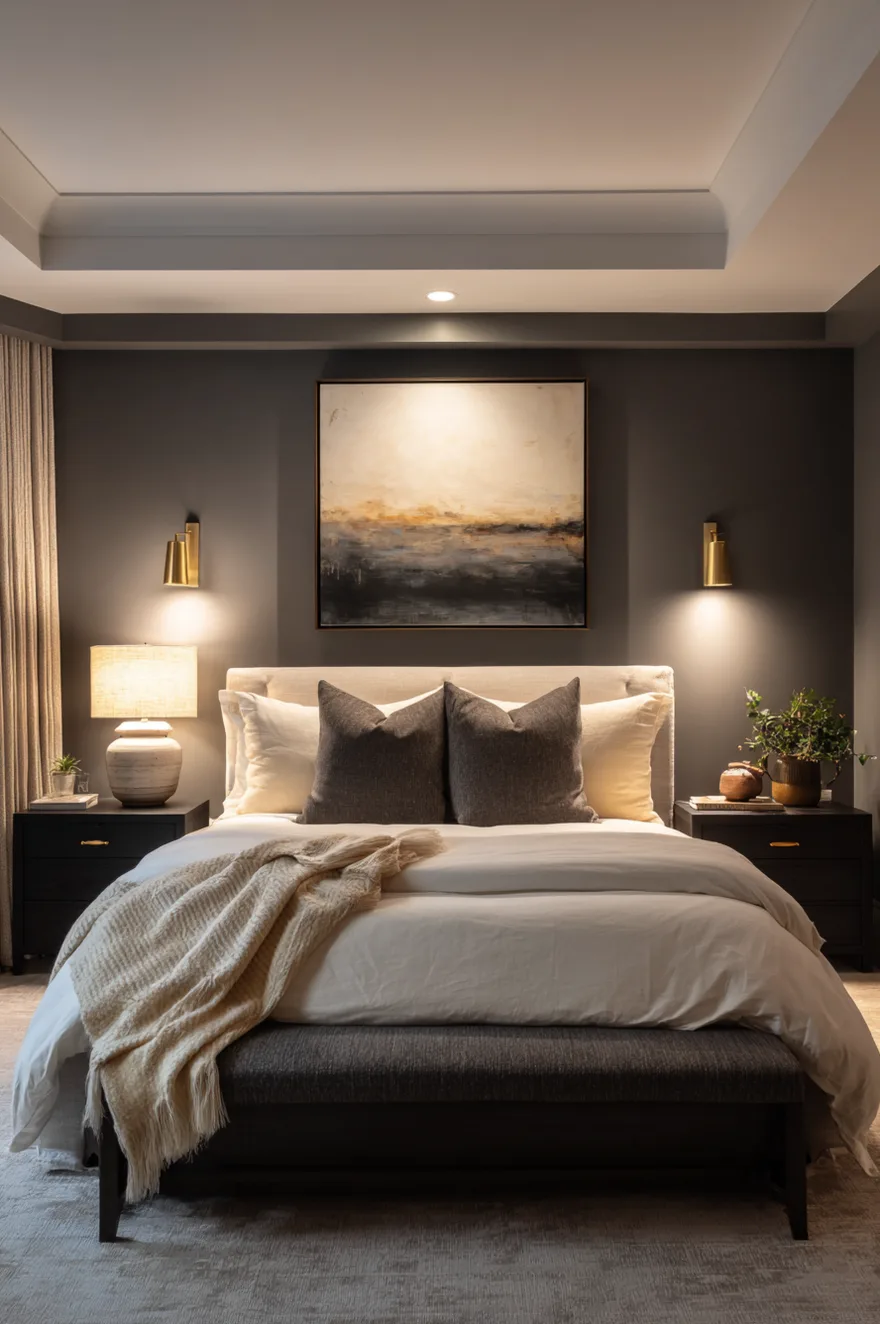
The single biggest functional upgrade in a master bedroom is eliminating dependence on overhead lighting.
Bedroom lighting should have three layers minimum: ambient (recessed or flush mount ceiling), task (reading lights by the bed), and accent (table lamps, wall sconces, or LED strips). Each layer serves a different time of day and activity. Morning prep needs bright task lighting at the closet and vanity. Evening wind-down needs warm, dimmable ambient light. Middle-of-the-night bathroom trips need low-level path lighting that doesn’t wake your partner.
I installed a lighting system in a Lincoln Park master last spring – recessed LEDs on dimmers for ambient, adjustable wall-mounted reading lights on each side of the bed, and motion-activated LED strips under the bed frame for nighttime navigation. Total cost around $2,400 installed. The clients told me three months later it changed how they used the room more than any furniture decision.
Put all bedroom lighting on dimmers. Lutron Caseta if you want app control without rewiring. The ability to adjust light temperature and intensity throughout the day is not a luxury – it’s the foundation of a functional bedroom.
Couples Need Symmetry
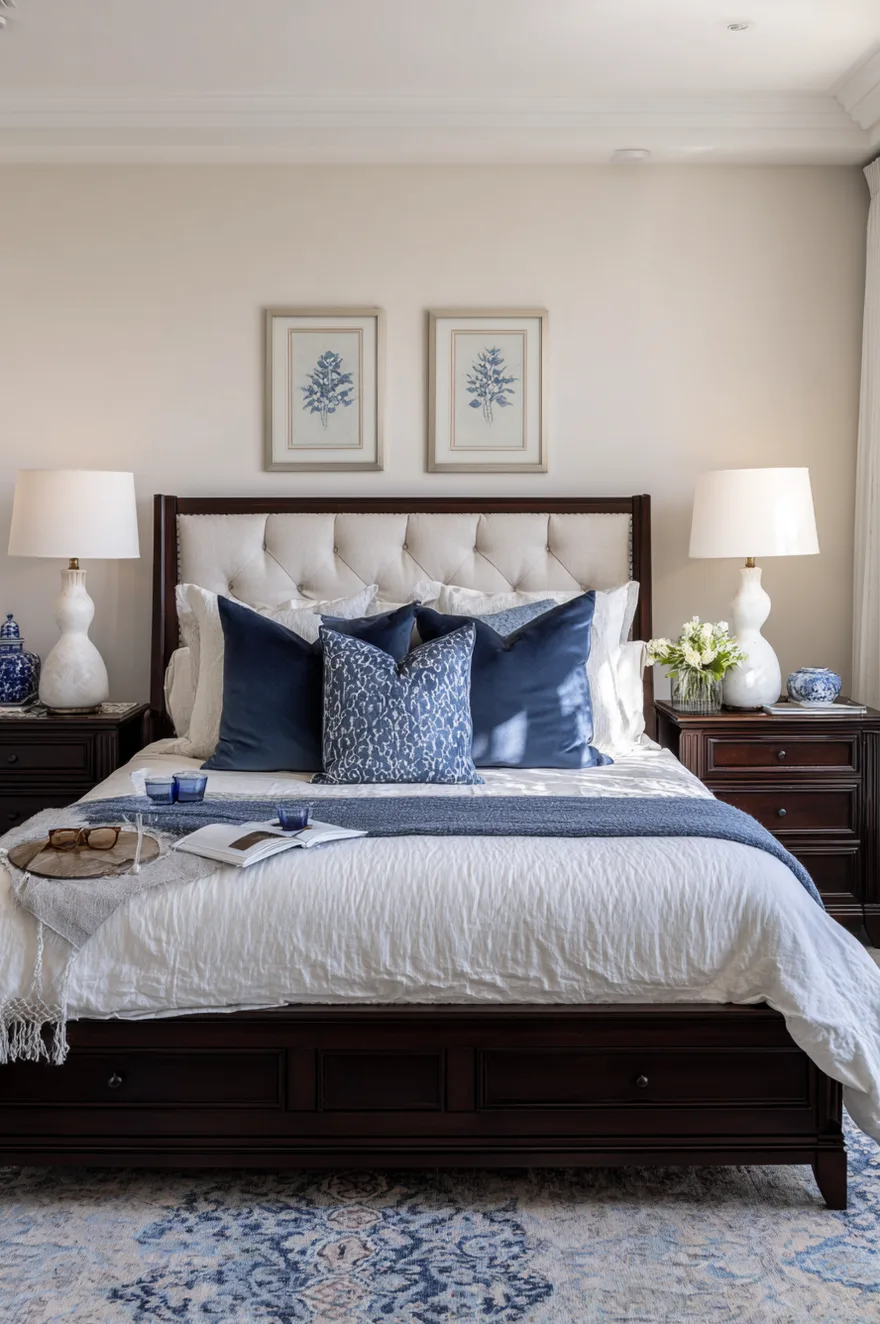
Asymmetrical bedrooms photograph beautifully. They function terribly for two people.
Each person needs equivalent access to storage, lighting, and surface area. This means matching nightstands at the same height, matching lamps with the same lumen output, matching drawers or shelves. The specific furniture can differ in style – one person might prefer a nightstand with drawers, the other a simple table – but the functional capacity needs to be equal.
I’ve seen too many master bedrooms where one nightstand is a three-drawer dresser and the other is a 12-inch plant stand. That’s not a design choice. That’s one person claiming territory and the other getting leftovers.
Blue Calms Without Trying
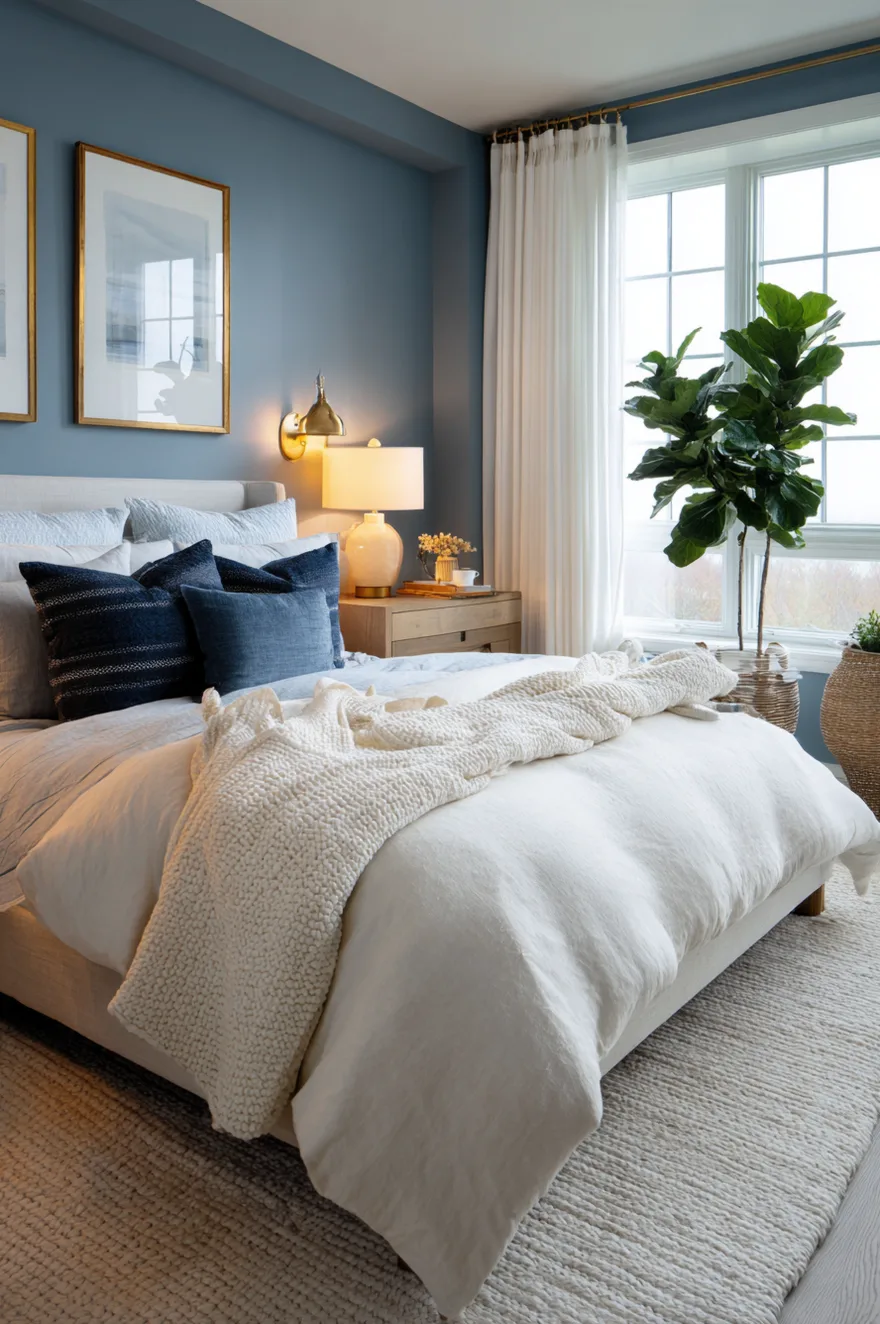
Blue master bedroom decor works across styles because it engages the parasympathetic nervous system.
This is not aesthetic preference – it’s biology. Blue wavelengths lower heart rate and blood pressure. A blue bedroom physically promotes better sleep than a red, orange, or bright yellow one.
The specific blue matters. Navy and slate blues feel grounding and sophisticated. Powder blues and periwinkles feel airy and coastal. Dusty blue-grays (Benjamin Moore Smokey Taupe, Farrow & Ball Borrowed Light) split the difference – calm without feeling cold.
I use blue in roughly half the master bedrooms I design, usually on the walls or in major textiles (duvet, curtains, upholstered headboard). Pair it with warm wood tones, brass or aged bronze hardware, and cream or white linens. The warmth prevents the blue from reading as cold or institutional.
Green Grounds the Space
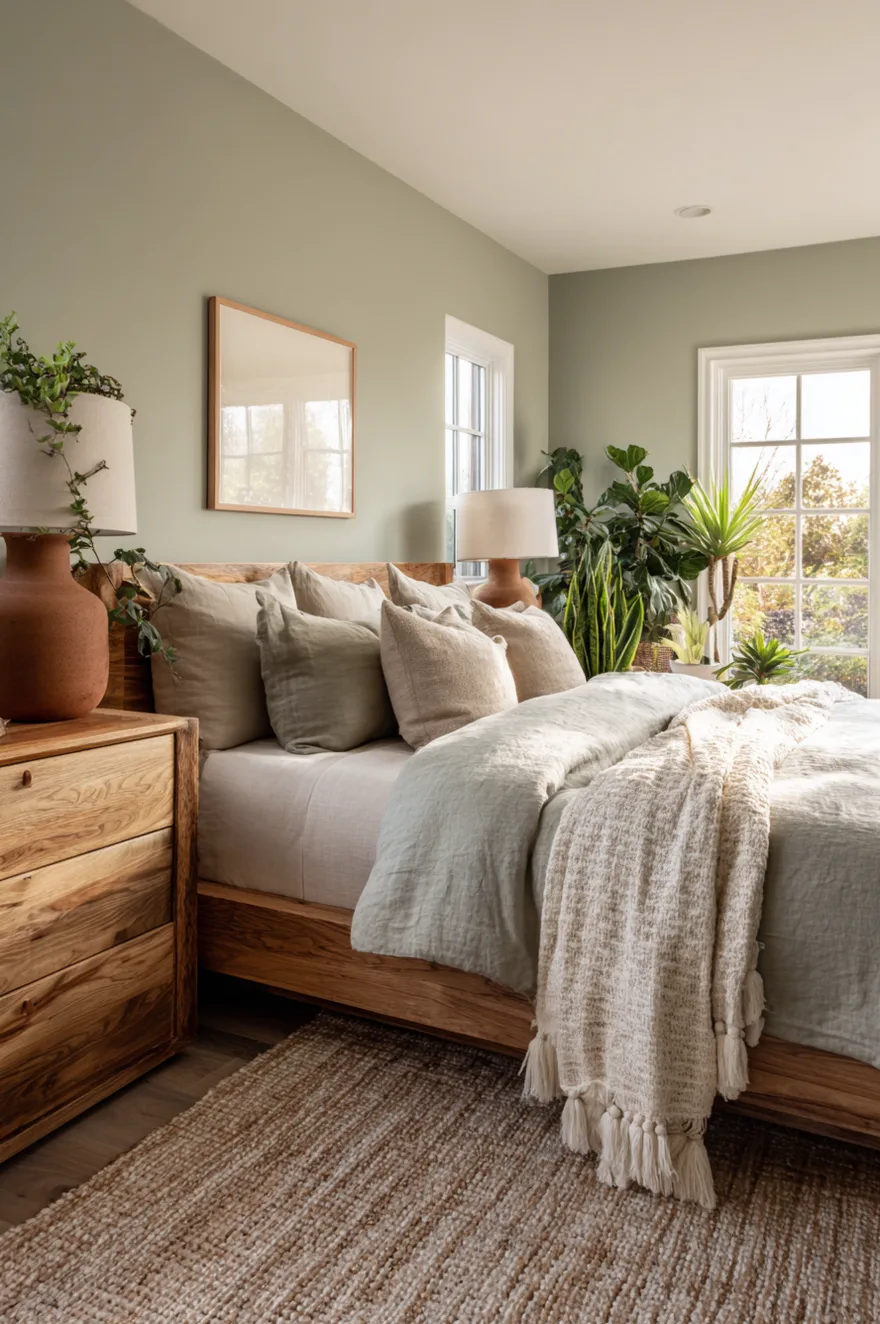
Green master bedrooms feel more connected to the outside than other colors.
Sage, olive, forest, moss – these greens reference nature without being literal. They work particularly well in urban bedrooms where you’re trying to create a sense of refuge from the city outside.
The mistake people make with green is going too bright or too yellow-toned. Bright lime green or Kelly green reads as energizing, not restful. You want greens with gray or brown undertones – colors that look like they came from a plant, not a highlighter.
I painted a Wicker Park master in Farrow & Ball Green Smoke last year – a complex gray-green that shifts between soft sage in morning light and deeper olive in evening. Paired with natural linen bedding, white oak furniture, and terracotta accents. The room felt like a clearing in a forest, which sounds precious but actually describes the mood accurately.
Simple Means Intentional
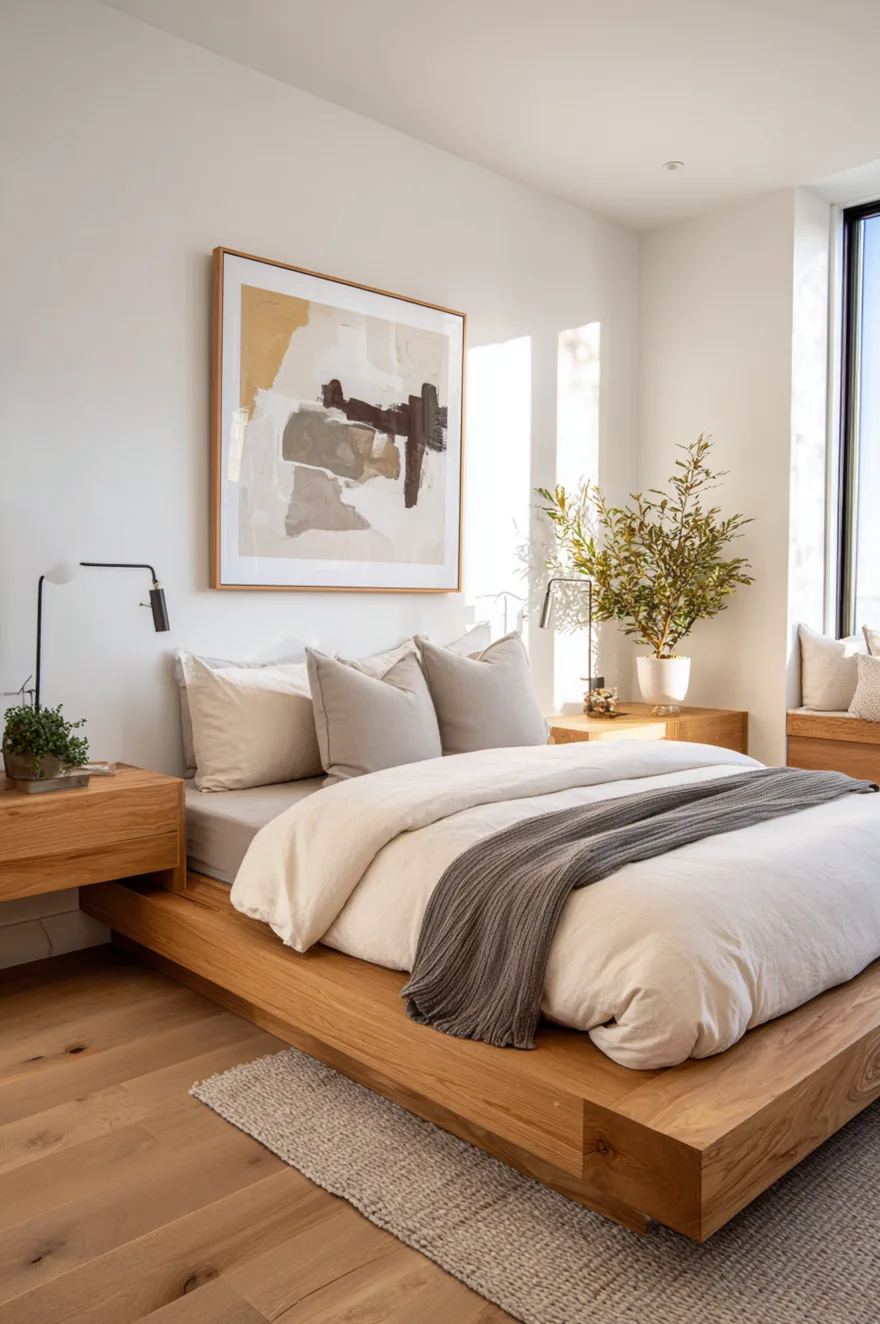
Simple master bedroom decor is not about having fewer things. It’s about having only intentional things.
A simple bedroom contains: a bed with high-quality bedding, adequate lighting for reading and dressing, storage that accommodates what both people actually own, and enough floor space to move freely. That’s it. Everything else – benches, chairs, decorative pillows, artwork – is optional.
The test: if you removed this item, would the room stop functioning? If no, you need a strong reason to include it. “It fills space” is not a strong reason. “It’s where I put on shoes every morning” is.
Dark Wood Ages Better
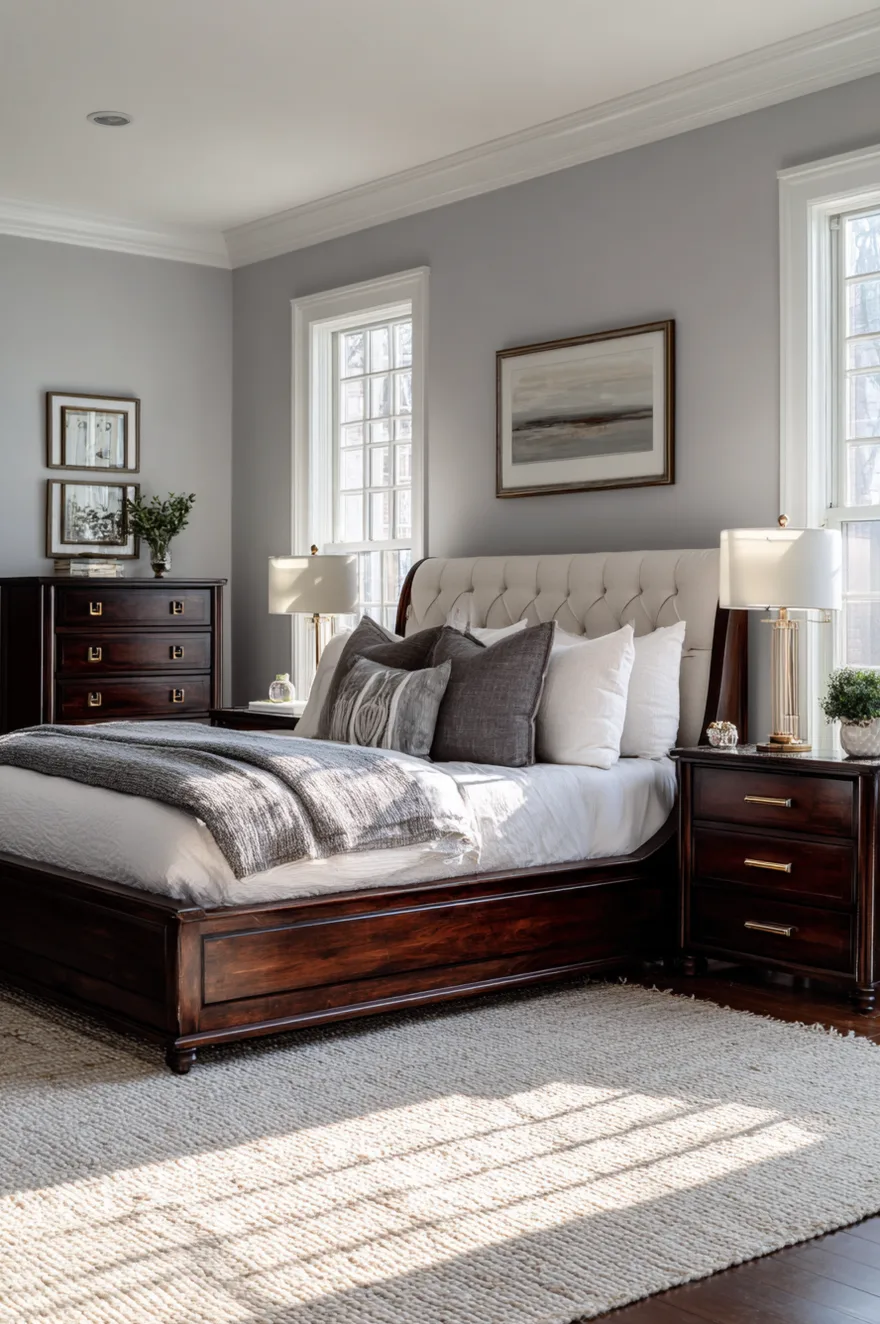
Dark wood furniture in master bedrooms shows less wear than light wood or painted finishes.
Walnut, dark-stained oak, espresso-finished maple – these develop patina rather than showing damage. Scratches blend into the grain. Watermarks are less visible. The furniture looks better at year five than year one.
Compare this to white or light gray painted furniture, which shows every nick and requires touch-ups. Or light oak, which can yellow over time and shows every water ring.
I specify dark wood bedroom furniture for clients who want something that will last fifteen years without maintenance. The upfront cost is usually higher – solid walnut costs more than painted pine – but the longevity justifies it.
Moody Requires Commitment
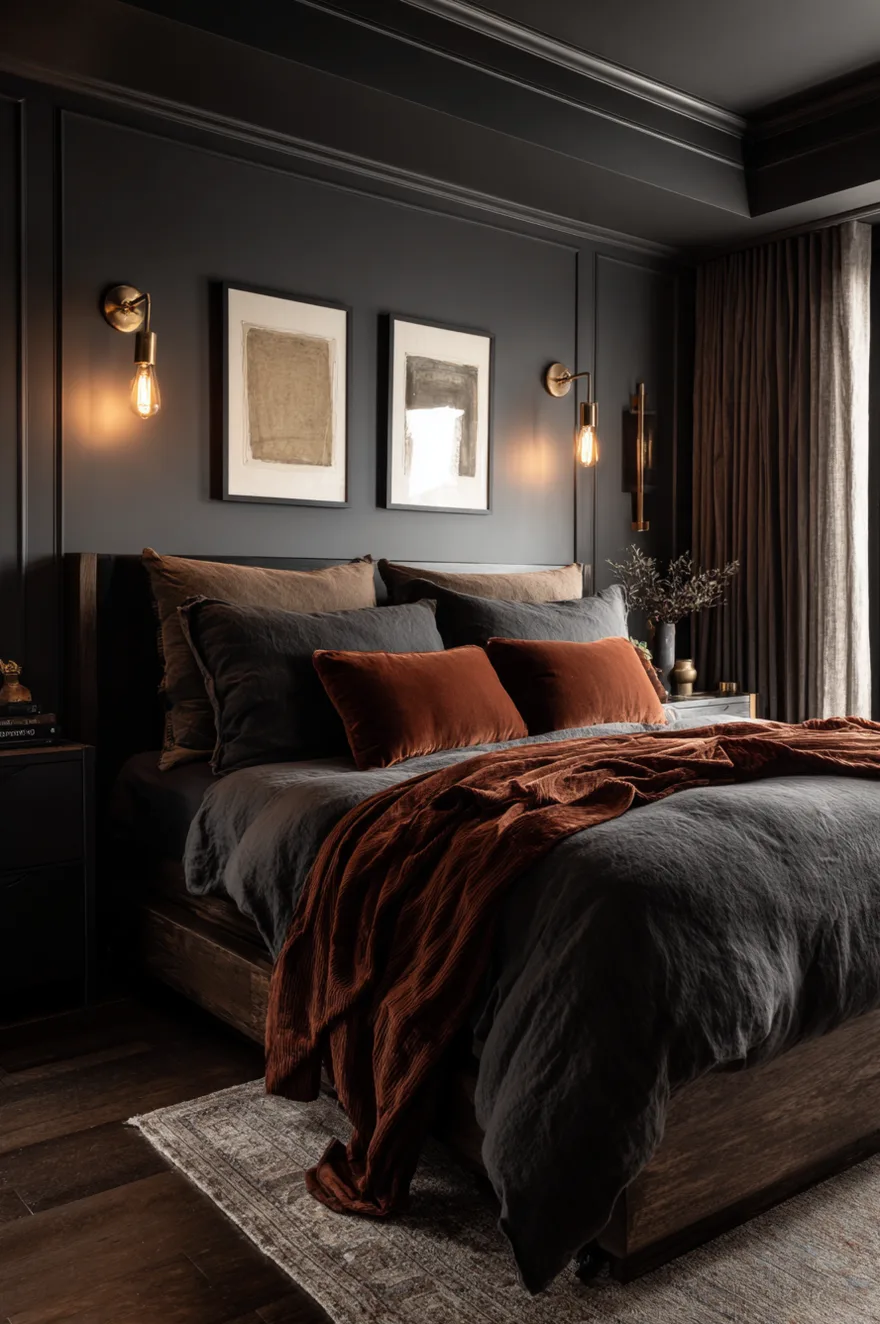
A moody master bedroom – dark walls, low light, rich colors – works beautifully if you’re willing to commit fully.
Half-measures fail. A dark accent wall with three bright white walls looks indecisive. Dark walls with bright overhead lighting looks unfinished. You need to embrace the darkness: all four walls in a deep color, warm low-level lighting throughout, and materials that add richness (velvet, leather, dark wood, brass).
I designed a moody master in a South Loop loft – walls in Benjamin Moore Kendall Charcoal, ceiling in the same color, dark walnut bed frame, charcoal linen bedding with a rust velvet throw, brass sconces and table lamps only (no overhead). The room felt cocooning and intentionally dramatic. It also required excellent window treatments for daytime light control and made getting dressed in the morning slightly more complicated.
Moody bedrooms are not for everyone. But if you’ve always wanted one, commit to it completely or don’t do it at all.
Black Isn’t Heavy
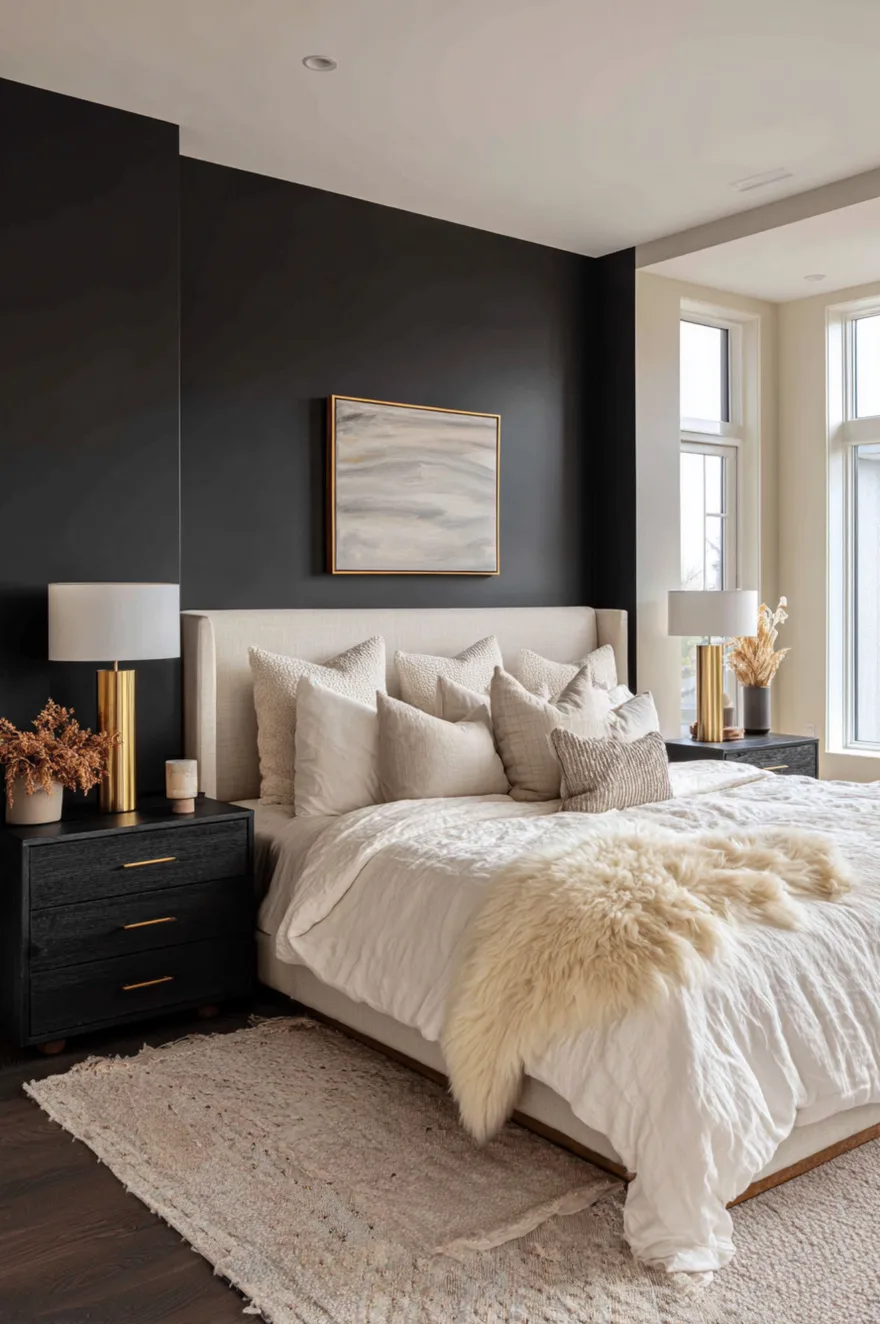
Black in master bedrooms reads as grounding, not oppressive, when you balance it with texture and warm light.
A black accent wall behind the bed becomes a backdrop that makes lighter elements pop – white bedding, natural wood, brass fixtures. Black furniture (a black wood bed frame, black nightstands) grounds the room without darkening it if the walls stay light and the textiles add softness.
The key is varying the blacks. Matte black walls, satin black furniture, glossy black accents – each reflects light differently. Monochromatic black without textural variation looks flat. Layered blacks with different finishes create depth.
Rustic Needs Editing
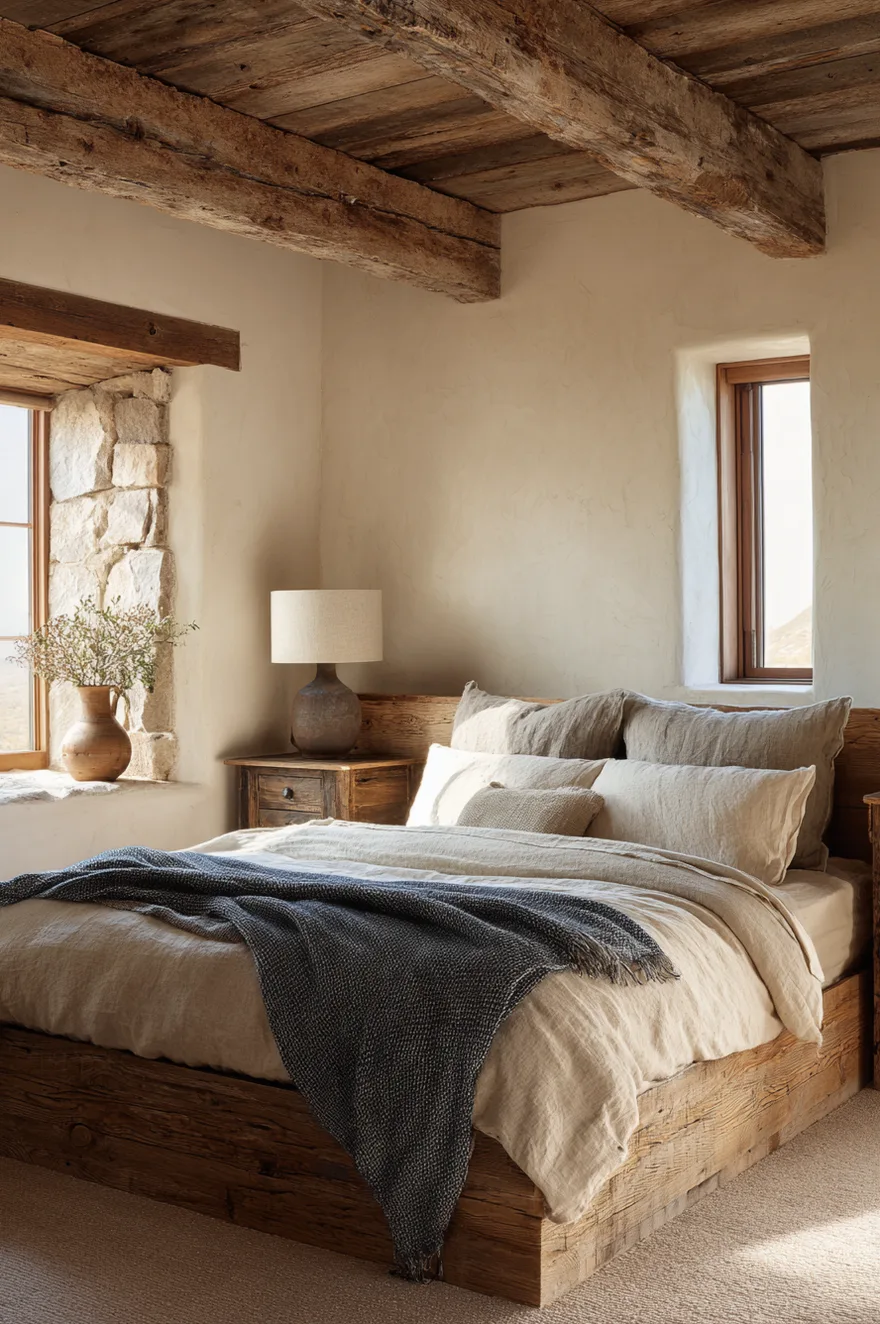
Rustic master bedroom decor fails when it becomes thematic rather than material-focused.
Real rustic design is about honest materials: reclaimed wood, natural stone, worn leather, linen, wool. Fake rustic is about signifiers: antler chandeliers, barn doors where no barn exists, distressed furniture that was artificially aged.
A rustic bedroom should feel like it was built from the landscape it sits in – which means the specific materials matter. Reclaimed barn wood in the Midwest. Weathered cedar in the Pacific Northwest. Adobe and terracotta in the Southwest. The materials should have history, not just the appearance of history.
I designed a rustic master in a converted barn in Lake County – exposed beam ceiling (original to the structure), walls in limewashed plaster, a platform bed made from reclaimed oak barn siding, linen bedding in natural tones, a vintage wool blanket. Nothing was trying to look old. Everything was old, or honestly new in a way that respected the old.
Modern Means Function First
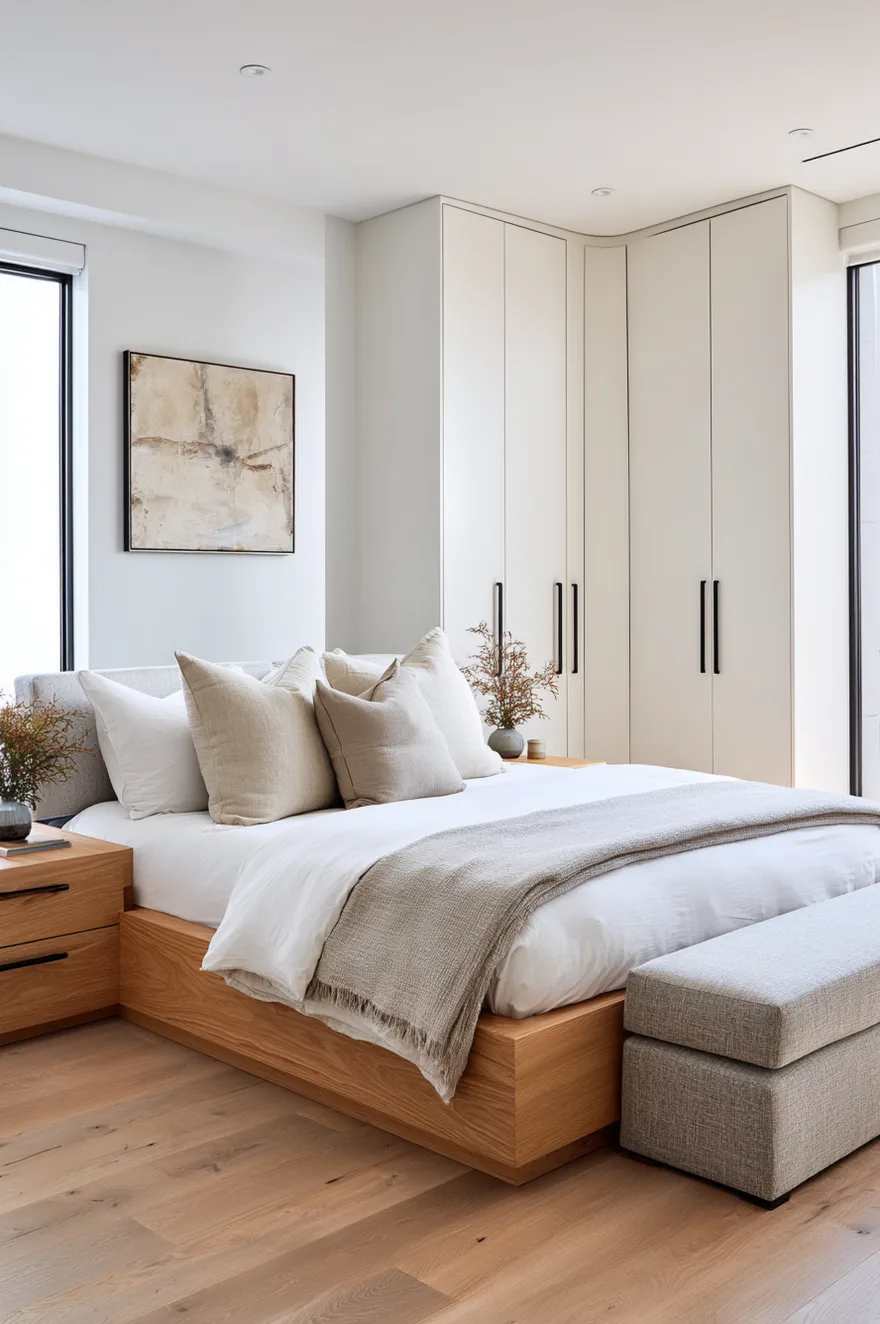
Modern master bedroom decor prioritizes how things work over how they look – though the best modern design does both.
Low-profile furniture with clean lines. Integrated storage (drawers under the bed, built-in wardrobes) instead of freestanding pieces. Minimal decorative objects. Technology integrated thoughtfully rather than tacked on.
A modern bedroom should answer these questions clearly: Where does each person’s clothing go? Where do phones charge overnight? Where do you put on shoes? Where does dirty laundry go before wash day? If any of these questions doesn’t have an obvious answer, the design is incomplete.
Cozy Is Temperature Plus Texture
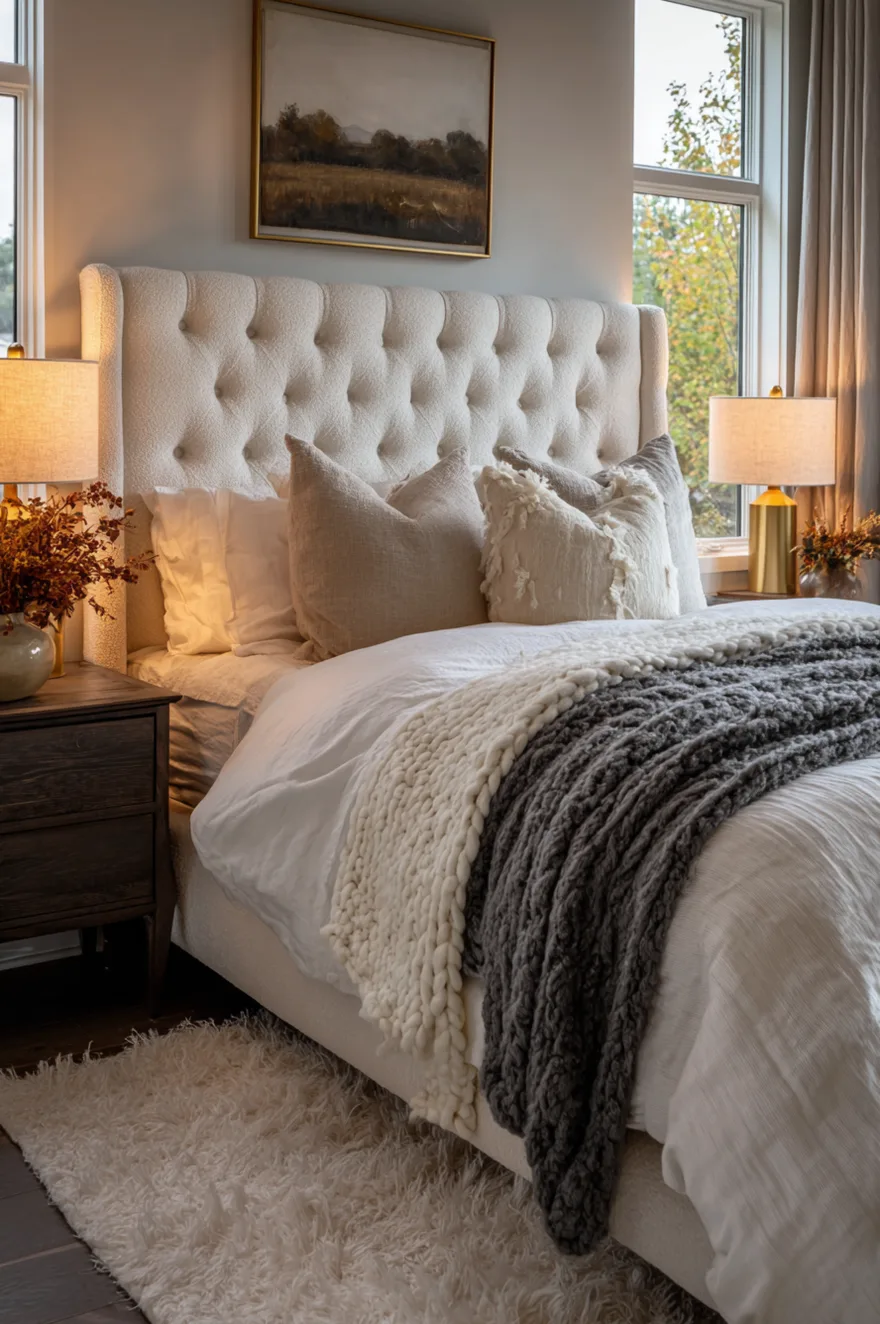
Cozy master bedroom decor has two components: literal warmth and tactile softness.
Literal warmth: the room should be 65-68°F for optimal sleep, with the ability to adjust via thermostat, heated floors, or a space heater. Bedding should include multiple layers – sheet, blanket, duvet, throw – so each person can self-regulate throughout the night.
Tactile softness: every surface you touch should feel good. High-thread-count sheets (400+ for cotton, any count for linen which improves with washing). Plush rug underfoot when you get out of bed. Upholstered headboard you can lean against. Soft throw for reading in bed.
The combination of physical warmth and soft textures creates the sensation people call “cozy.” You can’t achieve it with visuals alone.
The Headboard Anchors Everything

An upholstered headboard changes the perceived quality of the entire room.
A bed frame without a headboard, or with a simple wood or metal headboard, reads as functional furniture. Add an upholstered headboard – linen, velvet, bouclé, even leather – and the bed becomes a piece of architecture. The room organizes around it visually.
The headboard should be substantial: 48-54 inches tall for a standard 8-foot ceiling, 54-60 inches for 9-foot ceilings. Too short and it looks like an afterthought. The width should extend 4-6 inches beyond the mattress on each side.
I typically specify custom upholstered headboards from local fabricators – you can choose the exact fabric, height, and shape. Cost runs $800-1,500 for a king size, which is less than most people expect and transforms the room more than any other single purchase.
Storage Under the Bed
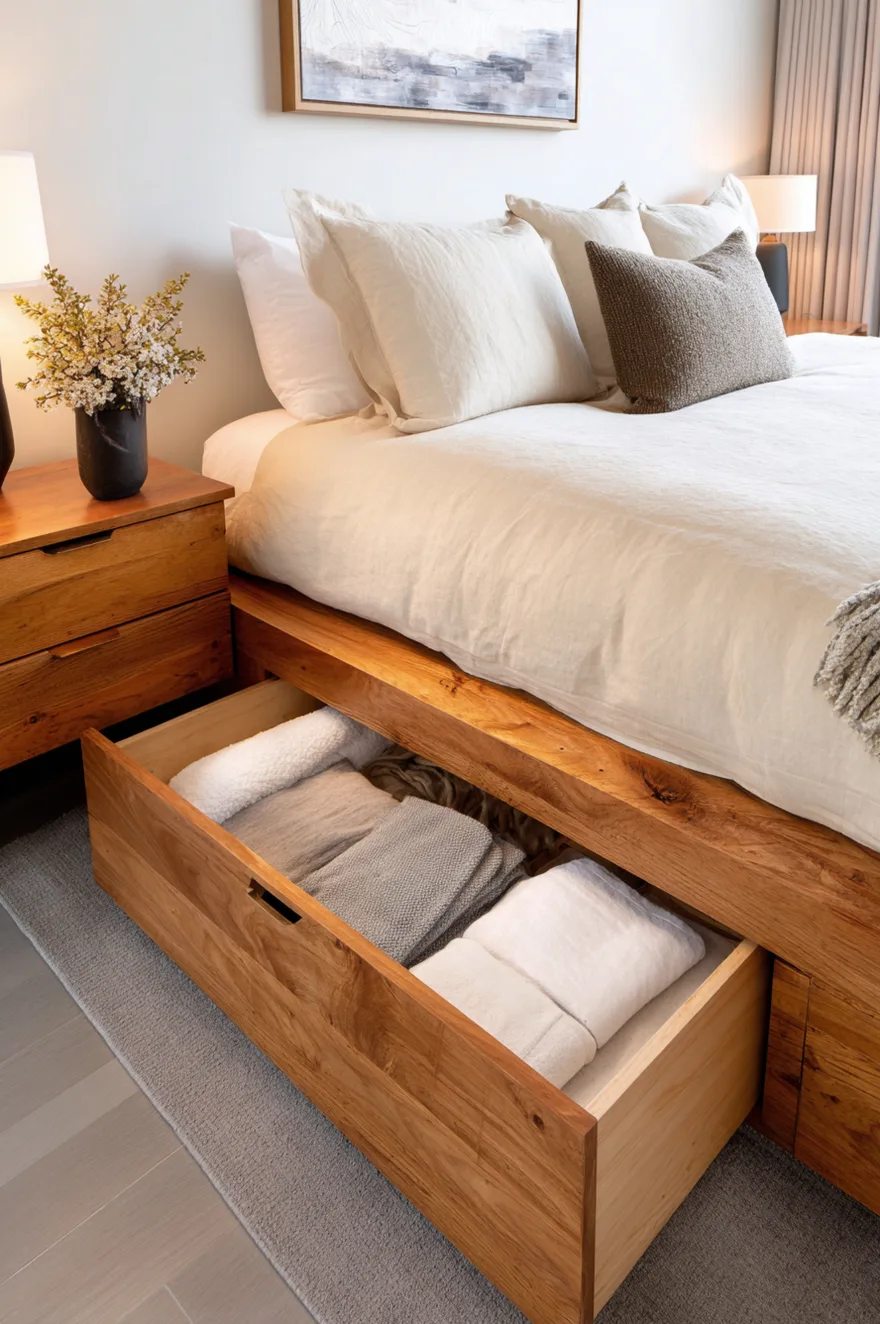
The space under a bed is 20-30 cubic feet of storage most people waste.
Platform beds with integrated drawers, storage beds with hydraulic lift mechanisms, or even basic under-bed boxes on wheels – all of these capture space that would otherwise sit empty.
This is particularly critical in master bedrooms without walk-in closets. Seasonal clothing, extra bedding, off-season shoes – these items need to live somewhere. Under the bed keeps them accessible without taking up closet space you need for daily items.
The trade-off: storage beds sit higher than platform beds without storage. If you’re under 5’4″ or over 6’2″, test the bed height before committing.
Blackout Shades Are Not Optional
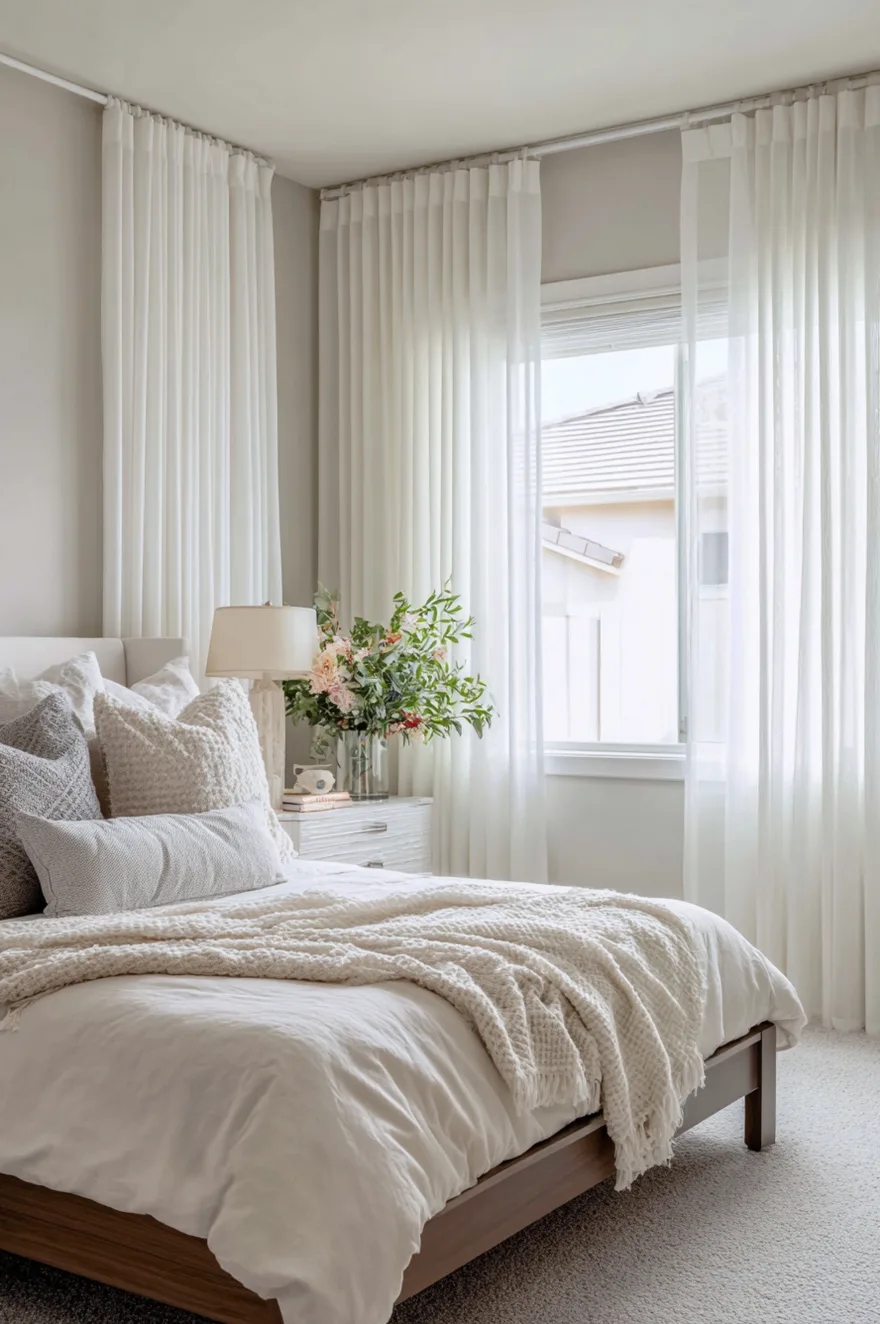
Sleep quality in a master bedroom depends heavily on light control.
Blackout roller shades, cellular shades, or lined curtains block external light sources – streetlights, car headlights, early sunrise in summer. Even small amounts of ambient light suppress melatonin production and fragment sleep cycles.
Layer blackout shades with sheer curtains or decorative drapes if you want the window to look finished during the day. The blackout layer is functional and can be ugly – no one sees it when it’s down at night. The decorative layer is what you see during waking hours.
I specify this in every bedroom project. Cost is roughly $200-400 per window for quality blackout shades. The ROI in sleep quality makes it one of the highest-value upgrades you can make.
The Bench Is Rarely Used
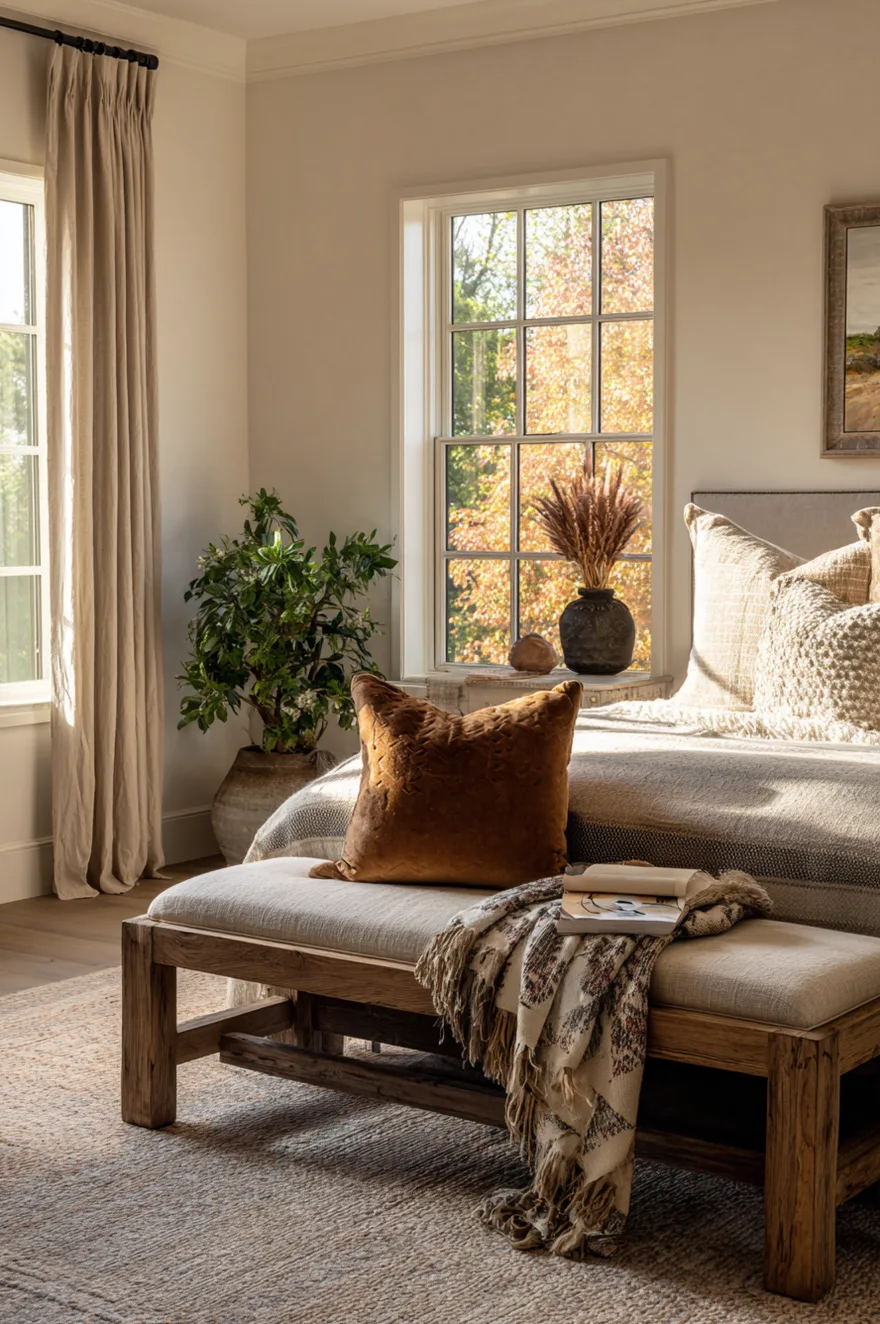
That upholstered bench at the foot of the bed – the one that appears in every hotel room and design magazine – is mostly decorative.
In practice, it becomes a clothes dumping ground. The “not dirty enough to wash but not clean enough to put away” items pile up there until the bench is no longer functional as seating.
If you want a bench for actual use – sitting to put on shoes, extra seating when someone visits – put it along a wall or in front of a window, not at the foot of the bed where it will inevitably collect clutter.
Or skip it entirely. Most bedrooms don’t need a bench. They need better closet organization so clothes have an actual home instead of living on furniture.
Sconces Free Nightstands
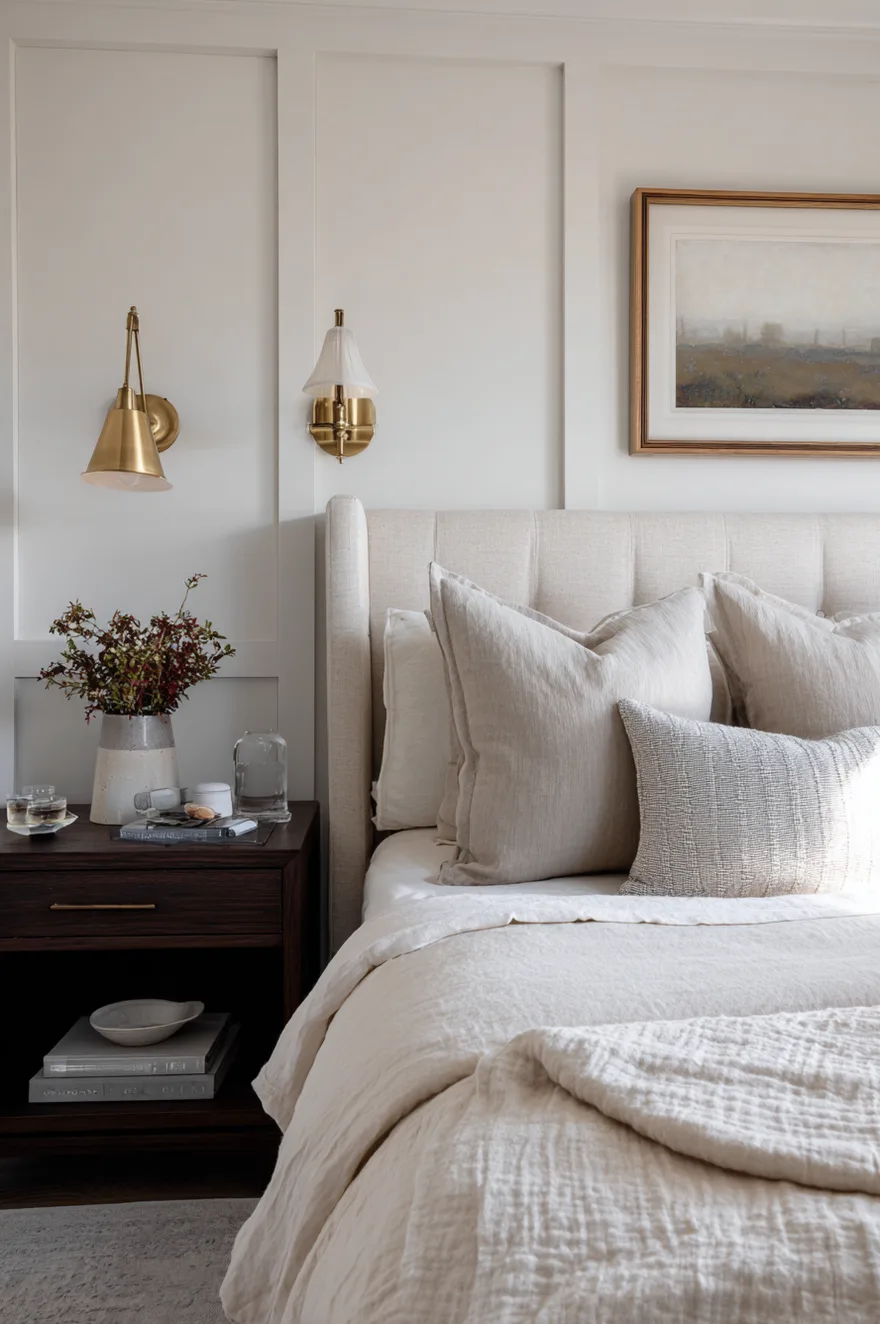
Wall-mounted reading lights eliminate the need for table lamps, which frees up nightstand surface area.
Swing-arm sconces or adjustable wall lights – one on each side of the bed, mounted 48-54 inches from the floor – provide direct task lighting for reading without occupying any horizontal space. This leaves the nightstand surface clear for the items you actually use: phone, water glass, book, alarm clock.
The installation requires electrical work (or running cord-and-plug sconces if hardwiring isn’t possible), but the functional improvement is significant. Your nightstand becomes usable rather than crowded.
I installed Schoolhouse Electric brass adjustable sconces in a West Loop master bedroom last fall. The clients said it felt like they’d doubled their nightstand space, which is exactly what happened – the lamps were taking up 40% of the surface area.
Dressers Beat Closets for Accessibility
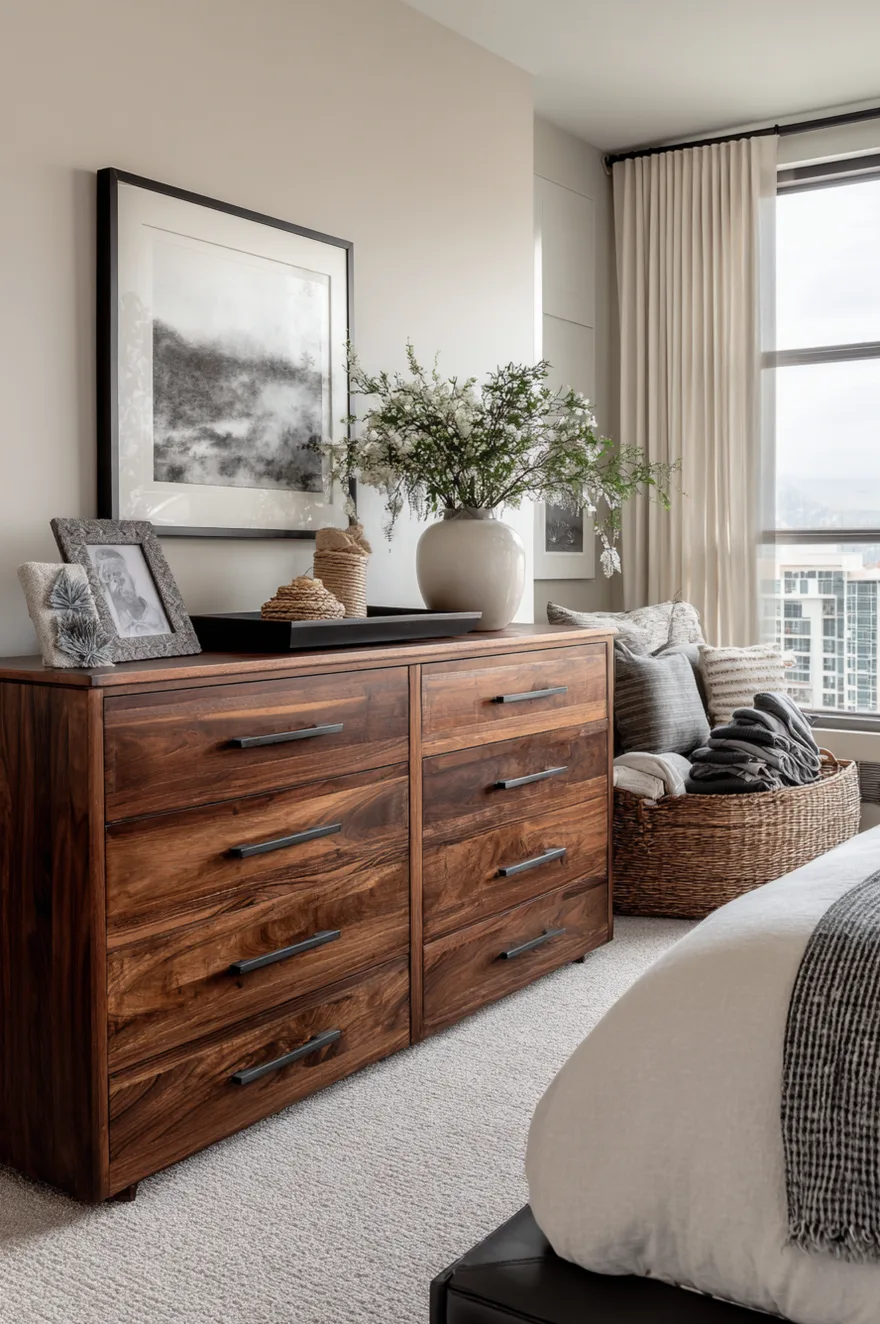
If you have space for a dresser in the master bedroom, use it – even if you have closet space.
Dressers make daily-wear items more accessible than closets. Underwear, socks, workout clothes, pajamas – things you need every morning – should be in drawers you can open from bed, not in a closet you have to walk to.
The closet holds clothing that requires more thought: work clothes, occasion-specific items, seasonal layers. The dresser holds the autopilot wardrobe.
This separation also prevents the “everything’s in the closet so I can’t find anything” problem. If 80% of what you wear daily is in dresser drawers, the closet stays more organized by default.
Artwork Should Be Large
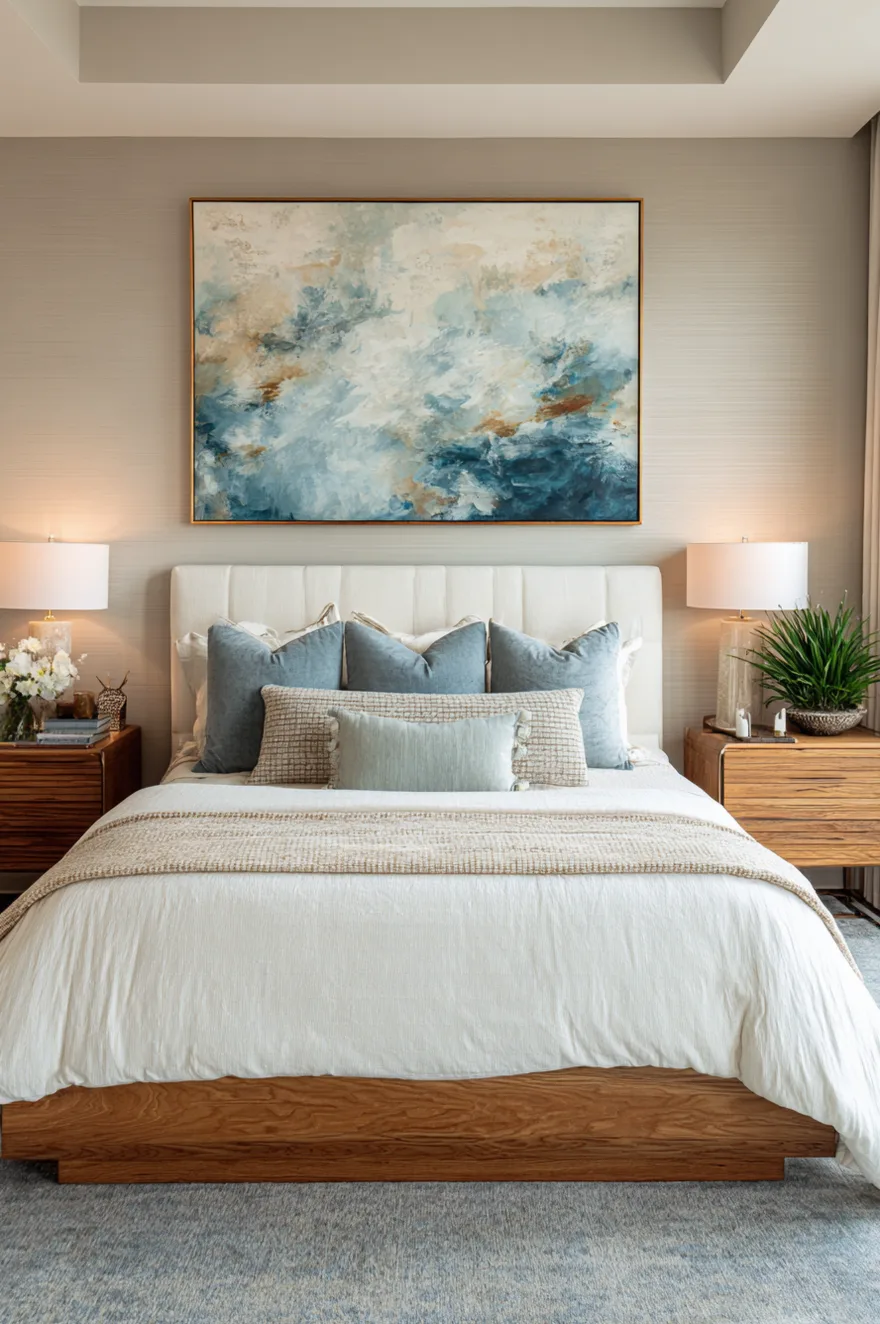
Small artwork in a master bedroom reads as indecisive.
The wall behind the bed – or any large wall in the room – needs artwork proportional to the space. For a king bed, that means 48-72 inches wide minimum. For queen, 40-60 inches. Smaller than this and it looks like you’re afraid to commit.
A single large piece creates more impact than a gallery wall of smaller pieces. It also simplifies the decision – you’re choosing one thing you love rather than curating a collection.
If budget is a concern, consider an oversized photographic print, a large-scale abstract painting from an emerging artist, or even a textile wall hanging. The size matters more than the medium.
The 60-30-10 Color Rule
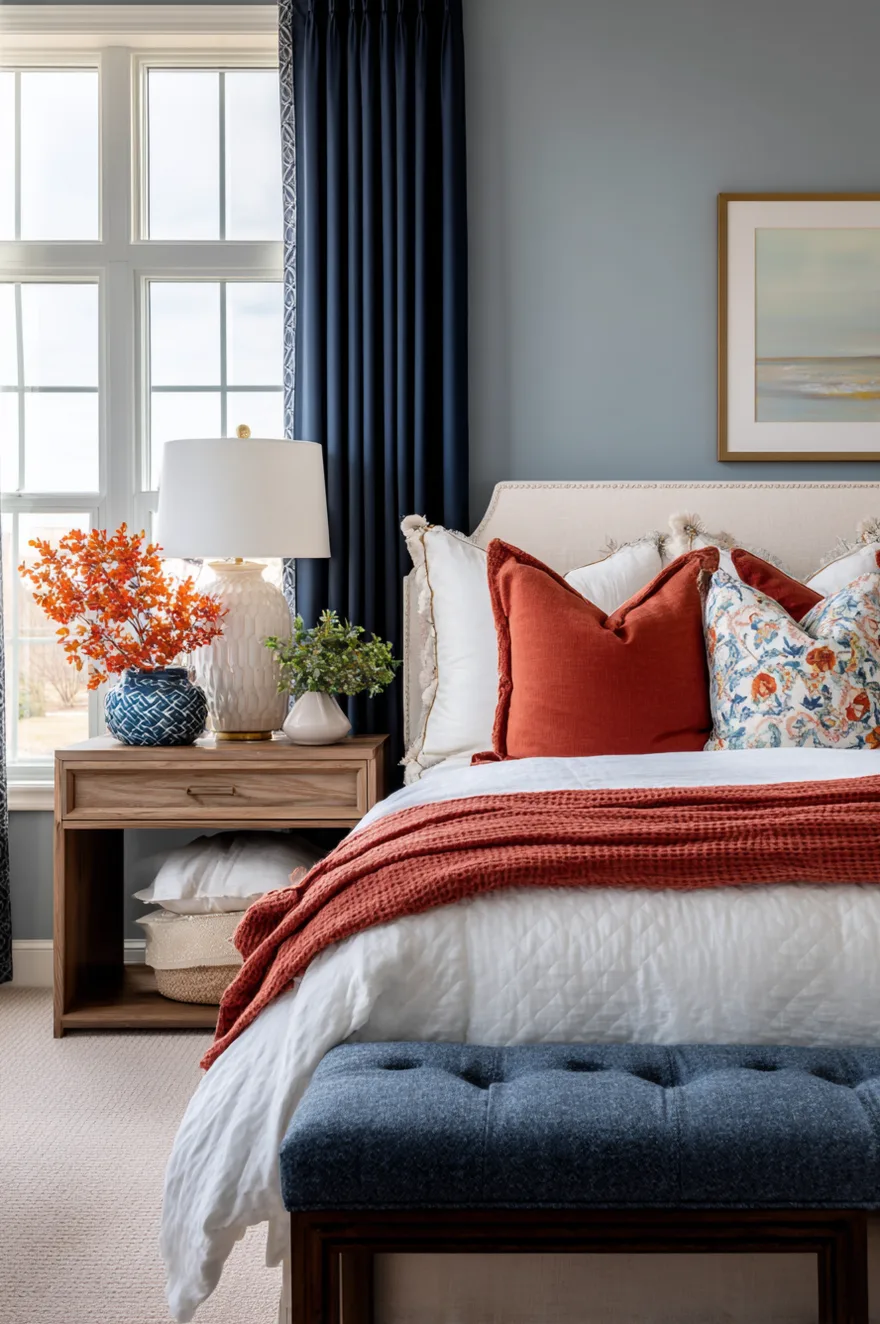
Master bedroom color schemes work best with a clear hierarchy: 60% dominant color, 30% secondary color, 10% accent.
60% is usually walls and bedding – your neutral base (white, cream, gray, or a muted color like soft blue or sage). 30% is your secondary supporting color in larger textiles and furniture (a darker wood tone, a complementary wall color if you have an accent wall, curtains). 10% is your accent color in smaller doses (throw pillows, artwork, decorative objects).
This creates visual balance without monotony. The room feels cohesive because the proportions are clear, but interesting because there’s variety within the structure.
I use this formula in almost every bedroom project. It’s the fastest way to create a pulled-together palette without formal color training.
Mattress Quality Trumps Frame Style
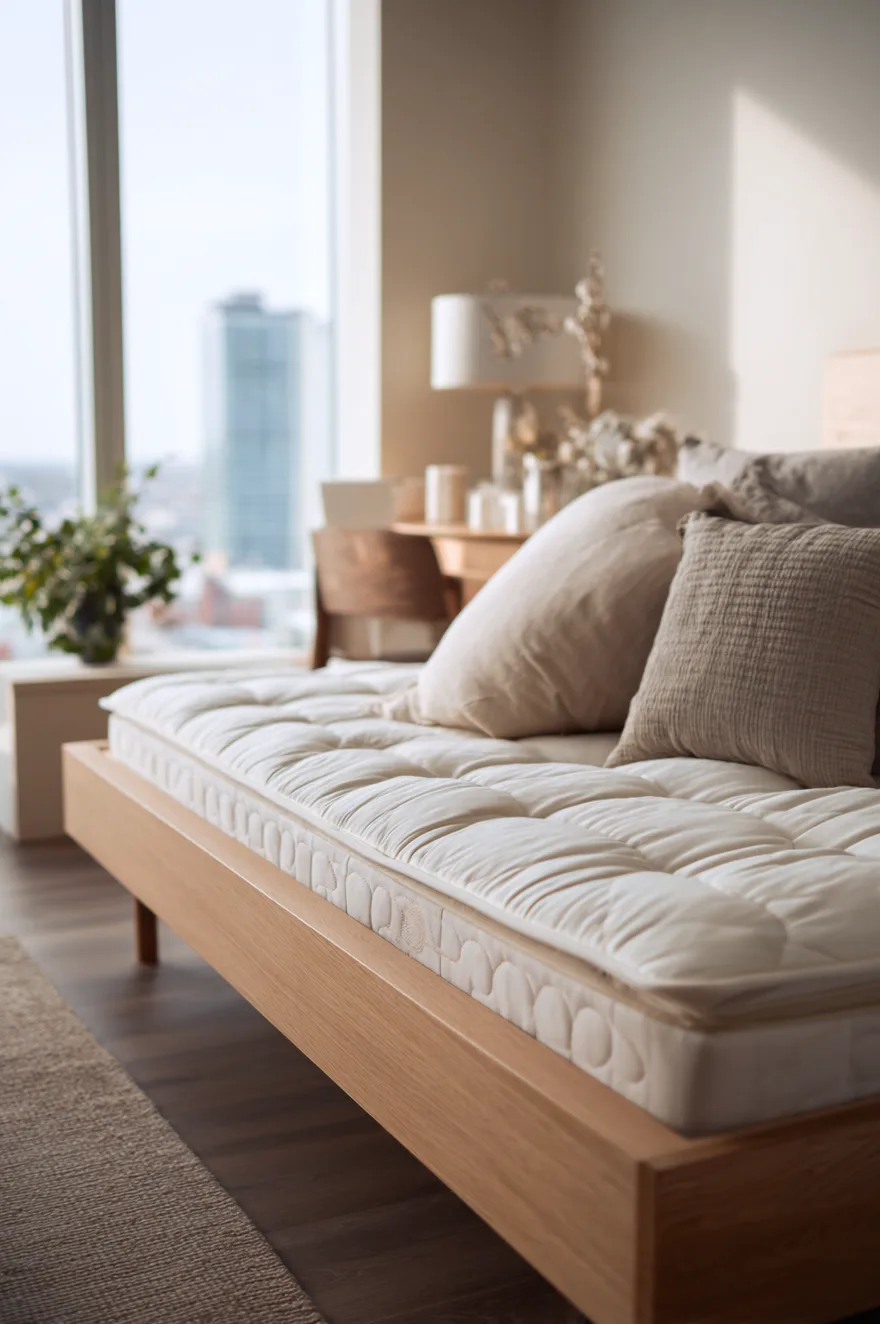
I’ll say something that might seem obvious but gets ignored constantly: the mattress matters more than everything else in the room combined.
You can have a $5,000 bed frame with a $300 mattress and sleep terribly. You can have a $200 IKEA frame with a $2,000 mattress and sleep beautifully. The frame is furniture. The mattress is health equipment.
Allocate your budget accordingly. If you’re spending $3,000 total on the bed, put $2,200 into the mattress and $800 into the frame. Not the other way around.
Test mattresses in person if possible. Lie on them for at least ten minutes. Bring your partner – you need to test how motion transfers between sides. And ignore firmness ratings from manufacturers – they’re not standardized. Trust how it feels under your body.
Mirrors Expand and Reflect Light
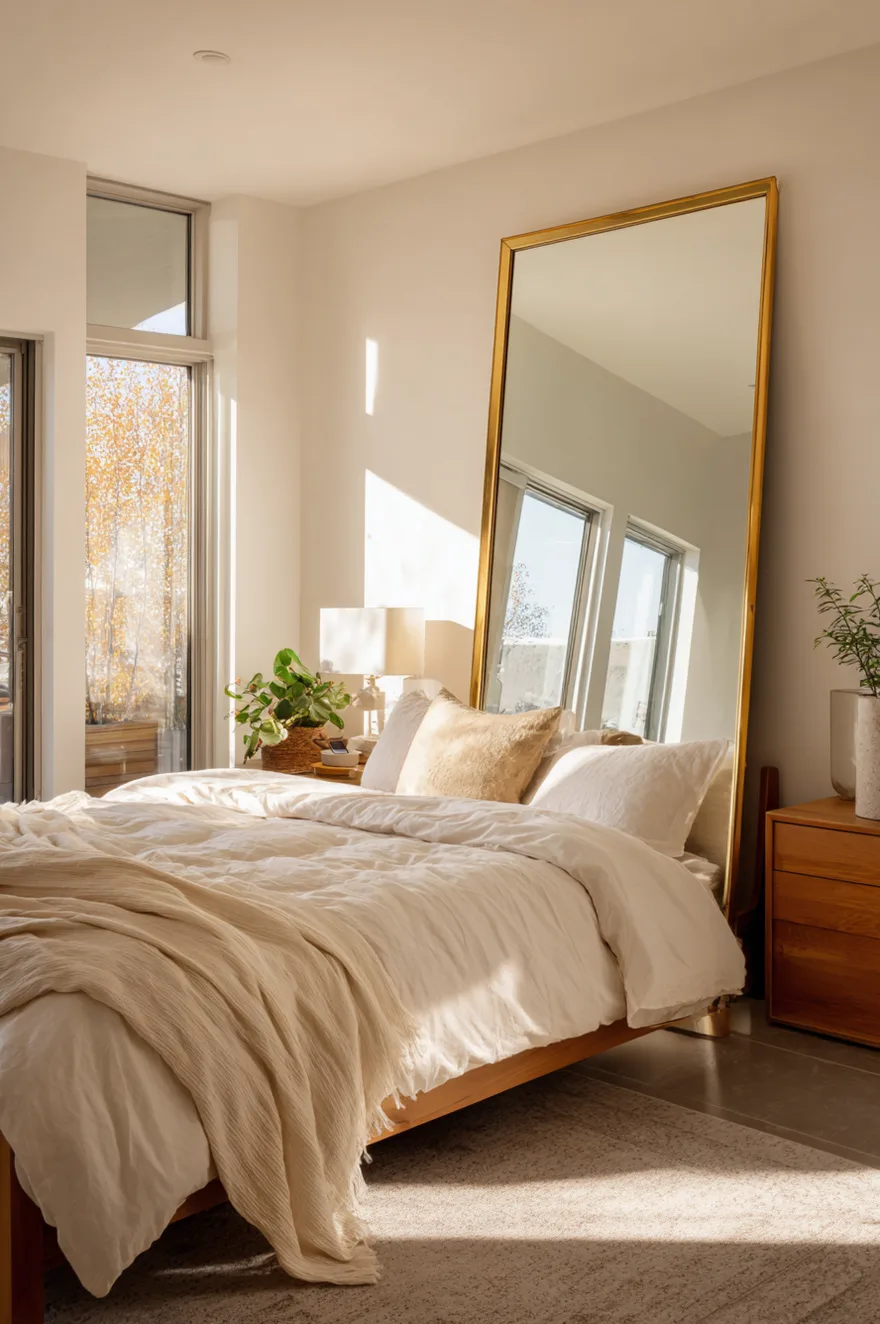
A large mirror in a master bedroom serves two functions: it increases perceived space and amplifies available light.
Position mirrors to reflect windows when possible – this doubles the apparent natural light. A floor mirror leaning against the wall opposite a window creates the effect without installation. Wall-mounted mirrors work too, but they’re permanent.
The mirror should be large enough to be functional – at least 36 inches tall, ideally 48-72 inches. Small decorative mirrors don’t expand space noticeably. They just add visual clutter.
Avoid mirrors directly facing the bed if either person is bothered by seeing themselves first thing in the morning. I’ve had clients request mirror removal after installation for exactly this reason.
The through line in all of these decisions is that the room needs to work for the specific two people using it, 50 hours a week, for the next five to ten years. That’s a very different design brief than “master bedroom that looks good in photos.”
Start with function – light, storage, sleep quality. Add beauty second. The best master bedrooms do both, but they never sacrifice the first for the second.
See you soon,
Rachel