Bathroom clutter happens when storage doesn’t match how you actually use the space. These 2026 bathroom organization ideas show you how to organize under-sink cabinets, maximize drawer space, style countertops functionally, and create storage systems that work for small bathrooms. Save these bathroom storage ideas for your next declutter.
How many products do you actually use every morning? How many live on your bathroom counter because there’s nowhere else to put them? And how often do you open the cabinet under your sink only to find a graveyard of half-empty bottles you forgot you owned?
Most bathroom organization fails because it’s designed for display, not for use. Pretty woven baskets that are too small to hold your hairdryer. Floating shelves positioned too high to reach comfortably. Drawer dividers sized for someone else’s products.
Functional bathroom organization starts with understanding your actual routine – what you use daily, what you use weekly, what you keep “just in case” but haven’t touched in six months. Then you design storage around that reality, not around what looks good on Pinterest.
I’ve spent years designing bathrooms where the organization actually works – where the person using the space can find what they need in under five seconds, where the counter stays clear because everything has a designated spot, and where maintenance takes minutes instead of hours. I’m going to walk you through 19 ways to organize your bathroom based on how you actually live, from under-sink solutions to drawer systems to countertop staging that’s both functional and clean.
Woven Baskets as Visible Storage Containers
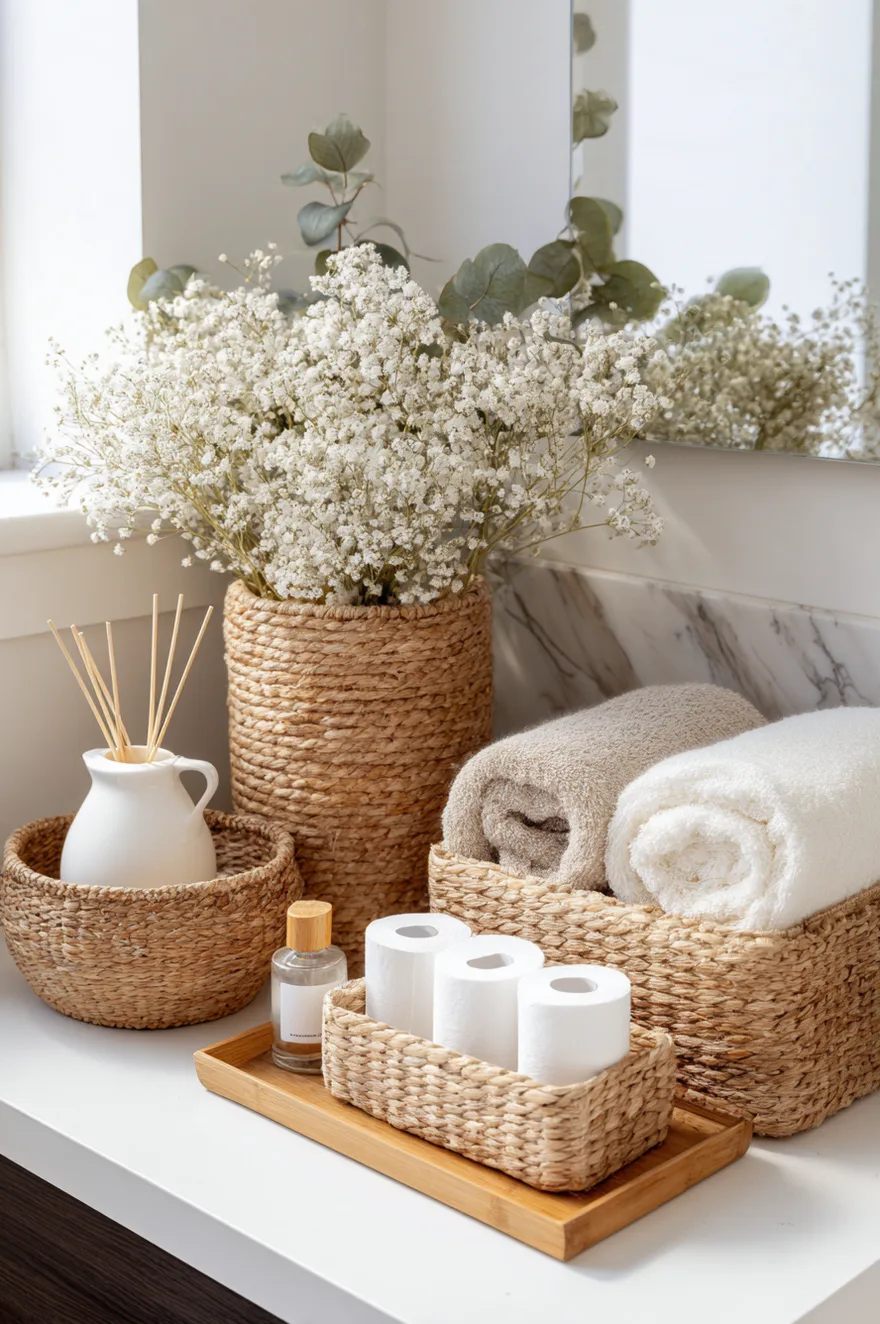
Seagrass or water hyacinth baskets in varying sizes solve the open-storage problem – they corral loose items while still looking intentional on a shelf or counter. The key is sizing the baskets to what they’re actually holding.
A 12-inch round basket holds rolled hand towels. A rectangular basket with handles holds backup toilet paper and stays accessible under the sink. Smaller 6-inch baskets hold hair ties, cotton rounds, or travel-sized products on a shelf.
Skip the baskets with lids in a bathroom – the humidity warps them and the extra step of removing a lid means you won’t maintain the system. Open baskets work because they’re easy to use.
Integrated Vanity Drawer Dividers With LED Lighting
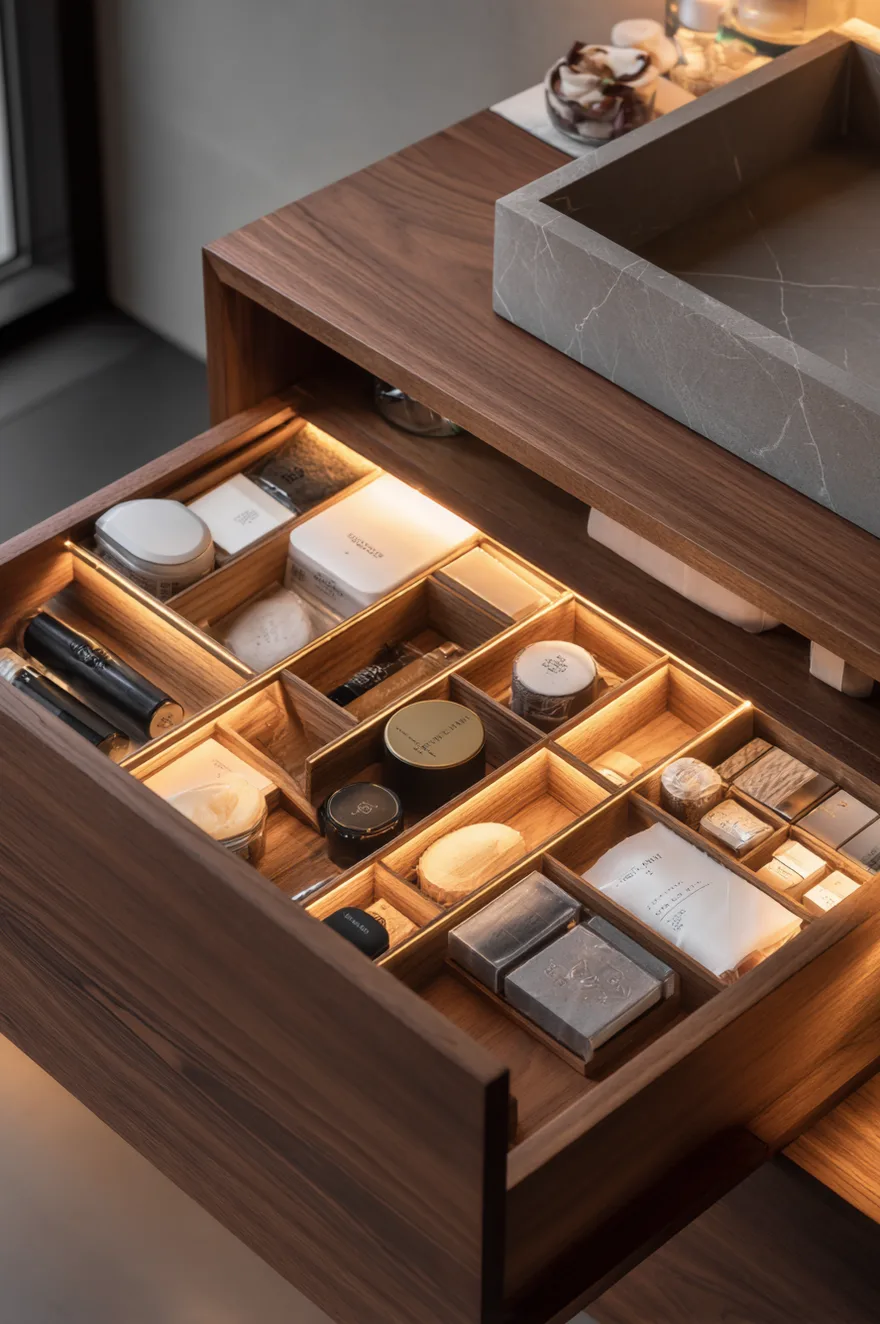
If you’re installing a new vanity, spec drawers with integrated LED lighting and custom dividers. This isn’t a retrofit – it’s a design decision that gets built in.
The LED strips mount inside the drawer along the sides or front edge. The dividers are sized to your products and built into the drawer as permanent partitions, not aftermarket inserts.
This is the most expensive organization option but also the most functional if you’re doing a full renovation anyway.
Countertop Staging With Purposeful Trays
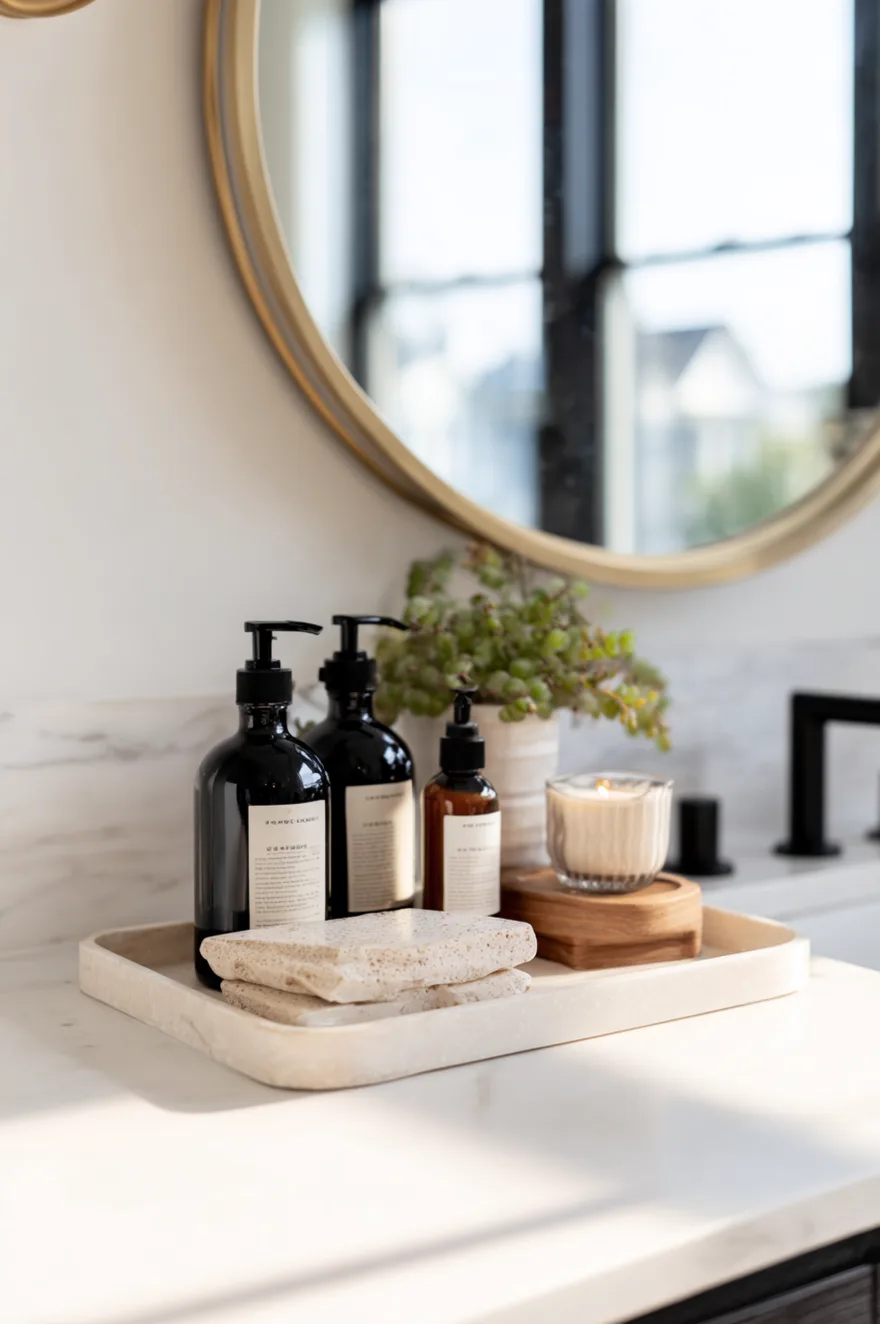
A bathroom countertop that looks organized isn’t empty – it’s staged with intention. Use trays to define zones: one for hand soap and lotion, one for daily skincare, one for styling products.
The tray material matters. Wood trays work in dry areas but warp near sinks. Marble or ceramic trays handle moisture and wipe clean. The tray should be large enough to hold what you use daily but small enough that it doesn’t dominate the counter.
Limit yourself to one or two trays total. More than that and the counter reads as cluttered regardless of how organized the items within each tray actually are.
Under-Sink Cabinet Organization With Pull-Out Bins
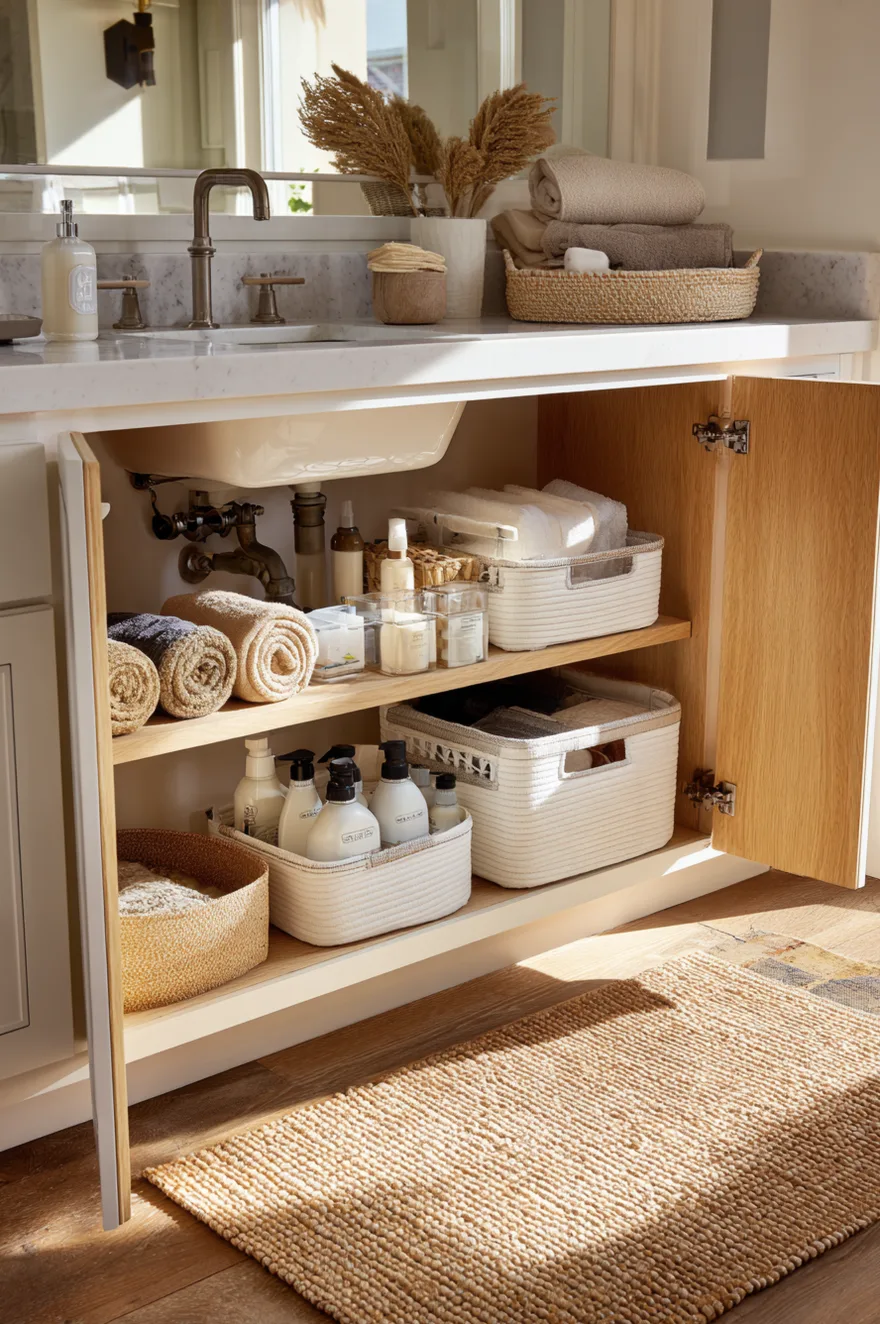
The cabinet under the sink is wasted space in most bathrooms because people store items directly on the cabinet floor where they’re hard to see and harder to reach. Pull-out bins or sliding drawers solve this.
Install two-tiered sliding organizers that pull forward so you can access items at the back without removing everything in front. Use white plastic bins with handles for cleaning supplies, hair tools, and backup products.
Group by category, not by size. All skincare in one bin. All hair products in another. Cleaning supplies in a third. Label the bins if you’re sharing the bathroom with someone else.
Open Shelving With Brass Brackets for Towel Display
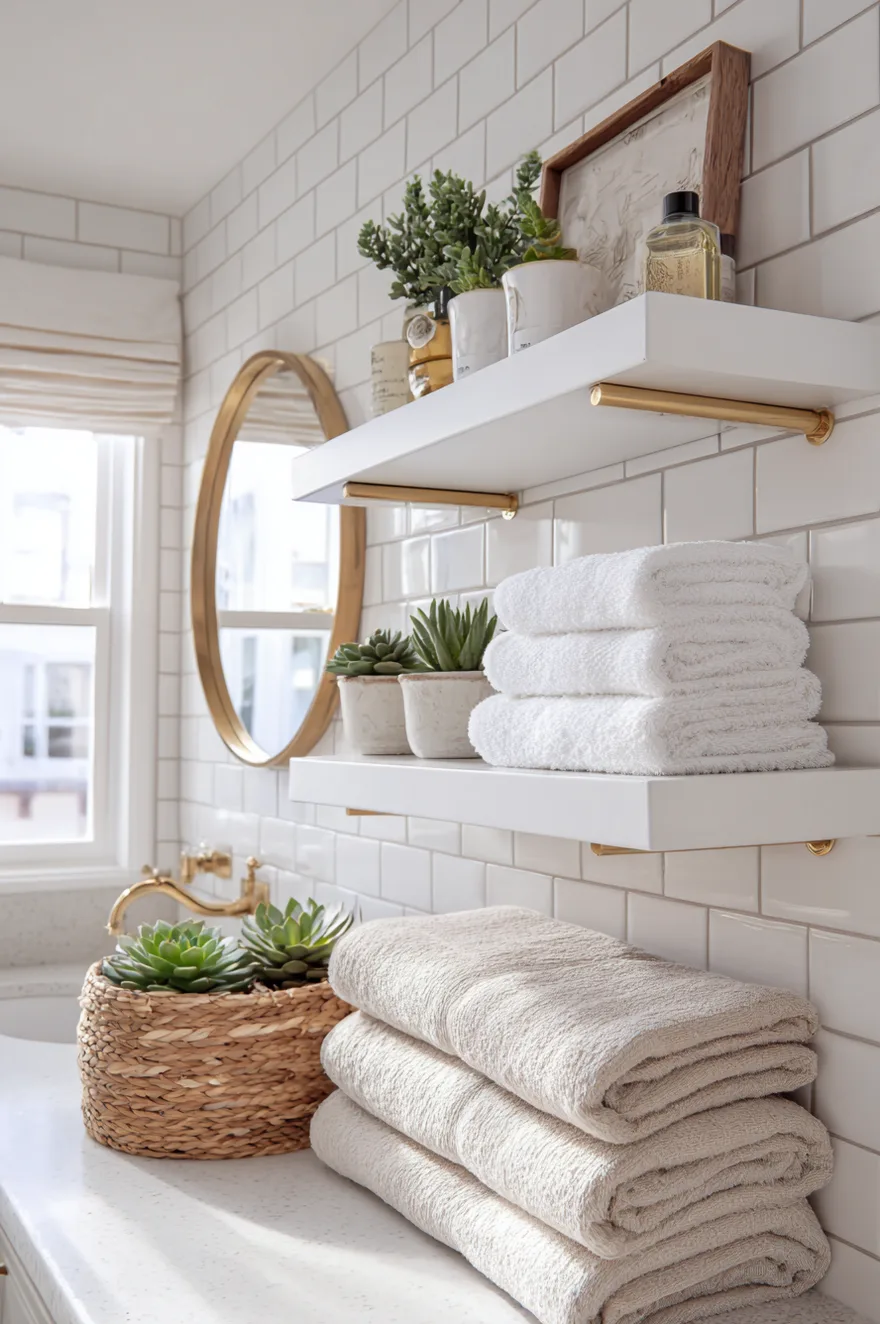
Wall-mounted shelves with brass or gold brackets create functional storage that doubles as display. The shelves should be deep enough for rolled towels – 10 to 12 inches minimum.
Stack towels in sets of three, rolled and standing upright, or folded and stacked horizontally. Add a few decorative elements – a small plant, a wood-framed mirror, a woven basket – but the towels are the primary visual.
Keep the shelves within arm’s reach. A shelf mounted above head height is decorative, not functional.
Floating Shelves for Styling Tools and Accessories
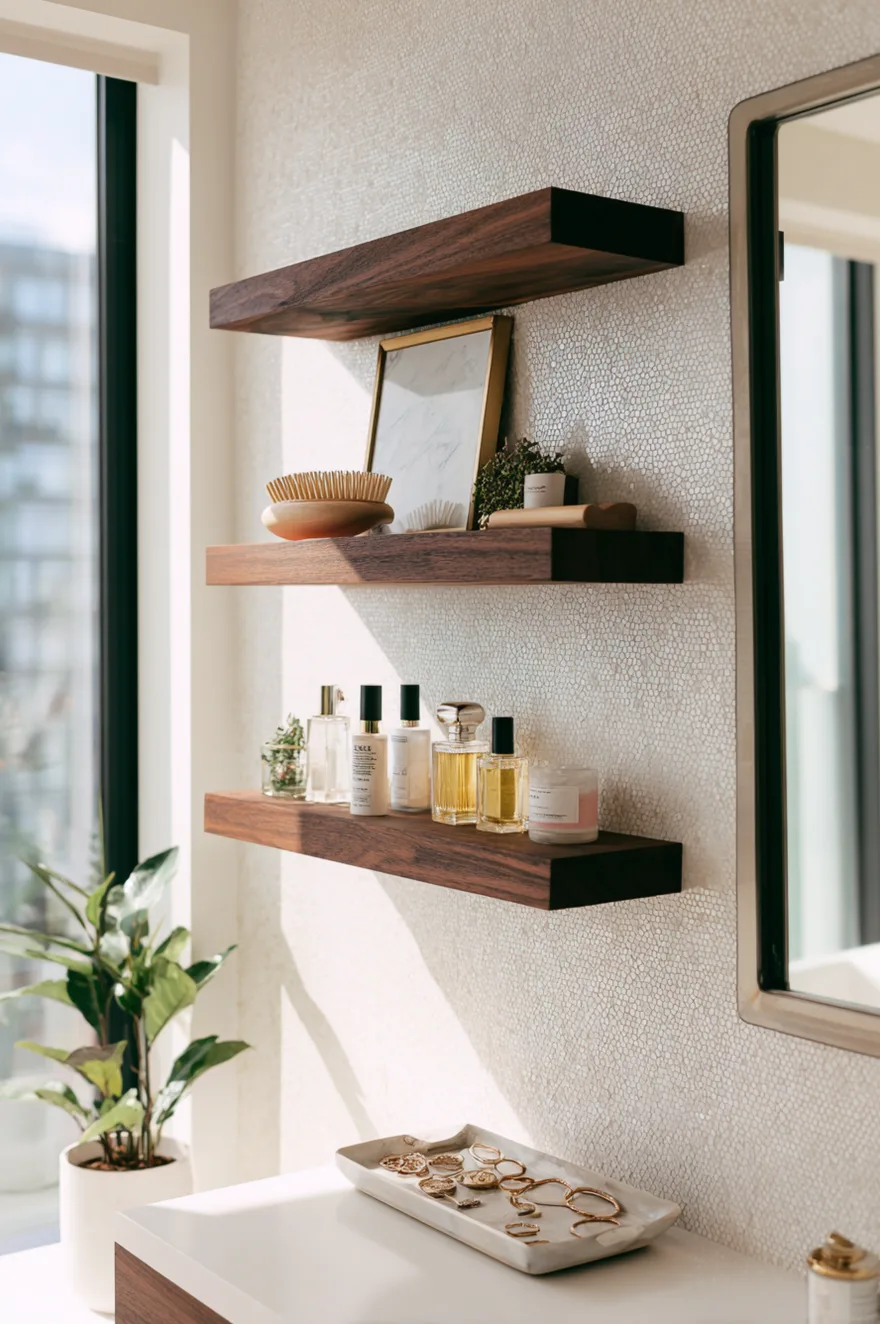
Dark wood floating shelves mounted above the counter or next to the mirror create landing spots for daily-use items – hairbrushes, styling tools, perfume, watches.
The shelves should be shallow – 6 to 8 inches deep – so items don’t get lost at the back. Mount them with concealed brackets and use a level. An unlevel shelf is immediately obvious when you place objects on it.
Limit what you display. If the shelf holds more than five or six items, it reads as cluttered.
Built-In Recessed Shelving With LED Lighting
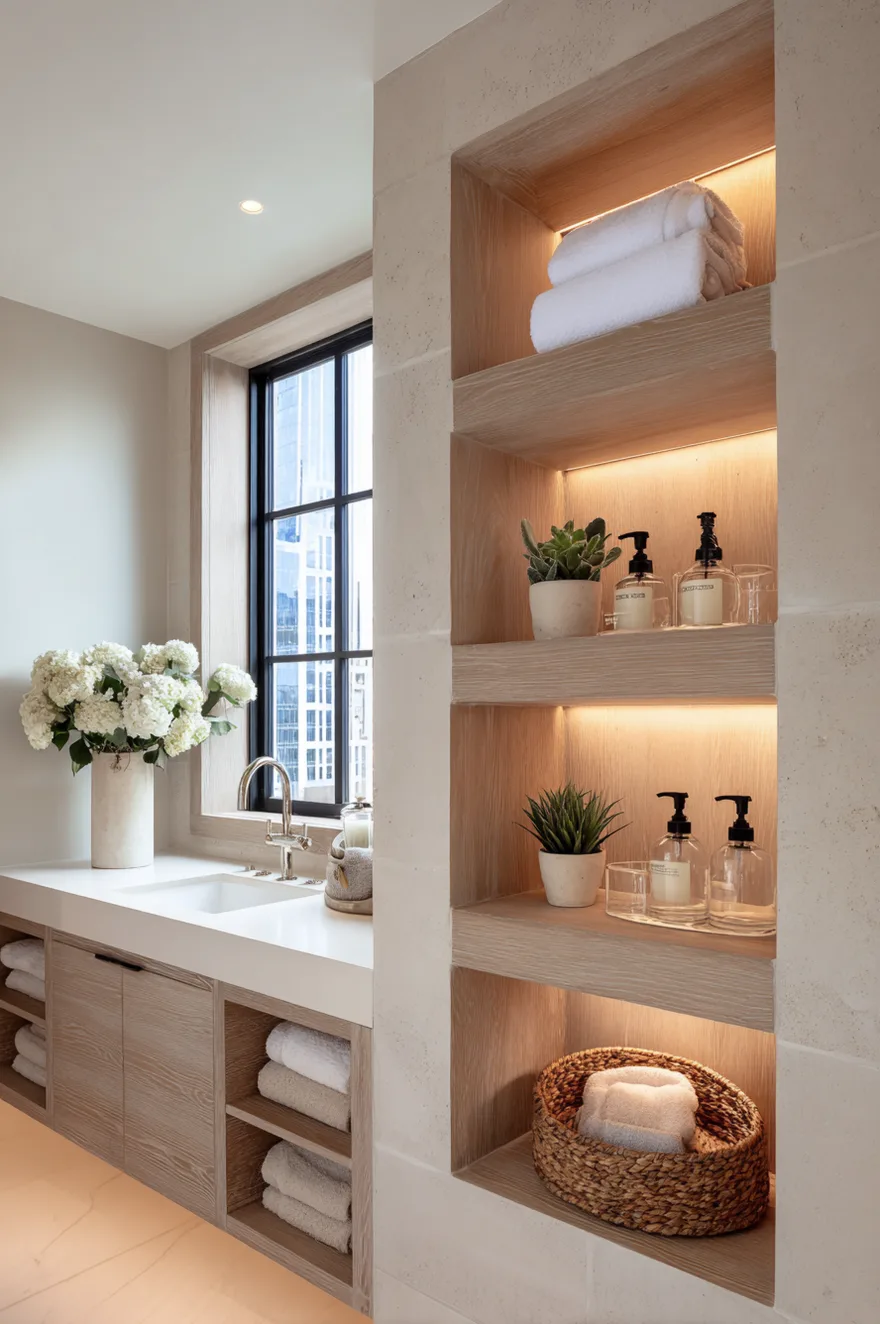
If you’re renovating, recessed shelving built into the wall between studs creates storage without taking up floor or counter space. Add LED strip lighting on each shelf for visibility and ambiance.
The shelves work best at 8 to 10 inches deep – deep enough for standard product bottles but shallow enough that items don’t disappear. Space shelves 10 to 12 inches apart vertically.
Use the lit shelves for items you want visible and accessible – clean towels, frequently used products, decorative glass jars. The lighting makes everything look more intentional.
Drawer Dividers Sized for Actual Products
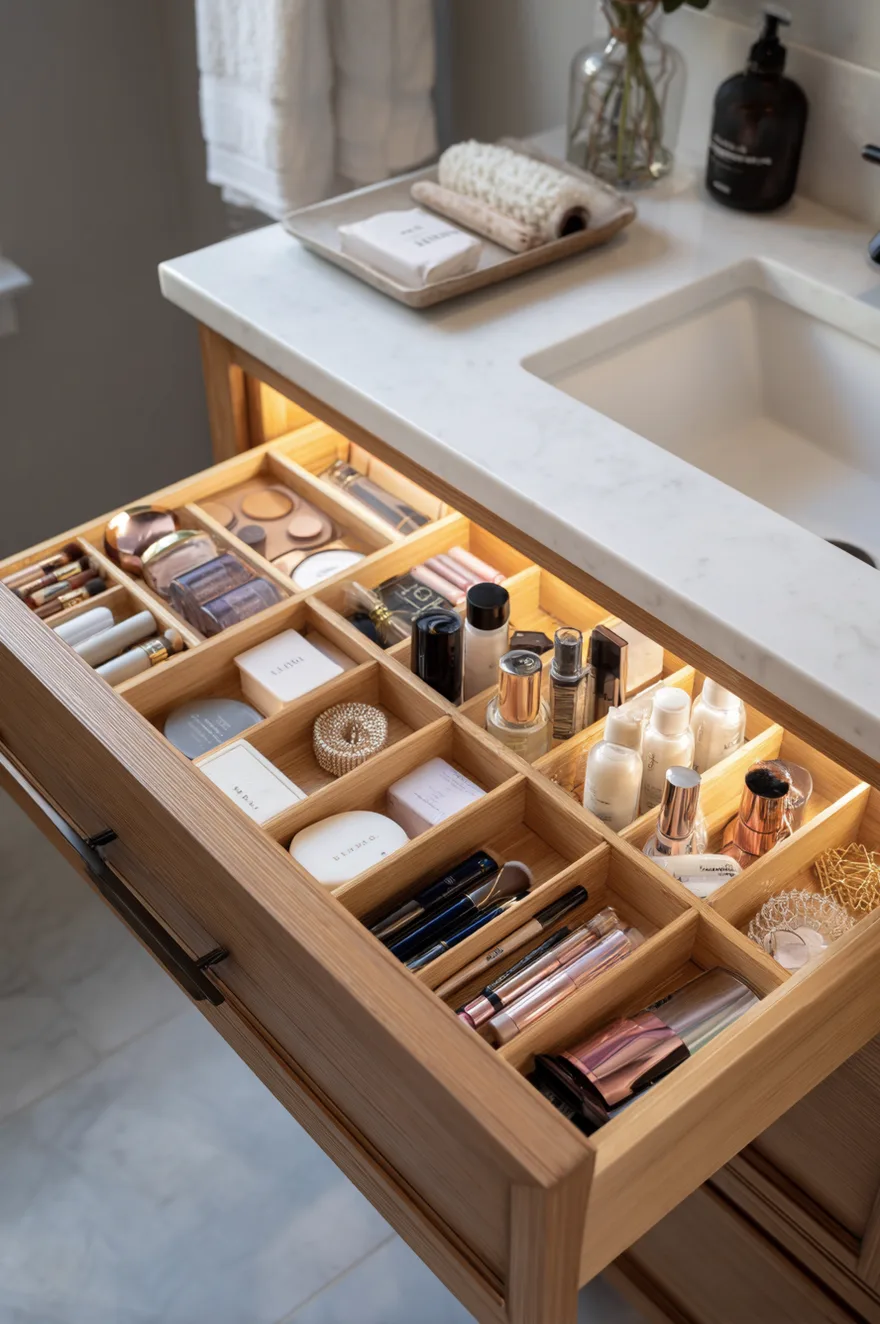
Most bathroom drawer dividers fail because they’re designed for a generic “bathroom” and not for your specific products. Custom dividers sized to your tallest bottle, widest palette, and longest tool make all the difference.
Measure before you buy or build. If your tallest skincare bottle is 7 inches, your divider walls need to be at least 3 inches high to keep it from tipping. If your hairdryer is 10 inches long, the compartment needs to be 11 inches.
Use bamboo, acrylic, or expandable dividers that adjust to fit your drawer dimensions. Avoid foam or fabric dividers that shift every time you open the drawer.
Under-Sink Lazy Susans for Product Access
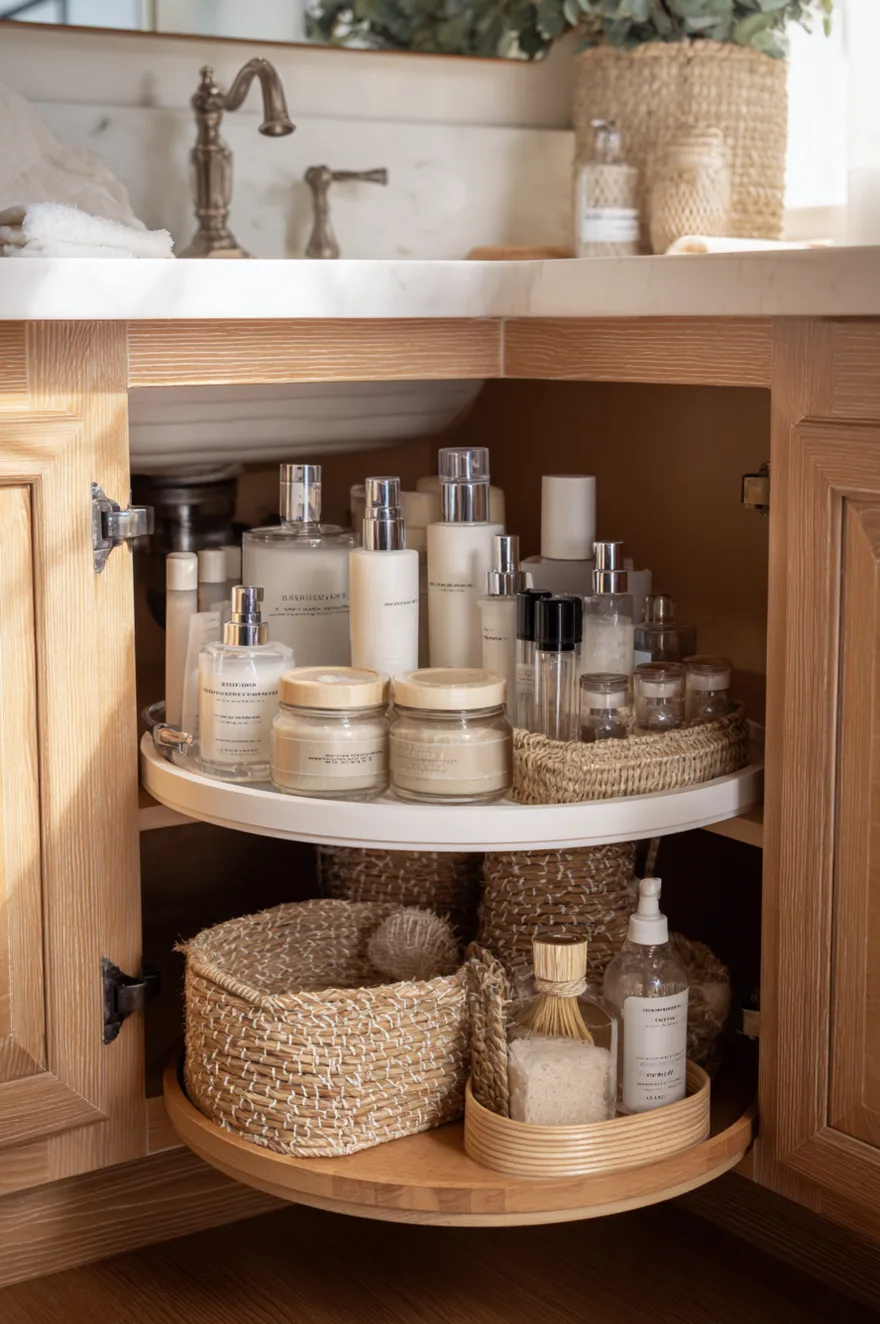
Lazy Susans – rotating trays – maximize corner space and make products at the back of a deep cabinet accessible without unpacking the entire shelf. Use two-tiered lazy Susans to double the storage capacity.
Group products by type on each lazy Susan. All hair products on one. All skincare on another. When you need something, you spin the tray instead of digging.
Stick to 10 to 12-inch diameter lazy Susans in a standard bathroom cabinet. Larger ones don’t leave enough clearance for the plumbing.
Tiered Counter Organizers for Vertical Space
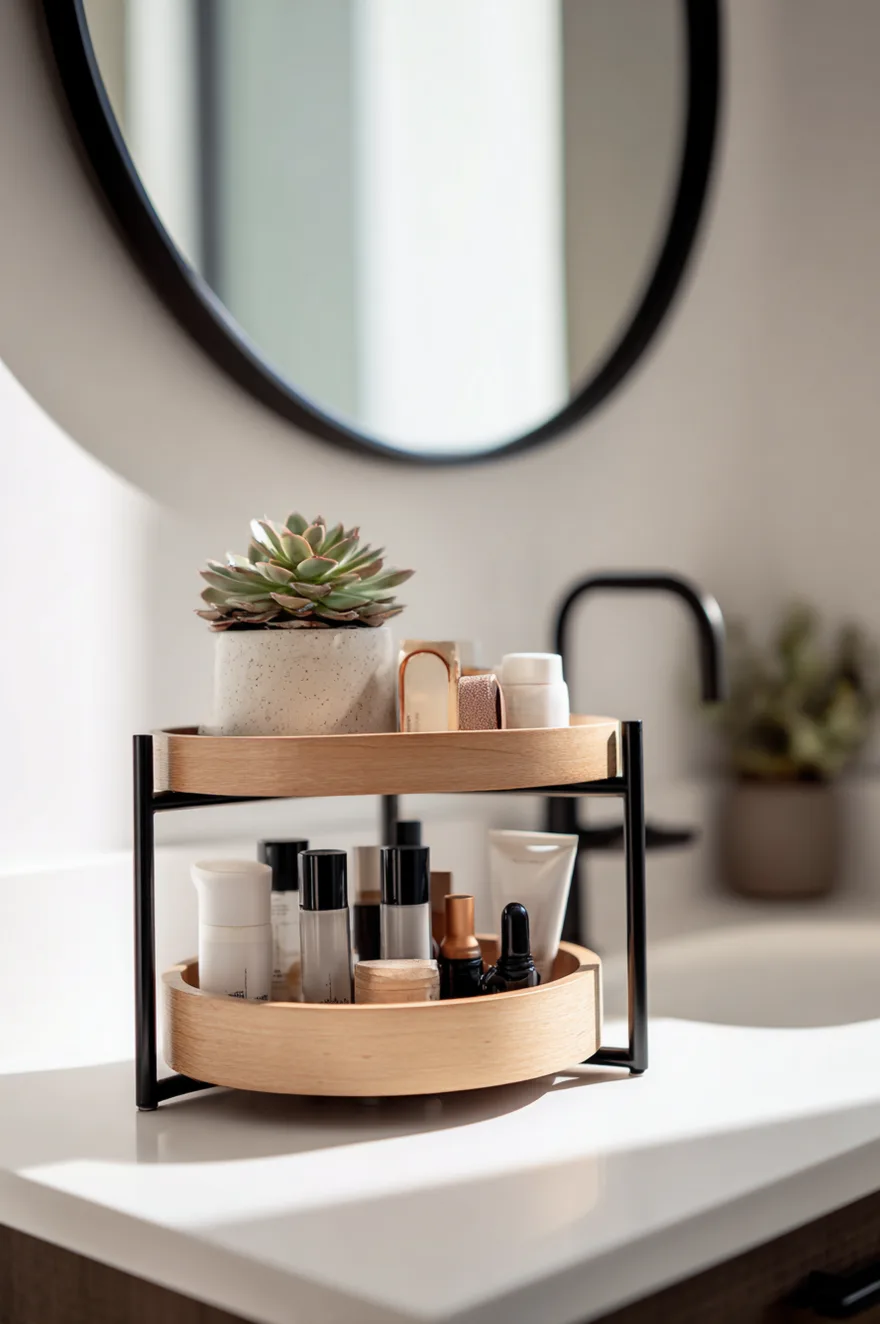
A two or three-tiered organizer on the bathroom counter uses vertical space and keeps frequently used items within reach without spreading them across the entire counter.
Use wood and metal tiered stands for a clean look. Place daily skincare on the bottom tier, smaller items like lip balm or jewelry on the middle tier, and a small plant or candle on the top.
The organizer should be proportional to your counter – a massive three-tiered stand on a 24-inch vanity overwhelms the space.
Clear Acrylic Organizers for Visibility
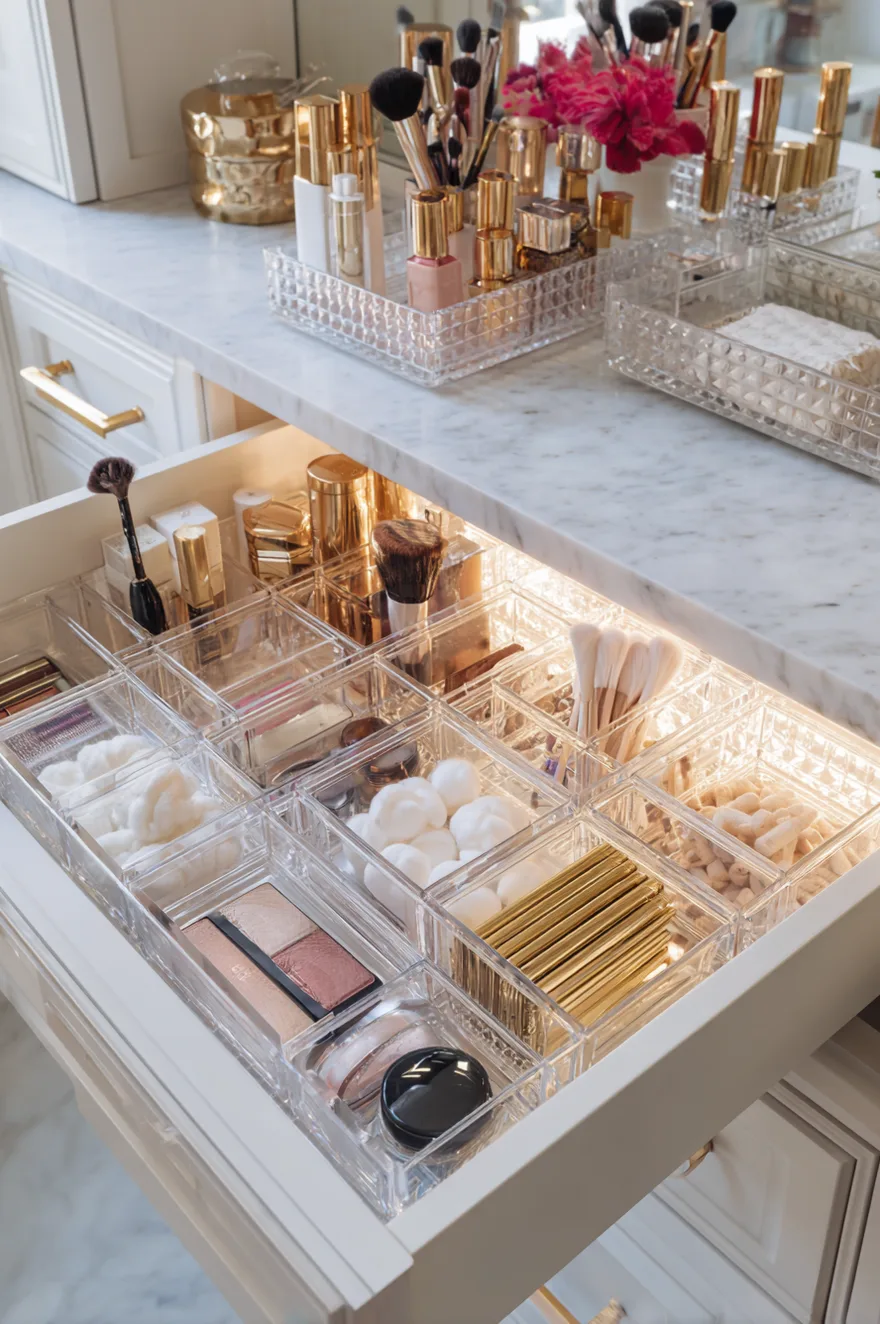
Clear acrylic drawer organizers and countertop holders let you see exactly what’s inside without opening anything. This works especially well for makeup, cotton products, and small tools.
Use stackable acrylic drawers for items you access less frequently. Use open-top acrylic trays for daily items. The visibility means you won’t forget what you have and re-buy duplicates.
Clean acrylic weekly – it shows fingerprints and water spots. A quick wipe with glass cleaner keeps it looking intentional.
Wall-Mounted Shelves Above the Toilet
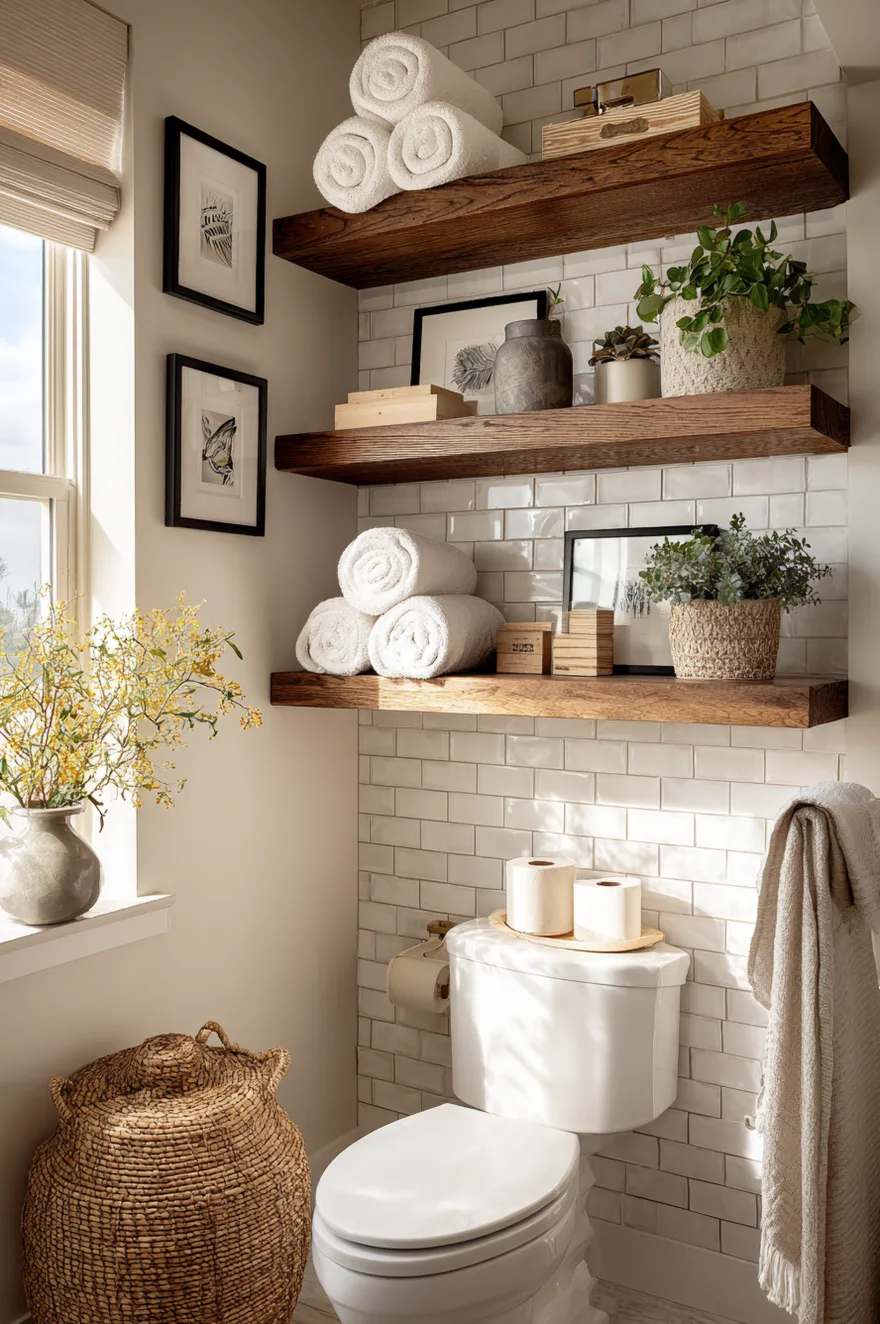
The wall above the toilet is prime real estate for storage. Install two or three floating shelves and use them for backup towels, decorative baskets, or extra toilet paper.
Keep the bottom shelf at least 24 inches above the toilet tank so you have clearance to reach behind the toilet if needed. Space shelves 10 to 14 inches apart.
Style the shelves with a mix of functional and decorative items. Rolled towels, a small plant, a woven basket with backup products.
Vertical Storage Tower Next to the Vanity
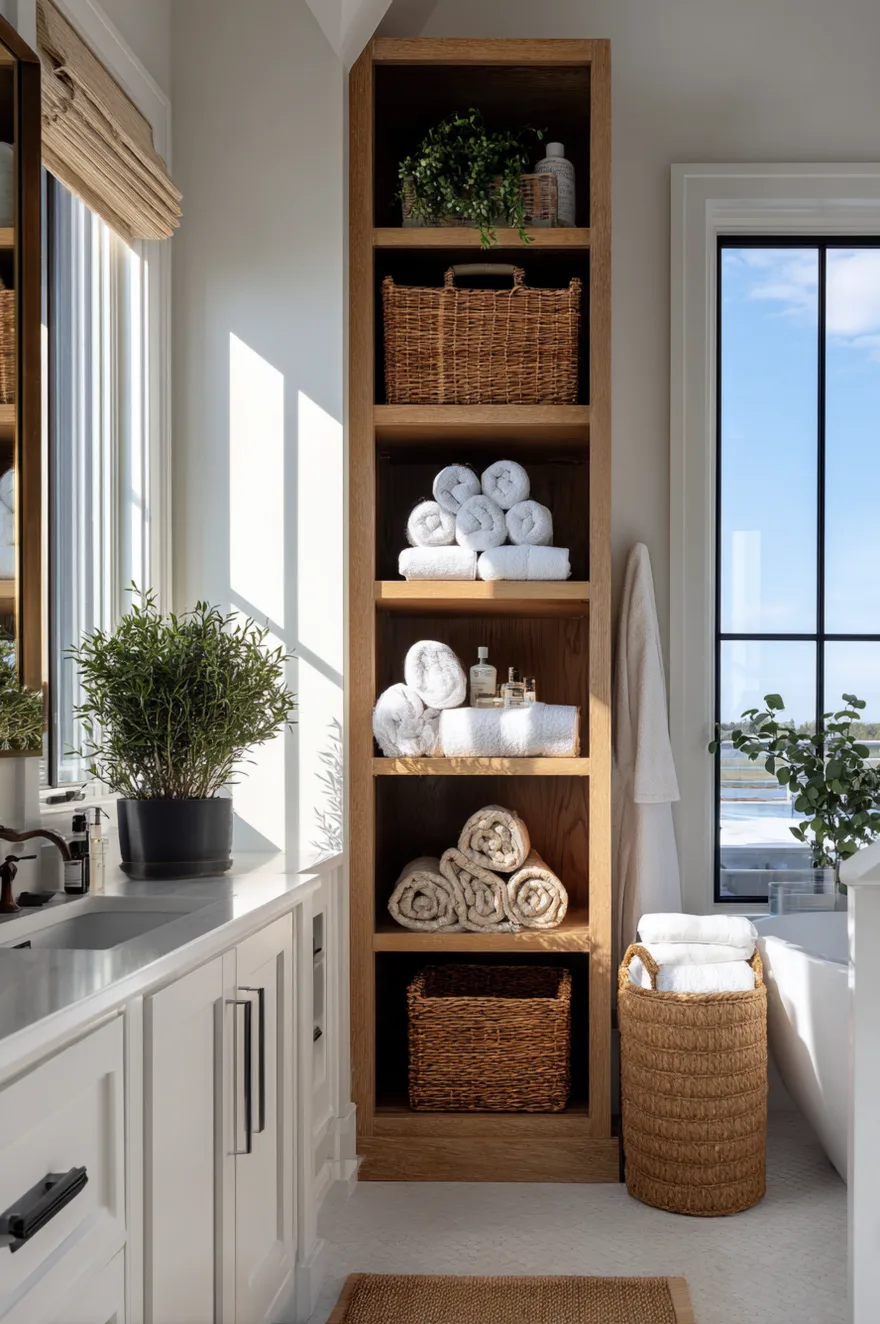
A narrow floor-to-ceiling storage tower – 12 to 18 inches wide – fits beside most vanities and provides cabinet and drawer storage without a custom built-in.
Look for towers with a mix of open shelves and closed cabinets. Use open shelves for display and frequently used items. Use cabinets for backup stock and cleaning supplies.
Mount the tower to the wall studs if possible. Freestanding towers can tip if loaded unevenly.
Medicine Cabinet Organization With Magnetic Strips
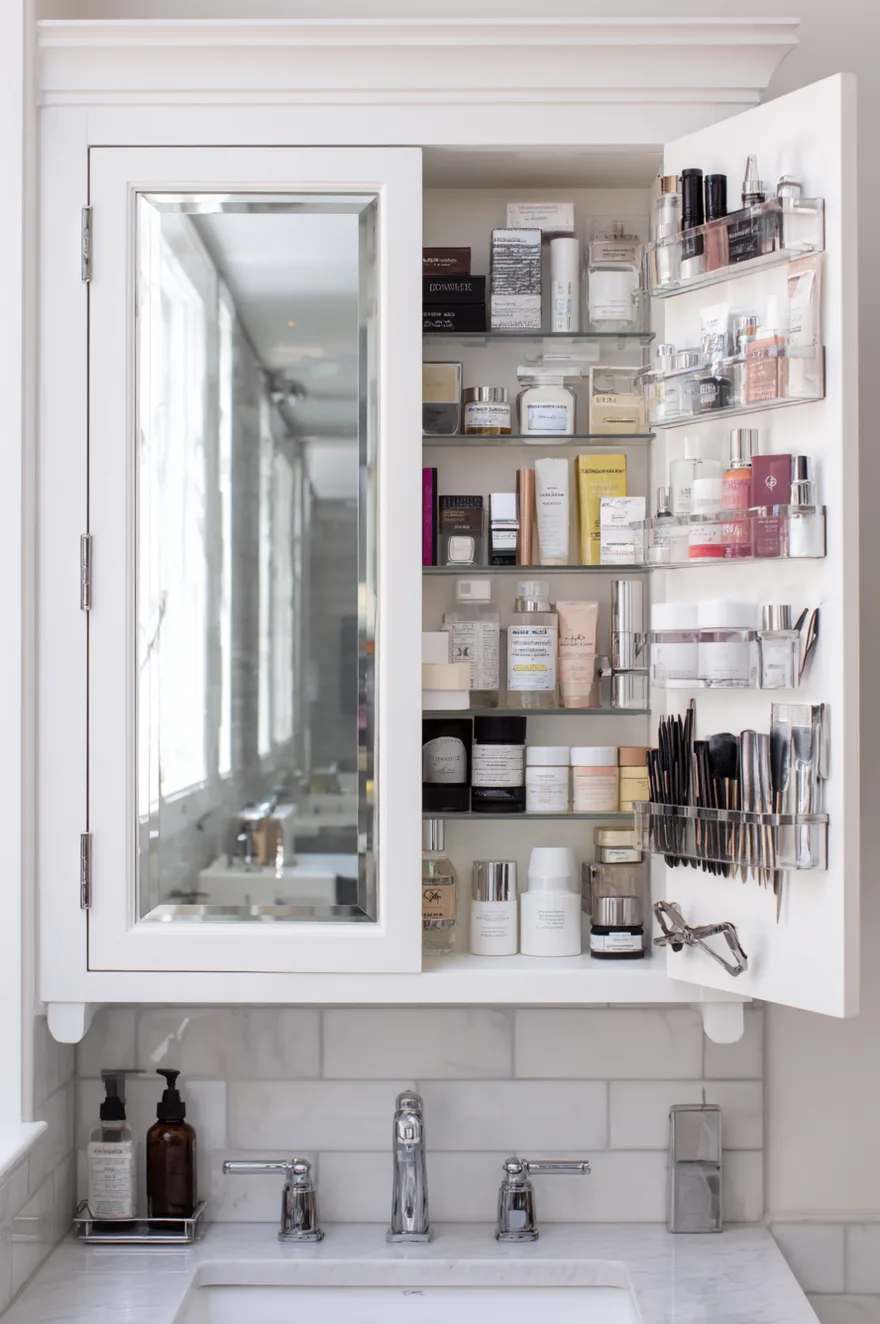
The inside of a medicine cabinet door is wasted space. Mount magnetic strips to hold metal tools – tweezers, nail clippers, scissors, bobby pins.
Use small adhesive magnetic strips rated for the weight of the items. Test the hold before loading it fully – cheap magnetic strips fail and everything falls into the sink.
This works best for items you use weekly, not daily. Daily items should live in a drawer or on the counter for easier access.
Drawer Lighting for Early Morning Visibility
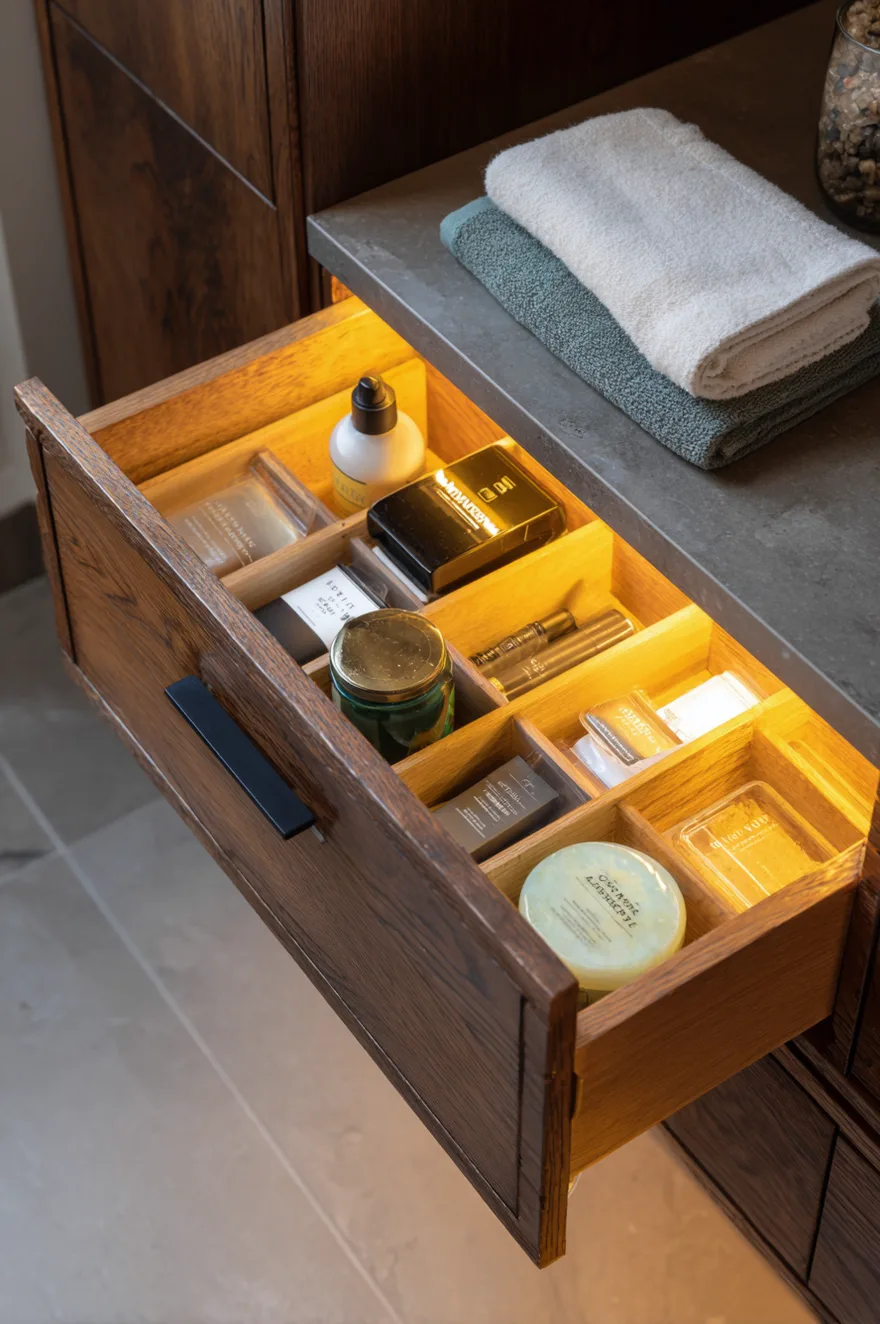
LED strip lighting inside deep drawers makes it possible to see what you’re grabbing at 6 a.m. without turning on overhead lights that wake everyone else up.
Use battery-powered LED strips with motion sensors. When you open the drawer, the light turns on. When you close it, the light turns off.
Mount the strip at the front top edge of the drawer so it illuminates the entire contents. Side-mounted strips create shadows.
Bathroom Closet Organization With Labeled Bins
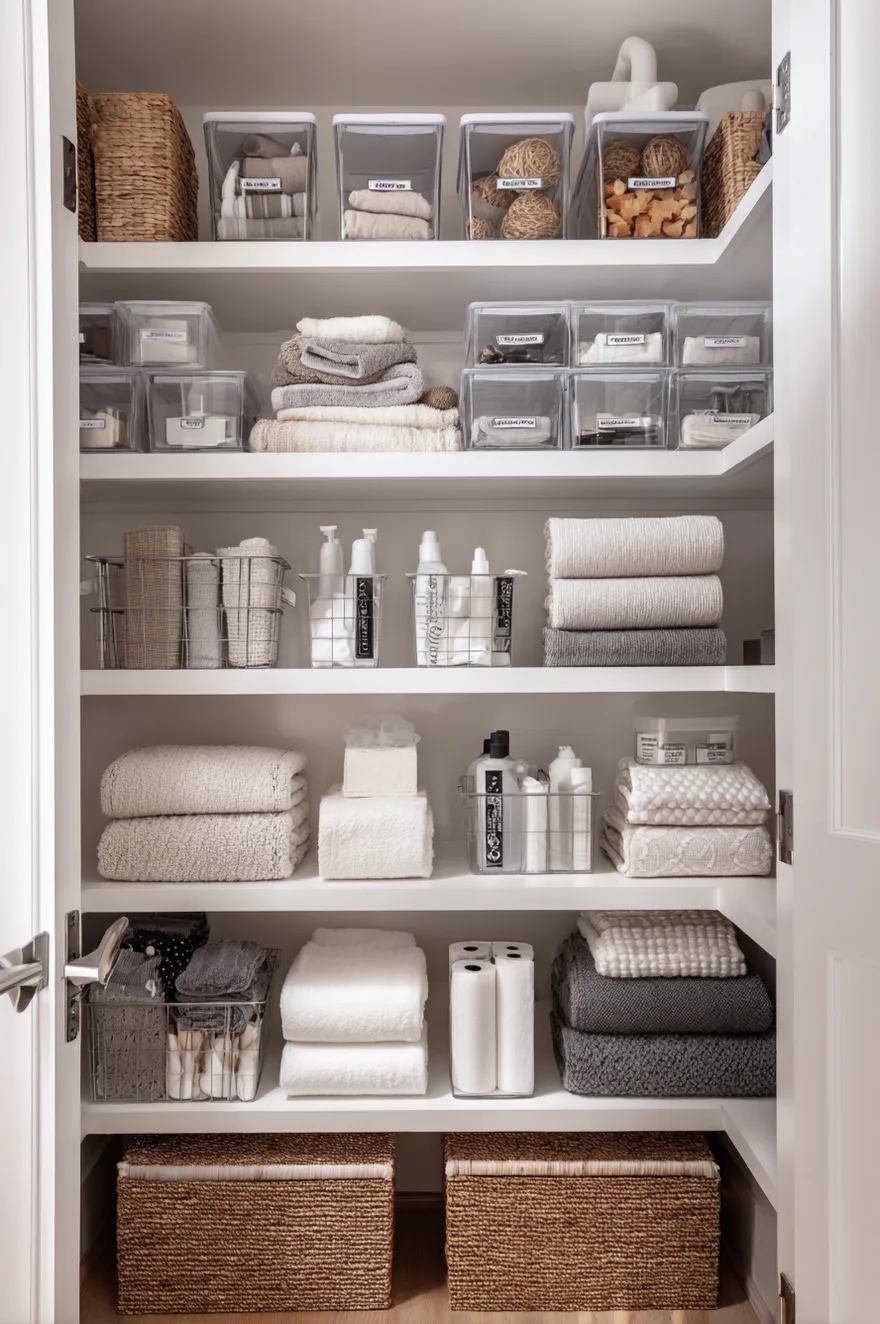
If you have a linen closet in or near the bathroom, use it for bulk storage and keep only active products in the bathroom itself. Label bins by category so anyone in the house can find what they need.
Stack bins vertically – towels on one shelf, toilet paper on another, cleaning supplies on the bottom. Use clear bins for items you need to see, opaque bins for things you access less frequently.
Measure your shelves before buying bins. A bin that’s too wide won’t slide in, a bin that’s too narrow wastes space.
Countertop Canisters for Cotton Products
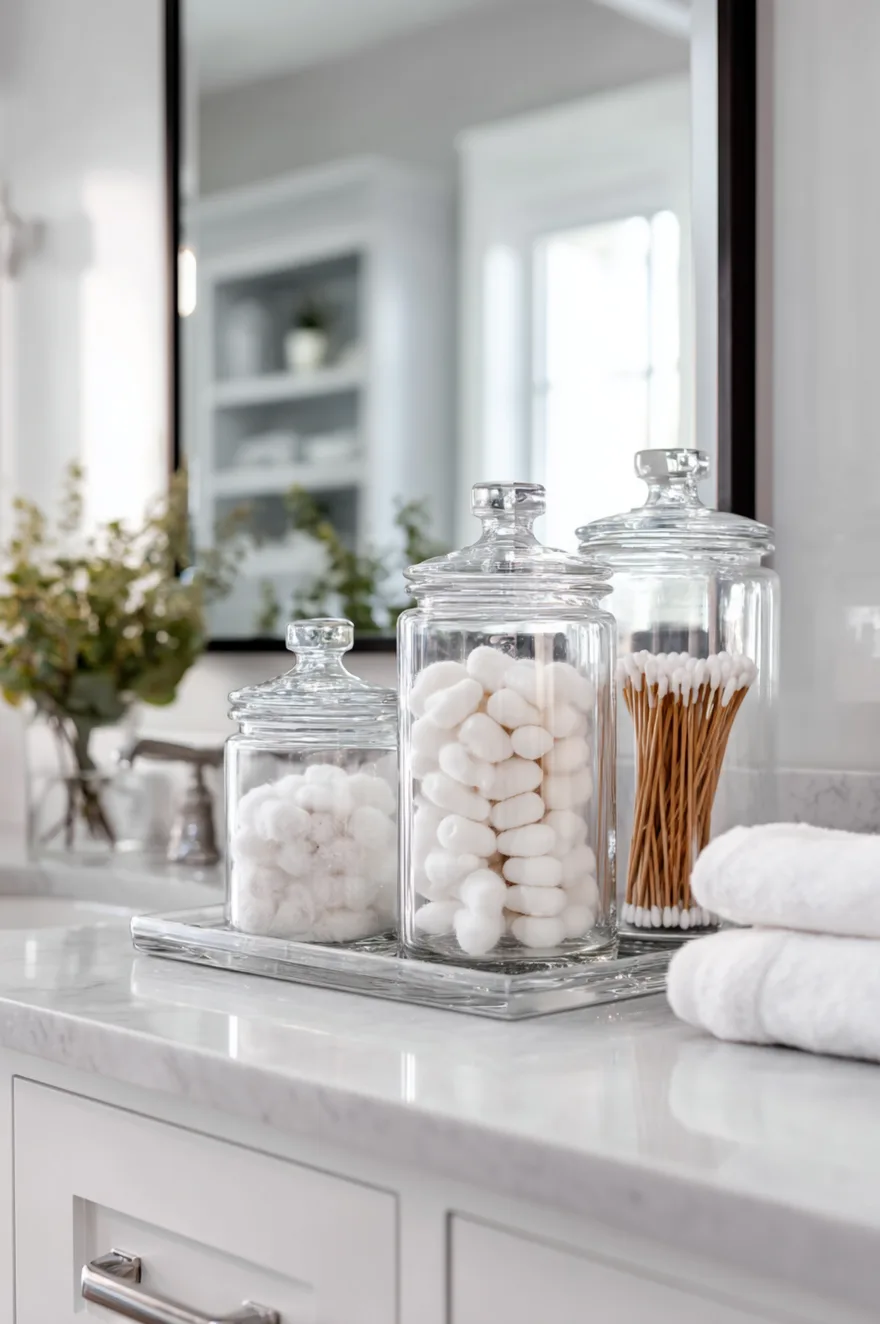
Glass or ceramic canisters with lids keep cotton rounds, cotton swabs, and makeup sponges accessible but contained. The lid keeps dust out, the clear glass lets you see when you’re running low.
Use canisters that are 4 to 6 inches tall – tall enough to hold products, short enough to fit under wall-mounted cabinets or mirrors. Group canisters together on a small tray so they read as a set.
Refill weekly. Empty canisters or canisters with three cotton rounds rattling around look neglected.
Open Cubby Storage Below Floating Vanity
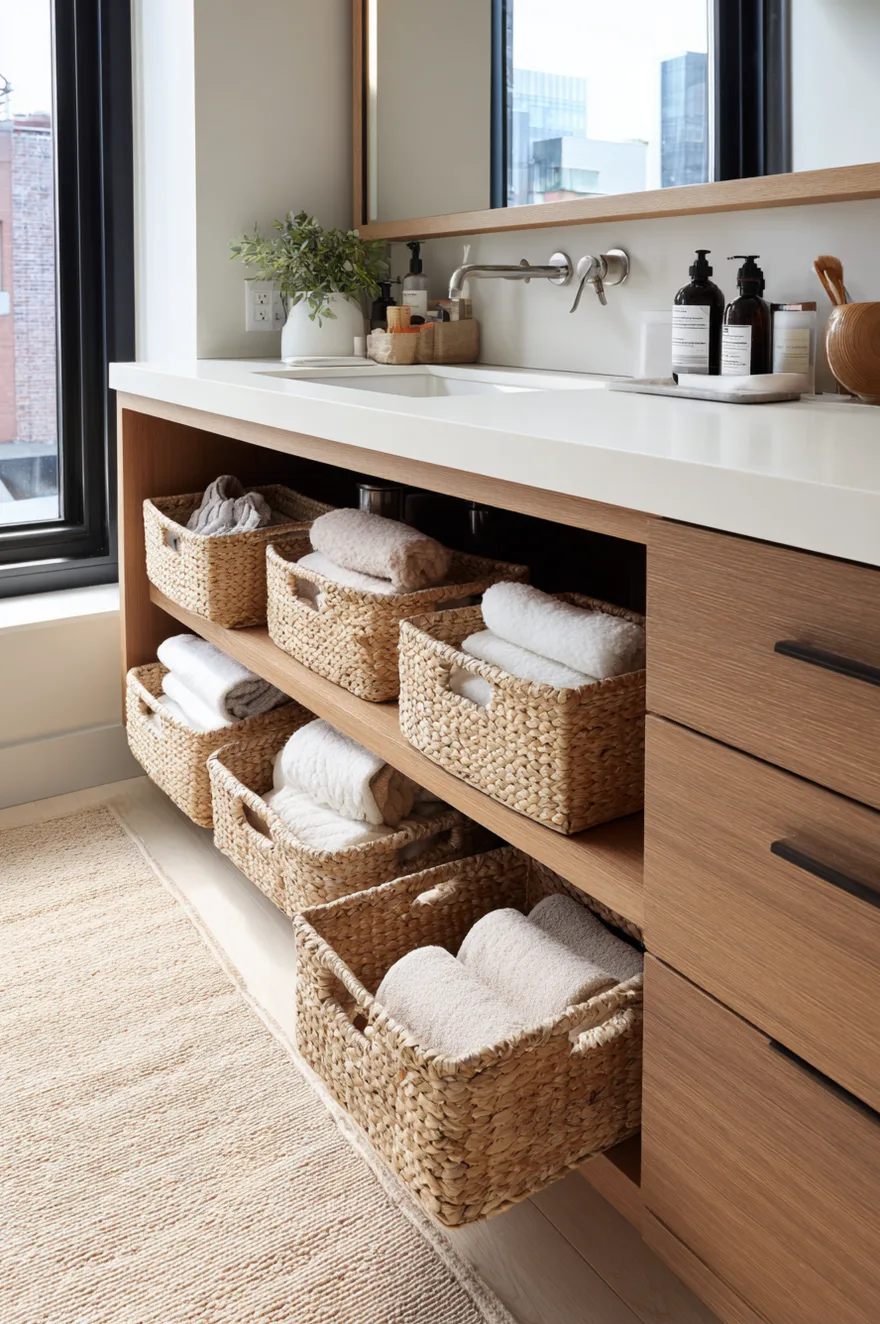
A floating vanity with open cubbies underneath provides storage that’s accessible without bending down and opening a door. Use the cubbies for woven baskets holding clean towels or frequently used products.
Size the cubbies to the baskets, not the other way around. Measure your basket first, then spec the cubby dimensions with 1 inch of clearance on all sides so the basket slides in and out easily.
Add LED strip lighting under the vanity to illuminate the cubbies. This makes the space feel less like a dark hole and more like intentional storage.
Rotating Spice Rack for Small Product Storage
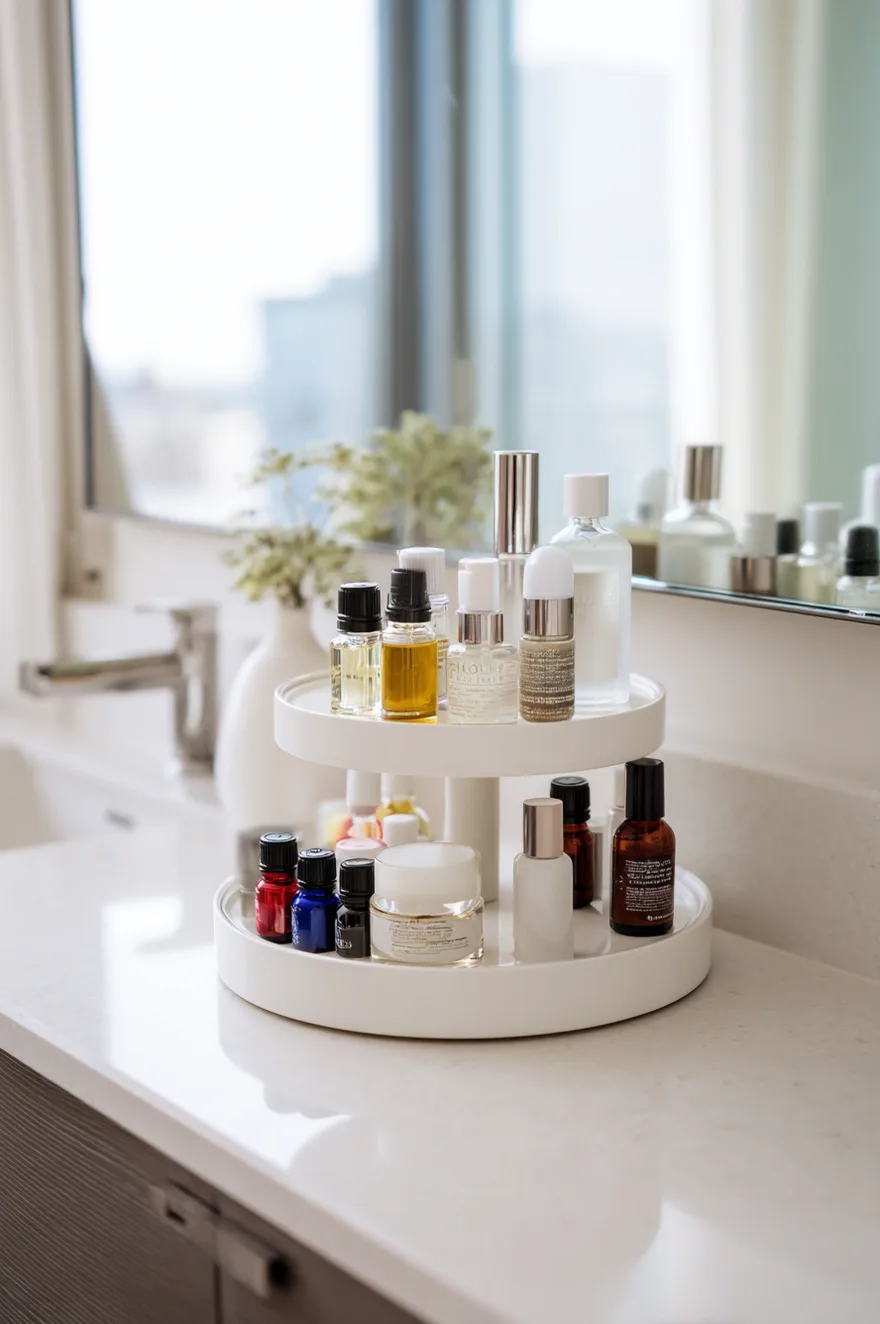
A countertop lazy Susan or rotating spice rack designed for kitchens works surprisingly well in a bathroom for small skincare bottles, essential oils, or nail polish.
The rotation makes everything accessible without digging. The compact footprint uses less counter space than spreading the same items across a tray.
Limit the height – a two-tiered rotating organizer is plenty. Three tiers and taller items on the top tier become unstable.
Bringing It All Together: Your Organized Bathroom
So there you have it – 19 bathroom organization ideas that solve real storage problems instead of just looking good in photos. The best systems are the ones you’ll actually use, which means they need to match how you move through your morning routine, not how someone else does.
Start by clearing everything out and sorting by frequency of use. Daily items live on the counter or in the top drawer. Weekly items go in lower drawers or on shelves. Rarely-used items go in cabinets or closets. Once you know what you’re storing, you can choose the right organizers.
Which organization idea is going to make the biggest difference in your bathroom? Let me know in the comments – I’m always curious what storage challenges people are trying to solve.
See you soon,
Rachel