Most boys bedroom designs for ages 11-12 fail because they prioritize aesthetics over function. These bedroom ideas for boys address real spatial challenges – small room layouts, shared bedroom configurations, twin bed placement, and bunk bed safety. From blue and green color psychology to space-efficient storage systems, these design solutions work with how children actually use their rooms.
I spent six months working with a family whose 11-year-old’s bedroom had been redone three times in four years.
Each redesign cost money and created disruption, but none of them addressed the core issue – the room wasn’t designed around how he actually used the space. His toys ended up on the floor because storage was inaccessible. His desk faced a wall with no natural light. The themed decor he’d loved at seven felt babyish at eleven.
That project taught me something fundamental about boys bedroom design for this age group. The room needs to accommodate rapid developmental changes, support actual daily routines, and provide clear zones for sleeping, studying, and play. I’m going to walk you through the boys bedroom ideas that actually function – from space themes that scale with maturity to bunk bed configurations that maximize square footage to storage systems that children can maintain themselves. These aren’t just pretty rooms. They’re designed to work.
Shared Boys Bedroom With Storage
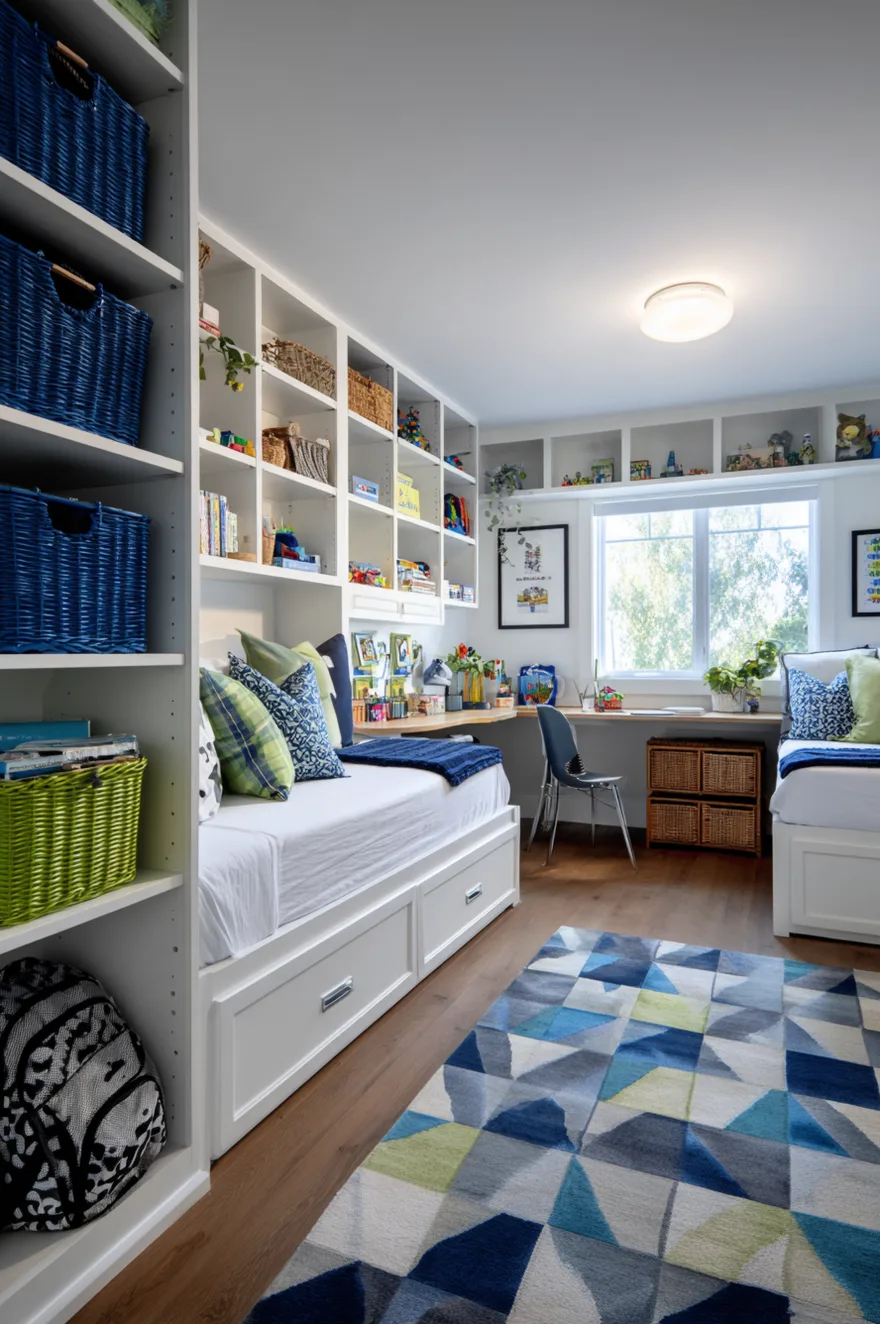
Shared rooms accumulate possessions at twice the rate of single-occupant rooms – storage capacity must scale accordingly or the space becomes non-functional.
The organizational strategy is clear attribution and easy maintenance. Color-coded bins – one child gets blue, the other gets green. Labeled containers at child height. Hooks for daily-use items like backpacks and jackets. The system must be intuitive enough that children can maintain it independently or it won’t be maintained at all.
I specify a combination of closed and open storage. Closed cabinets or drawers for clothing and less-used items. Open cubbies with bins for toys and books – visibility increases usage. Under-bed storage for seasonal items or backup supplies. A central storage unit between beds works well for shared books and games while providing symmetric nightstand function. The goal is making organization the path of least resistance.
Navy Boys Bedroom For A Classic Look
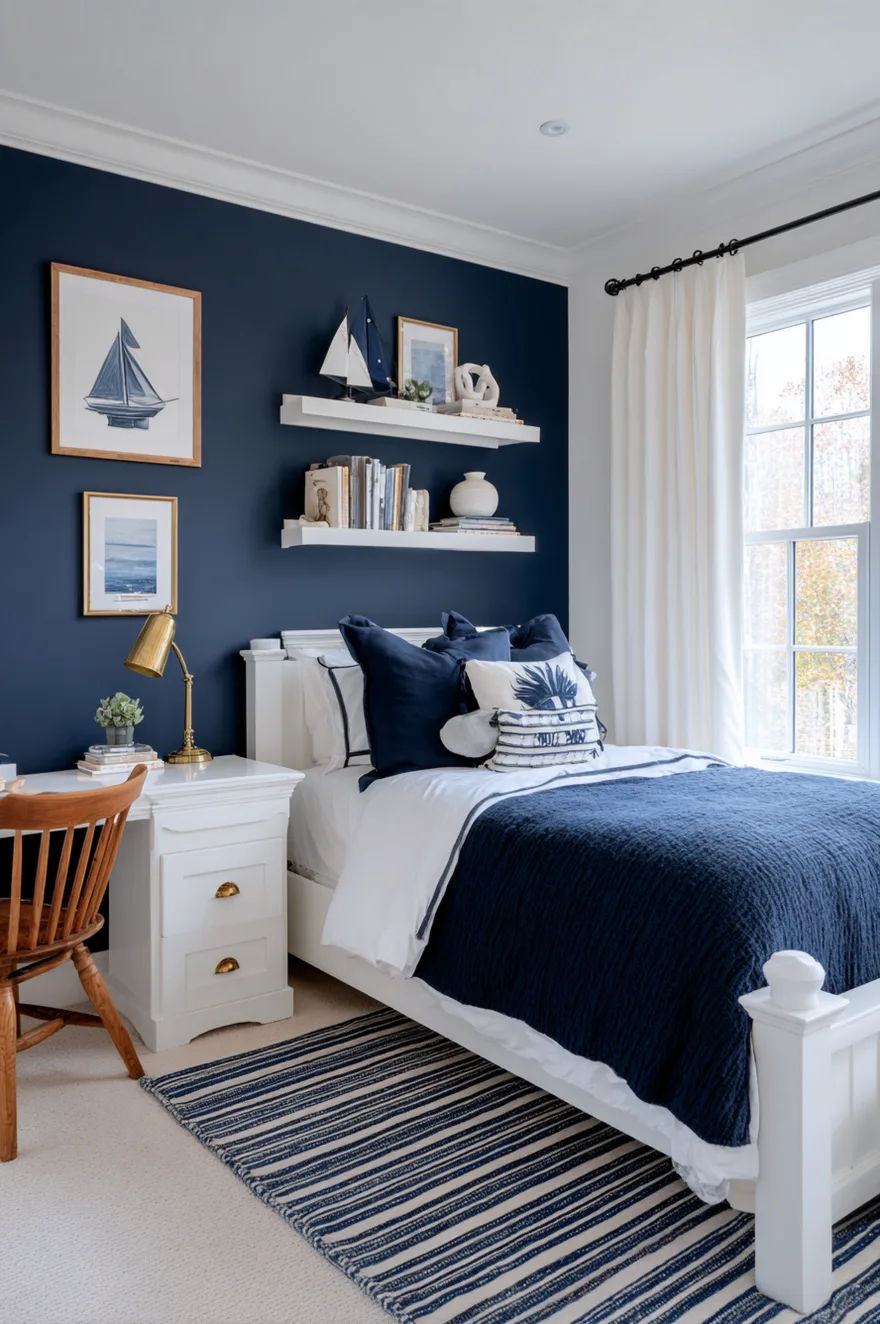
Navy provides the most reliable long-term color choice for this demographic – it’s sophisticated enough for teenagers while remaining appropriate for younger children.
The application can be comprehensive – all walls in navy with white trim and furniture for high contrast – or accent-based with three neutral walls and one navy statement wall. Layer multiple navy shades and textures for visual interest rather than flat monochrome. Navy bedding on white beds, navy curtains, navy area rugs.
Pair navy with warm wood tones to prevent coldness. Brass or gold hardware adds warmth and sophistication. Orange or red accent colors provide energy without permanent commitment. Navy with gray creates a more modern, sophisticated palette than navy with white. The color psychology is relevant – navy promotes calm and focus, beneficial for both sleep and study. It’s effectively a neutral that works with any theme or interest overlay.
Space Themed Boys Bedroom Ideas
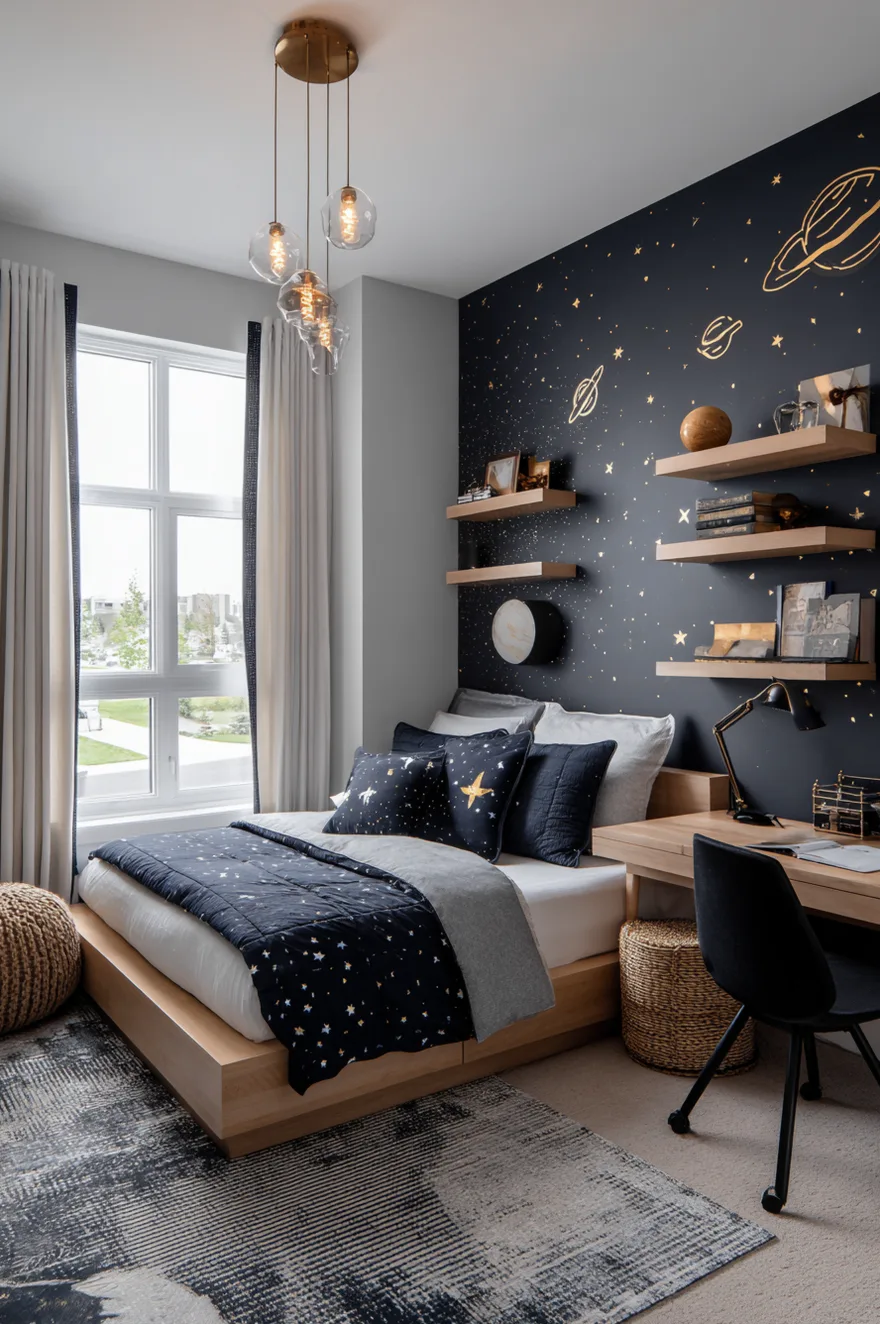
Space themes provide long-term viability because astronomical concepts remain engaging across developmental stages.
The design principle is straightforward – use navy or charcoal as the base wall color, add constellation or planetary elements, and keep furniture neutral. A 5-year-old responds to rocket ships and astronauts. A 11-year-old engages with actual astronomy, physics concepts, and space exploration history. The same room works for both if you avoid cartoon interpretations.
I specify removable wall decals for planets and stars – they’re repositionable as interests evolve. Floating shelves display models that can transition from toy rockets to actual NASA replicas. The lighting matters here – LED strips in cool white or blue create atmospheric effects without permanent installation. Keep the bed, desk, and storage pieces simple. The theme lives in the changeable elements, not the furniture investment.
Soccer Boys Bedroom Ideas
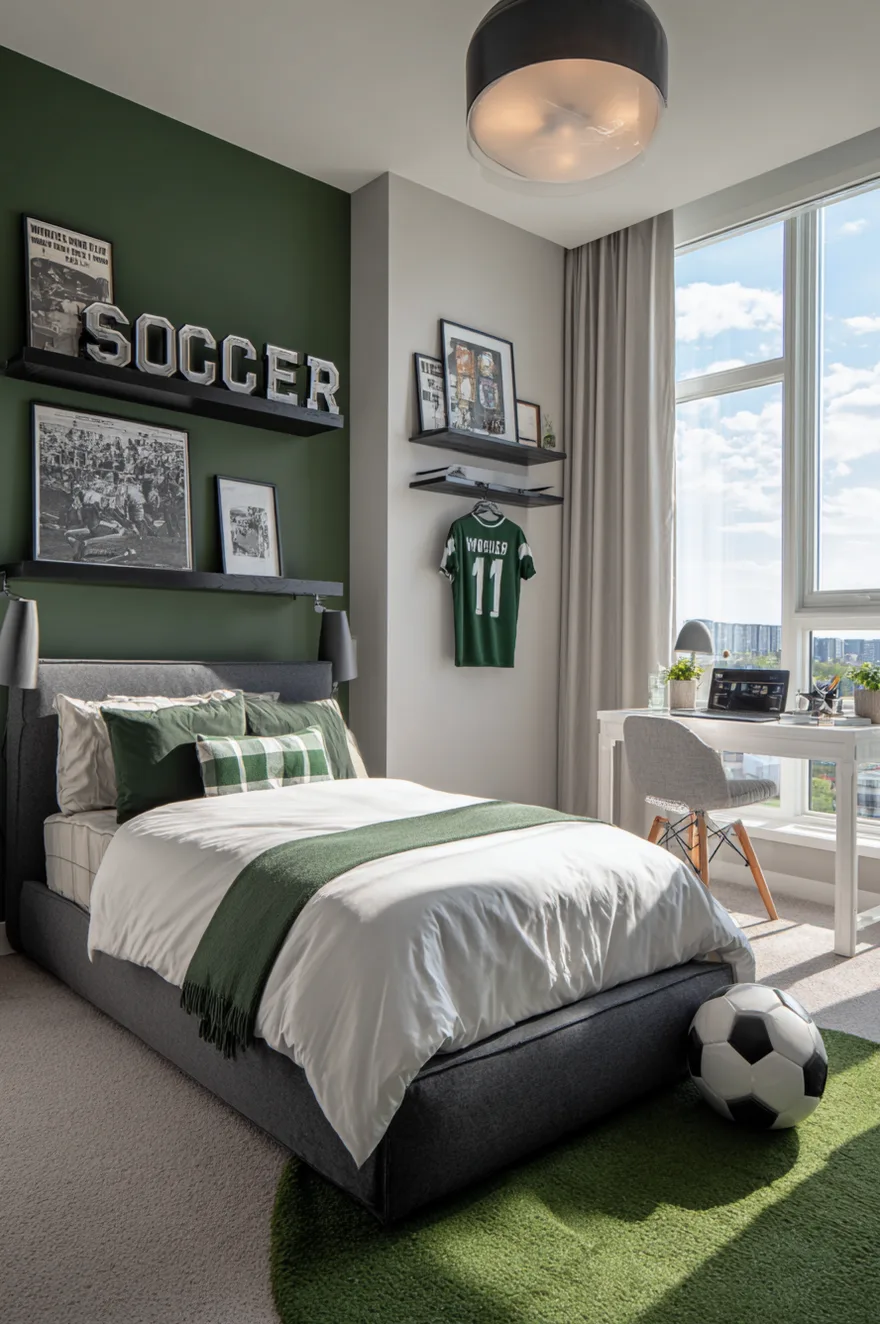
Soccer themes work when they’re personal rather than generic – specific team allegiances, actual equipment display, achievement recognition.
Paint accent walls in team colors or field green – this provides immediate context. Frame jerseys they’ve earned or from games they’ve attended. Wall-mounted ball holders display collections while keeping floor space clear. Create a gallery wall of action photos from their games – this builds pride in actual achievement rather than aspirational decoration.
The furniture should be neutral – no themed beds that won’t age well. Storage requirements for soccer equipment are significant – cleats, shin guards, balls, uniforms. Design for actual volume rather than idealized versions. Equipment storage extends gear life and reduces household clutter. The room should feel like it belongs to someone who plays soccer seriously, not someone who decorates with soccer themes. That distinction creates longevity and authenticity.
Marvel Superhero Boys Bedroom Ideas
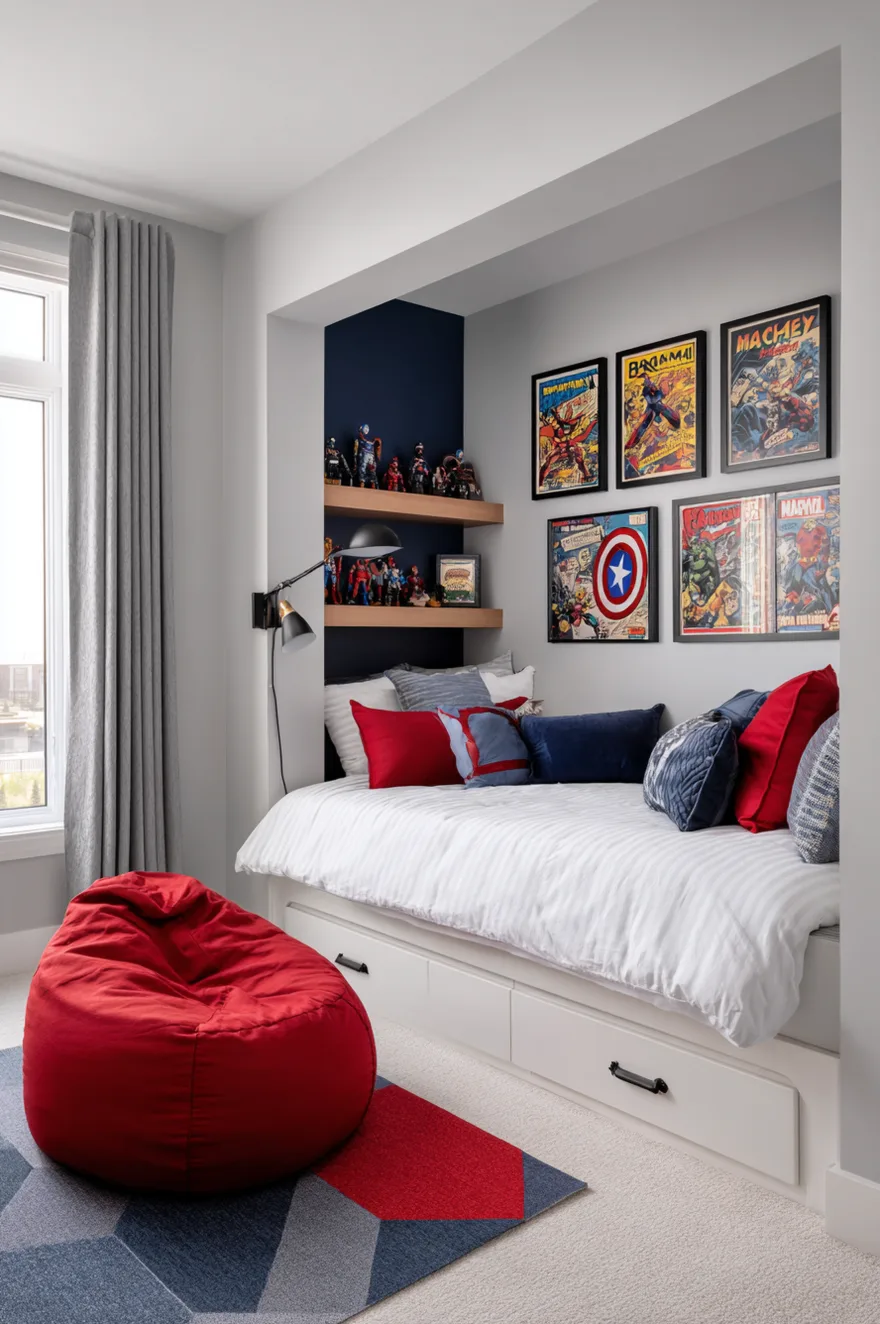
Superhero themes work for ages 11-12 when they’re collected and curated rather than licensed and commercial – vintage comic covers, graphic novel art, and minimalist iconography have broader appeal than cartoon characters.
The design approach is gallery wall rather than branded bedding. Frame vintage-style comic posters or create a grid of superhero symbols. Use team colors – the primary palette of red, blue, and yellow – which provides energy without requiring character-specific elements. This allows the theme to evolve from Marvel to DC to original graphic novels without requiring redecoration.
Keep furniture completely neutral. Built-in storage works well here because comic collections expand over time. The room should feel like it belongs to someone who appreciates sequential art and storytelling, not someone who likes cartoon versions of superheroes. That subtle distinction determines whether the room works until middle school or needs replacement in two years.
Blue Boys Bedroom Ideas
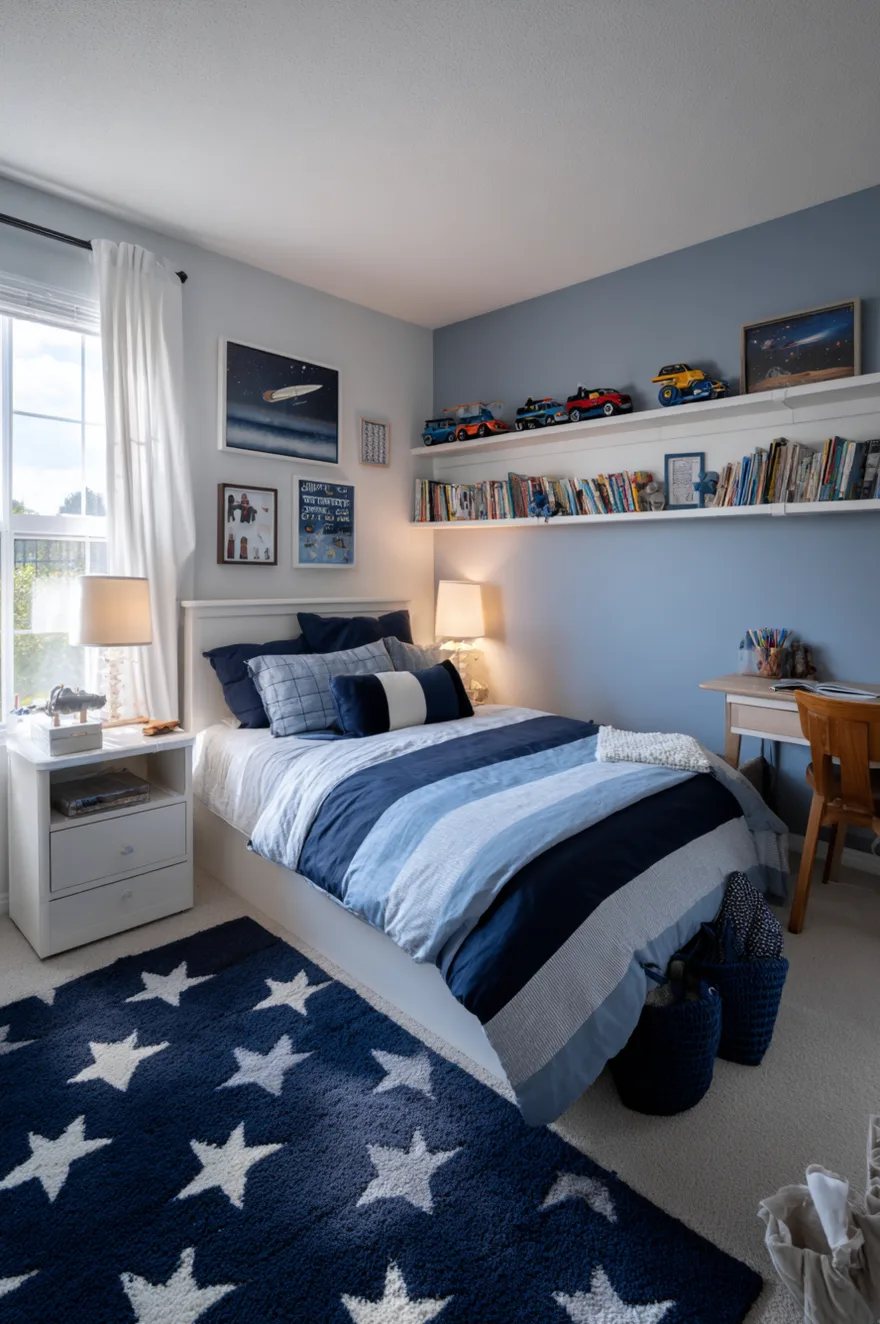
Blue provides the widest application range of any color choice for this demographic – it’s psychologically calming while remaining gender-coded enough to satisfy traditional preferences.
The technical approach is layering multiple blue values rather than monochromatic application. Navy accent wall, medium blue bedding, pale blue-gray on remaining walls. This creates visual depth and prevents the flat, one-note appearance that reads as cheap or builder-grade.
Pair blue walls with natural wood furniture – the warm undertones prevent the cool color from reading as cold or sterile. White furniture works but requires warm lighting at 2700K to compensate. I’ve found that blue rooms benefit from brass or black hardware rather than chrome or nickel. The contrast grounds the space. Add accent colors through textiles and accessories – orange, yellow, or red provide energy without permanent commitment.
Gaming Boys Bedroom Ideas
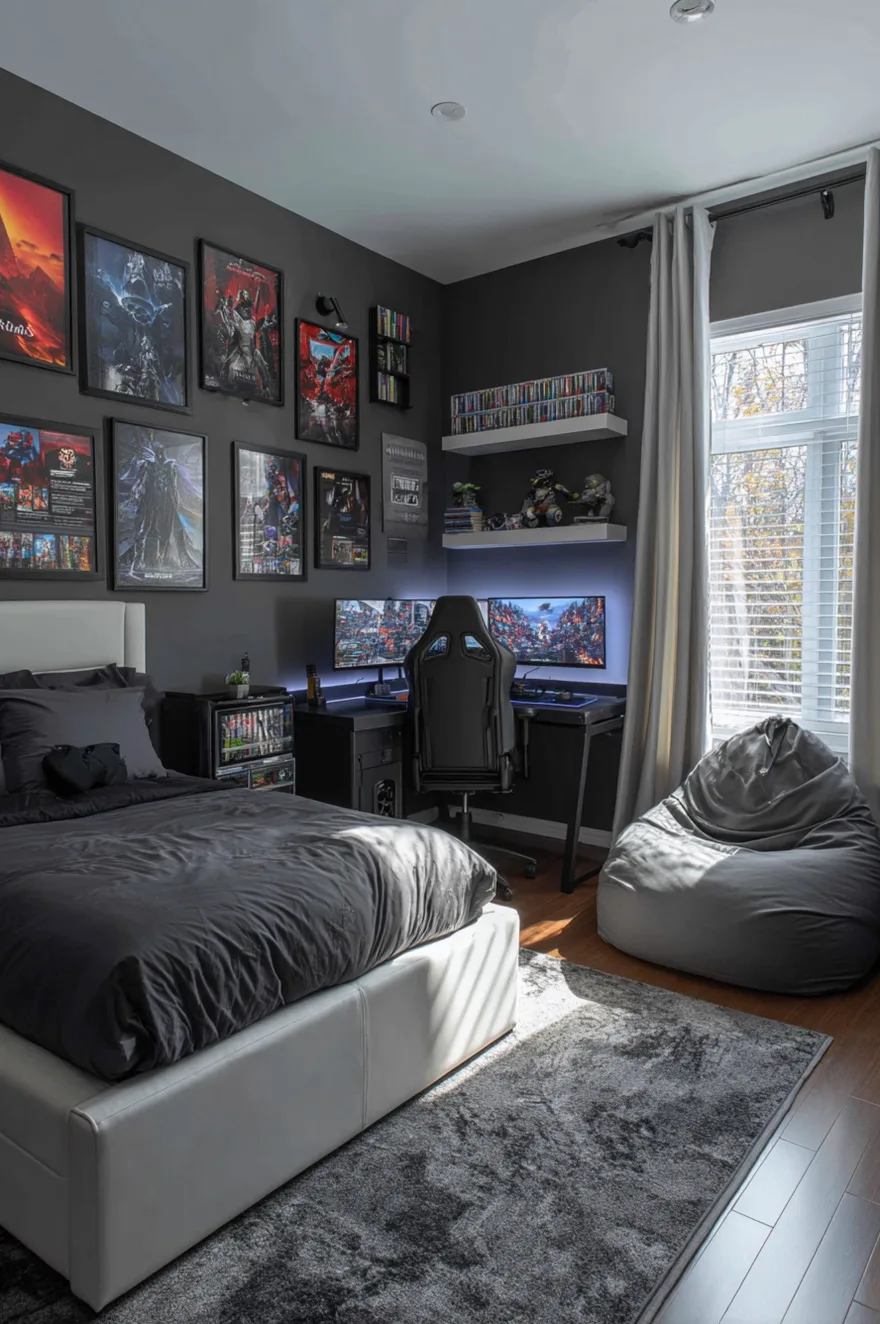
Gaming setups are increasingly standard for this age group – the design challenge is creating functional technology integration without the room becoming solely technology-focused.
The dedicated gaming zone requires proper ergonomics – adjustable chair with lumbar support, desk height appropriate for keyboard and monitor, adequate task lighting to reduce eye strain. Cable management is critical – exposed cables create visual clutter and tripping hazards. LED strip lighting provides ambiance but shouldn’t be the primary illumination source.
The room must maintain distinct zones – sleeping area, study area, gaming area. Blackout curtains improve screen visibility but shouldn’t eliminate natural light entirely. Storage for controllers, games, and peripherals prevents device damage and loss. The balance is acknowledging gaming as a legitimate activity while ensuring the room supports all necessary functions – sleep, homework, play. Technology shouldn’t dominate at the expense of other developmental needs.
Simple Boys Bedroom Ideas
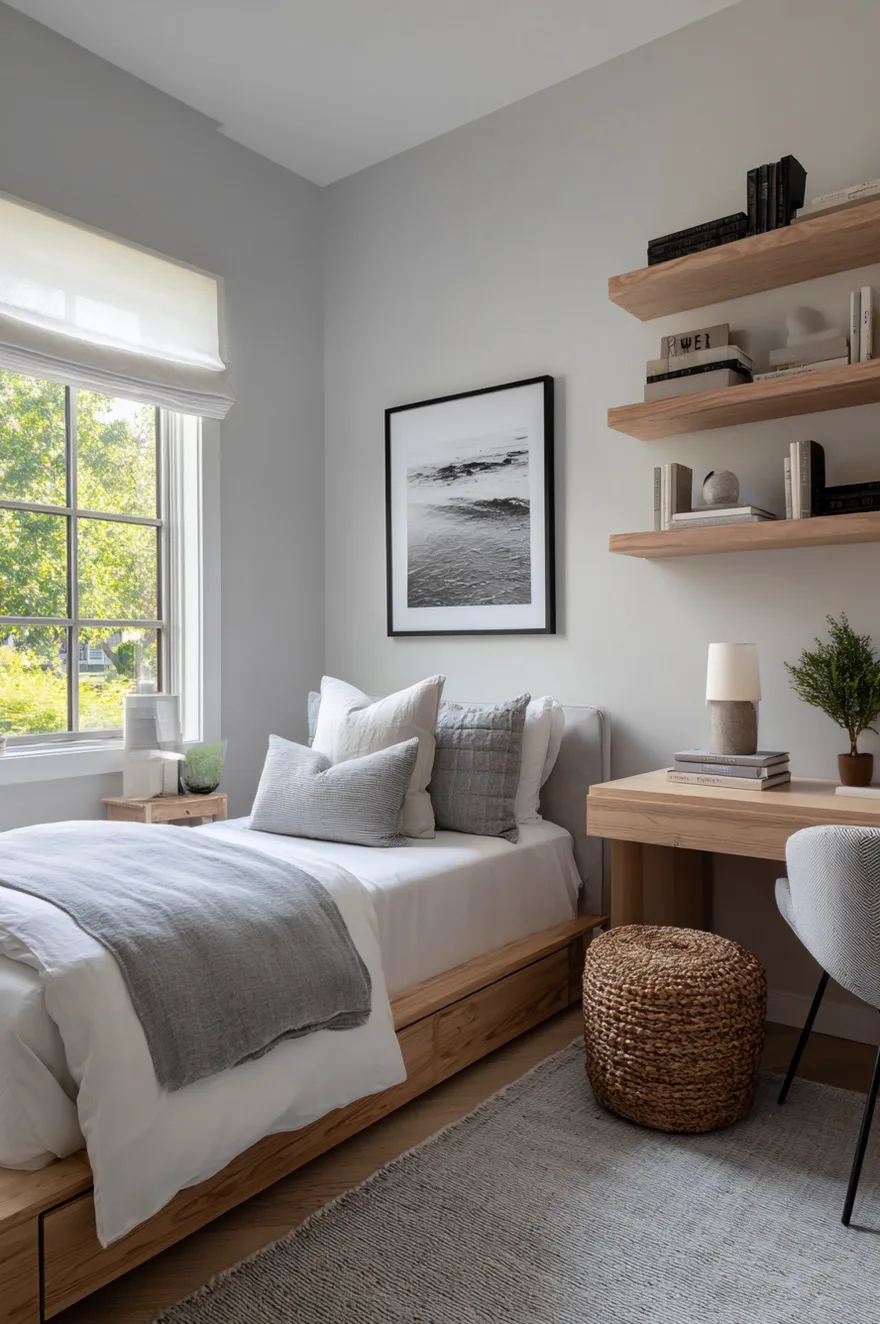
Simple designs prioritize longevity and adaptability – critical factors when designing for a six-year developmental span.
Here’s the strategy – neutral walls in light gray or soft white, wood or white furniture with clean lines, and open shelving for display. No character themes, no trend-dependent colors, no elements that announce a specific age. The room provides a blank canvas that accommodates shifting interests through easily changed accessories.
The furniture selection drives long-term value. A quality wood bed frame serves from kindergarten through high school. A properly sized desk supports homework needs that increase annually. Storage systems with removable bins allow reorganization as toy collections transition to sports equipment, then to gaming setups. The initial investment is higher, but the cost per year of use is significantly lower than themed furniture requiring replacement.
Bunk Beds Boys Bedroom Ideas
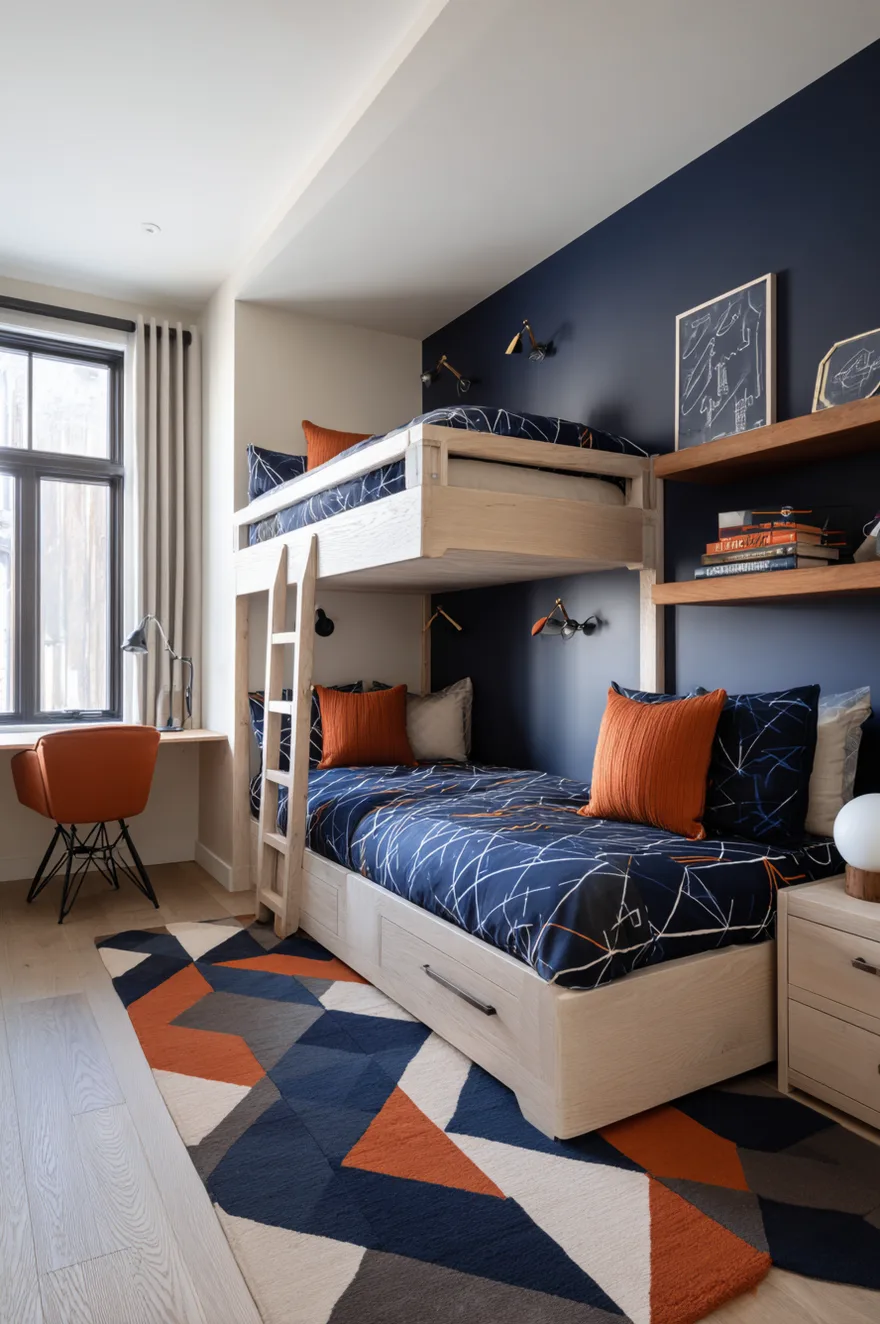
Bunk beds solve two distinct design problems – they accommodate multiple occupants or they free vertical space for other functions in single-occupant rooms.
The configuration selection depends on room dimensions and usage. L-shaped bunks work best in square rooms, providing each occupant with wall-backed privacy. Stacked bunks suit narrow rooms where floor space is the limiting factor. Loft beds create functional zones underneath – desk areas, reading nooks, or additional storage.
Safety requirements are non-negotiable – guardrails on all open sides, ladder stability, proper mattress thickness to prevent gap hazards. I specify solid wood construction over metal whenever budget allows – it’s structurally superior and doesn’t develop the squeaks and looseness metal frames exhibit over time. Built-in storage stairs are worth the premium over ladders – they provide additional organization and improve safety.
Two Boys Bedroom Ideas For Shared Spaces
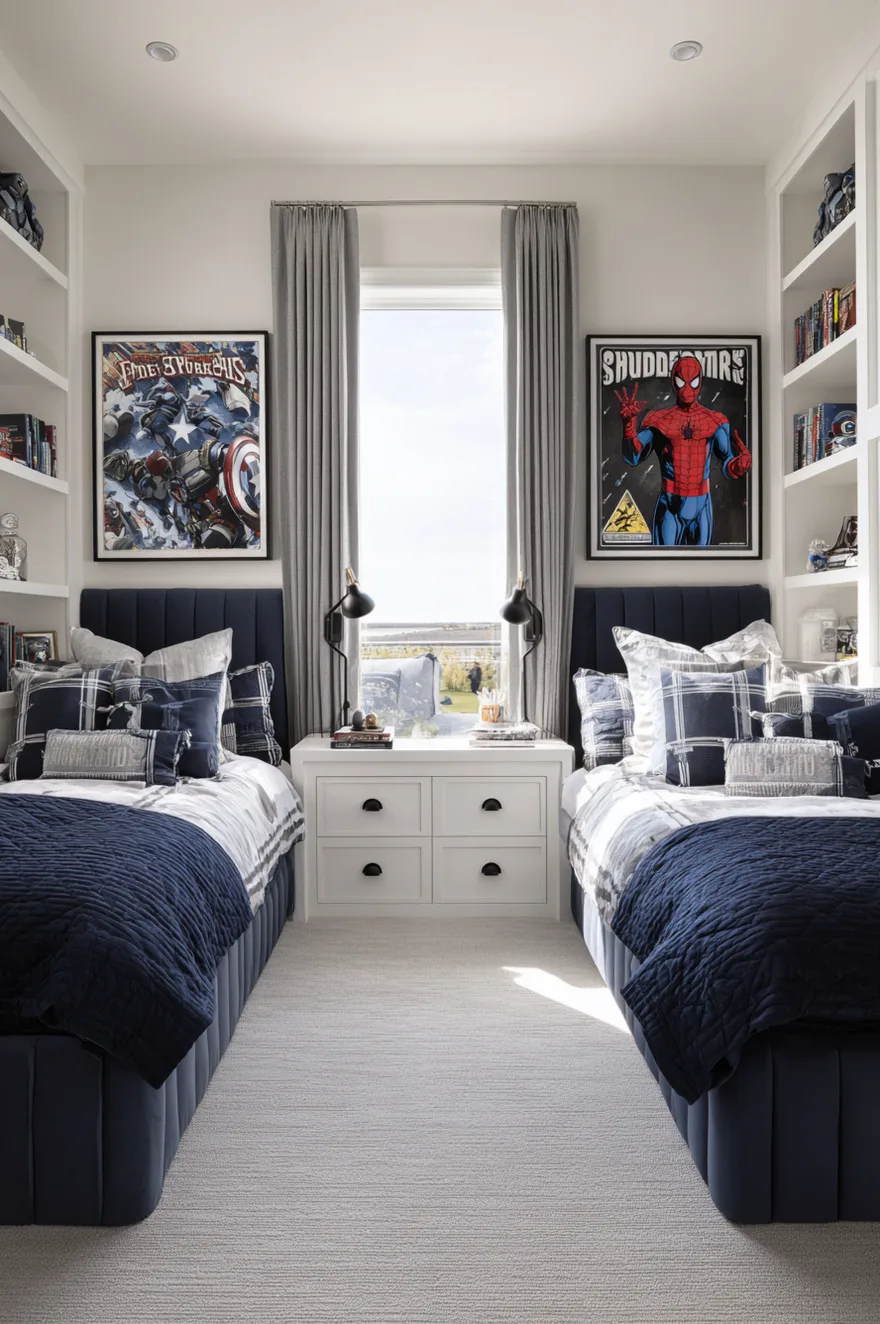
Shared bedrooms require territorial definition and equitable resource allocation – both spatial and material.
The most effective layout is symmetrical – identical beds on opposite walls with matching nightstands and lamps. This prevents the hierarchy issues that emerge when one child has a “better” setup. Accent walls behind each bed can be the same color for unity or coordinating colors for individual identity. Navy and gray, blue and green – colors from the same temperature family that don’t compete.
Storage must be individualized and clearly delineated. Separate closet sections, color-coded bins, individual shelving units. The goal is eliminating disputes over ownership and space. If square footage allows, include both a shared work surface and individual study areas. A central rug defines communal space while keeping pathways clear. The design should feel balanced, not divided.
Green Boys Bedroom Ideas
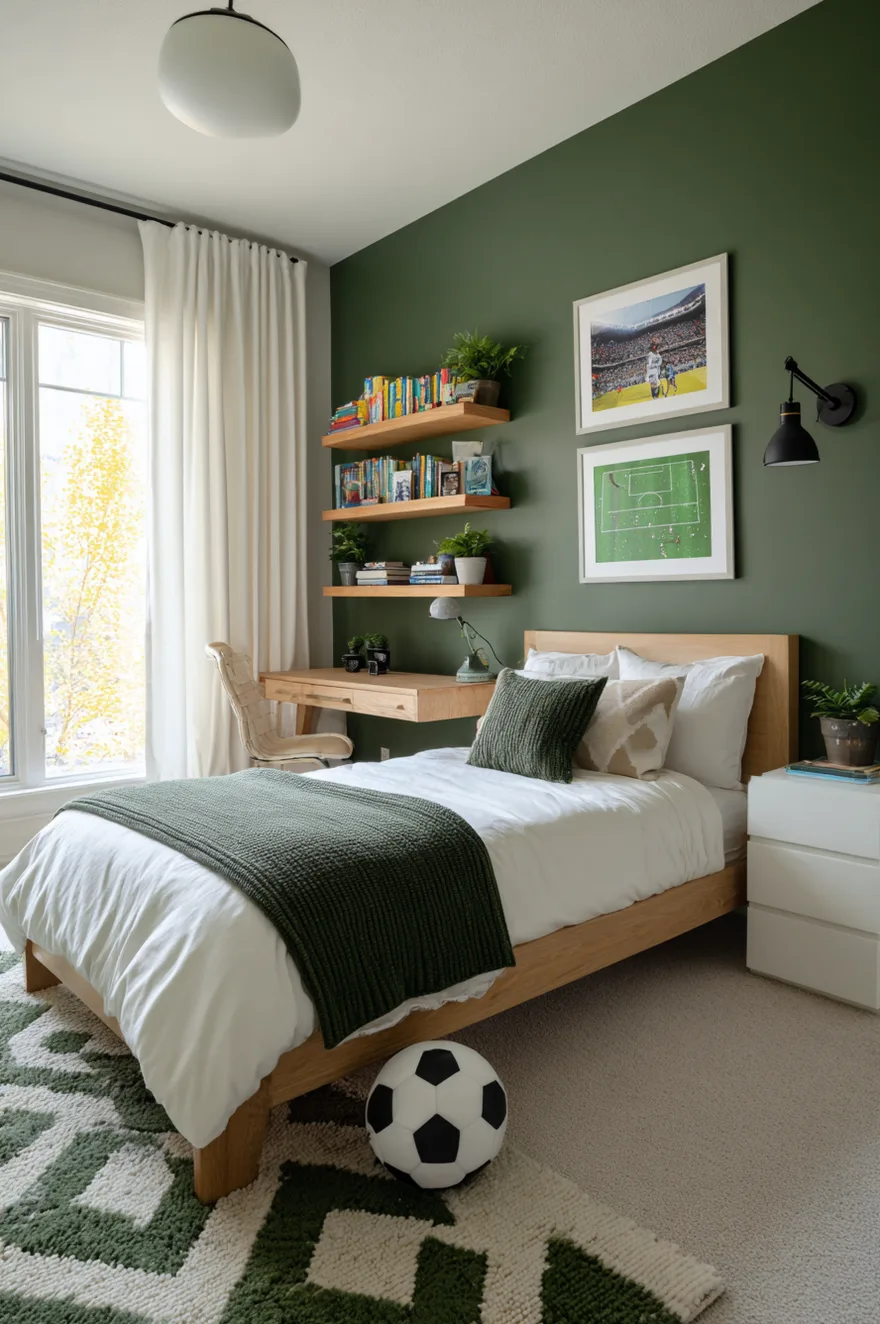
Green occupies the psychological middle ground between cool blues and warm earth tones – it’s calming without being passive, natural without being explicitly themed.
I typically specify deep forest green or sage for accent walls, paired with white or light gray on remaining surfaces. Green works exceptionally well with natural wood furniture because both reference organic materials – the combination feels intentional rather than arbitrary. Hunter green with brass hardware creates a sophisticated palette that transitions well into teenage years.
The color psychology is relevant here – green has documented calming effects, which benefits sleep quality and focus during homework. It’s also the only color that works equally well with both warm and cool accent colors. Orange and yellow create an energetic outdoor adventure feel. Navy and gray provide a more sophisticated, mature aesthetic. The flexibility is the point.
Sports Boys Bedroom Ideas
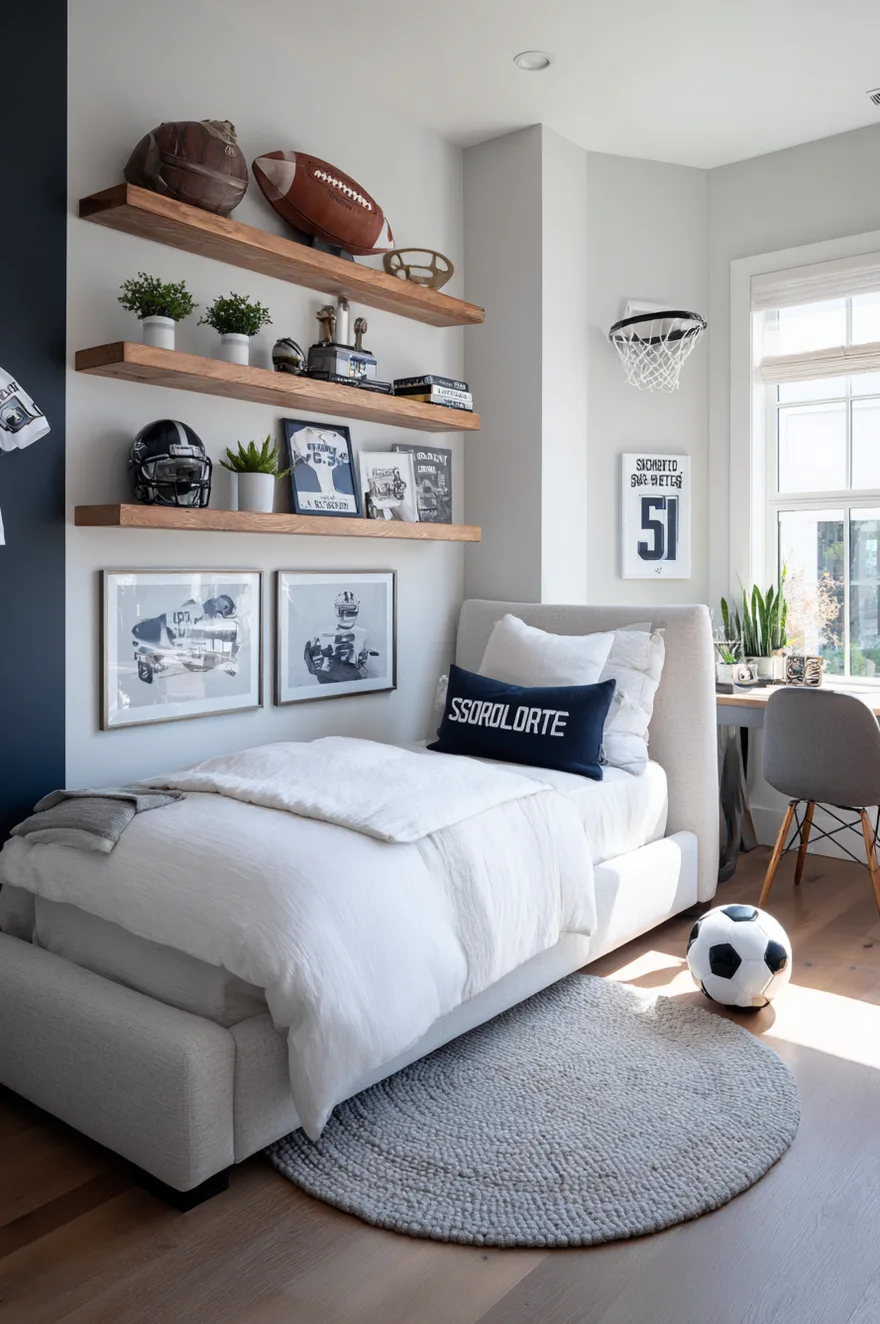
Sports themes succeed when they reference real athletics rather than cartoon interpretations – actual jerseys, vintage posters, equipment as functional display.
The design approach is curated rather than comprehensive. Frame a meaningful jersey – something they’ve earned or represents a favorite player. Create a gallery wall of black and white sports photography. Use team colors as accent elements – bedding, area rug, desk accessories. The room should feel like it belongs to someone who plays sports, not someone who likes sports-themed decor.
Storage becomes crucial here – equipment requires designated space or it migrates throughout the house. Wall-mounted ball holders, hooks rated for equipment weight, bins sized for specific gear types. I’ve found that making equipment storage visible rather than hidden increases the likelihood children will actually use the organizational system. Functional display serves dual purposes.
Red Boys Bedroom Ideas
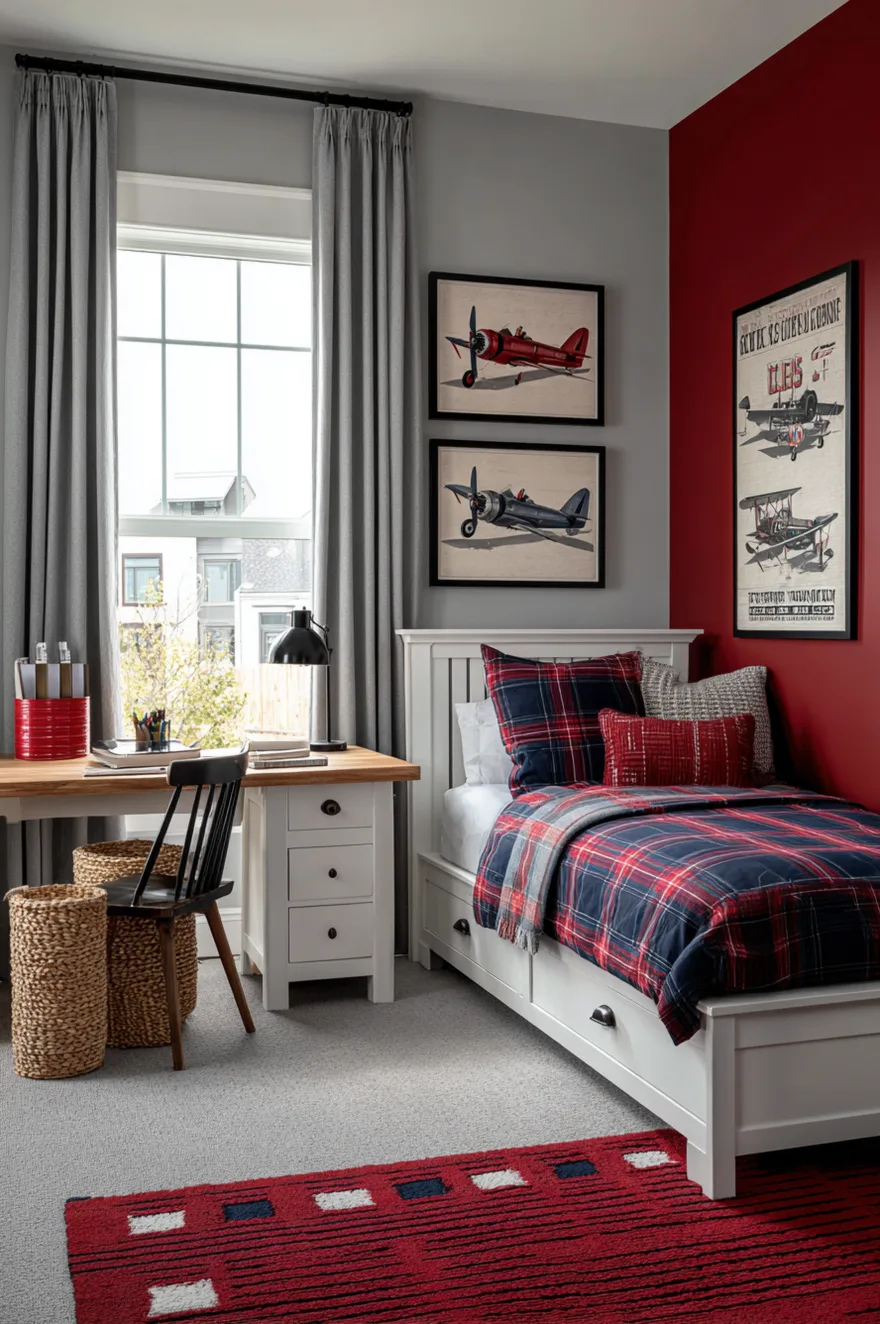
Red requires careful application – it’s psychologically stimulating, which can impact sleep quality if overused, but provides necessary energy in doses.
The successful approach is accent-based rather than dominant. One red wall paired with neutral gray or white on remaining surfaces. Or maintain neutral walls and introduce red through textiles – bedding, area rug, curtains. Red and navy is the classic combination that feels traditional and sports-appropriate. Red with gray creates a more modern, graphic aesthetic.
The color science is relevant – red increases heart rate and blood pressure slightly, which makes it effective for play areas but problematic for sleep zones. Keep red away from the immediate bed area. Use it on the wall behind the desk or in the play zone. Pair with natural wood to warm the boldness and prevent it from reading as aggressive. Black and white artwork provides visual grounding.
Football Boys Bedroom Ideas
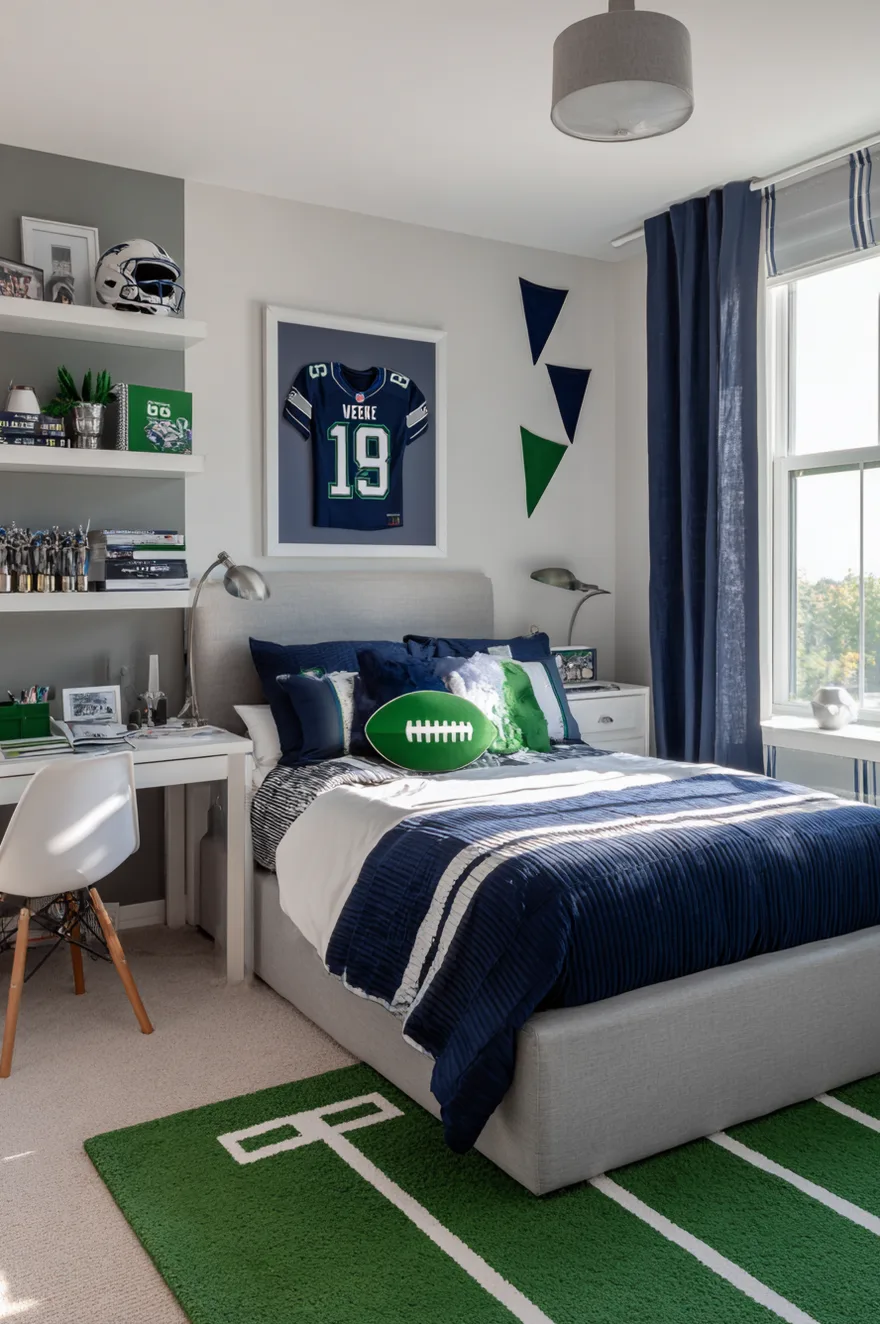
Football themes succeed when they’re personalized rather than generic – team-specific rather than football-generic, achievement-focused rather than decorative.
Use team colors as the foundation – this provides specificity that generic “sports” rooms lack. Frame jerseys they’ve earned or represent meaningful games. Display their own equipment and trophies – this creates ownership rather than aspiration. Wall-mounted equipment storage serves functional and visual purposes.
The furniture should be completely neutral – the theme lives in the changeable elements. I’ve seen too many themed beds that become problematic within two years. Pennants, team banners, and posters can be updated as allegiances or interests shift. The storage requirements for football equipment are substantial – helmets, pads, cleats. Design for the actual gear volume, not an idealized version. Proper equipment storage extends its usable life and reduces household clutter.
Small Room Bunk Beds For Boys
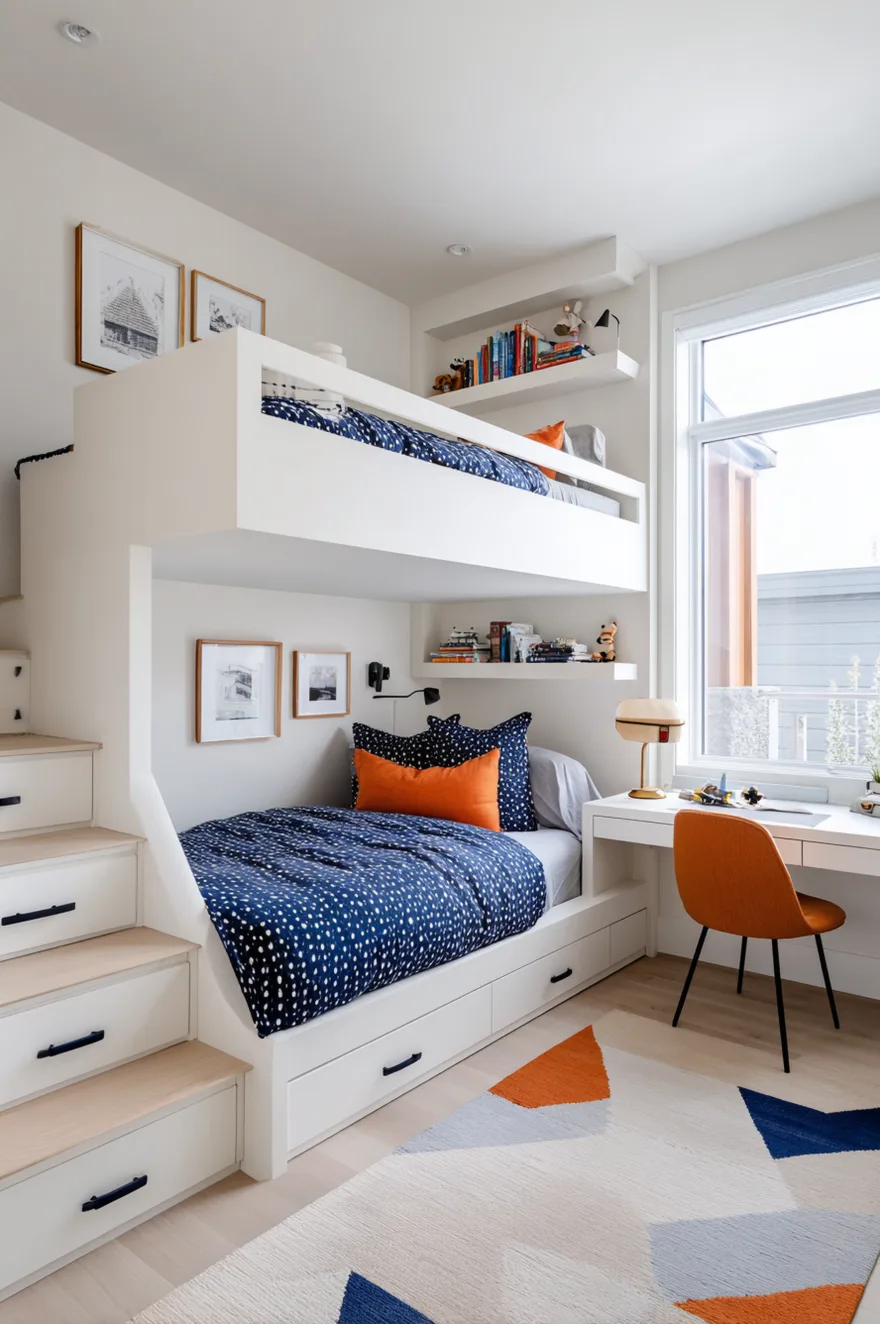
Bunk beds in small rooms provide the dual benefit of accommodating multiple occupants while freeing floor space – but the configuration selection is critical to functionality.
Loft bunks work exceptionally well in small single-occupant rooms – the elevated bed creates usable space underneath for a desk or storage without consuming additional square footage. For shared small rooms, L-shaped bunks utilize corner space more efficiently than stacked bunks and provide each occupant with more head clearance and privacy.
The color strategy in small rooms with bunks is keeping everything light – white or light wood bed frames, light bedding, pale walls. Visual weight matters when vertical furniture dominates. Storage stairs instead of ladders provide drawer capacity while improving safety. Wall-mounted shelving eliminates the need for floor-based bookcases. The entire design focuses on maximizing usable space while minimizing visual clutter.
Baseball Boys Bedroom Ideas
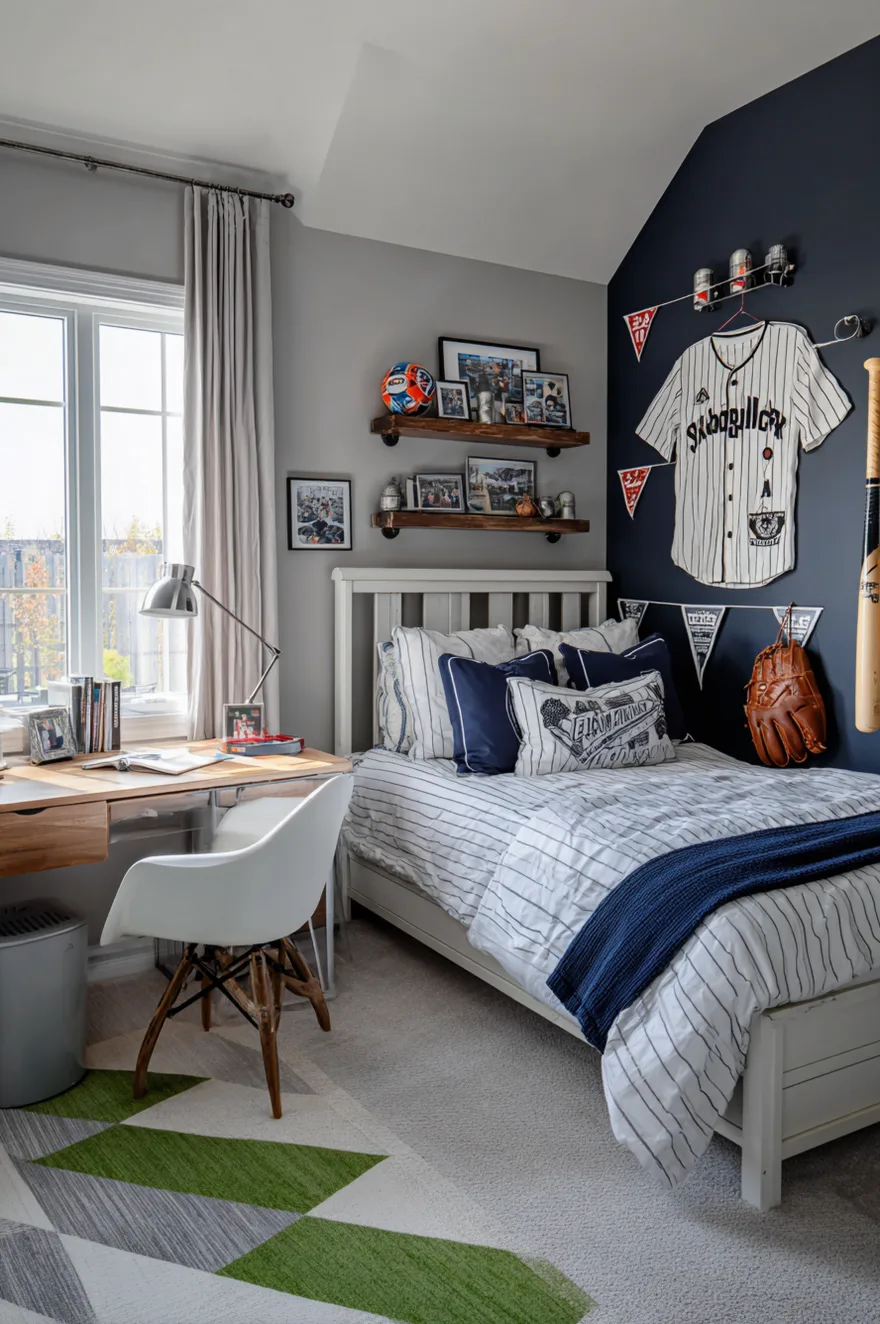
Baseball themes succeed through authenticity – actual equipment, earned jerseys, collected memorabilia rather than decorated merchandise.
The color palette references the sport without requiring baseball-specific imagery – navy and white, forest green and cream, classic combinations that work beyond the theme. Frame jerseys from teams they’ve played on or games they’ve attended. Display actual equipment – bats, gloves, balls – as functional art. A bat rack serves both organizational and visual purposes.
I’ve found that incorporating field elements subtly works better than obvious references – paint stripes suggestive of baselines, use a green accent wall to reference the field, add a baseball-stitching pattern to a single decorative pillow. The room should feel like it belongs to someone who plays baseball, not someone who likes baseball decoration. That creates longevity and authenticity.
Orange Accent Boys Bedroom Ideas
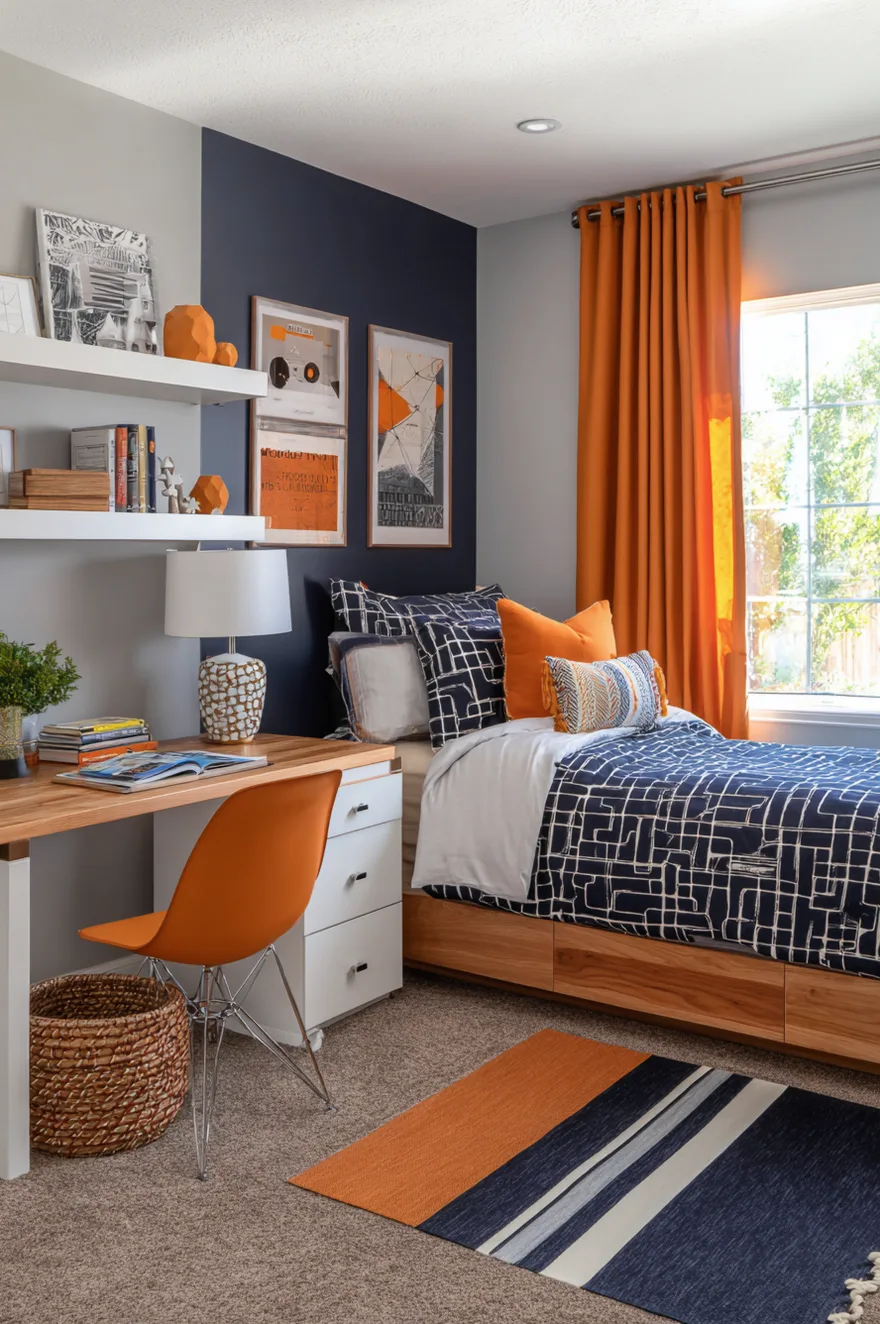
Orange is an underutilized accent color in boys bedroom design – it provides energy and warmth without the psychological intensity of red or the coolness of blue.
The application strategy is accent-based rather than dominant. Navy walls with orange textiles, gray walls with orange furniture pieces, or neutral walls with a single orange accent wall. Orange and teal creates a modern, energetic palette. Orange and navy feels more traditional and sophisticated.
I typically introduce orange through changeable elements – desk chair, area rug, throw pillows, curtains. This allows intensity adjustment as the child’s color preferences develop. Burnt orange reads more mature than bright orange and pairs better with natural wood. The lighting temperature matters with orange walls – warm white at 2700K enhances the warmth, while cool white at 4000K creates unwanted contrast. Material selection impacts how orange reads – matte finishes feel more sophisticated than glossy.
Paint Ideas For Boys Bedroom
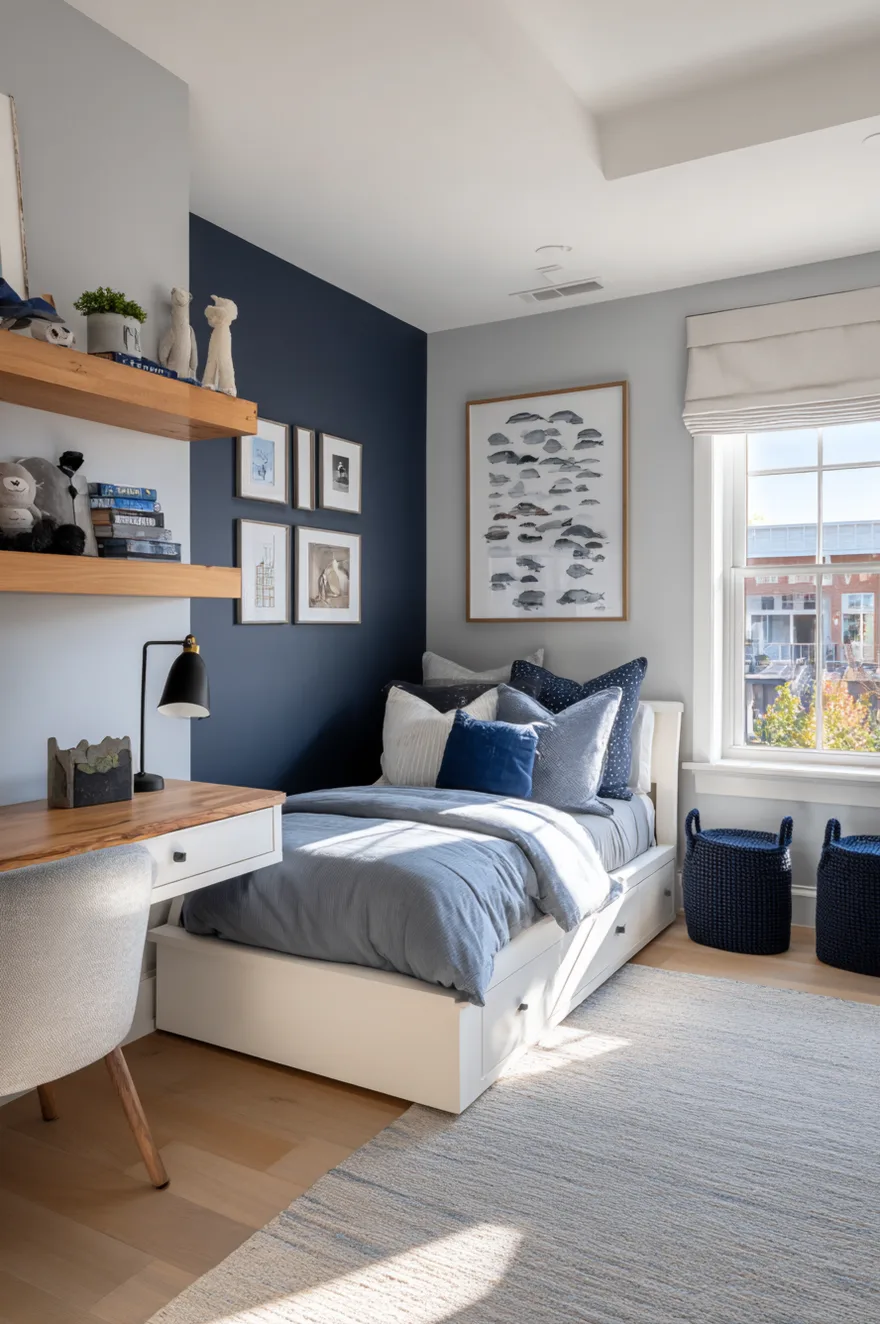
Paint color selection should prioritize longevity and light reflection – these rooms need to function across multiple years and developmental stages.
Soft blue-gray provides the broadest application range – it’s neutral enough to work with changing accessories while having enough character to feel intentional. Navy accent walls create drama and depth without requiring full-room commitment. Warm gray offers neutrality that works from toddler through teenage years.
Creative paint applications include ceiling treatments – sky blue with cloud stencils, charcoal with glow-in-the-dark stars, or bold navy that draws the eye upward and makes the room feel taller. Geometric patterns on accent walls, painted headboard shapes, or racing stripes add interest without permanent commitment – paint is the most easily changed element. The selection should consider both current preferences and likely evolution – avoid trendy colors that will date the room within two years.
Ikea Boys Bedroom Ideas
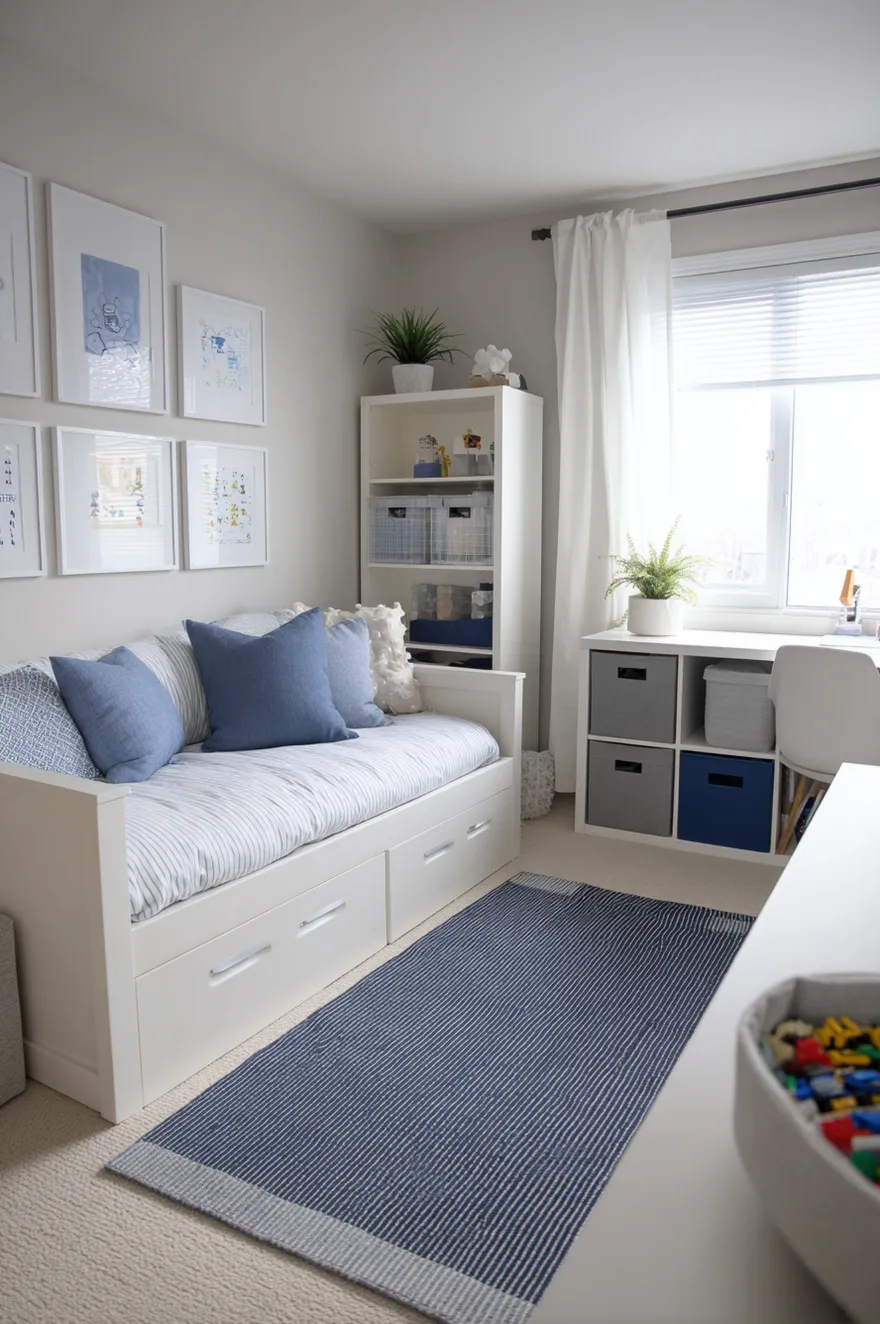
Ikea furniture provides functional, budget-conscious solutions for this demographic – the key is supplementing rather than apologizing for the price point.
The Hemnes daybed with storage drawers solves multiple problems – sleeping surface, guest accommodation, and storage in a single footprint. Kallax shelving units scale to any room size and work equally well for toy storage, book display, and later for gaming equipment or sports gear. The Micke desk provides adequate work surface with built-in cable management.
The elevation strategy is hardware replacement and thoughtful accessorizing. Leather pulls or brass knobs immediately upgrade basic pieces. Quality bedding, properly scaled area rugs, and intentional artwork prevent the showroom appearance. Mix Ikea pieces with vintage or handmade elements. The goal is creating a cohesive design that happens to include budget-friendly furniture, not a room that announces its price point.
Box Room Boys Bedroom Ideas
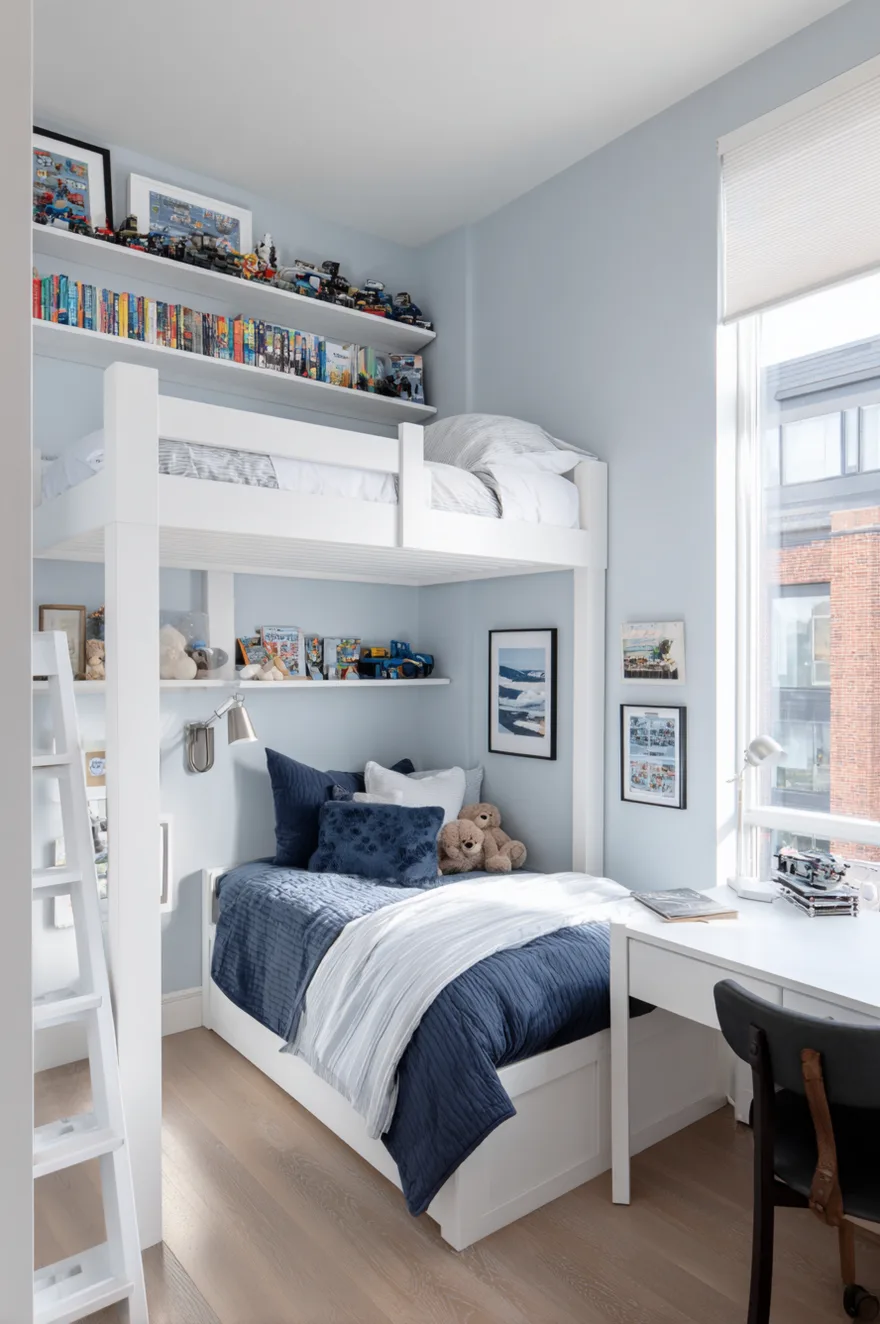
Box rooms – small secondary bedrooms – require aggressive space optimization and disciplined editing of possessions.
The furniture strategy is vertical and multi-functional. Loft beds or high sleepers free floor space for desk or storage placement underneath. Tall narrow shelving utilizes wall height without consuming floor area. Wall-mounted lighting eliminates the need for nightstands. Floating desks attached directly to walls save the depth of desk legs.
Light colors maximize perceived space – white or pale gray walls reflect available light. Mirrors strategically placed opposite windows amplify natural illumination. The possessions must be edited to fit the actual storage capacity – small rooms punish excess immediately. Every item requires a designated location or the system fails. This constraint actually benefits children by teaching spatial limitations and prioritization. The design challenge is creating adequate function within severe square footage constraints.
Rustic Boys Bedroom Ideas
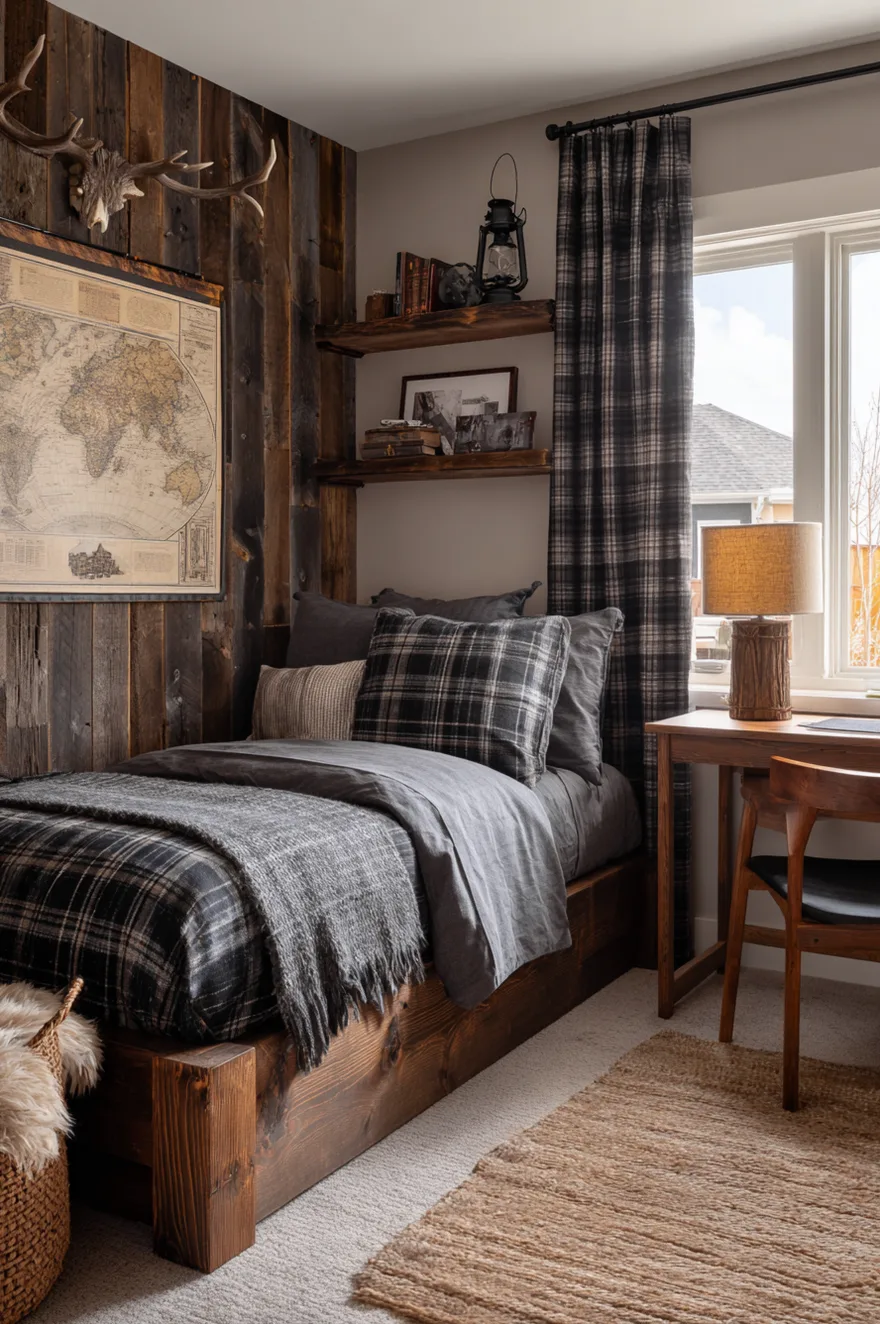
Rustic design incorporates natural materials and outdoor references – appropriate for children interested in camping, hiking, or outdoor activities.
The material palette is wood, leather, metal, and natural fibers. Reclaimed wood accent walls, log bed frames, or exposed beams if architecturally available. The color scheme is earth tones – browns, tans, forest green, stone gray. Plaid patterns reference outdoor gear without being costume-like.
I incorporate functional outdoor elements – vintage maps, camping equipment as display, rope accents. A canvas teepee creates a reading nook. Antler mounts or wooden animal figures reference wildlife without being juvenile. The room should feel like a mountain cabin retreat – masculine, earthy, and connected to nature. This aesthetic typically has strong longevity because the core elements remain relevant as interests mature.
Designing Rooms That Accommodate Growth
The most effective boys bedroom design for ages 11-12 is one that requires accessory changes rather than structural renovation as the child develops.
The foundation – quality furniture in neutral finishes, durable flooring, adaptable paint colors – should serve from kindergarten through middle school. The personalization lives in textiles, artwork, and storage contents – elements easily changed as interests evolve. A space theme becomes a gaming setup becomes a study-focused room through strategic accessory replacement, not furniture overhaul.
I’ve walked through twenty-one specific applications, but the underlying principle is consistent – design for function first, aesthetics second, and provide flexibility for evolution. Whether you implemented a sports theme or maintained complete neutrality, the measure of success is whether the room supports actual daily routines and accommodates the rapid developmental changes characteristic of this age range. That’s not decorating. That’s designing spaces that work.
See you soon,
Rachel