Most bathroom renovations fail at the foundation – literally. These bathroom floor tile ideas for 2026 focus on durability, layout efficiency, and designs that solve real problems. From classic black and white patterns to modern large format installations, these bathroom floor tile trends prioritize function without sacrificing style. Reference these proven tile designs before your next project.
I spent three years working on a residential project where the client changed their bathroom floor tiles twice – after installation. Both times, the issue wasn’t aesthetics. It was function.
That experience taught me something crucial about bathroom floor tiles. The right choice isn’t just about what looks good in a showroom. It’s about understanding slip resistance ratings, grout line maintenance, subfloor requirements, and how different materials perform in wet conditions.
I’m going to walk you through the bathroom floor tile ideas that actually work – the ones that hold up to daily use, complement your space, and make practical sense. We’ll cover classic layouts that have proven longevity, modern materials that solve old problems, and the technical details most designers skip.
Classic Black and White Bathroom Floor Tile Patterns
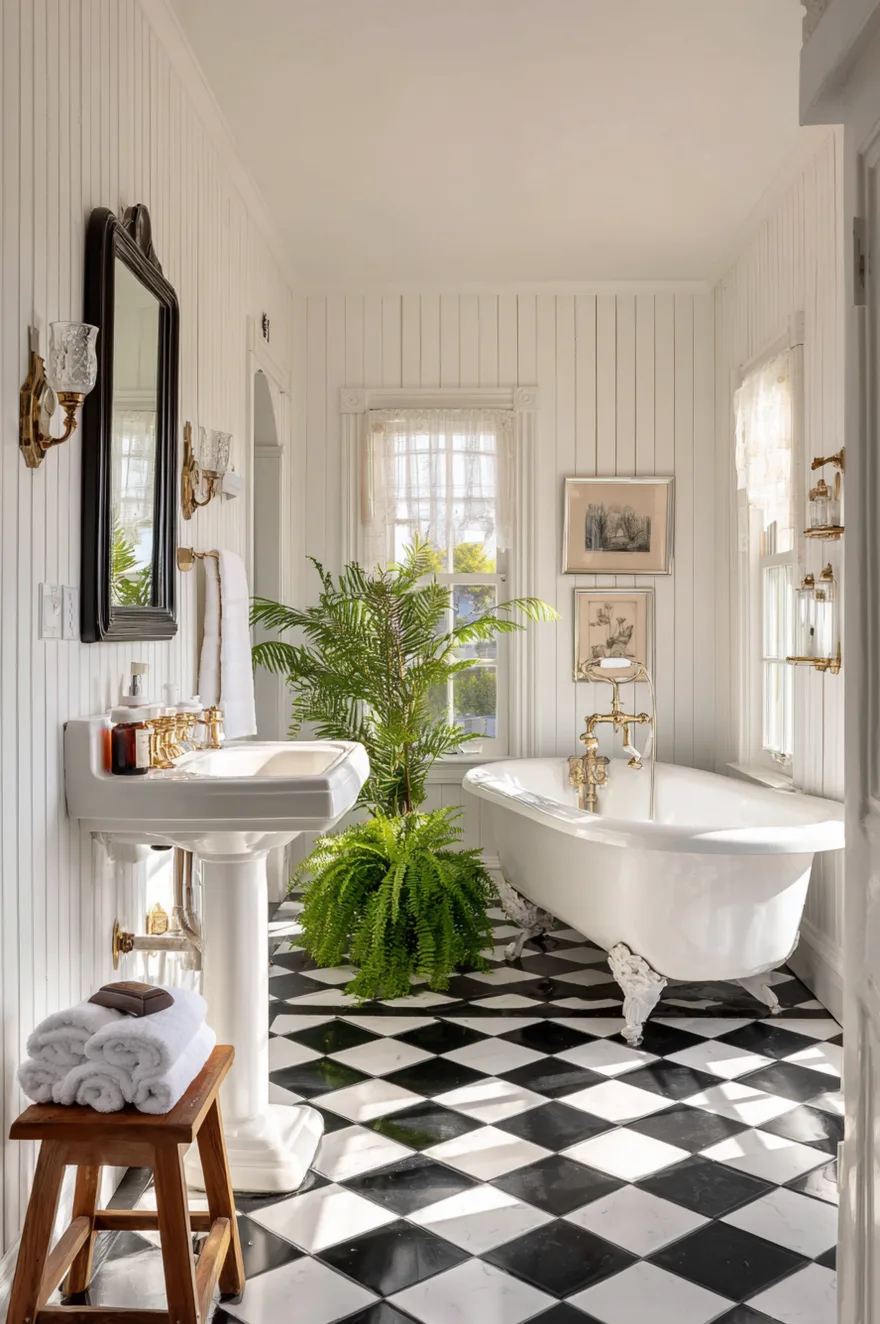
Here’s what I’ve learned about black and white tiles – they create visual contrast that defines space better than any other combination.
The geometry matters more than people realize. A standard checkerboard uses equal-sized squares, typically 12×12 inches, which creates a grid that helps guide tile installation and ensures proper spacing. Basketweave patterns require rectangular tiles, usually in a 2:1 ratio, and the interlocking layout provides structural stability.
Black and white bathroom floor tiles work because they establish a neutral foundation. You can layer any cabinet finish, wall color, or fixture material on top without creating visual competition. Function first – choose matte or textured finishes over glossy. The slip resistance coefficient matters in wet environments.
Large Format Bathroom Floor Tiles
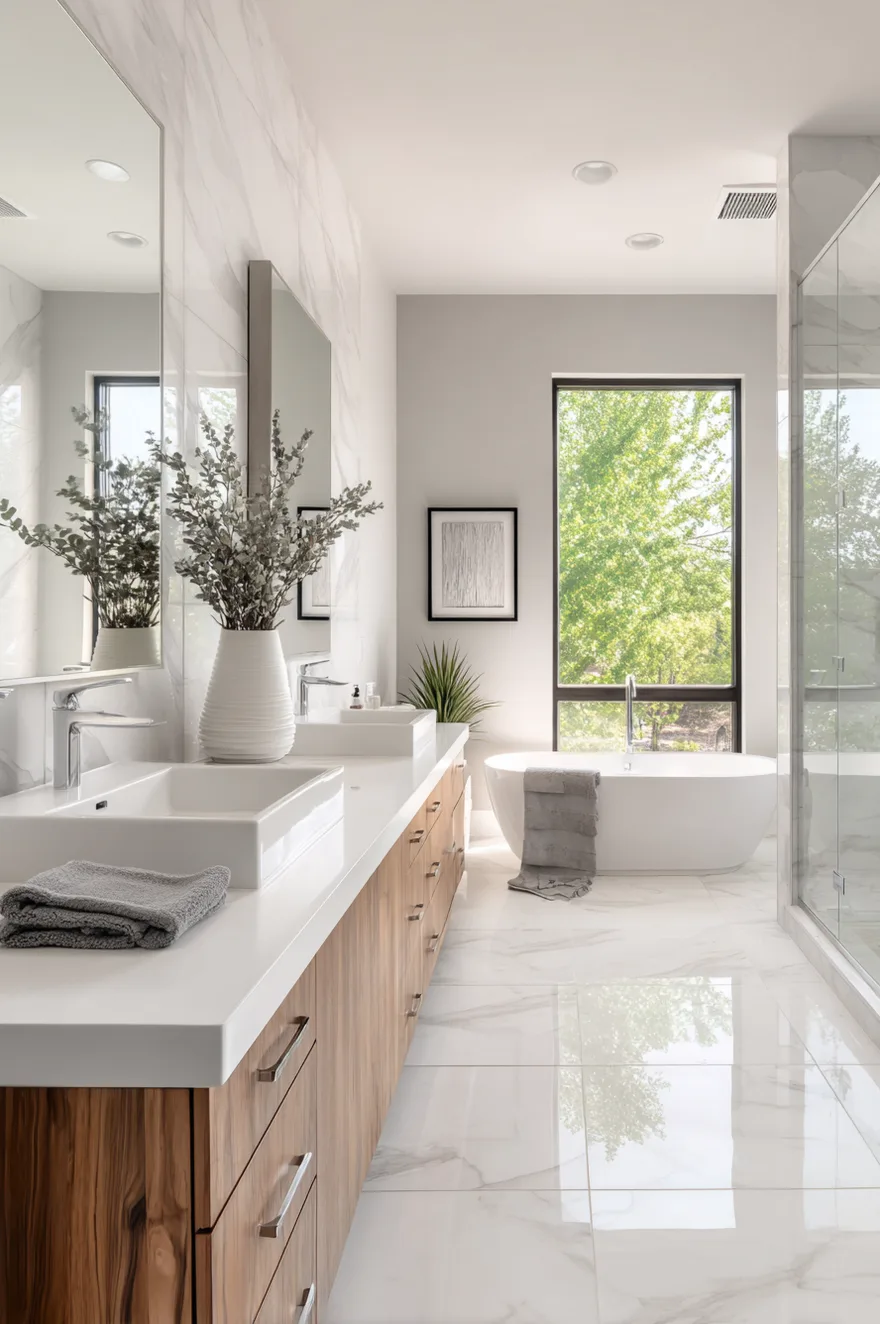
Large format tiles fundamentally changed how I approach bathroom design – fewer grout lines means better waterproofing and easier maintenance.
The shift to 24×24 inch or even 12×24 inch planks reduces grout joints by approximately 60% compared to standard 12×12 tiles. Less grout means fewer places for water penetration, mold growth, and dirt accumulation. The installation requires a perfectly level subfloor – any deviation over 1/8 inch across 10 feet will telegraph through large tiles.
Porcelain works better than ceramic for large format applications. It’s denser, less porous, and handles moisture more effectively. The visual effect is cleaner, more contemporary, and the maintenance reduction is measurable. Most people overlook this, but large tiles also reduce installation time and labor costs.
Hexagon Bathroom Floor Tile
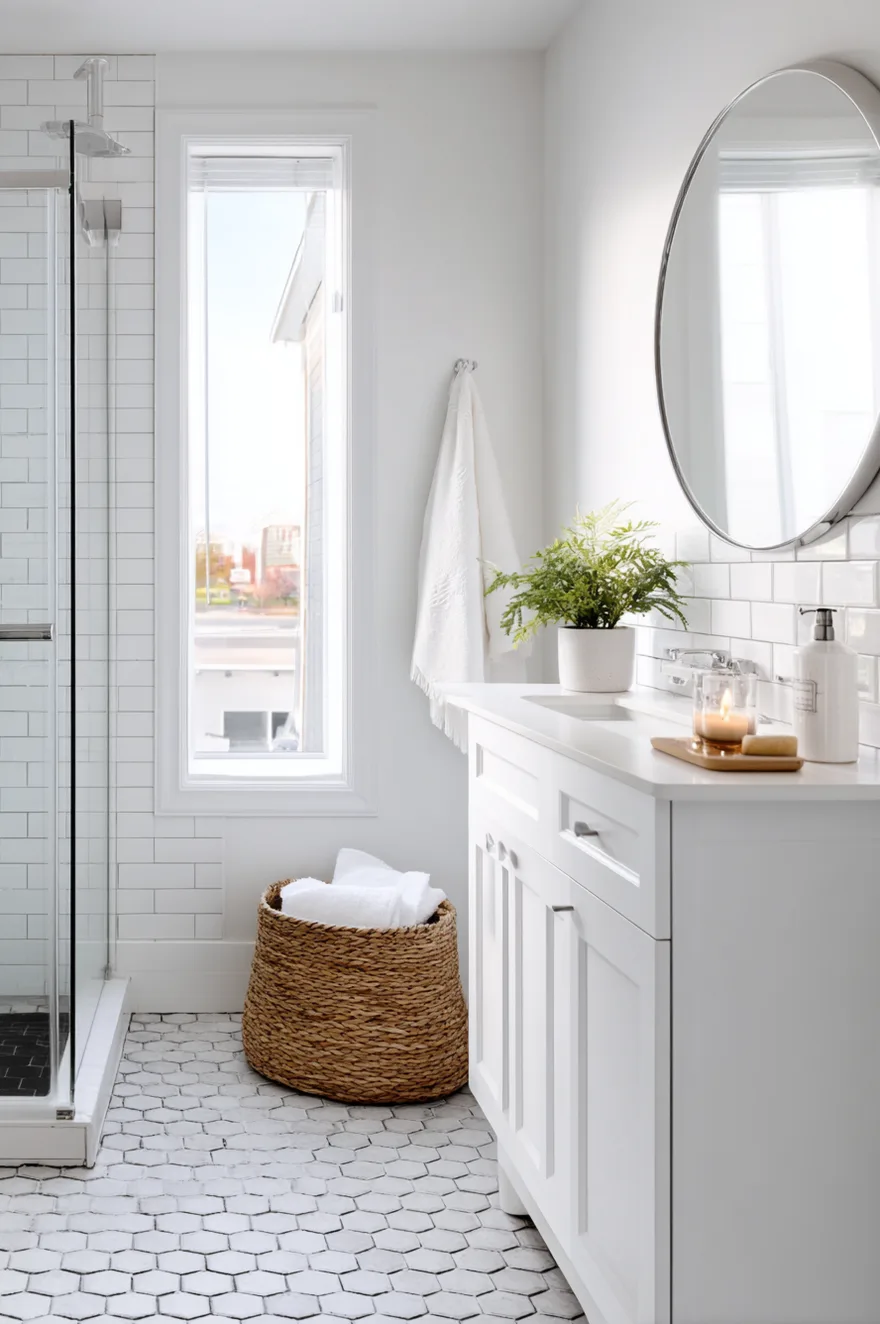
If you want something a little more interesting than a standard square tile but don’t want a crazy pattern, hex tiles are your best friend.
The six-sided geometry provides more layout flexibility than square tiles. You can orient them in multiple directions, create custom patterns, and work around irregular spaces more easily. I typically specify 2-inch hex tiles for floors because the smaller scale provides better slip resistance through increased grout lines.
White hexagon tiles with contrasting grout – usually charcoal or black – create definition without relying on color. The pattern reads clearly, the installation is straightforward, and the look has been consistent since the early 1900s. That’s not trend following. That’s understanding what works and why it continues to work.
Terracotta Bathroom Floor Tiles
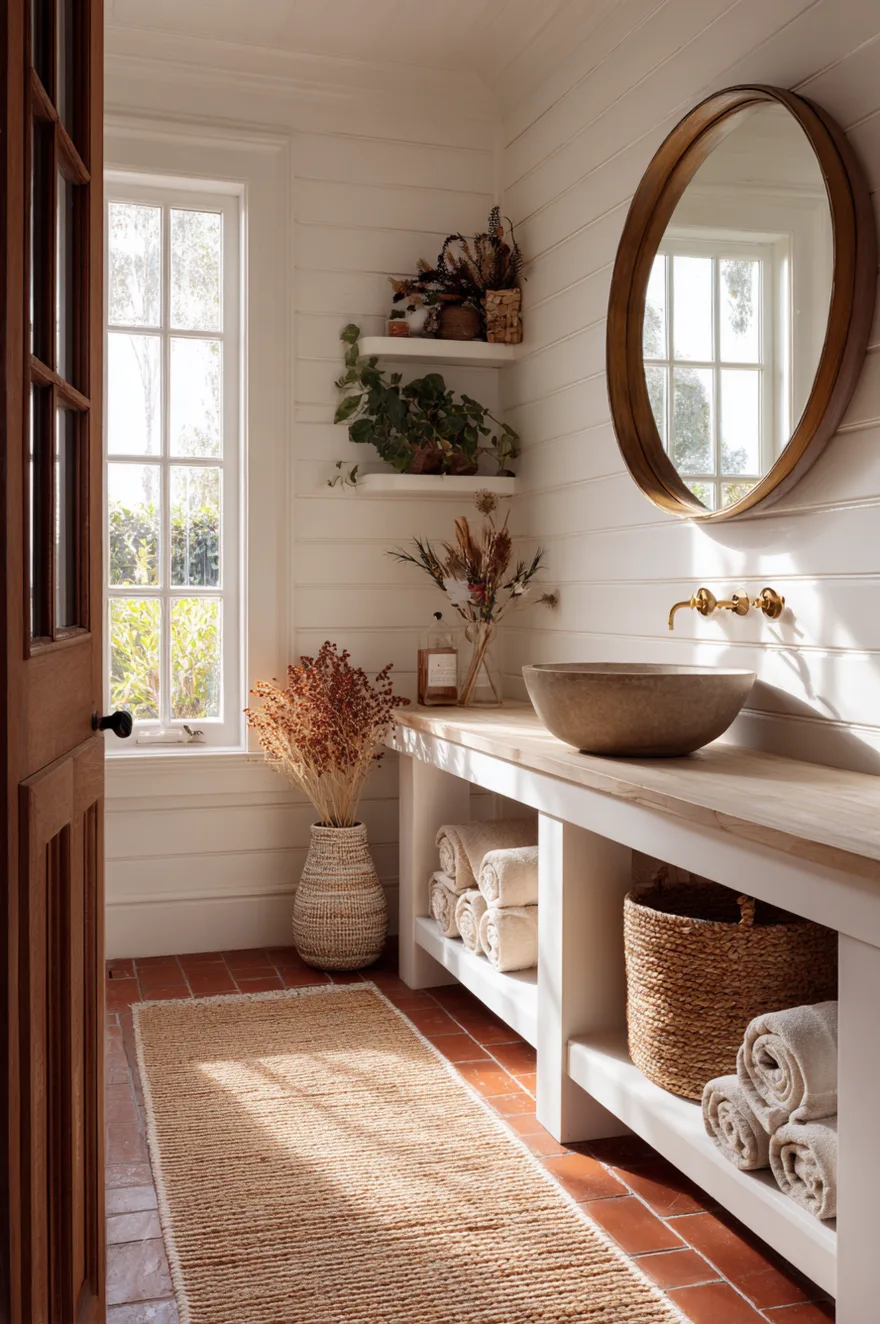
Terracotta introduces thermal mass and natural color variation that synthetic materials can’t replicate.
Here’s the technical reality – terracotta is porous clay fired at lower temperatures than porcelain. It absorbs moisture, which means proper sealing is non-negotiable. I specify penetrating sealers applied before grouting, then a topical sealer after installation. Maintenance includes resealing every 12-18 months depending on use.
The payoff is worth the upkeep. Terracotta bathroom floor tiles in rust, salmon, and clay tones provide warmth that reads physically, not just visually. The material develops a patina over time – slight darkening in high-traffic areas, subtle wear patterns. Pair with white walls and natural wood. The contrast grounds the space.
Mosaic Bathroom Floor Tile Texture
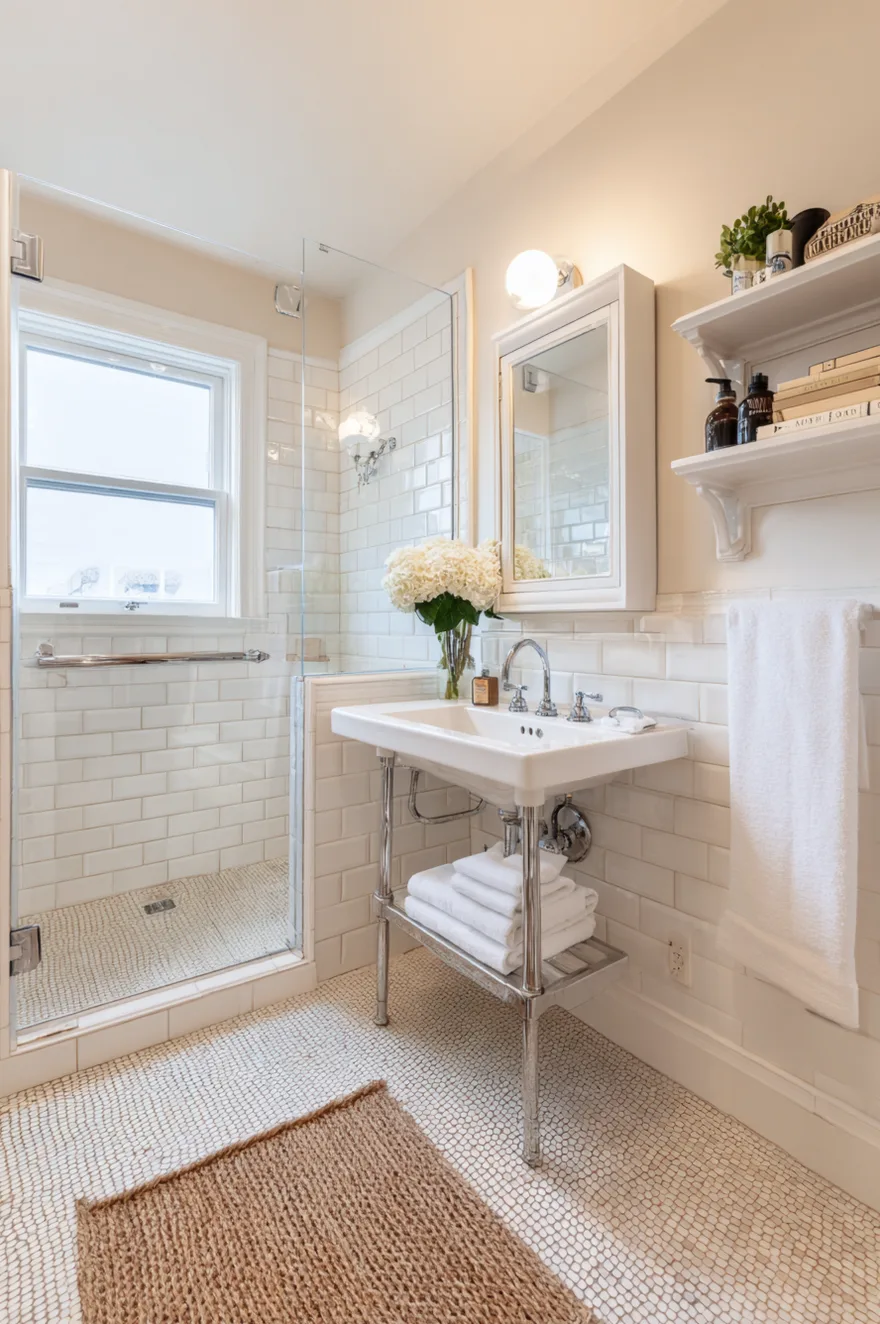
Mosaics are easily the safest option for a wet bathroom floor. Because the tiles are so small, you end up with a lot of grout lines, which naturally grips your feet and keeps you from slipping.
Installation is easier than people assume. Most mosaics come on 12×12 mesh sheets. You treat each sheet as a single tile during installation. I’ve used penny rounds in gray, white, and mixed blue-green palettes. The pattern hides minor installation imperfections, and the maintenance is straightforward – standard grout sealer applied annually.
Neutral Bathroom Floor Tile Designs
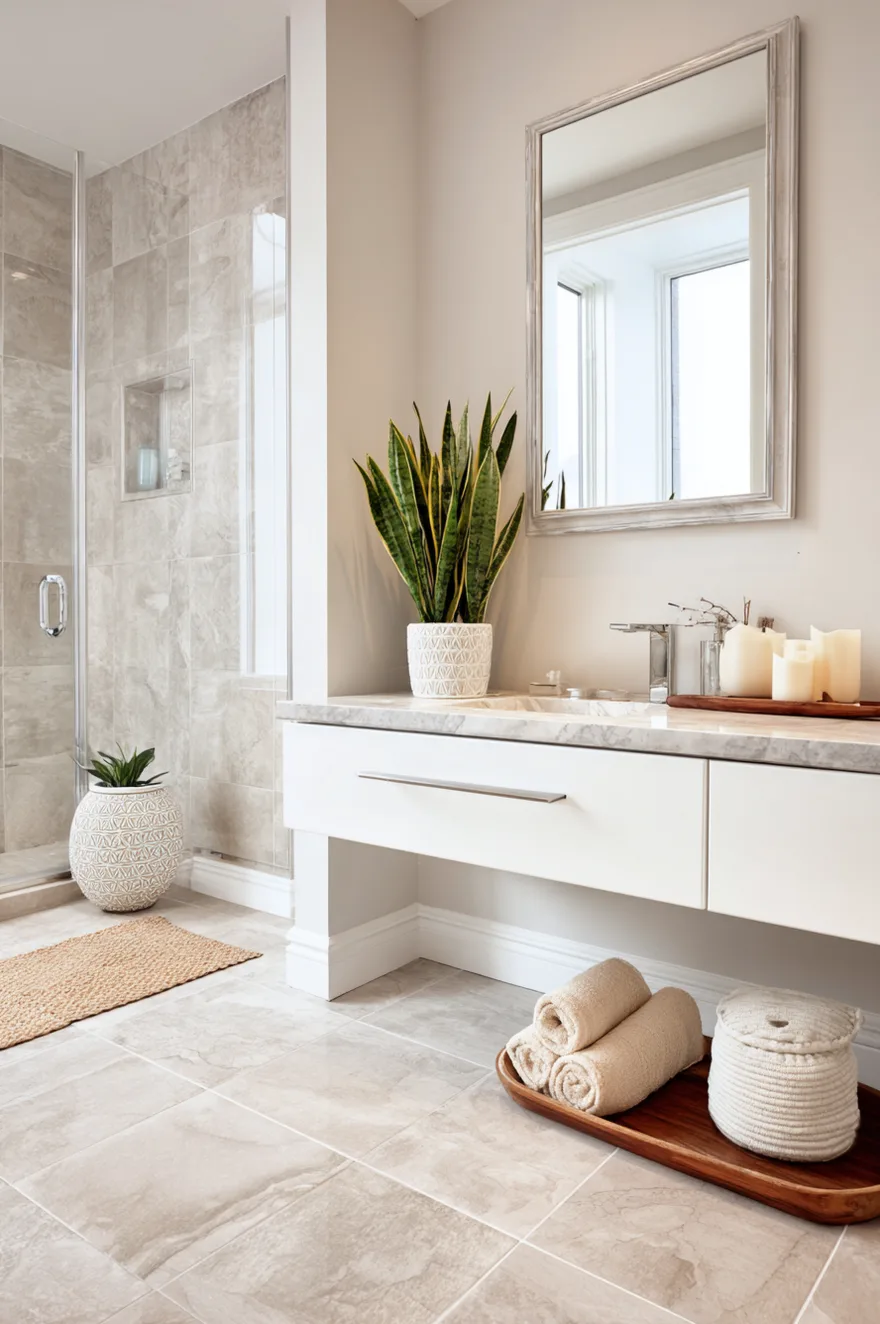
Neutral tiles aren’t a compromise – they’re a strategic foundation that allows flexibility in every other design element.
I specify warm grays and taupes with subtle variation – usually a stone-look porcelain with 3-4 shade variations per box. This creates natural depth without pattern. The reason this works is color theory – neutral floors don’t compete with vertical surfaces, fixtures, or accessories. You can change hardware, paint, or textiles without replacing tile.
The technical advantage is resale value. Neutral bathroom floor tile colors appeal to the broadest market. And here’s something most people miss – continuing the same neutral tile from floor to shower wall creates visual continuity that makes bathrooms feel larger. It’s one material purchase, one installation process, and a cohesive result.
Blue Bathroom Floor Tiles
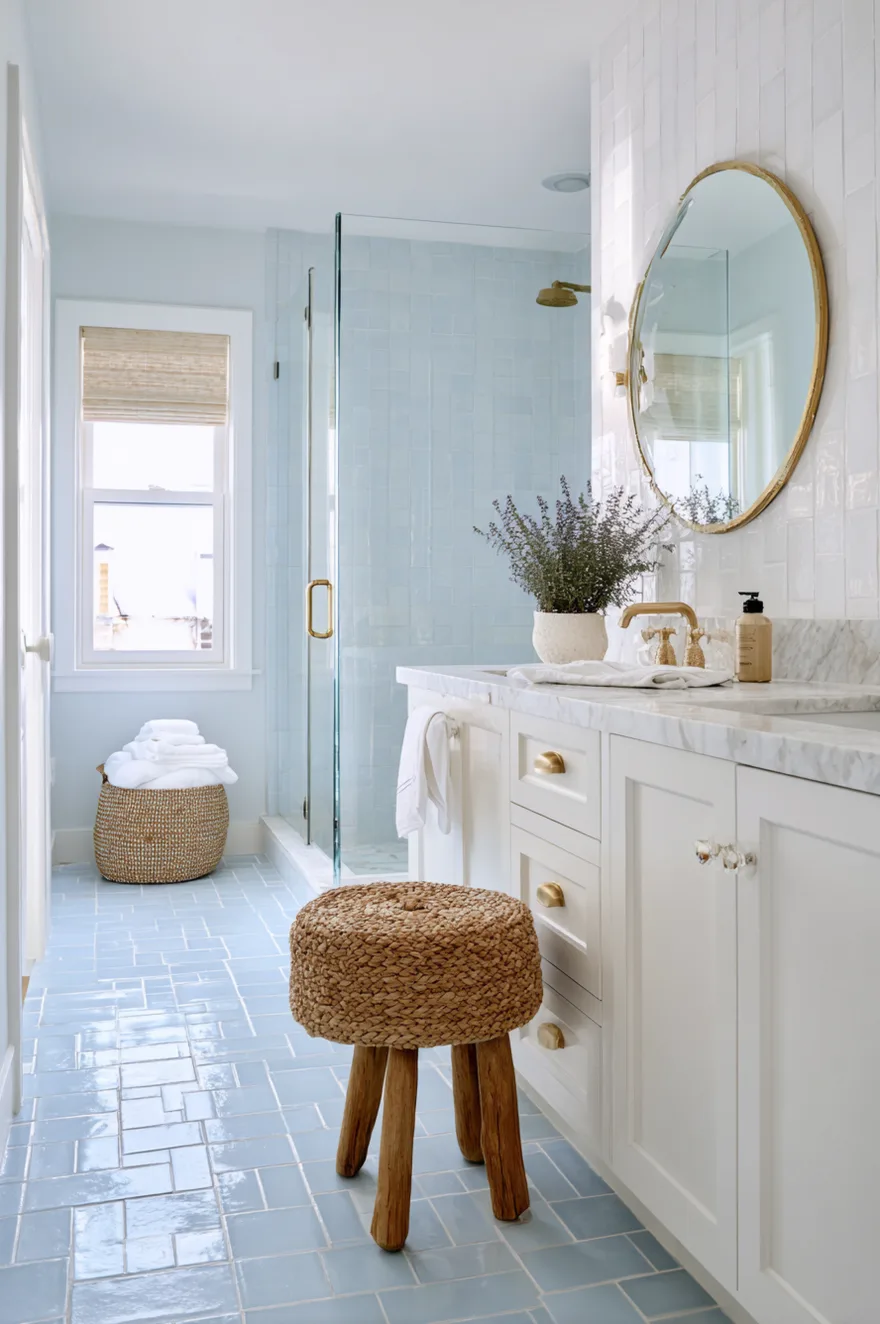
There is a neat visual trick that happens with blue floor tiles: the cool tones actually make the floor feel like it’s pushing away from you, which makes a cramped bathroom feel much larger.
I’ve specified cement-look tiles in powder blue and slate blue for bathrooms that needed to feel larger. Cool colors on floors push surfaces away from the eye, creating perceived depth. The key is balancing with warm elements – brass fixtures, natural wood vanities, warm white lighting at 2700K.
Cobalt or navy hexagons work in powder rooms where bold choices won’t fatigue over time. For primary bathrooms, softer blue-gray tones in large format provide the color benefit without overwhelming the space. The material choice matters – porcelain over ceramic for better moisture resistance. Always.
Dark Bathroom Floor Tile
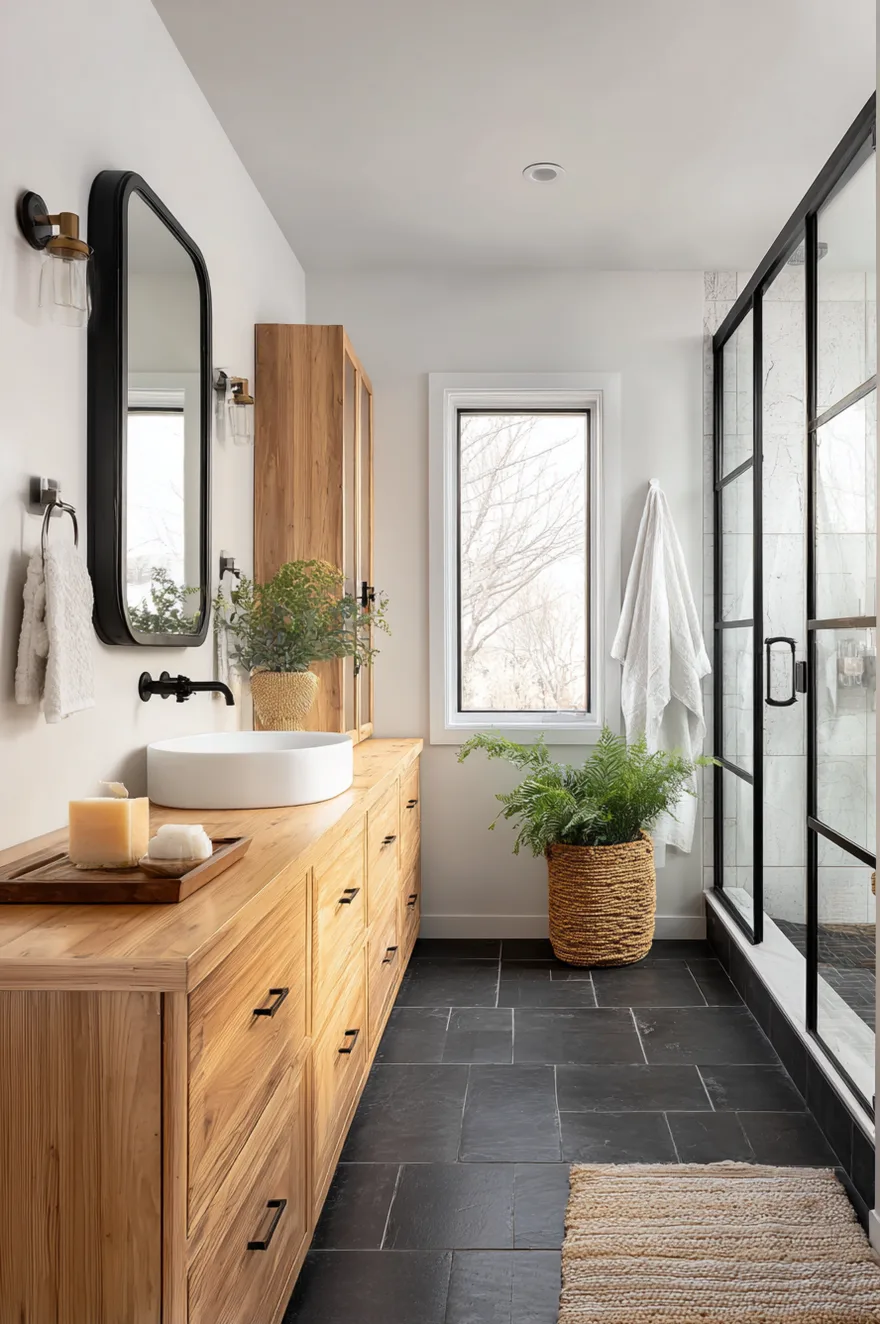
Dark tiles are more practical than light tiles – they hide water spots, soap residue, and daily wear significantly better.
I’ve installed matte black and charcoal porcelain in dozens of bathrooms. The maintenance reality is straightforward – dark floors show dust but hide water marks. Light floors show water marks but hide dust. Most bathroom messes involve water. Dark wins functionally.
The design principle is contrast. Dark bathroom floor tiles require light walls and adequate lighting. I specify warm white LED recessed lighting with a minimum of 50 foot-candles at counter height. Add natural wood vanities and brass or unlacquered copper hardware. The dark floor anchors the space, and every other element reads more clearly against it.
Green Bathroom Floor Tile
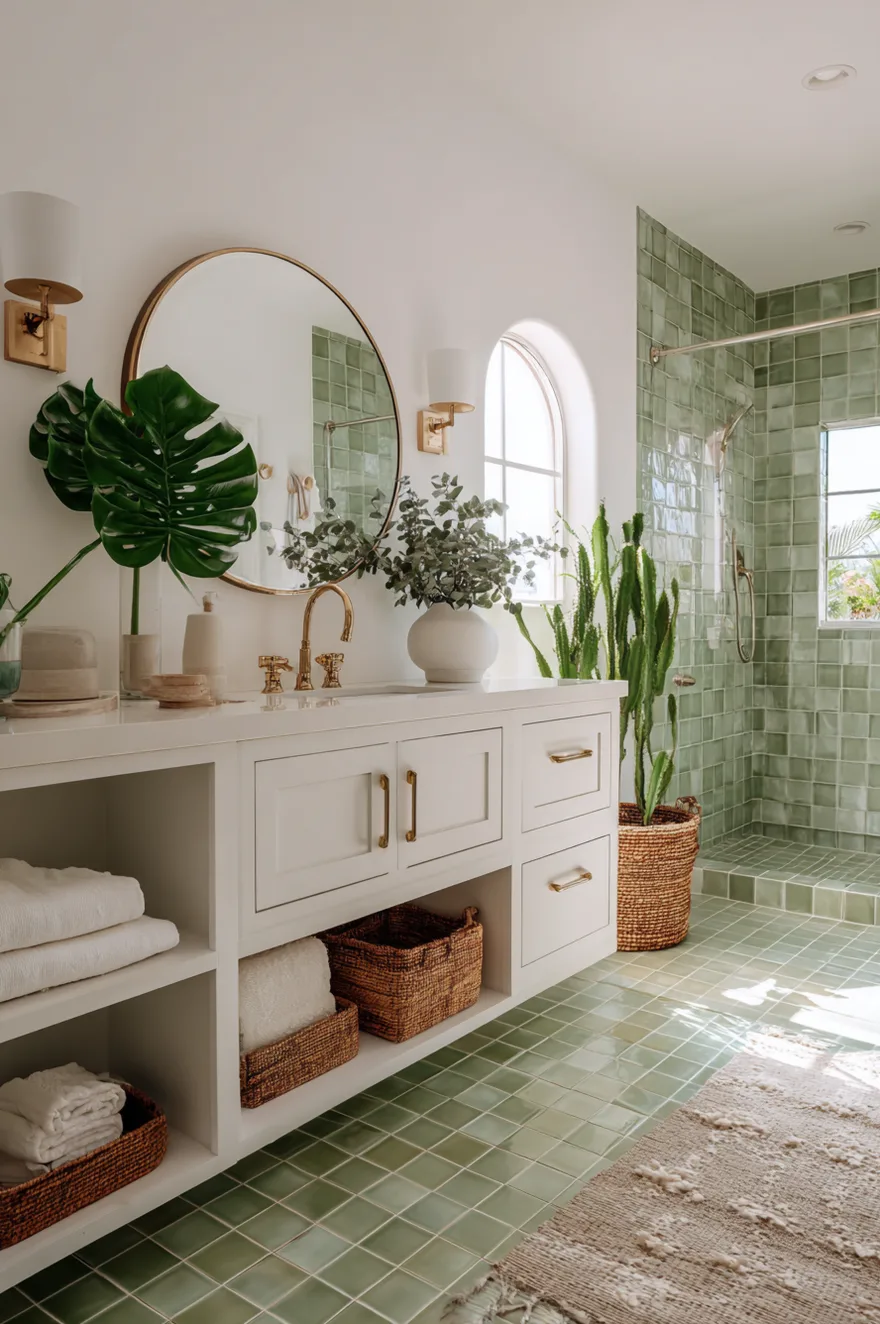
Green tiles – specifically sage, olive, and eucalyptus tones – address a gap in the neutral palette between blue and beige.
Green works so beautifully in bathrooms because it instantly makes the room feel like a natural, calming oasis. It brings the soothing vibe of the outdoors right into your morning routine. Zellige tiles in green provide handmade variation with a glossy finish that reflects light effectively in small spaces.
The practical consideration is slip resistance. Glossy zellige requires textured bath mats or rugs in wet zones. If you’re worried about slipping, skip the glossy finish on the floor and opt for a matte green porcelain tile instead – it gives you the exact same beautiful earthy color but with plenty of grip. Pair green bathroom floor tiles with unlacquered brass that will develop patina, white walls for contrast, and natural fiber accessories. The palette is grounded and functional.
Gray Bathroom Floor Tiles
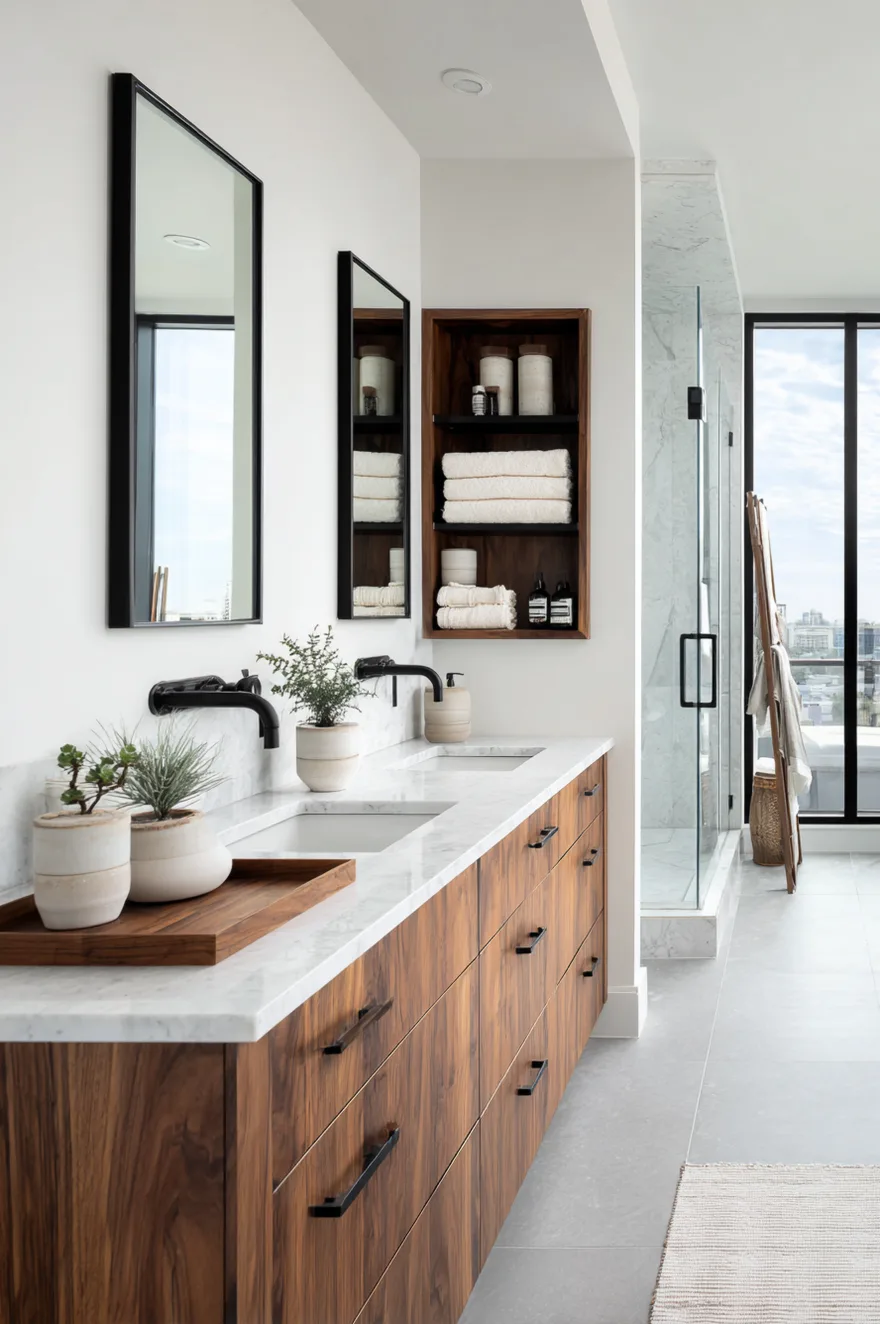
Gray tiles with warm undertones – greige or taupe-gray – solve the cool-toned gray problem from the previous decade.
The secret to getting gray right is choosing one with a brown or beige undertone (often called ‘greige’). Unlike the icy, cool grays from ten years ago that can make a room feel like a sterile hospital, warm grays act as a true neutral that plays beautifully with both warm woods and sleek black hardware.
I prefer large format gray porcelain – 12×24 planks or 24×24 squares – with minimal grout lines. The clean installation reads contemporary without trending. Pair with white walls, black hardware, and natural wood accents. It’s a proven combination that’s been working in residential and commercial applications for over a decade.
White Bathroom Floor Tile Ideas
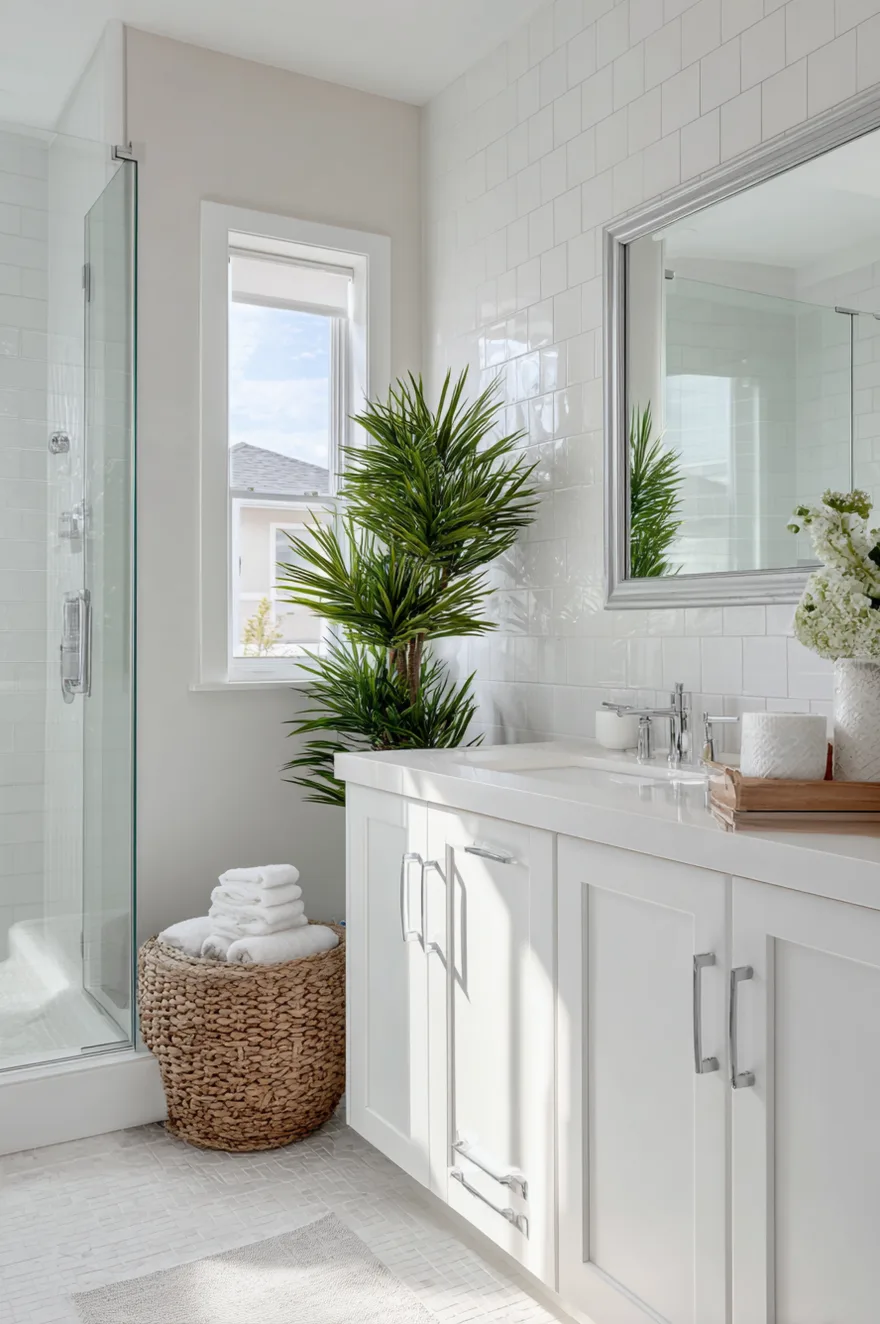
If your bathroom is lacking natural light, white floor tiles are the ultimate hack for bouncing whatever light you do have around the room.
The functional concern with white bathroom floor tiles is staining and visible wear. Here’s the solution – textured or patterned white tiles hide imperfections better than smooth surfaces. White tiles with subtle marble veining, slight geometric patterns, or matte finishes all disguise day-to-day wear.
I specify white subway tiles in herringbone or basketweave patterns for bathroom floors. The layout provides texture, the white provides light reflection, and the grout lines – in light gray or white – define the pattern without creating harsh contrast. Avoid stark bright white. Warm white or soft white feels more inviting and hides imperfections better.
Bathroom Floor Tile Patterns
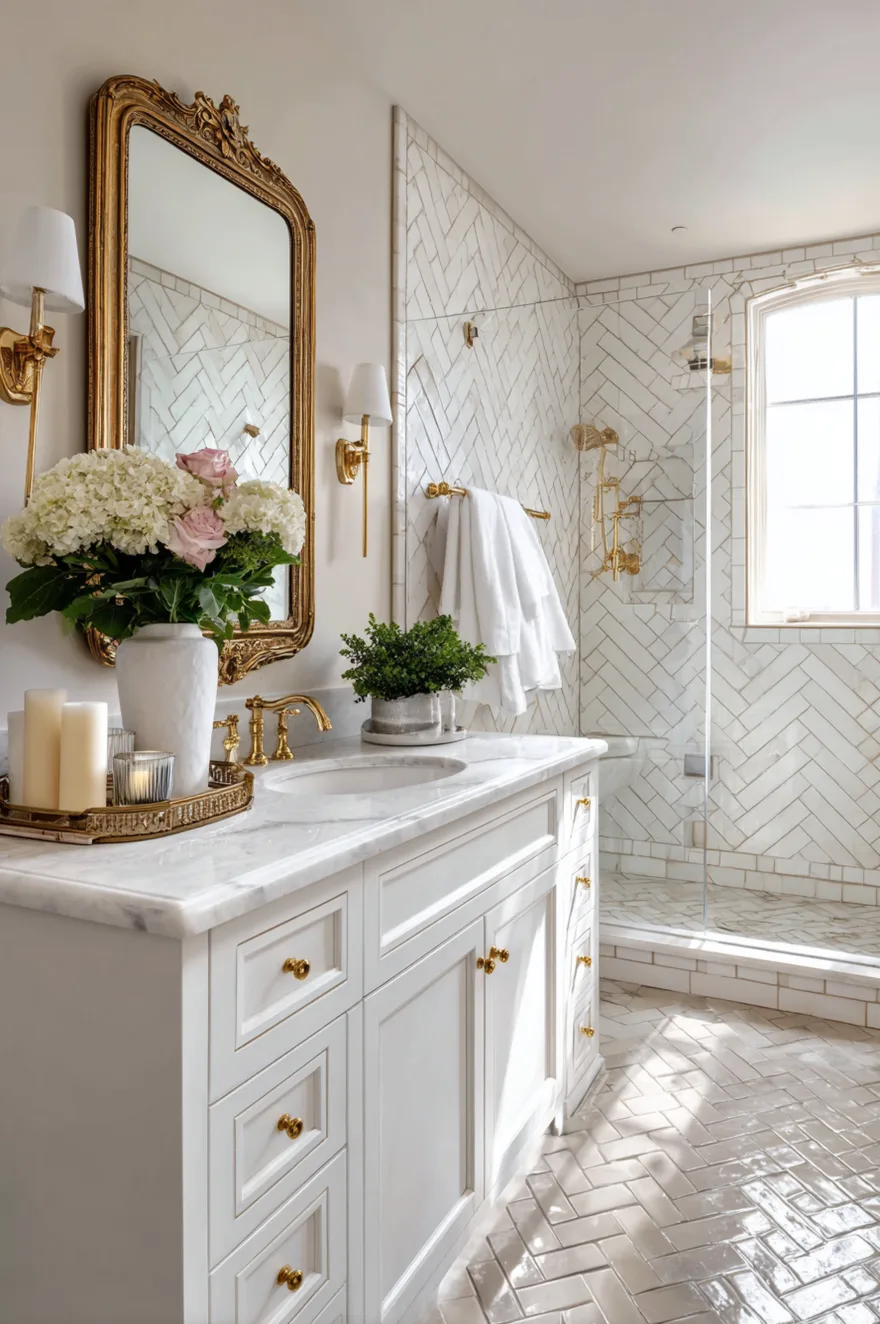
When picking a tile pattern, you have to think about the shape of your room and your budget, not just what looks pretty on Pinterest.
Herringbone creates a 45-degree angle that visually widens narrow spaces. The pattern requires 10-15% more tile than straight-lay installations due to cuts, but the spatial effect justifies the material cost. Chevron patterns are similar but require factory-cut ends at precise angles – it’s a more expensive installation.
Basketweave uses rectangular tiles in a 2:1 ratio woven in alternating directions. The pattern has been used since Roman times because it’s structurally sound and visually interesting. Most people overlook this, but bathroom floor tile patterns should complement wall tiles, not compete. If you’re using patterned floor tiles, keep walls simple.
Black Bathroom Floor Tiles
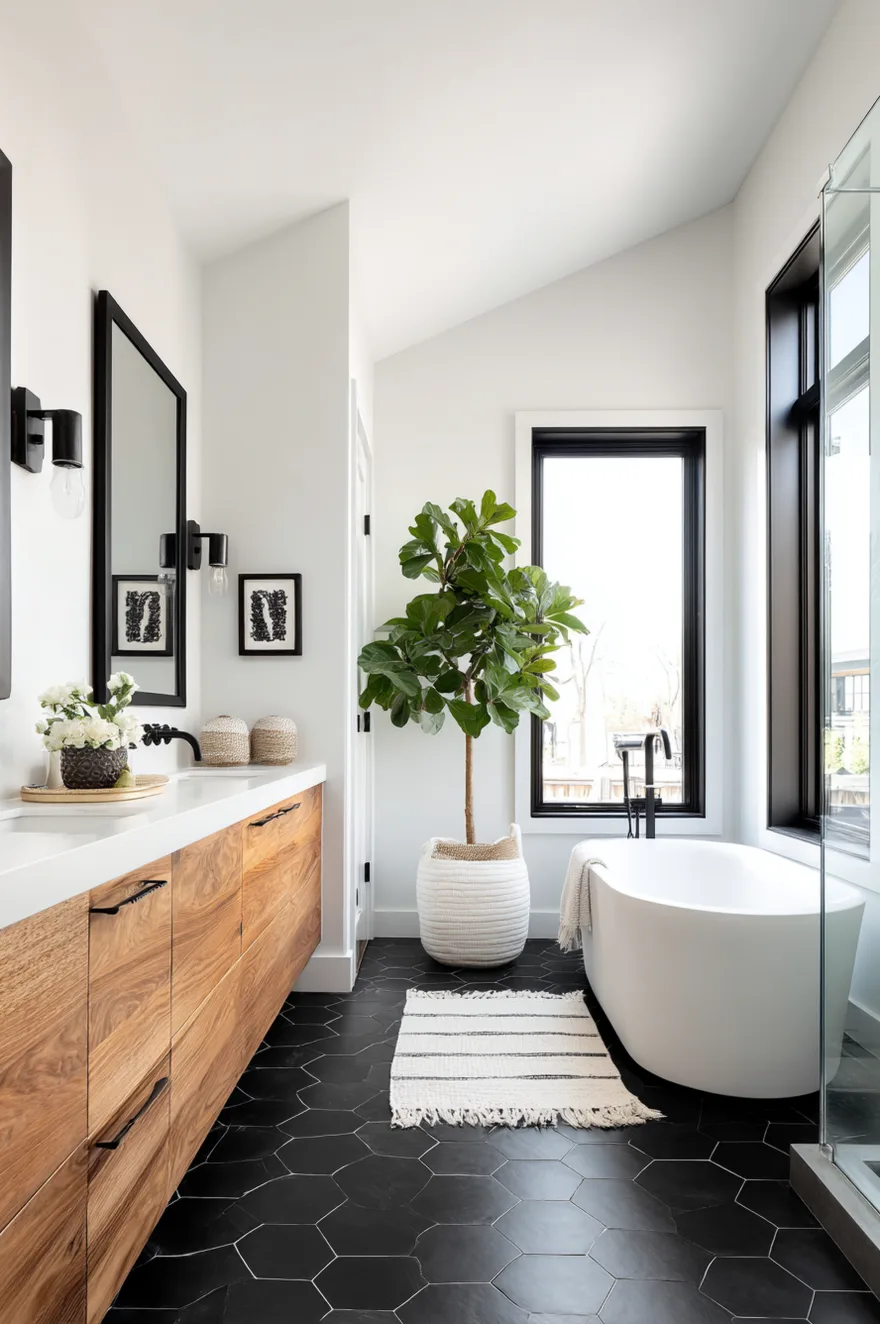
Black tiles provide maximum contrast and the highest hide-factor for water spots and soap buildup.
The material choice is critical. Matte black porcelain with a slip-resistant finish provides safety and aesthetic. Glossy black shows every water drop and footprint – it’s impractical for bathrooms. I specify matte or honed finishes with COF ratings above 0.60 for wet areas.
Black bathroom floor tiles work when balanced with light walls – typically white or cream – and warm accents. Natural oak floating vanities, brass hardware, and warm lighting at 2700-3000K prevent the space from reading cold. The contrast makes white fixtures appear crisper and allows architectural details to stand out more clearly.
Timeless Bathroom Floor Tile Designs
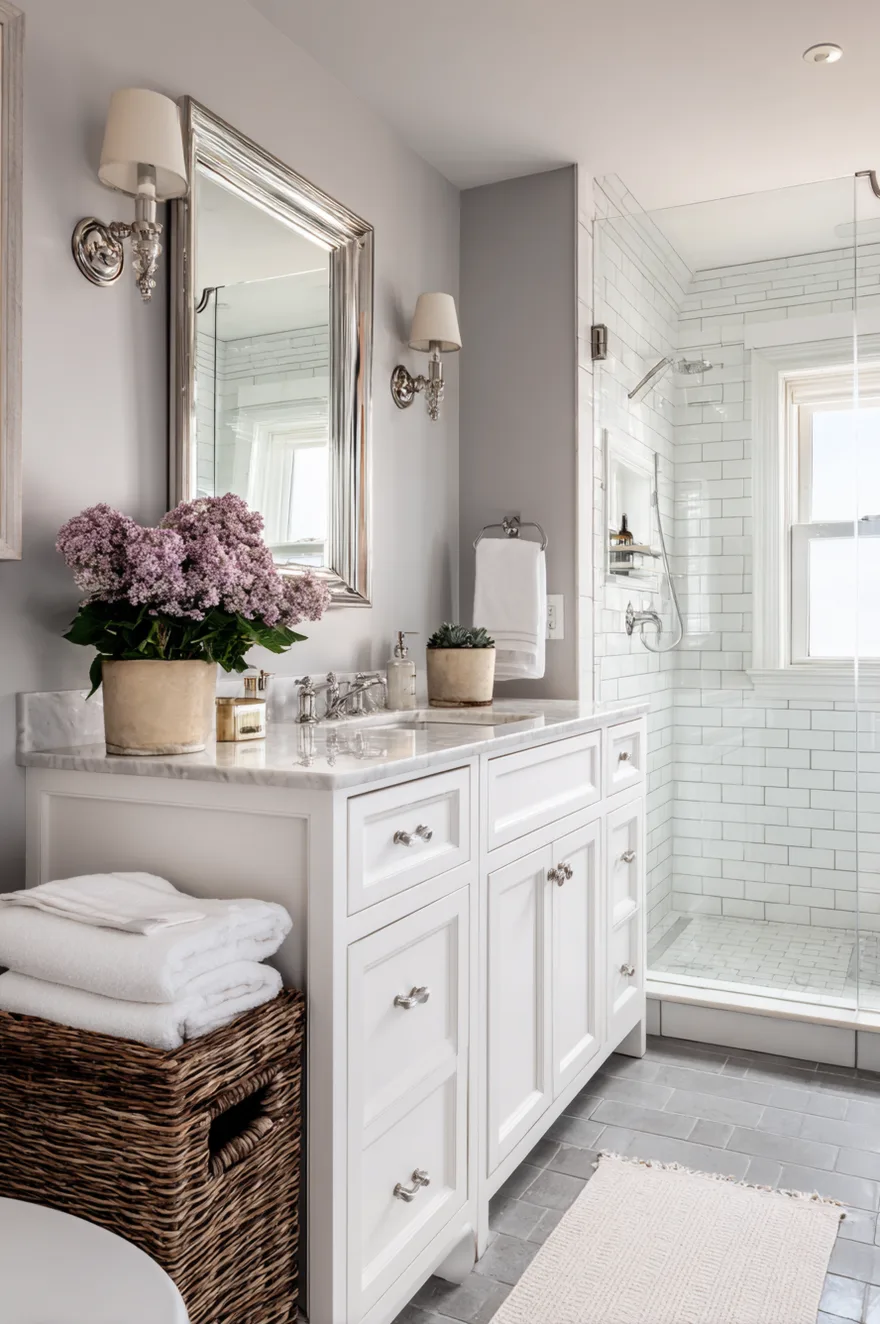
Timeless design is about material longevity and aesthetic consistency – not trend resistance.
Classic white subway tiles, gray porcelain, and natural stone looks have remained relevant because they solve fundamental design problems. They provide neutral backgrounds, they’re available consistently, and they install efficiently. I put gray porcelain in a bathroom seven years ago and it still reads as current.
The principle is simple – stick with neutral colors and traditional shapes. Squares, rectangles, hexagons. These geometric forms have been in continuous use for centuries. You can update accessories, hardware, and paint without touching tile. That’s functional timelessness.
Unique Bathroom Floor Tile
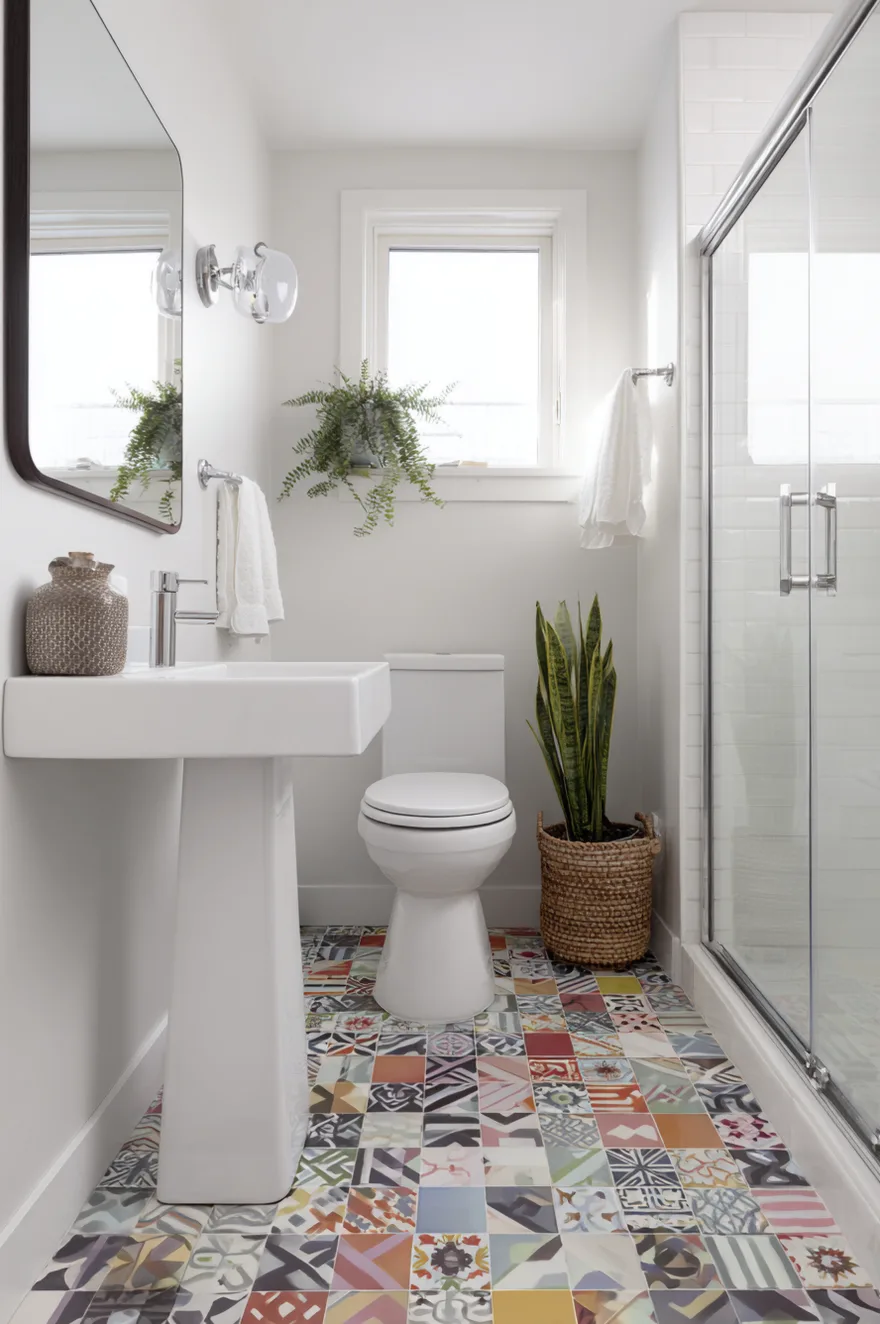
Unique tile choices require understanding the line between distinctive design and dated trend.
Encaustic cement tiles with geometric patterns work when the rest of the bathroom is minimal. The tiles become the focal point, everything else recedes. I’ve specified Moroccan-inspired patterns in blues and creams, Spanish tiles in terracotta and white. The key is committing fully – if you’re introducing pattern, make it the primary design element.
Custom mosaic designs, metal-look tiles, or wood-look porcelain planks all qualify as unique bathroom floor tiles. The risk management strategy is simple – use them in spaces where replacement cost is manageable. Powder rooms, guest bathrooms. Test bold ideas in lower-stakes environments.
Guest Bathroom Floor Tile Ideas
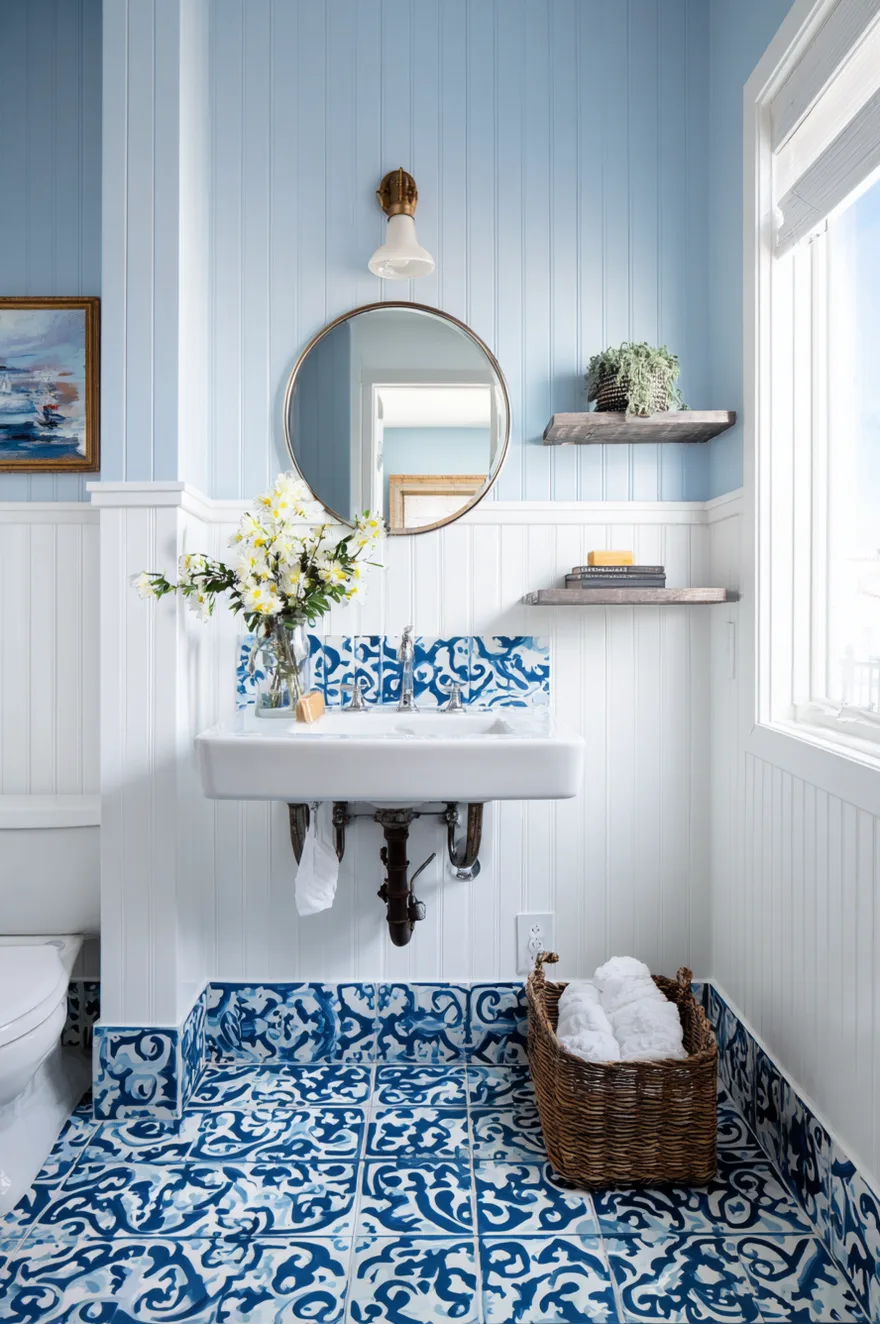
Guest bathrooms provide the ideal testing ground for higher-risk design choices because usage frequency is lower.
The practical reality is that guest bathrooms typically see 10-20% of the traffic of primary bathrooms. This allows for materials or patterns that might not hold up to daily use. Patterned cement tiles, colorful mosaics, or vintage-inspired designs all work well in these applications.
I always make sure to choose tiles with a matte or textured finish for guest baths. Even if the shower isn’t being used every single day, you still want to ensure your guests have a safe, slip-free surface. But the aesthetic tolerance is higher. Navy hexagons, bold geometric patterns, or high-contrast black and white designs that might feel overwhelming in a primary bath work perfectly in a powder room.
Master Bath Bathroom Floor Tile Ideas
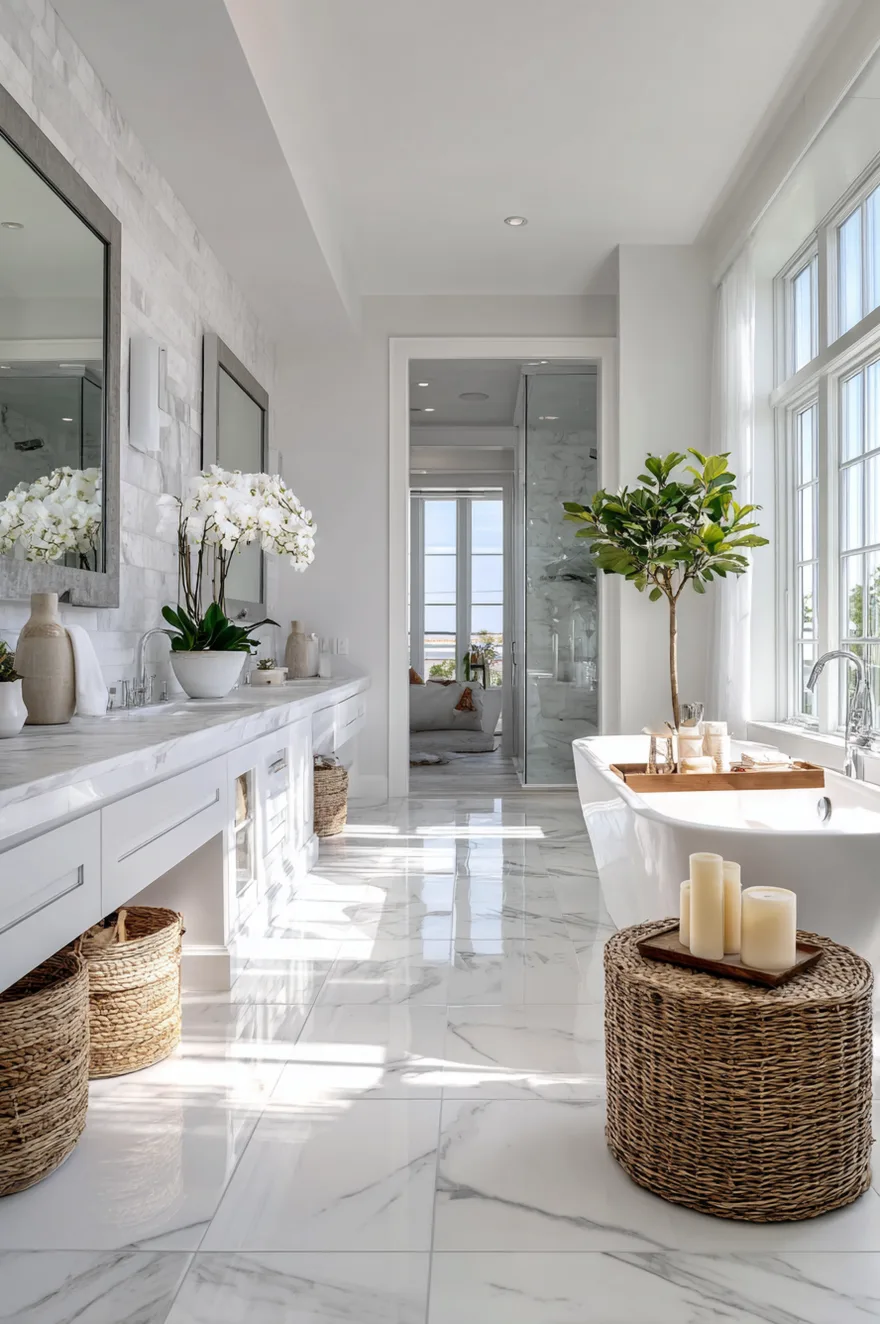
Primary bathrooms justify higher material investment because usage frequency and resale impact are both significant.
I specify large format porcelain or natural stone – typically 24×24 or 12×24 planks. The larger scale suits bigger spaces, and the reduced grout lines improve waterproofing. Running the same tile from floor into the shower creates visual continuity and simplifies installation.
Consider radiant floor heating during renovation. The system installs between subfloor and tile, adding approximately $10-15 per square foot but transforming the user experience. Pair with smooth porcelain or honed marble. Warm neutrals – beige, taupe, soft gray – create the spa-like atmosphere most people want in a primary bathroom.
Fun Bathroom Floor Tile Texture Ideas
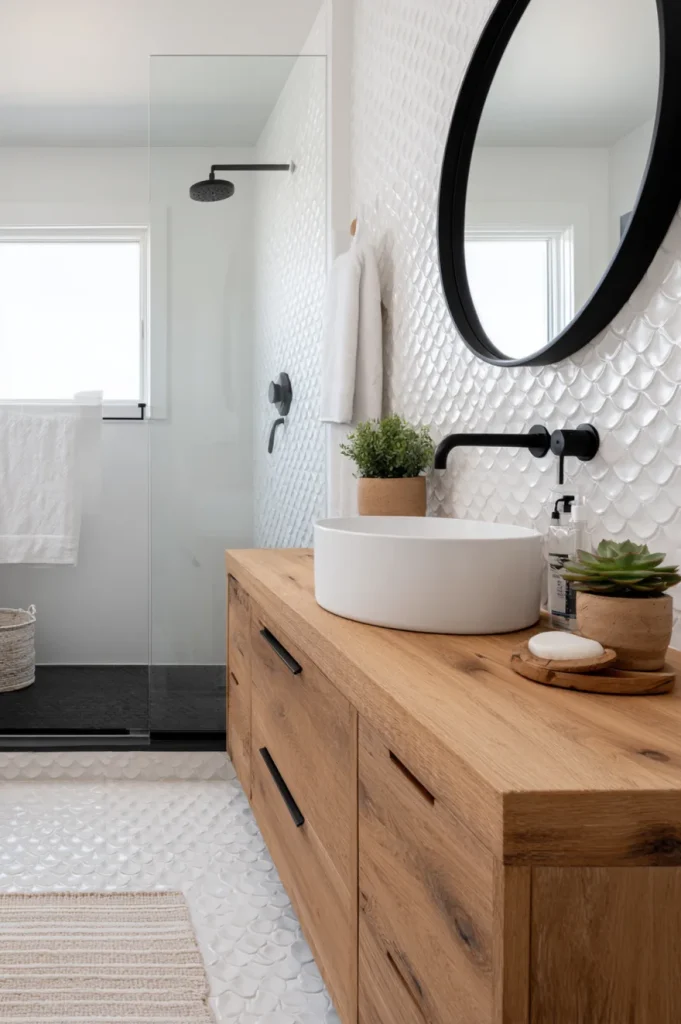
Texture provides tactile interest and improved slip resistance – it’s both aesthetic and functional.
Three-dimensional tiles with raised geometric patterns or wave designs create shadow lines that change throughout the day as light shifts. The installation requires flat substrate – any variation telegraphs through raised surfaces. Split-face stone provides natural texture but requires more maintenance due to the irregular surface.
Ribbed porcelain tiles with linear grooves offer subtle texture that’s easier to clean than deep relief patterns. Concrete-look tiles with slight surface variation provide industrial aesthetic with practical maintenance. The functional test is simple – can you clean it efficiently? If texture traps dirt or complicates mopping, it fails functionally.
Bathroom Floor And Wall Tile Ideas
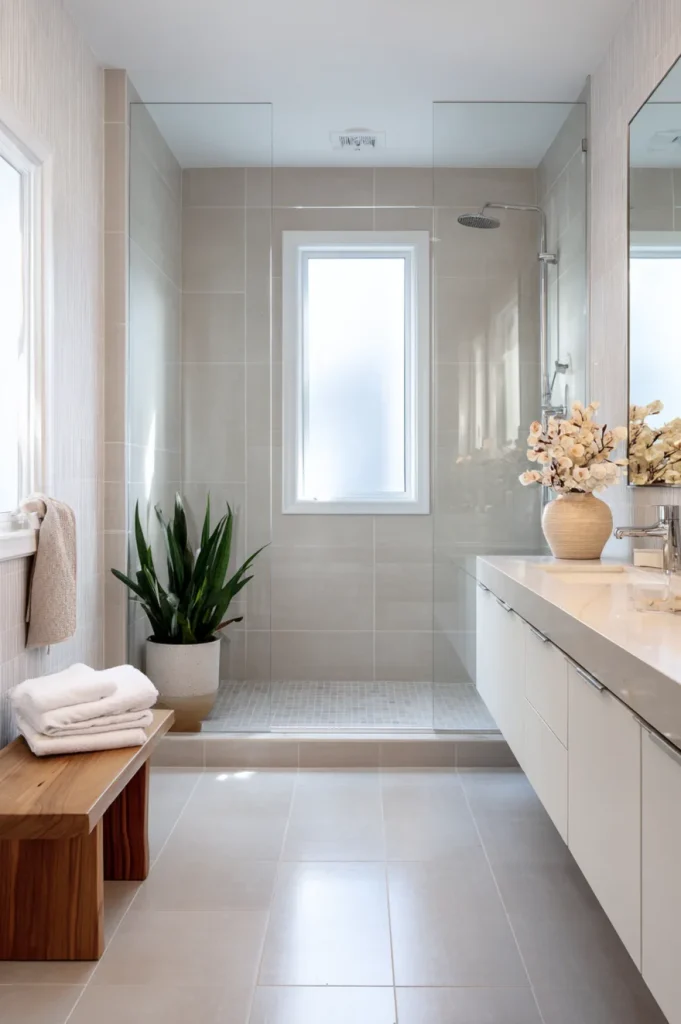
Continuous tile from floor to wall eliminates visual breaks and simplifies material sourcing and installation.
I’ve run the same large format gray porcelain from bathroom floors up shower walls in multiple projects. The result is cohesive, the material order is simpler, and installation efficiency improves. Your eye doesn’t stop at material transitions, which makes spaces feel larger.
If full matching feels excessive, use tiles from the same color family. Warm beige on floors with lighter cream on walls, or dark gray floors with pale gray walls. The subtle variation provides definition while maintaining visual connection. Most people overlook this, but matching floor and wall tiles also simplifies future repairs – you’re working with one material, one lot number.
Bathroom Floor Tiles For Small Spaces
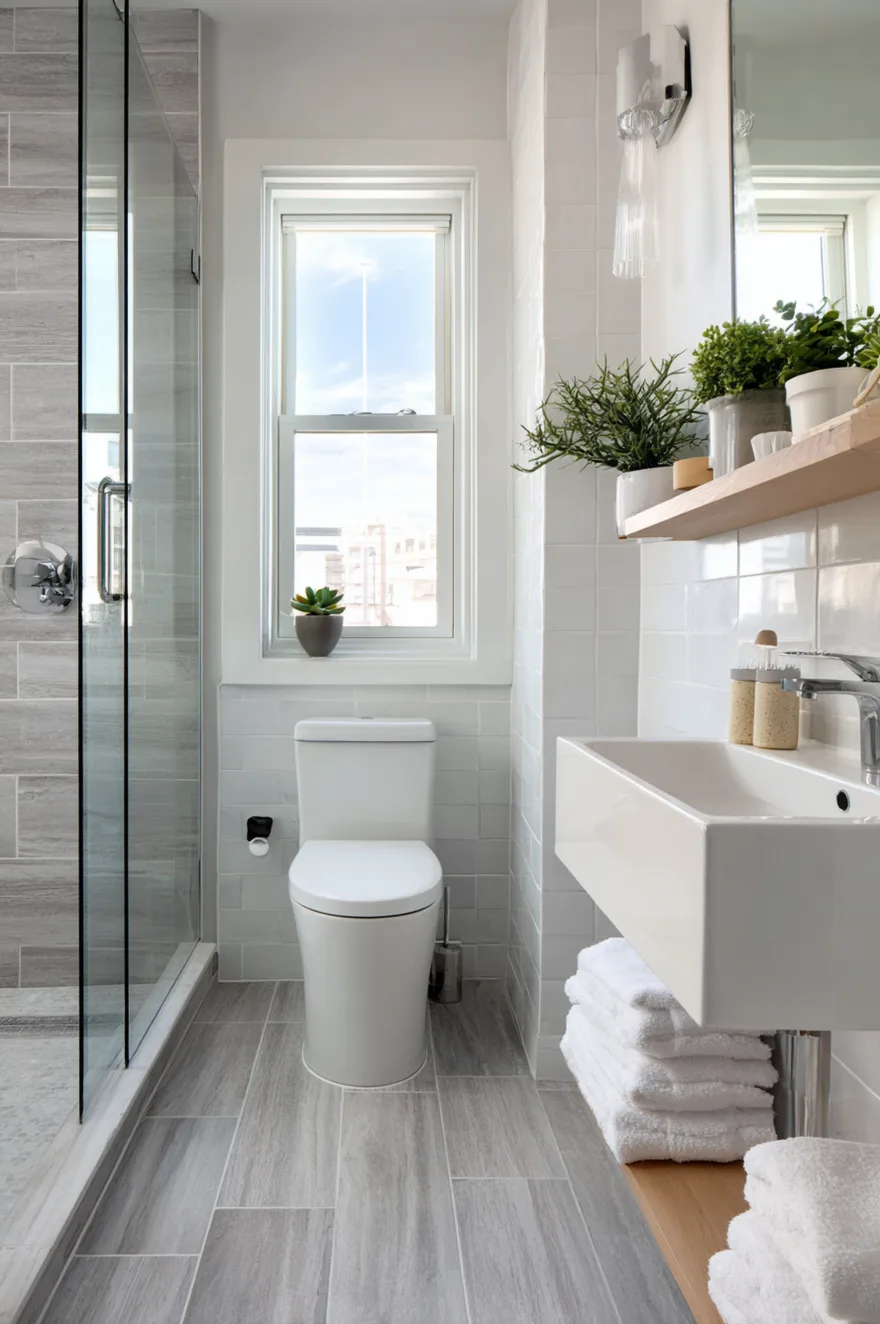
Making a tiny bathroom feel larger really comes down to three simple tricks: going light with your colors, scaling up your tile size, and laying them in the right direction.
Light-colored tiles bounce natural light around the room, while large format tiles mean fewer grout lines to chop up the floor visually. If you lay those large tiles on a diagonal, it tricks your eye into following the longest line in the room, making the whole space feel instantly wider.
I specify light gray or white large format tiles laid diagonally in small bathrooms. The combination maximizes all three factors. If pattern is necessary, keep it subtle – simple geometric designs in light colors. Busy multi-color patterns visually fragment space and make rooms feel smaller.
Building Your Bathroom From The Ground Up
The floor tile decision should come early in the design process – not as an afterthought.
Here’s what I’ve learned over 15 years – bathroom floor tiles establish the foundation for every other material choice. They determine your color palette, influence your grout selection, and affect your overall budget. Whether you’re selecting classic black and white bathroom floor tiles or contemporary large format installations, start with function.
Consider durability, maintenance requirements, and slip resistance before aesthetics. Choose materials that match your actual lifestyle, not an idealized version. And remember – bathroom floor tile ideas should solve problems. Water resistance, ease of cleaning, longevity. Get the technical aspects right, and the design follows naturally.
See you soon,
Rachel